Business
TCS Dividend 2025: IT Giant To Declare 2nd Cash Reward On Oct 09, Record Date Fixed
Last Updated:
Tata Consultancy Services will announce Q2 results and consider a 2nd interim dividend on October 9, 2025.

TCS to declare 2nd interim dividend on October 09.
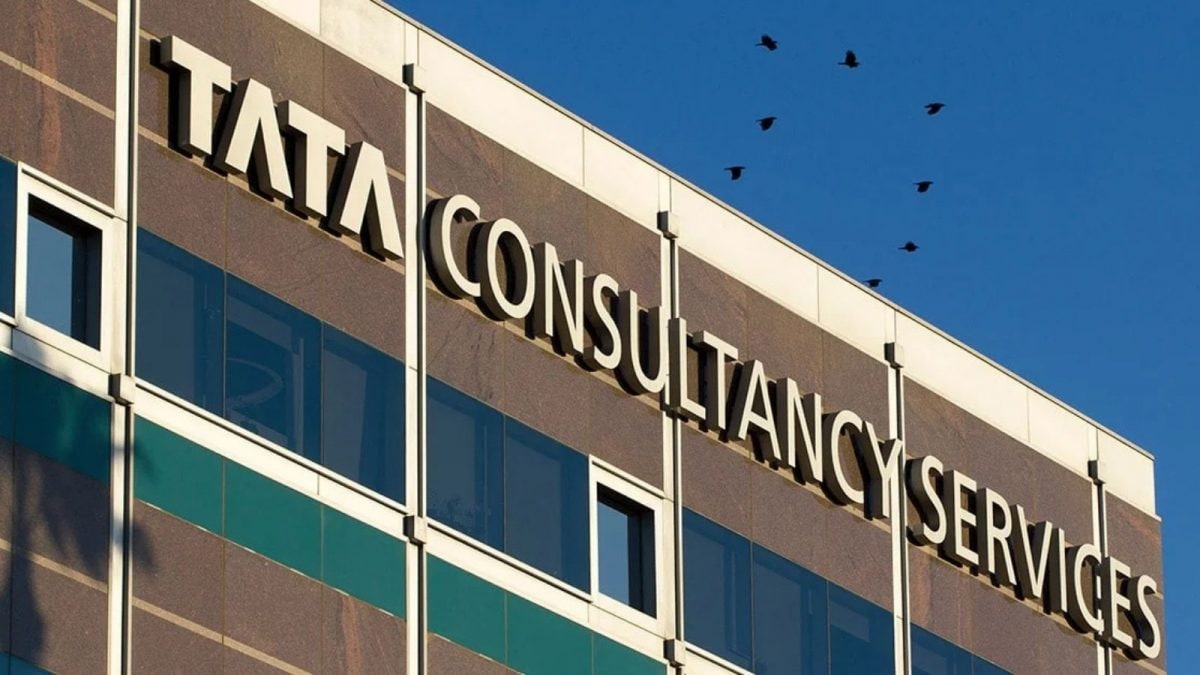
TCS Dividend 2025 Record Date: IT major Tata Consultancy Services (TCS) is all set to kick off Q2 earnings season with the declaration of its quarterly results for the July-September period, 2025, on Thursday, October 09. The board will also consider the 2nd interim dividend for the financial year 2025-26.
In a stock exchange filing, TCS said, “A meeting of the Board of Directors of Tata Consultancy Services Limited is scheduled to be held on Thursday, October 9, 2025, to approve and take on record the audited standalone financial results of the Company under Indian Accounting Standards (Ind AS) for the quarter and six-month period ending September 30, 2025.”
TCS Dividend 2025 Record Date
TCS has also fixed the record date for the proposed 2nd interim dividend for FY2025-26. TCS added, “The second interim dividend, if declared, shall be paid to the equity shareholders of the Company whose names appear on the Register of Members of the Company or in the records of the Depositories as beneficial owners of the shares as on Wednesday, October 15, 2025, which is the Record Date fixed for the purpose.”
For Q1FY26, the board had declared an interim dividend of Rs 11 per share.
TCS Q1 FY26 Results
TCS had reported a 5.98 per cent rise year-on-year (YoY) in its net profit to Rs 12,760 crore for the first quarter ended June 30, 2025 (Q1 FY26). On a quarter-on-quarter (QoQ) basis, the net profit grew 4.38%.
It had reported a net profit of Rs 12,040 crore a year ago and Rs 12,224 crore in the previous quarter.
The Q1 FY26 earnings are better than expectations. A Bloomberg consensus poll of analysts had pegged TCS’ Q1 FY26 net profit growth at a muted 1.9% to Rs 12,263 crore.
The company’s revenue from operations during April-June 2025 stood at Rs 63,437 crore, which is 1.13 per cent higher as compared with the Rs 62,613 crore reported last year. On a sequential basis, the revenue fell 1.61%.

Varun Yadav is a Sub Editor at News18 Business Digital. He writes articles on markets, personal finance, technology, and more. He completed his post-graduation diploma in English Journalism from the Indian Inst…Read More
Varun Yadav is a Sub Editor at News18 Business Digital. He writes articles on markets, personal finance, technology, and more. He completed his post-graduation diploma in English Journalism from the Indian Inst… Read More
October 05, 2025, 14:57 IST
Read More
Business
Piyush Goyal: India-NZ talks focused on goods mkt access, services – The Times of India
AUCKLAND: The fourth round of the India-New Zealand FTA talks was focused on goods market access, services, economic and technical cooperation, and investment opportunities, and both countries have vowed to wrap up a deal soon.“We look forward to working towards the early conclusion of a balanced, comprehensive and mutually beneficial agreement, in line with the growing strategic and economic convergence between India and New Zealand,” commerce and industry minister Piyush Goyal said on Friday at the end of his official visit to New Zealand.While no timeline has been given about the signing of the FTA, there are expectations that it may be concluded early next year.New Zealand’s trade minister Todd McClay will visit India next month and is expected to carry forward the negotiations.Negotiators from both countries have narrowed down the differences but there are some “nuances” which need to be worked on. The dairy remains a sticking point.But there is growing interest in New Zealand about expanding cooperation with India across sectors such as agriculture, tourism, technology, education, sports, gaming, and drone technology. Given India’s significant advancements in the space sector, including its recent lunar missions, space collaboration was identified as an area for future engagement.During the visit, Goyal also held meetings with business leaders from both India and New Zealand and called for deepening the economic ties between the two countries.
Business
Blame game over Air India crash goes on
Theo LeggettInternational Business Correspondent
Getty ImagesNearly five months after a plane crash in India which killed 260 people, the investigation has become mired in controversy – with the country’s Supreme Court the latest to weigh in.
Flight 171 was en route to London from Ahmedabad in western India on 12 June. It crashed into a building just 32 seconds after taking off.
An interim report was released in July, but critics argue it unfairly focused on the actions of the pilots, diverting attention away from a possible fault with the aircraft.
On Friday, a judge in India’s Supreme Court insisted that nobody could blame the aircraft’s captain.
His comments came a week after the airline’s boss insisted there was no problem with the aircraft.
During a panel discussion at the Aviation India 2025 summit in New Delhi in late October, Air India’s chief executive Cambell Wilson admitted that the accident had been “absolutely devastating for the people involved, for the families of those involved, and the staff”.
But he stressed that initial investigations by Indian officials, summed up in a preliminary report, had “indicated that there was nothing wrong with the aircraft, the engines or the operation of the airline”.
He added although Air India was working with investigators it was not involved directly.
Because the accident happened in India, the investigation is being led by the country’s Air Accident investigation Bureau (AAIB). However, because the aircraft and its engines were designed and built in America, US officials are also taking part.
A month after the accident, the AAIB published a preliminary report. This is standard procedure in major accident investigations and is meant to provide a summary of the known facts at the time of publication.
The report will typically draw on information gleaned from examination of the crash site, for example, as well as basic material downloaded from the flight data recorder. It will not normally make firm conclusions about the cause of the accident.
However, the 15-page report into Air India 171 has proved controversial. This is largely due to the contents of two short paragraphs.
First, it notes that seconds after takeoff, the fuel cutoff switches – normally used when starting the engines before a flight and shutting them down afterwards – had been moved from the “run” to the cutoff position.
This would have deprived the engines of fuel, causing them to lose thrust rapidly. The switches were moved back to restart the engines, but too late to prevent the disaster.
It then says: “In the cockpit voice recording, one of the pilots is heard asking the other why did he cutoff. The other pilot responded that he did not do so.”

That indirectly-reported exchange sparked intense speculation about the role of the two pilots, Captain Sumeet Sabharwal and his first officer Clive Kunder, who was flying the plane at the time.
A former chair of the National Transportation Safety Board, Robert Sumwalt, claimed the report showed “this was not a problem with the airplane or the engines”.
“Did somebody deliberately shut down the fuel, or was it somehow or another a slip that they inadvertently shut off the fuel?” he said during an interview with the US network CBS.
Indian aviation safety consultant Capt. Mohan Ranganathan strongly implied that pilot suicide could have caused the accident, in an interview with the country’s NDTV channel.
“I don’t want to use the word. I’ve heard the pilot had some medical history and… it can happen,” he said.
Mike Andrews, a lawyer acting on behalf of victims’ families, thinks the way in which information has been released has “led people unfairly and inappropriately to blame those pilots without all the information”.
“An aircraft like this – that is so complex – has so many things that could go wrong,” he explains.
“To seize upon those two very small, decontextualised pieces of information, and automatically blame pilots for suicide and mass murder… is unfair and wrong.”
That view is echoed by Capt. Amit Singh, founder of the Safety Matters Foundation, an organisation based in India that works to promote a safety culture in aviation.
He has produced a report which claims the available evidence “strongly supports the theory of an electrical disturbance as the primary cause of the engine shutdown” that led to the disaster.
He believes an electrical fault may have caused the Full Authority Digital Engine Control (FADEC), a computerised system which manages the engines, to trigger a shutdown by cutting off the fuel supply.
Meanwhile the flight data recorder, he suggests, may have registered the command to shut off the fuel supply, rather than any physical movement of the cutoff switches in the cockpit.
In other words, the switches themselves may not have been touched at all, until the pilots tried to restart the engines.
Capt. Singh has also challenged the way in which the investigation has been carried out in India’s Supreme Court.
He told the BBC the way in which the preliminary report was framed was biased because it “appears to suggest pilot error, without disclosing all the technical anomalies that occurred during the flight”.
Meanwhile the Supreme Court itself has already commented on the issue.
It has been considering a petition filed by Pushkarraj Sabharwal, the father of Capt. Sumeet Sabharwal. The 91-year-old has been seeking an independent judicial inquiry into the tragedy.
“It’s extremely unfortunate, this crash, but you should not carry this burden that your son is being blamed. Nobody can blame him for anything,” Justice Surya Kant told him.
A further hearing is expected on 10 November.
‘Flat out wrong’
The theory that an electrical fault could have caused the accident is supported by the US-based Foundation for Aviation Safety (FAS).
Its founder is Ed Pierson, a former senior manager at Boeing, who has previously been highly critical of safety standards at the US aerospace giant.
He believes the preliminary report was “woefully inadequate… embarrassingly inadequate”.
His organisation has spent time examining reports of electrical issues on board 787s. They include water leaks into wiring bays, which have previously been noted by the US regulator, the Federal Aviation Authority. Concerns have also been voiced in some other quarters.
“There were so many of what we consider electrical oddities on that plane, that for them to come out and to all intents and purposes direct the blame to the pilots without exhaustively going through and examining potential system failures, we just thought was flat out wrong,” he says.
He believes there was a deliberate attempt to divert attention away from the plane and on to the pilots.
The FAS has called for wholesale reform of current international air accident investigation procedures, citing “outdated protocols, conflicts of interest and systemic failures that endanger public trust and delay life-saving safety improvements”.
‘Keeping an open mind’
Mary Schiavo, an attorney and former inspector general at the US Department of Transportation, disagrees that the pilots have been deliberately put under the spotlight.
She thinks the preliminary report was flawed, but only because investigators were under intense pressure to provide information, with worldwide attention focused on them.
“I think they were just in a hurry, because this was a horrific accident and the whole world was watching. They were just in a hurry to push something out,” she says.
“Then, in my opinion, the whole world jumped to conclusions and right away was saying, ‘this is pilot suicide, this was intentional’.
“If they had to do it over again, I don’t think they would have put those little snippets from the cockpit voice recording in,” she says.
Her own view is that “a computer or mechanical failure… is the most likely scenario”.
International rules for air accident investigations stipulate that a final report should appear within 12 months of the event, but this is not always adhered to. However, until it is published, the true causes of the accident will remain unknown.
A former air accident investigator who spoke to the BBC emphasised the importance of “keeping an open mind”, until the process has been completed.
Boeing has always maintained that the 787 is a safe aircraft – and it does have a strong record.
The company told the BBC it would defer to India’s AAIB to provide information about the investigation.
Business
‘It’ll be something cool’: Elon Musk promises of moon buggies, humanoid robots after $1 trillion Tesla payday – The Times of India
Tesla CEO Elon Musk celebrated shareholder approval of his record-breaking $1 trillion compensation package with a flurry of ambitious promises, from humanoid robots performing surgery to building vehicles for missions to the Moon and Mars.The vote, which saw over 75% of investors back the deal, clears the path for Musk to expand his stake in Tesla to around 25% over the next decade and potentially become the world’s first trillionaire.
Humanoid robots, moon buggies, & new vision
Musk used the meeting to outline Tesla’s futuristic roadmap. He claimed the company’s humanoid robot, Optimus, would soon evolve from handing out candy to performing surgery “with beyond-human precision.”He also teased that both Optimus and Tesla’s vehicles could one day play a key role in establishing bases on the Moon and Mars. “It’ll be something cool — a next-level moon buggy or Mars buggy,” Musk told shareholders, Bloomberg reported.The billionaire added that Tesla aims to boost its car production by roughly 50% by the end of 2026, despite ongoing challenges in its automotive division, which is facing its second consecutive year of declining sales.“It’s not just a new chapter for Tesla, it’s a new book,” Musk declared during the company’s annual meeting in Austin, Texas.“That new book is about massively increasing vehicle production and ramping up Optimus production faster than anything in human history,” he added.
Pay package paves way to trillionaire status
The approval of Musk’s massive stock award cements his control over Tesla at a time when he had hinted he might divert more attention to other ventures if the deal failed. General Counsel Brandon Ehrhart announced that more than three-quarters of votes supported the package, prompting a standing ovation.The plan sets performance targets that could raise Tesla’s market value to $8.5 trillion, enough to make Musk’s total stake worth roughly $2.4 trillion, according to Bloomberg estimates. That figure would surpass the GDP of nearly every country except a handful of the largest economies.“There are significant hurdles,” noted Dan Ives, an analyst at Wedbush Securities. “Musk now has to execute on the most important chapter in Tesla’s history, an autonomous and robotic future.”The compensation plan faced resistance from several institutional investors and proxy advisory firms, including Norway’s Norges Bank Investment Management and Glass Lewis, who cited its “unprecedented scale” and potential dilution of other shareholders.According to Bloomberg, critics also accused Tesla’s board of being overly deferential to Musk. New York State Comptroller Thomas DiNapoli called the deal “pay for unchecked power, not pay for performance,” while Senator Bernie Sanders described it as “totally absurd.”
Musk’s vision: From chips to cybercabs
Musk acknowledged that Tesla’s growth will depend heavily on securing enough chips for its advanced technologies. He suggested that Tesla may build its own semiconductor facility to supplement existing supply from companies like Samsung and Taiwan Semiconductor Manufacturing Co.“Even in the best-case scenario, the chip supply from our partners won’t meet our needs,” Musk said. “So we may have to build a Tesla terafab — like giga, but way bigger” he added.He revealed that three new products are expected to enter production next year — the humanoid Optimus, the long-delayed Semi truck, and the steering-wheel-less Cybercab, Tesla’s autonomous ride-hailing vehicle.
Investor division over xAI investment
While shareholders largely supported Musk’s pay deal, they were split over another proposal — a potential investment in Musk’s artificial intelligence company, xAI. Ehrhart said that although more votes were cast in favor than against, there was “a significant number” of abstentions.The measure was advisory and non-binding, meaning Tesla is not required to follow through. Musk has previously suggested Tesla could inject up to $5 billion into xAI to accelerate development in AI and robotics integration.
A roller coaster ride
Musk’s wealth has seen major swings this year. It peaked around $450 billion in January when he appeared alongside President Donald Trump at his inauguration but fell sharply amid political controversies and consumer backlash. A feud with Trump over policy disagreements later sent Tesla shares tumbling.His fortune has since rebounded, buoyed by a recovery in Tesla stock and rising valuations for SpaceX and his AI venture xAI. As of this week, Musk’s net worth stood at around $460 billion, according to the Bloomberg Billionaires Index.Tesla’s shares slipped as much as 4.8% on Friday morning amid a broader market downturn, even as Musk vowed to “massively scale production and push the limits of human innovation.”
-
Tech1 week agoNew diode chain could be used to develop high-power terahertz technologies
-
Tech1 week agoGiant, Spooky Animatronics Are 75 Percent Off at the Home Depot
-
Business1 week agoPrinces Group valued at £1.16bn as food firm launches London float
-
Tech1 week agoDisney content has gone dark on YouTube TV. Here’s what customers should know
-
Business1 week agoChocolate’s reign over Halloween is under threat from inflation, tariffs and high cocoa prices
-
Fashion1 week agoUS Senate passes legislation challenging Trump’s tariffs on Canada
-
Sports6 days agoTudor’s Juve exit means McKennie must prove himself all over again
-
Fashion1 week agoAmazon beats cloud growth estimates