

Business
Driver fury as parking ticket debt firms record ‘disproportionately high’ 63% profits

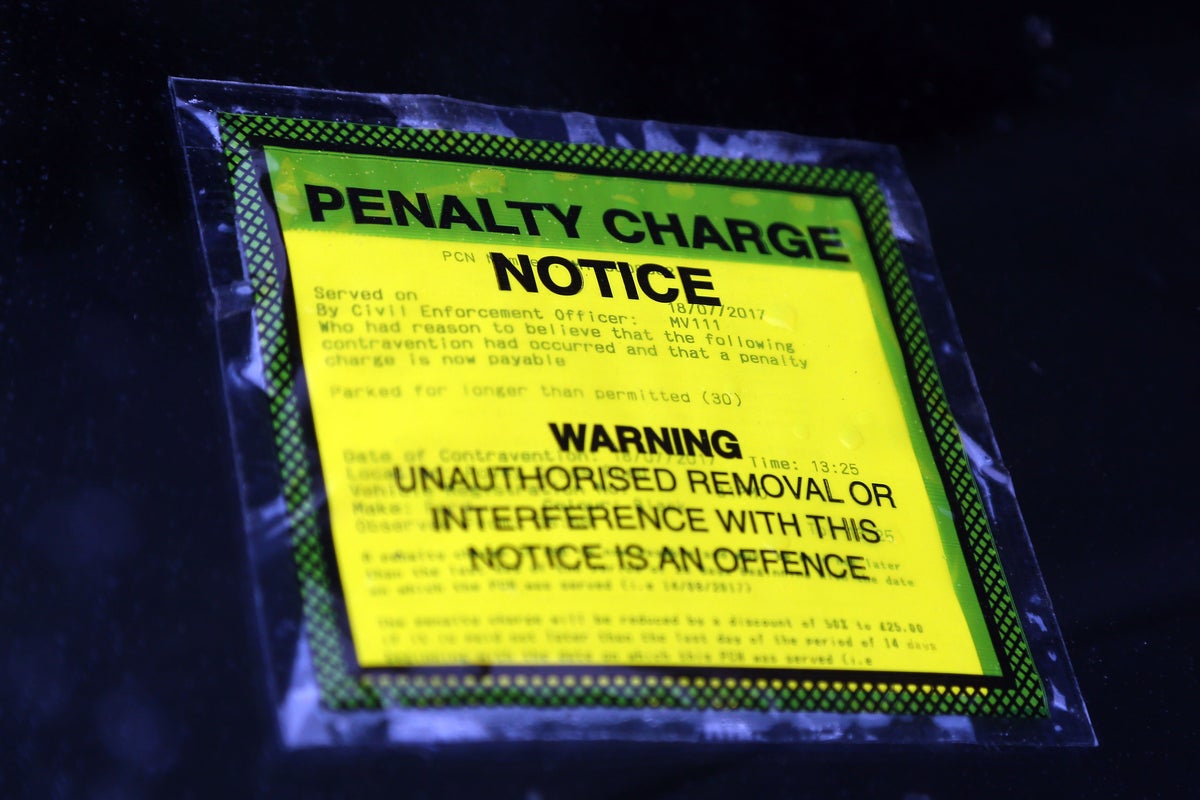
Companies that charge drivers fees for recovering parking ticket debts are operating with an average profit margin of more than 60 per cent, a Government document has disclosed.
The Ministry of Housing, Communities and Local Government (MHCLG) stated that this figure indicates a “market failure”, while the AA branded the margins “disproportionately high”.
Debt recovery agencies are employed by parking operators to pursue payment for unpaid tickets, often adding up to £70 in additional fees per ticket for drivers.
These charges were set to be banned when the then-Conservative government introduced a code of practice in February 2022, but this was withdrawn four months later after a legal challenge by parking companies.
A new consultation document setting out the current Labour Government’s proposed code stated the £70 cap is “likely to be higher than can be reasonably justified” but it is “seeking further evidence”.
It added that recovery agencies have “an average profit margin of approximately 63 per cent”.
This is “comparable to highly innovative companies” despite the businesses involved providing “standard services such as payment plan provision”, according to the document.
It continued: “We therefore do not consider them to be providing significantly innovative services, and as such the high profits may be indicative of these firms having too much control over the market, thereby indicating that there is a market failure.”
Parking operators can take drivers to court if they continue to resist paying for tickets.
The MHCLG said debt recovery agencies would break even with fees of approximately £26 per ticket, if the proportion of those paying was stable.
Jack Cousens, head of roads policy at the AA, said: “The 63 per cent profit margin feels disproportionately high for the services provided.
“This only highlights the need to curb the sector and ensure balance for all.
“There remains an overzealous cohort among some private parking operators where they hand over cases to debt recovery firms for seemingly innocuous charges.”
He added that the ban on debt recovery fees in the original consultation was “the right position” and claimed the latest version “falls short of the mark”.
Steve Gooding, director of motoring research charity the RAC Foundation, said: “The profit margins revealed by the Government help explain why there are now more than 180 private parking firms buying vehicle keeper records from the DVLA so they can send demands to drivers – it’s a huge and profitable business.
“The private parking industry’s failure over time to be more open about its activities is part of the problem and its ongoing reluctance to open its books to official scrutiny shows why ministers must follow through with plans to bring transparency and independence to this sector.”
Recent analysis by the PA news agency and the RAC Foundation found 4.3 million tickets were issued by private companies to UK drivers between April and June.
That was a 24 per cent increase compared with the same period last year.
A BPA spokesman said it “strongly disputes the Government’s profit calculations” and called on it to “publish the methodology behind these figures”.
He continued: “The numbers presented are misleading and fail to reflect the reality of the debt resolution sector.”
He insisted the purpose of debt recovery fees is “not to generate profit but to act as a fair and effective deterrent against deliberate non-payment”.
An MHCLG spokesperson said: “This Government inherited a private parking market that lacks transparency and protection for motorists.
“We share their frustration, which is why our private parking code of practice will drive up standards in the industry and hold parking operators to account.
“We consulted on the current cap on debt recovery fees and will publish our response as soon as possible.”
Brent crude sinks by a tenth after Iran says the key waterway is open for commercial ships for the rest of the ceasefire.
Source link
Oil prices tumbled on Friday after Iranian officials said they would allow commercial traffic to resume in the Strait of Hormuz. This lifted equity markets in Europe and New York, where major indices hit new records.
Citing the ceasefire between Israel and Lebanon, Iran’s Foreign Minister Abbas Araghchi said Tehran would lift its blockade on shipping through the key Gulf energy trade route.
“In line with the ceasefire in Lebanon, the passage for all commercial vessels through Strait of Hormuz is declared completely open for the remaining period of ceasefire,” Araghchi said.
Traffic in the strategic waterway, through which one-fifth of the world’s crude oil normally flows, has been disrupted by Iran since the US-Israeli offensive began on Feb. 28. At one point, this sent oil prices to a peak of nearly $120 a barrel and roiled the global economy.
Both Brent, the benchmark international contract, and its US equivalent WTI fell below $90 per barrel following Tehran’s announcement. Brent later cut its losses and finished at $90.38 a barrel, down 9.1%.
‘Immediate impact’
“This news is having an immediate impact on markets,” said Kathleen Brooks, research director at XTB.
The move also sent a jolt through equity markets, extending a rally in New York. There, equities have pushed ever higher since late March in anticipation of a breakthrough in the Middle East crisis.
“We had seen a big move the last two weeks, and now it’s just really pricing completely out the worst-case scenario, said Angelo Kourkafas, from Edward Jones.
Kourkafas also pointed to underlying strength in the US economy that should get more attention in the coming period as geopolitical concerns ebb.
“Geopolitical developments are moving in the right direction, and at the same time, the earning strength is hard to ignore,” Kourkafas said.
The broad-based S&P 500 finished at 7,126.06, up 1.2% for the day and 4.5% for the week.
‘Good news’
Earlier, European stocks closed higher, with both Frankfurt and Paris gaining 2%.
US President Donald Trump cheered the reopening of the Strait of Hormuz in an interview with AFP.
“We’re very close to having a deal,” Trump said in a brief telephone call with AFP from Las Vegas. He added there were “no sticking points at all” left with Tehran.
But Iran quickly pushed back on one key point.
Iran’s foreign ministry said Friday that its stockpile of enriched uranium would not be transferred “anywhere.” It rejected an earlier claim by Trump that the Islamic Republic had agreed to hand it over.
Shipping industry figures, meanwhile, gave a cautious welcome to Iran’s announcement.
A spokesman for German transportation giant Hapag-Lloyd, which has ships stuck in the Gulf, told AFP by phone that the reopening was “in general… good news.”
But he cautioned that shippers still needed details of what route vessels could take and in what order, citing fears of mines.
“One thousand ships cannot just go now to the entrance of the strait, that will be chaos. They (the Iranians) need to give clear orders,” said the spokesman, Nils Haupt.
“We would be ready to go very soon if some of these open questions can be solved within the weekend.”
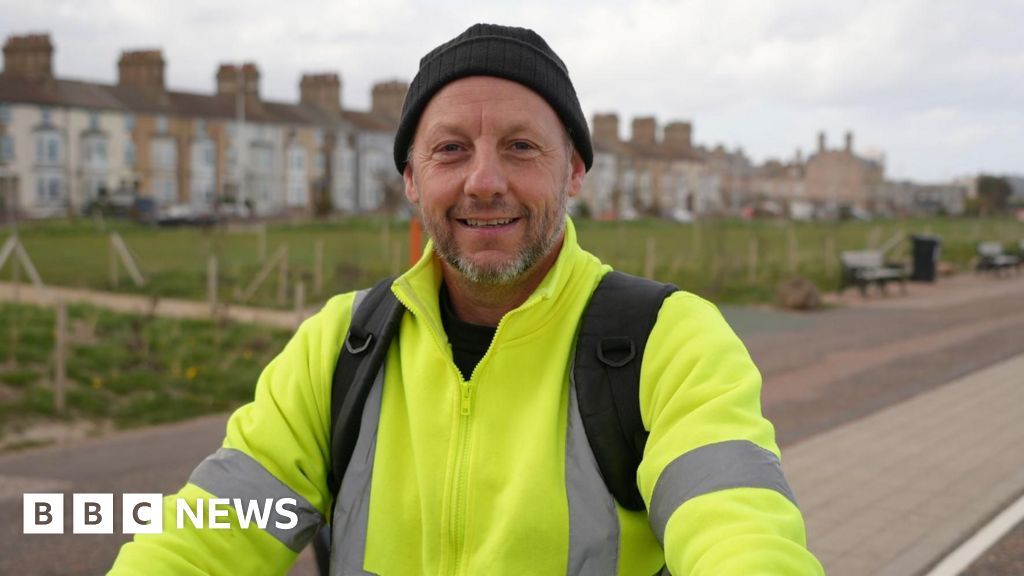
One man says he cancelled his holiday to Spain due to the rising costs and uncertainty.
Source link


Nathalie Baye, low-key legend of French cinema, dies aged 77

Transfer rumors, news: Liverpool eye Wharton amid Man United, Real Madrid interest

The Best Movies to Stream This Month

-

 Politics1 week ago
Indian airlines hit hardest after Dubai limits foreign flights until May 31
-

 Entertainment5 days ago
Palace left in shock as Prince William cancels grand ceremony
-

 Sports5 days ago
The case for Man United’s Fernandes as Premier League’s best
-

 Politics1 week ago
Chinese, Taiwanese will unite, Xi tells Taiwan opposition leader
-

 Sports1 week ago
Documents: NC State trainer initiated ‘unwelcome,’ ‘sexual’ contact
-

 Entertainment1 week ago
Dua Lipa hits major career high ahead of wedding with Callum Turner
-
 Business5 days ago
UK could adopt EU single market rules under new legislation
-
 Business1 week ago
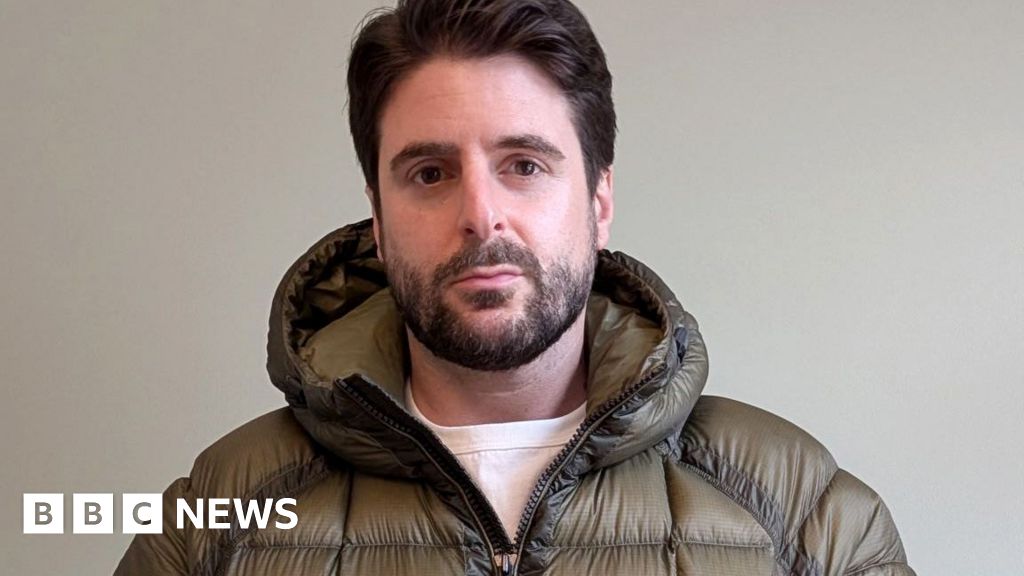
He paid $248 in illegal tariffs for this coat. Will he ever get it back?