

Business
‘Textile waste threatening blue economy, marine life’ | The Express Tribune


ISLAMABAD:
Federal Minister for Maritime Affairs, Muhammad Junaid Anwar Chaudhry, has warned that the rising tide of textile and fashion waste flooding oceans poses a growing threat not only to marine life but also to Pakistan’s economy, climate resilience, and future generations.
In a statement on Saturday marking World Cleanup Day 2025, themed “Tackling Textile and Fashion Waste Through Circular Fashion,” the minister stressed urgent action for sustainable practices. He said protecting oceans is vital to secure the future for coming generations. World Cleanup Day is a global initiative against solid waste and marine debris, with this year’s focus on textile pollution.
Chaudhry noted that the prime minister’s commitment to prioritising climate change highlights the need for sustainable policies to protect the environment, economy, and citizens.
“The health of our oceans is directly linked to the wellbeing of our people, economy, and planet. I urge industries, policymakers, and citizens to recognise the dangers of textile and fashion waste and collaborate to build a circular economy that protects both livelihoods and biodiversity,” he said.
Pakistan’s textile and fashion sector, one of the world’s largest and the source of nearly 60% of exports, generates significant waste and pollution. Studies show textile waste contributes heavily to microplastic contamination in rivers and seas, threatening marine life including fish, corals, and coastal ecosystems.
Every year, tonnes of textile waste end up in landfills and waterways, eventually flowing into the Arabian Sea. Microfibers from synthetic fabrics are consumed by marine animals, disrupting food chains and placing added stress on species already endangered by climate change, overfishing, and habitat loss.
The minister said the issue also damages the economy. Pakistan’s blue economy, including fisheries, shipping, tourism, and coastal industries, faces heavy losses from polluted waters and degraded habitats. Pollution-related losses in fisheries alone exceed $200 million annually, while coastal tourism potential remains largely untapped. If unchecked, financial losses will rise further.
Globally, the fashion industry loses about $500 billion each year due to underutilisation and lack of recycling. For Pakistan, adopting circular fashion is both an environmental and economic necessity.
He added that textile waste is tied to climate change. The sector is a major consumer of water and emitter of greenhouse gases. Discarded textiles in landfills release methane, worsening global warming impacts on coastal communities already vulnerable to rising seas and extreme weather.
Chaudhry said circular fashion, with longer-lasting, reusable, repairable, and recyclable products, offers a path to cut emissions, conserve resources, and adapt to climate risks. For Pakistan, a frontline state in the climate crisis, this approach is vital.




Motorists are facing higher fuel prices ahead of Easter break due to the conflict in the Middle East, the RAC says.
Source link

Hyderabad: Pharma player Hetero on Friday said it has rolled out exports of its generic semaglutide injection portfolio as part of a multi-year plan to widen access to treatments for type 2 diabetes and obesity in more than 75 countries.The Hyderabad-based pharmaceutical company said initial rollouts are under way in Africa, Asia and the Middle East, with additional launches planned in other markets subject to regulatory approvals.The injectable therapies will be sold under the brand names Truglyx, Rolmodl and Moto G. Semaglutide belongs to the GLP-1 class of medicines, which are used in diabetes care and weight management.Hetero said the export launch is part of its broader strategy to improve access to advanced cardio-metabolic therapies, particularly in emerging markets.The company said the products will be offered in multi-dose disposable pen devices designed in line with innovator formats and will be available in several strengths, including 0.25 mg, 0.5 mg, 1 mg, 2 mg, 1.7 mg and 2.4 mg, allowing dosing flexibility for both diabetes and obesity treatment.Hetero said it is also awaiting approval from India’s Central Drugs Standard Control Organisation (CDSCO) after completing clinical trials in type 2 diabetes and obesity and plans an India launch after regulatory clearance.Hetero managing director Dr Vamsi Krishna Bandi said the company aims to provide high-quality, affordable generic semaglutide through a single global product platform backed by its manufacturing and development capabilities.He said Hetero would use its commercial networks across Asia, the Middle East, Africa and Latin America to support supply and access. The Hyderabad-headquartered Hetero operates in more than 145 countries and employs over 30,000 people.
Business
India-US trade deal update: Piyush Goyal meets USTR Jamieson Greer, discusses next steps in BTA talks – The Times of India
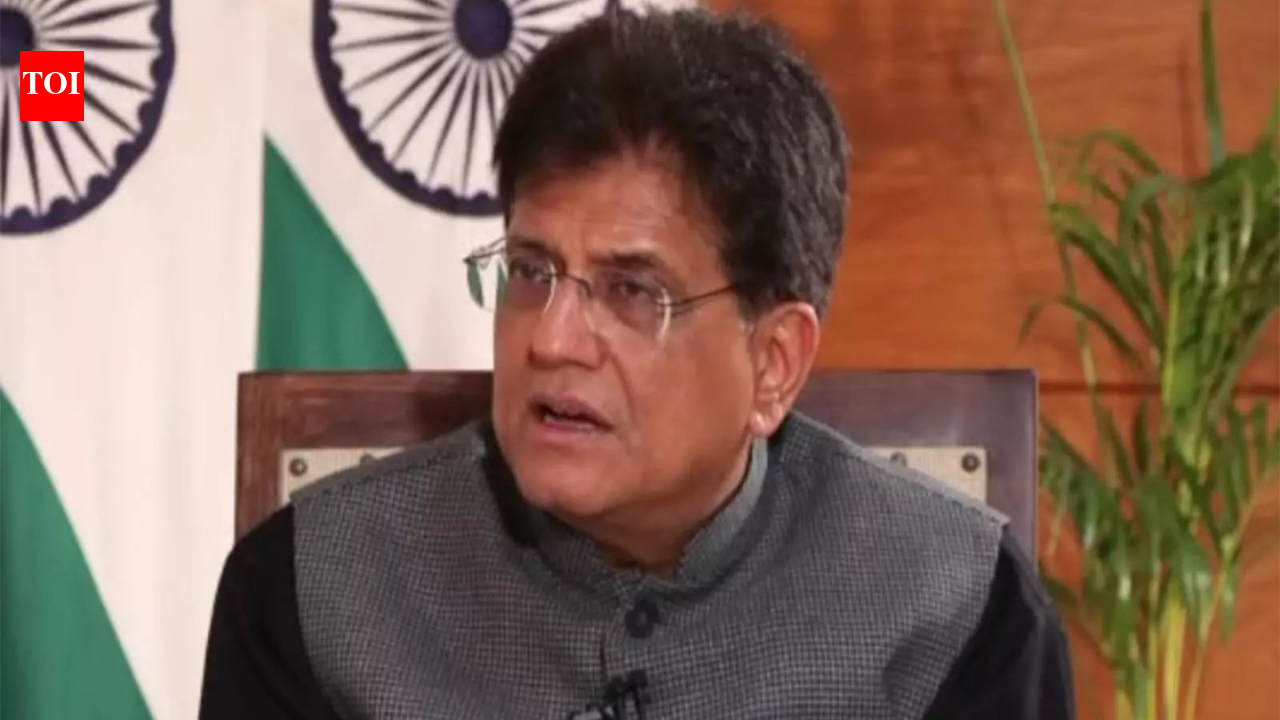
Commerce and industry minister Piyush Goyal on Friday met US Trade Representative Jamieson Greer and reviewed the next steps in negotiations for the proposed India-US bilateral trade agreement (BTA).The meeting took place on the sidelines of the 14th ministerial conference (MC14) of the World Trade Organisation in Yaounde, Cameroon, where both sides also exchanged views on issues related to the WTO agenda.“Had a very productive discussion with @USTradeRep Jamieson Greer on the sidelines of the WTO Ministerial Conference. Exchanged views on the #WTOMC14 agenda, next steps in the India-US BTA negotiations and explored ways to further deepen our economic cooperation and bilateral trade ties,” Goyal said in a social media post.The development comes amid ongoing efforts by both countries to finalise an interim trade pact. Last month, India and the US announced that they had finalised a framework for the first phase of the agreement, though it is yet to be signed.The two sides had earlier announced a trade deal on February 2, followed by a joint statement on February 7 outlining the contours of the agreement.As part of the framework, the US had agreed to reduce tariffs on Indian goods to 18%. However, the tariff structure has since undergone changes after the US Supreme Court struck down sweeping tariffs imposed under earlier measures.Following the ruling, US President Donald Trump introduced a 10% tariff on all countries for a period of 150 days starting February 24.In view of these developments, a planned meeting between chief negotiators of India and the US — aimed at finalising the legal text of the agreement — has been postponed. The pact was earlier expected to be signed this month.An official had earlier said that the interim trade agreement would be signed once the new global tariff framework of the US is fully in place.


Backstreet Boys AJ McLean shows support to Britney Spears after DUI arrest
Asda boss rejects profiteering claims as petrol price tops 150p

Britney Spears turns a new page after recent legal trauma

-

 Entertainment1 week ago
Val Kilmer revived 1 year after death through AI
-

 Fashion7 days ago
China’s textile & apparel exports surge 17% to $50 bn in Jan-Feb 2026
-
 Business7 days ago
Flipkart group CFO to leave co amid IPO plans – The Times of India
-
 Business1 week ago
Video: The Effects of High Oil Prices
-

 Sports1 week ago
Rating Adidas’ 2026 World Cup away shirts: Argentina, Spain, Mexico and more
-

 Sports7 days ago
American Conference Commissioner Tim Pernetti thanks Trump for Army-Navy game executive order
-

 Fashion1 week ago
The hidden $1.62 war tax now embedded in every garment you source
-
Tech1 week ago
The Corsair 4000D RS PC Case Keeps Your System Cool