

Business
TG Jones faces administration if not restructuring by end of July, lenders told


TG Jones’ lenders have been warned that the retailer faces being put into administration by the end of July if they do not approve restructuring plans to close up to 150 shops.
Modella Capital, the owner of the chain that was formerly WH Smiths high street shops, has laid out its turnaround plan to the company’s creditors.
Its proposals involve Modella injecting some £35 million worth of funding into the business while also slimming down the chain, following eight stores being shut down earlier this week.
It intends to close up to 150 shops as part of the restructuring and said there could be job losses as a result.
It is understood that the proposals say the business would face being put into administration if the plan is not in place by July 31.
The restructuring plan must win the vote of creditors and also get approved at a High Court hearing set for June 29, after which it would take effect.
A spokesman for TG Jones earlier this week said the decision to launch an overhaul had “not been taken lightly”, and that it was an “essential part of the company’s turnaround”.
The company said the retailer’s “forced name change from WH Smith” had had a negative impact on people’s awareness of the brand, while also saying Government policy pushing up business costs was partly to blame.
The chain of high street shops was renamed to TG Jones last year after being bought by Modella, while WH Smith kept its group of stores in travel locations like airports and train stations.
The travel division made up the bulk of its sales and profits prior to the sale of the high street arm, and has grown to more than 1,200 stores across 32 countries.
Business
Middle East conflict burns Indian oil firms: Rs 30,000 crore monthly hit to keep fuel prices stable – The Times of India

India’s state-run oil marketing companies are absorbing losses of nearly Rs 30,000 crore every month to keep petrol, diesel and LPG prices unchanged despite the sharp surge in global energy prices triggered by the West Asia conflict, government officials and sources, cited by PTI said on Friday.The financial burden on Indian Oil Corporation, Bharat Petroleum Corporation Ltd and Hindustan Petroleum Corporation Ltd comes as crude oil prices climbed from about $70 per barrel two months ago to nearly $120 amid supply disruptions and rising shipping risks in the Strait of Hormuz.At a briefing on developments in West Asia, joint secretary in the ministry of petroleum and natural gas Sujata Sharma said the government had so far prioritised shielding consumers from higher fuel costs despite volatility in international markets. “It has been government’s endeavour to keep prices stable so far and that there is no price increase for consumers,” Sharma said. “This has hit finances of OMCs… monthly under-recoveries are of the order of Rs 30,000 crore.”She declined to say whether fuel prices would remain unchanged going forward. “As I said, the endeavour so far has been to see that there is no price increase,” she added.According to PTI sources, daily under-recoveries during April touched around Rs 18 per litre on petrol and Rs 25 per litre on diesel, translating into losses of roughly Rs 700-1,000 crore per day.The sources also said the prolonged pressure could affect the balance sheets and borrowing requirements of oil companies, although investments related to refining expansion, energy security, ethanol blending and transition fuels would continue with government backing.The crisis came after the February 28 strikes by the United States and Israel on Iran escalated tensions across West Asia, disrupting tanker movement across key route Strait of Hormuz and raising freight and insurance costs. India’s dependence on the region left nearly 40 per cent of its crude imports, 90 per cent of LPG imports and 65 per cent of natural gas supplies exposed to disruptions.Meanwhile, the Centre also reduced excise duties to cushion the impact. The special additional excise duty on petrol was cut from Rs 13 per litre to Rs 3, while duty on diesel was reduced from Rs 10 per litre to zero. Officials estimated that without these cuts, under-recoveries would have risen to nearly Rs 62,500 crore. “The government has taken a hit of Rs 14,000 crore a month in cutting the excise duty,” Sharma said.Officials said the combined impact of government intervention and oil company absorption helped India avoid the steep retail fuel price hikes witnessed globally. Petrol prices reportedly rose by about 34 per cent in Spain, 30 per cent in Japan, Italy and Israel, 27 per cent in Germany and 22 per cent in the United Kingdom during the same period.
Business
Air India Layoffs: Middle East crisis: Air India says no layoffs planned, asks staff to cut discretionary spending – The Times of India
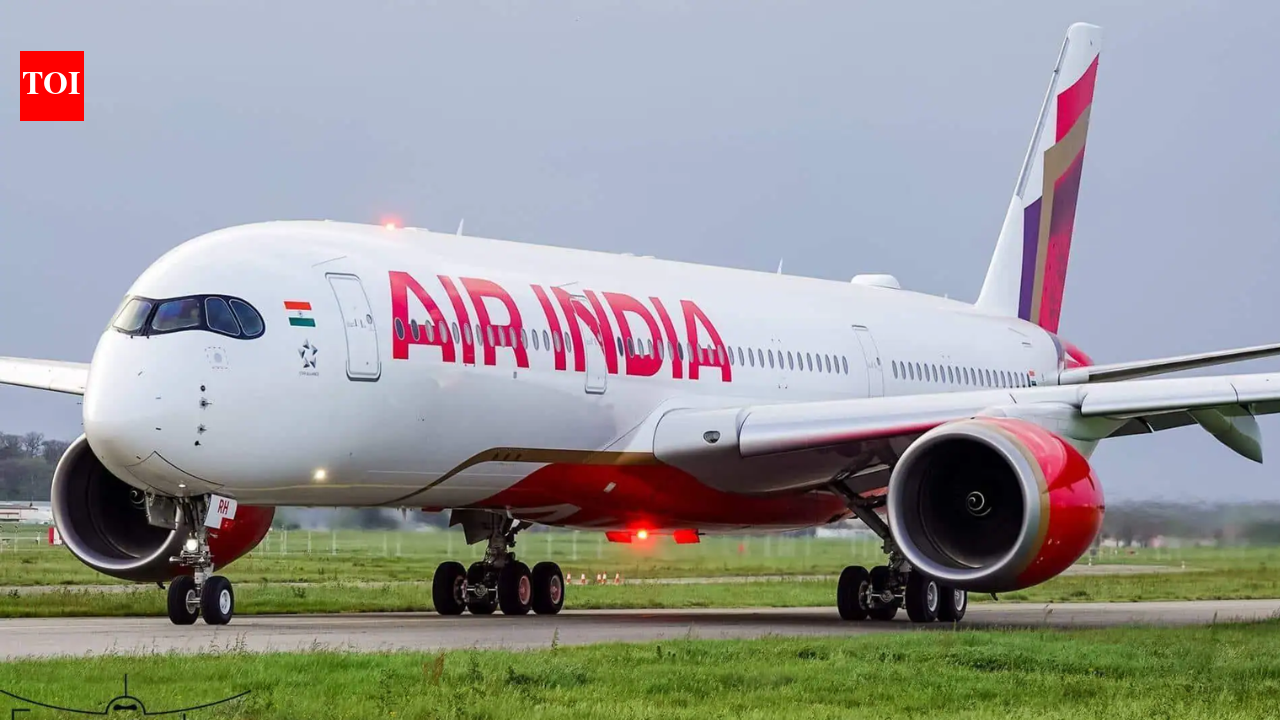
Air India has told employees that it does not anticipate layoffs despite mounting financial pressures linked to the Middle East conflict, while also directing teams to sharply reduce costs and suspend discretionary spending.During a townhall meeting on Friday, Air India chief human resources officer Ravindra Kumar GP assured staff that job cuts were not expected even as the airline navigates a difficult operating environment.“We don’t anticipate layoffs,” Kumar told employees, according to news agency PTI.The management, however, indicated that annual salary increments would be deferred by at least one quarter due to the uncertain economic situation.Kumar also said the airline would proceed with variable pay for the last financial year and continue with planned promotions.
CEO urges strict cost control
Air India CEO Campbell Wilson asked employees to maintain a “laser sharp focus” on cutting unnecessary expenses and improving operational efficiency.Calling for a “relentless focus on costs in these tough times”, Wilson urged staff to suspend discretionary spending, renegotiate rates wherever possible and defer non-critical expenditures.“There must be a laser sharp focus on eliminating wastage and leakages,” he said, as per PTI.The townhall was also attended by chief financial officer Sanjay Sharma.
Middle East conflict raises pressure
The Tata Group-owned carrier is facing multiple headwinds due to the ongoing Middle East conflict, which has significantly increased operational costs.Airspace restrictions and rising jet fuel prices have added pressure on the loss-making airline at a time when it is implementing an ambitious transformation plan aimed at modernising operations and improving profitability.The conflict-driven disruptions have impacted flight routes and increased fuel expenses for airlines globally, with carriers operating international routes among the worst affected.

Lake Oswego in Oregon.
Bradleyhebdon | Istock Unreleased | Getty Images
A version of this article first appeared in CNBC’s Inside Wealth newsletter with Robert Frank, a weekly guide to the high-net-worth investor and consumer. Sign up to receive future editions, straight to your inbox.
A wave of states deciding to take aim at a tax incentive for investors and startup founders could sway some high-net-worth residents to relocate, lawyers to the wealthy told Inside Wealth.
The One Big Beautiful Bill Act turbocharged the tax breaks on qualified small business stock, better known as QSBS. However, some states, including Maine and Oregon, have targeted the tax incentive in response to federal funding cuts.
“Tax policy has consequences, both good and bad, and I think that the states need to figure out what makes the most sense for them,” said David Blum, partner and chair of Akerman’s national tax practice group. “Someone looking for a substantial exit could have multiple homes already.”
Blum noted that several billionaires have made high-profile departures from California as a state billionaire tax proposal gains steam. Google co-founder Sergey Brin, who has bought mansions in Nevada and Florida, is funding two ballot initiatives that take aim at the wealth tax measure.
The QSBS exemption, introduced during the Clinton administration, was designed to encourage investing and creating small companies. The federal carve-out allows investors and founders to reduce their capital gains taxes when selling stock directly acquired from a qualifying C corp.
In order to claim the full exemption, the stock must be held for more than five years. Prior to the OBBBA, the maximum exemption from capital gains taxes was $10 million or 10 times the original basis of the investment, whichever is greater. The OBBBA raised the exclusion to $15 million. The bill also raised the maximum size of qualifying “small businesses” from $50 million to $75 million in gross assets.
Last month, Maine and Oregon passed legislation to decouple from the federal QSBS exemption, meaning that taxpayers will have to pay state income taxes on startup exits. Similar efforts in New York and Washington state failed to pass. The District of Columbia Council voted to decouple from several provisions of the OBBBA, but Congress passed a resolution to block that move.
Four states already tax gains on QSBS: Alabama, Mississippi, Pennsylvania and, most notably, California, the nation’s venture-capital center.
Proponents of QSBS reform argue that the regime primarily benefits the wealthy. Research by the Department of Treasury found that taxpayers who earn more than $1 million account for nearly 75% of gains excluded.
Lawyer Steve Oshins told Inside Wealth that QSBS laws and other tax proposals aimed at the wealthy encourage high earners to move to other states.
The tax burden depends on where the shareholder lives when they sell their stock, which gives clients time to plan. Oshins said it is possible in some states to use trusts to avoid state income taxes on QSBS. Delaware, Nevada and Wyoming are popular jurisdictions for establishing these trusts.
For instance, he said, a resident of Oregon could transfer stock to an incomplete non-grantor trust set up in a state that doesn’t tax trust income, like Nevada. As long as the trust is not administered in Oregon and none of the trustees live there, the trust’s capital gains would not be subject to Oregon income taxes.
But other states, including Maine, have more stringent rules, he said. Non-grantor trusts are subject to state income if funded by a Maine resident or created by the will of one, according to Oshins.
That said, the most straightforward course of action is to move.
“Let’s say a client is about to hire me and says, ‘I have a summer ho me in Florida, I’m thinking of moving there,'” Oshins said. “I’ll say, ‘Let’s wait a few months. Move there. Then let’s set up your trust.'”
But changing your domicile is easier said than done, Blum said. To pass muster with state tax authorities, clients have to do more than change their voter registration and and spend at least 183 days in another state.
“When it comes to changing residency and your domicile, you really have to move and uproot your life,” he said.

Middle East conflict burns Indian oil firms: Rs 30,000 crore monthly hit to keep fuel prices stable – The Times of India

Ben Abraham on his music journey, collaborations and how he thinks he can “make a difference”

H&M debuts on Nordstrom for its first curated marketplace launch in US

-

 Politics5 days ago
Iran weighs US reply delivered via Pakistan as Trump signals opposition to deal terms
-
 Business1 week ago
PSX plunges over 4,800 points | The Express Tribune
-

 Fashion6 days ago
US’ J.Jill, Inc. appoints Kimberly Wallengren as CMO
-

 Tech1 week ago
Almost half of UK businesses hit by cyber attacks | Computer Weekly
-

 Tech1 week ago
This Indigenous Language Survived Russian Occupation. Can It Survive YouTube?
-

 Fashion1 week ago
Canada’s Lululemon appoints Esi Eggleston Bracey to board of directors
-

 Entertainment1 week ago
David Allan Coe, country singer who wrote “Take This Job and Shove It,” dies at age 86
-
 Business1 week ago
Government hikes jet fuel prices by 5% for international airlines – The Times of India