

Tech
We Asked Coffee Pros to Blind Test Coffee Machines. The Results Were Surprising

What do you love about coffee? Is it the caffeine boost in the morning, the creamy sweetness of a cappuccino or latte, the bucket of filter coffee you can sip on all day, or the quick kick of a good espresso? Or is it the zen-like ritual of it all, the measuring of beans and the precision of the perfect extraction? Good thing it’s much better for you than science previously realized.
If the marketing hype is to be believed, you can have it all, thanks to the best in fully automatic coffee machines. These compact countertop cafés promise to deliver a vast menu of drinks at the touch of a button, all with no barista prowess needed. But are the brews actually any good?
WIRED tests a lot of coffee machines—productivity would grind to a halt if we stopped. But for this group blind test, we wanted to see what coffee professionals thought of the drinks produced by the “best” in fully automatic machines, without being influenced by any fancy design or brand awareness. We’re not judging the machine’s usability here, the app’s interface (there’s always an app), or how easy it is to clean. We only want to know about the Joe.
By the end of our experiment, it was clear that while money can buy you endless choice and push-button convenience, it doesn’t necessarily guarantee barista-grade, café-quality coffee at home.
Our Experts
Adam Cozens is the cofounder of Perky Blenders, a UK specialty coffee brand from coffee-shop-dense, hipster-populated East London. He was joined in WIRED’s test café by his business manager and coffee aficionado Calum Hunt. Launching in 2015 from a three-wheeled coffee cart, they now have multiple cafés and more than 100 retail partners across the UK.
For this test, they chose their Forest Blend beans, noted for their dark chocolate, molasses, and walnut notes, creamy body, low acidity, and a sweet, lingering finish. Crucially, Cozens and Hunt know implicitly how the Forest Blend beans should taste, and they are ideally positioned to decide which of our machines produces the best coffee with the most accurate flavor profile from the beans provided.
The Test
Each of the machines we chose is a fully automatic bean-to-cup behemoth capable of producing upwards of 50 types of coffee drinks at the push of a button; everything from espresso and cortado to iced lattes with syrup or a simple long black.
WIRED chose the latte—America’s most popular steamed-milk coffee order—and a classic espresso to blind taste test. The latte allows us to test the milk-heating, frothing, and steaming mechanisms, while the espresso reveals any weaknesses in extraction and coffee flavor. Per Cozens’ instructions, we used organic whole milk.
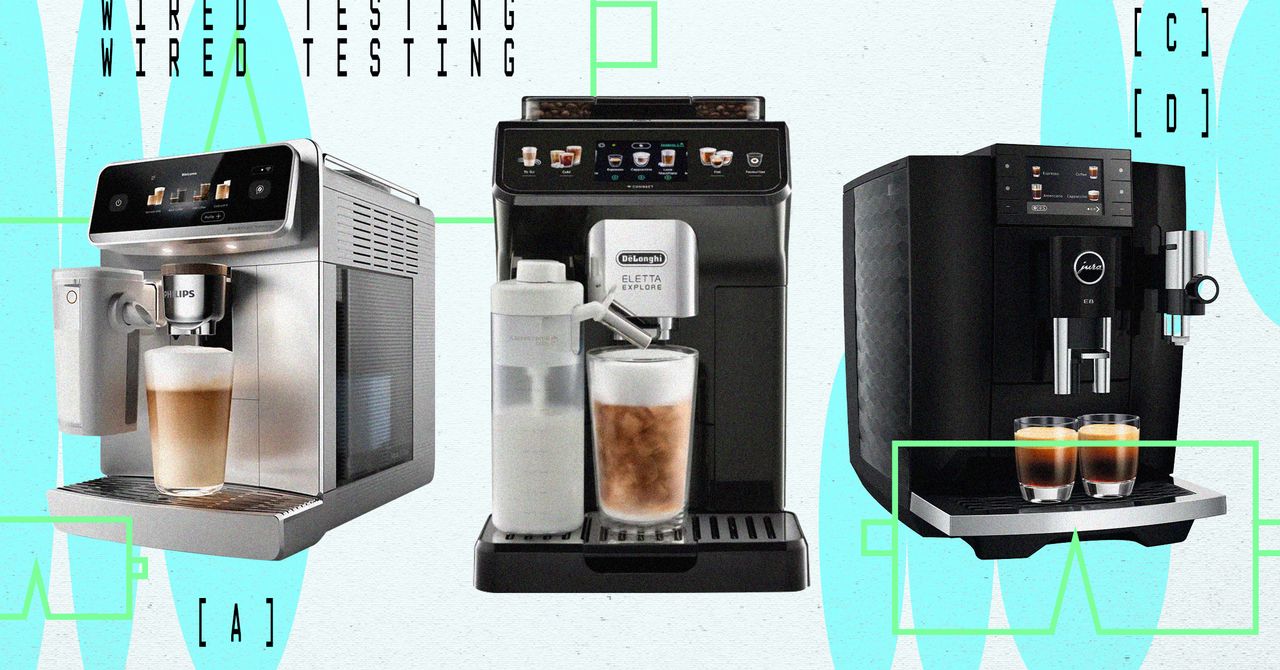
Our experts were blindfolded and then presented with one latte and one espresso from each machine. Labelled A, B, C, and D, the machines were visible to the testers, but they had no idea which coffee came from which. They then assessed each drink on looks, milk-steaming quality, crema (the golden aromatic foam on top of espresso), temperature, extraction, and flavor. The coffees were then ranked in order from best to worst.
To reiterate, this is not a test of the machine’s usability, desirability, or features. Each design can have every aspect of every recipe tweaked, but we’re not convinced the average buyer will want to dive deep into the settings. These are sophisticated push-button machines designed to take the faff and fiddle out of making good coffee at home—anything for an easy life.
The Coffee Machines
Machine “A”
One of only a few machines capable of making espresso-based drinks and classic drip coffee, the TK-02, from NYC-based Terra Kaffe, is a gorgeous-looking piece of kitchen kit with premium components, a delightful glass milk carafe, a super-cool monochrome touchscreen, extensive personalization, and full app control.










Virtual reality (VR) has already seen many commercial and industrial uses. Yet VR also can be one of the most powerful tools for storytelling, visualising ideas and enhancing narratives – most obviously in the arts and entertainment sphere, where VR brings enhanced capabilities and enables artists to indulge in experiments to try out new approaches.
Other storytelling uses support societal causes, enable new judicial procedures, boost education and become emphatic conduits. Simply, VR can put storytelling in a higher gear.
Showing how VR enables new storytelling avenues and approaches for artists and entertainers, artist Charlotte Mikkelborg noticed the transformative power VR could unleash for narratives when she first tried on a VR headset in 2015: “I realised that I didn’t have to just watch a scene, I could live it.”
Since then, she has created an immersive concert for Coldplay; a multisensory narrative game; and Adventure, her series for Apple that portrays extreme athletes in VR.
Meanwhile, artist Estella Tse “merges tech and visual storytelling into a new art form”, adding: “The immersive nature of VR metaphorically and literally puts the viewer into a different world. The brain feels like it is transported to another place.” In contrast to Mikkelborg’s VR experiences, Tse’s stories resemble art installations rather than narratives.
It shouldn’t come as a surprise that the annual Venice Film Festival features an entire section related to the emerging artform. Venice Immersive “is entirely devoted to immersive media and includes all XR means of creative expression”. Eligible for submission are all immersive videos, VR, MR, AR and XR works of any length, including installations and virtual worlds. A review by the Guardian describes 2025’s selection as a “flourishing lineup of immersive storytelling experiments, [which] are taking visitors into novels, nightclubs and outer space”.
At the 82nd Venice Film Festival in August and September 2025, the island of Lazzaretto Vecchio featured a wide range of XR artwork that invited audience members to immerse themselves into stories rather than just looking onto them. For example, The Time Before is “a virtual reality journey through memory, imagination and dreams”, which steps into the main character’s mind to explore the imaginary worlds his sister builds to protect them from the anger of their father. The piece 1968 is “communal VR theatre that explores the transformative power of protest through illusions to 1968, which was a year charged by societal, political and cultural unrest”.
Venice Immersive Jury chair Eliza McNitt sees XR as “the beginning of a revolution … [artists can] push the boundaries of storytelling”.
Conveying societal causes
The way VR can bring stories and narratives closer to an audience lends itself to highlight social and societal issues in more impactful ways than previously possible. Journalist Becca Warner outlined her experience with VR content created by South African Habitat XR. The company’s objective is to create “immersive nature storytelling that drives public engagement, education, fundraising and conservation outcomes.”
Warner watched A Predicament of Pangolins, an immersive story featuring two wild pangolins in the Kalahari Desert who are facing the challenges of climate change. The anthropomorphised animals are created “for maximum empathy and cognitive connection to the present reality of climate change”. Warner highlights VR’s impact: “A virtual reality pangolin made me cry and care more about the planet: is this the real power of VR headsets?”
Exploring how humans live with nature is a common theme. French company Wild Immersion is “dedicated to raising awareness of environmental issues through 360° films, VR experiences, AR journeys, wildlife encyclopaedias and interactive drawings”. And the British artist collective Marshmallow Laser Feast is using stories in immersive experiences and XR that are “designed to carve out space to expose, explore and expand our relationship with the living world”.
The UK’s Natural History Museum uses VR headsets to look a century into the future to visualise humans’ impact on nature. The showcase’s main takeaway is that “the actions we take today will help build a better tomorrow.”
Alex Burch, director of public programmes at the museum, explains that the immersive story shows “the aftermath of centuries of human industrial activity as well as to the interventions we have introduced to remedy our unsustainable activity”.
New York artist Sam Wolson uses VR to tell political narratives. For instance, Re-educated puts viewers into a Chinese re-education camp to convey the experience of prisoners, with first-hand testimony informing the animation. And No Place at Home follows a mother and her transgender teenager on their search for gender-affirming care, combining photorealistic three-dimensional imagery.
Wolson explains where VR can improve storytelling: “With virtual reality and interactive visual features, it comes down to whether a story is suited to multimedia or nonlinear narratives, in which the viewer can be placed directly into a story with the freedom to move around.”
Recovering memories, creating experiences
A less-known and emerging use of VR is visualising memories to resurrect past experiences. For instance, in December 2024, judge Andrew Siegel of Florida’s Broward County Circuit Court used a VR headset to a recreate the imagery of an aggravated assault. The defence hired an expert to visualise the defendant’s perspective in a stand-your ground trial.
Previous research at the University of South Australia indicated that test subjects showed improvements in spatial recall, “remembering the correct placement of evidence items”, and some aspects of narrative recall when using VR in comparison to the use of still imagery.
The approach offers benefits when crime-site visits are difficult or dangerous, contextual information plays an important role, or interactions among individuals are complicated to follow. Louisiana Fifth Circuit Court judge Scott Schlegel, who investigates new technologies for legal applications, points to a potential drawback. Virtual reality recreations “may powerfully convey emotions and perspective; it may be less reliable for conveying specific factual details that are crucial in legal proceedings.” In other words, emotions might cloud or even bias factual judgement.
Other applications for recreating memories exist. Researcher Rob Martin at South Carolina’s Clemson University employs VR so that hospice patients can have an experience they always wanted to have. After taking a survey of local patients, he found that most wanted to experience one more Clemson football game. With the help of the Clemson’s Tandem VR team, Martin created such a visualisation.
Tandem VR is a part of Clemson’s Virtual Reality and Nature Lab. The lab’s director Olivia McAnirlin developed a concept that allows users to share a VR experience “in tandem”. The “experiences are synchronised (simultaneous) so they can fully enjoy them together, personalised to their preferences based on their experiences, dreams or memories”.
Informing education
Storytelling is set to play a bigger role in tomorrow’s teaching and learning, and XR can transform education though new ways to bring stories alive. Eli Joseph at Columbia University School in New York believes that the merging of literature and technology “transforms storytelling from a linear into an interactive experience in which the reader’s choices can influence the narrative”.
Joseph notes that readers can immerse themselves in stories by addressing multiple senses, and that multisensory environments for genuinely immersive experiences enables users to take a closer look at ways how XR can create layers of experiences. Joseph also believes that the technology can benefit text books – for instance, by visualising dissection of cells in biology class.
VR not only can create narratives but also tell stories from the past. For example, the Illinois Holocaust Museum’s Experience360 is using VR to make history palpable. The Chicago museum uses the technology “to witness stories of survival, ask questions and reflect on the past in ways that inspire empathy, respect and hope”.
Other institutions have taken note. The Centreville Regional Library in Fairfax, Virginia, partnered with the Illinois Holocaust Museum. Luis Aponte, an information services librarian who brought the experience to Centreville, praises “the Illinois Holocaust Museum’s dedication to preserving history in a way that transforms the future”.
Eliciting empathy
Educational use of VR can deepen the experience by eliciting empathy for history’s protagonists and witnesses. In a study by Stanford University, researchers looked at the effect VR can have to “reduce psychological distance to locations affected by climate change, influencing climate emotions and risk perceptions”.
One group of test subjects were only listening to news broadcasts about flooding in selected locations due to climate change while other participants were virtually flying through a three-dimensional representation of the floodings. Participants that experienced the virtualisation became concerned about climate change.
“Utilising VR for climate education can enhance awareness and inspire constructive actions, moving beyond traditional fear-driven narratives,” said the study.
VR can also elevate emotional participation. In 2015, musician Björk released the album Vulnicura, which deals with her emotional breakup of a long-time relationship. She recently worked with Pulse Jet Studios to create a VR visualisation of the songs. Björk explained her motivation: “I realised that I’d written a whole heartbreak album … what most people were complaining about with VR is it was very isolating.”
The VR journey starts in an austere landscape of Iceland, where Björk hails from. Users then can thread together Björk’s broken heart. Her initial VR art was released shortly after the album’s release, but over time she frequently updated the storytelling as VR become more powerful and capable, resulting in the most recent 2025 version.
And this takes the conversation back to arts and entertainment. VR’s impact on storytelling can affect many applications areas across industries, sometimes in surprising ways. Over time immersive capabilities will become an expectation rather than a surprise when experiencing stories and narratives across various types of content.
Martin Schwirn is the author of ‘Small data, big disruptions: How to spot signals of change and manage uncertainty’ (ISBN 9781632651921). Schwirn has advised companies internationally for SRI International and Business Finland. He is a strategy and innovation consultant for Global 2000 companies.
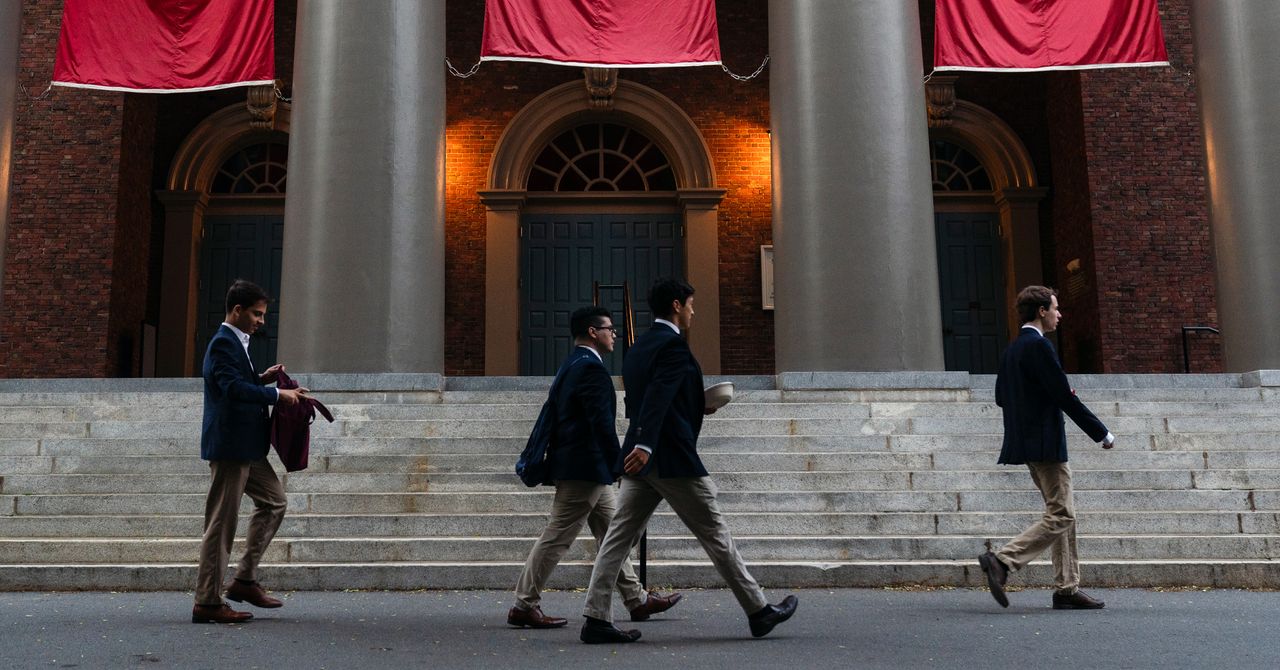
Higher education has long been a target of ransomware gangs and data extortion attacks. But never before, perhaps, has a cyberattack against a single software platform so thoroughly disrupted the daily operations of thousands of schools across the United States.
The widely used digital learning platform Canvas was put into “maintenance mode” on Thursday after its maker, the education tech giant Instructure, suffered a data breach and faced an extortion attempt by attackers using the recognizable moniker “ShinyHunters.” Though the hackers have been advertising the breach and attempting to extract a ransom payment from Instructure since May 1, the situation took on additional immediacy for regular people across the US and beyond on Thursday because the Canvas downtime caused chaos at schools, including those in the midst of finals and end-of-year assignments.
Universities like Harvard, Columbia, Rutgers, and Georgetown sent alerts to students about the situation in recent days; other institutions, including school districts in at least a dozen states, also appear to have been affected. In a list published by the hackers behind the attack on their ransom-focused dark web site, they claim the breach affected more than 8,800 schools. The exact scale and reach of the breach is currently unclear, though. And the fact that Canvas was down throughout Thursday afternoon and evening further complicated the picture.
In a running incident update log that began on May 1, Steve Proud, Instructure’s chief information security officer, said that the company had “recently experienced a cybersecurity incident perpetrated by a criminal threat actor.” He added on May 2 that “the information involved” for “users at affected institutions” included names, email addresses, student ID numbers, and messages exchanged by users on the platform.
The situation was ultimately marked as “Resolved” on Wednesday, with Proud writing that “Canvas is fully operational, and we are not seeing any ongoing unauthorized activity.” At midday on Thursday, though, the Instructure status page registered an “issue” where “some users are having difficulties logging into Student ePortfolios.” Within a few hours, the company had added another status update: “Instructure has placed Canvas, Canvas Beta and Canvas Test in maintenance mode.” Late Thursday evening, the company said that Canvas was available again “for most users.”
TechCrunch reported on Thursday that the hackers launched a secondary wave of attacks, defacing some schools’ Canvas portals by injecting an HTML file to display their own message on the schools’ Canvas login pages. According to The Harvard Crimson, attackers modified the Harvard Canvas login page to show a message that included a list of schools that the hackers claim were impacted by the breach.
The message from attackers “urged schools included on the affected list to consult with a cyber advisory firm and contact the group privately to negotiate a settlement before the end of the day on May 12—or else risk their data being leaked,” The Crimson reported. “It is unclear what information tied to Harvard affiliates was included in the alleged breach.”
Instructure did not immediately respond to a request for comment about Thursday’s outages and how they fit into the bigger picture of the breach. But the situation is significant given that a massive trove of student information has potentially been exposed, and the visibility of the incident across the country makes it a key example of a longstanding, yet endlessly escalating problem of data extortion and ransomware attacks.
The ShinyHunters name is associated with massive data dumps and has been linked to the infamous hacker collective known as the Com. But as the constellation of actors has shifted over the years, numerous attackers have taken up the most prominent Com-related monikers. A number of recent attacks have invoked other names, such as Lapsus$, with little or no connection to the original group that operated under the name.
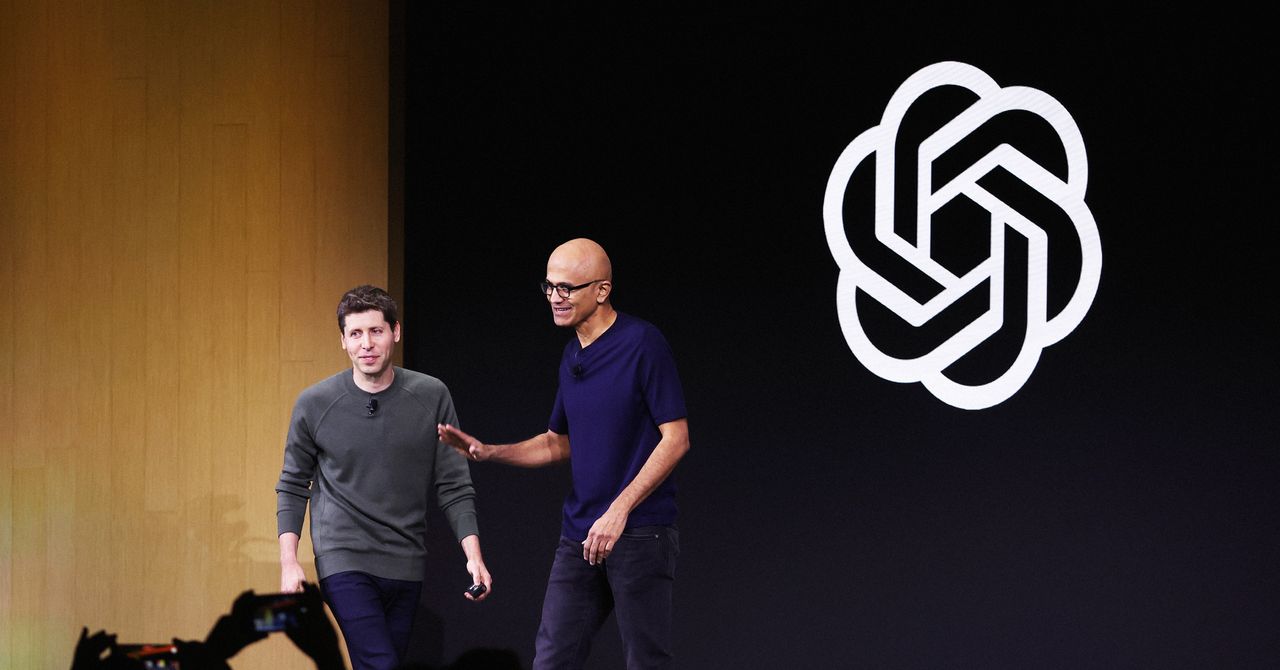
OpenAI’s relationship with Microsoft, its longtime investor and cloud partner, has grown increasingly complicated over the years as the ChatGPT-maker has grown into a behemoth competitor.
But Microsoft executives had reservations about sending additional funding to OpenAI as far back as 2018 when it was just a small nonprofit research lab, according to emails between more than a dozen Microsoft executives, including CEO Satya Nadella, shown in a federal court on Thursday during the Musk v. Altman trial.
The emails show how Microsoft, at the time, wavered over what has since been held up as one of the most successful corporate partnerships in tech history. Several Microsoft executives said in the emails their visits to OpenAI did not indicate any imminent breakthroughs in developing artificial general intelligence. In 2017, much of OpenAI’s work was focused on building AI systems that could play video games, which showed early signs of success. But OpenAI needed five times more computing power than it had originally secured from Microsoft to continue the project.
Microsoft worried that not providing support could push OpenAI into the arms of Amazon, the world’s dominant cloud computing provider at the time. Roughly 18 months after the emails were sent, Microsoft announced a landmark $1 billion investment in OpenAI after the lab created a for-profit arm that provided the tech giant with the potential to generate a return of $20 billion.
Microsoft declined to comment.
Elon Musk’s attorneys introduced the emails to show Microsoft’s evolving relationship with OpenAI. After Musk reached out to Nadella, Microsoft in 2016 agreed to provide $60 million worth of cloud computing services to OpenAI at a steep discount. OpenAI consumed the services twice as fast as expected.
The email chain kicked off on August 11, 2017, with Nadella reaching out to OpenAI CEO Sam Altman to congratulate the lab on winning a video game competition using AI to mimic a human player. Ten days later, Altman responded seeking $300 million worth of Microsoft Azure cloud computing services.
“We could figure how to fund some of it but not that much,” Altman wrote, apparently seeking a financial handout and engineering help. “I think it will be the most impressive thing yet in the history of AI.”
Nadella asked four lieutenants for their input on how to respond three days later. Microsoft’s AI team saw “no value in engaging,” according to a response from Jason Zander, Microsoft’s executive vice president, that also documented how other teams felt. Its research team thought its own work was “more advanced,” while the public relation teams didn’t like the idea of supporting a group pushing the idea of “machines beating humans.” Ultimately, Zander suggested that Azure would benefit from associating with Musk and Altman but that he wouldn’t want to “take a complete bath,” or large financial hit, in doing so.
A subsequent analysis showed that Microsoft stood to lose about $150 million over several years if it provided the services Altman wanted, according to one email. “Unless he can help us draw a more direct networking effect with OpenAI -> Microsoft business value, we will wind up having to pass,” Zander wrote.
The thread went dark for several months, but was revived on January 10, 2018, with an email to Nadella from Brett Tanzer—who signed off his emails with “Brettt”—then a director on the Azure cloud unit. Altman had told Tanzer that OpenAI could license its gaming AI to Microsoft’s Xbox video game division in exchange for “$35-50 million in Azure Credits.” But Xbox couldn’t commit that much money. Microsoft planned to tell Altman there would be no more discounts after that March, per Tanzer’s email.


US’ Carter’s taps retail veteran Sharon Price John as new CEO

States crack down on tax break for wealthy investors

New orders in German manufacturing up 5% MoM in Mar 2026: Destatis

-

 Tech1 week ago
Almost half of UK businesses hit by cyber attacks | Computer Weekly
-
 Business1 week ago
PSX plunges over 4,800 points | The Express Tribune
-

 Politics5 days ago
Iran weighs US reply delivered via Pakistan as Trump signals opposition to deal terms
-
 Business1 week ago
Apollo Sports Capital and Tom Dundon make landmark $225 million investment in pickleball
-

 Tech1 week ago
This Indigenous Language Survived Russian Occupation. Can It Survive YouTube?
-

 Entertainment1 week ago
David Allan Coe, country singer who wrote “Take This Job and Shove It,” dies at age 86
-
 Business1 week ago
Government hikes jet fuel prices by 5% for international airlines – The Times of India
-

 Fashion1 week ago
US’ Gap partners with Victoria Beckham on timeless wardrobe essentials