

Tech
The Hard-Left Shooters Leading a Gun Culture Revolution

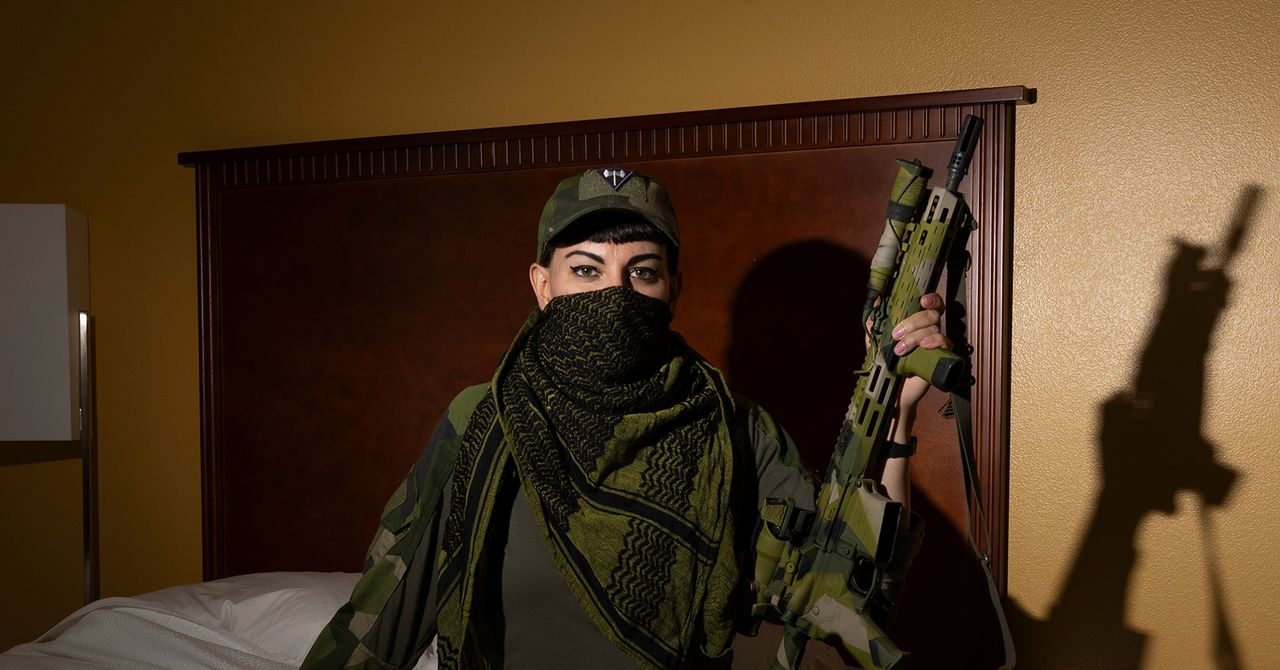
Kasarda is dressed in a sandy acid-wash T-shirt and tartan cargo pants—“postapocalyptic cowboy meets dad,” Gun Bunny chimes in. A 51-year-old cis white man whose love of subcultures spans hacking, industrial music, and a stint as a minister with the Satanic Temple, Kasarda eschews the title of “leader.” On the contrary, he says he has “a problem with authority” and “flirts” with the idea of anarchy. But there is no question he is largely responsible for building this alternative gun community, which he and others describe as the “punk rock outsiders of the shooting community.”
His movement started about a decade ago with a YouTube channel, InRange TV, which now has around 930,000 followers. Kasarda’s videos frequently focus on firearms history he believes many conservatives in the gun world would love to forget, like slave revolts, members of a Native American tribe kicking the KKK’s ass in a standoff in North Carolina in 1958, and a possibly trans midwife in Colonel George Armstrong Custer’s cavalry. The channel’s description says it’s “actively anti-racist, pro human liberation and LGBTQ+ rights,” and Kasarda is a champion of “2A For All,” the belief that everyone, particularly minorities, should have access to arms. While that might seem like a natural stance for any gun-loving American, Kasarda’s views have pissed off right-wing gun nuts so badly that there are years-long angry threads about him on AR15.com and Kiwi Farms, a forum notorious for harassing trans folks. “We don’t want to talk about marginalized communities depending on firearms because we don’t like the marginalized communities,” Kasarda says, of how right-wingers see the issue.
These tensions have gotten worse under Trump 2.0. After the president was reelected, left-leaning and queer-focused firearms organizations and classes like the Liberal Gun Club and the Pink Pistols told me they were seeing major spikes in interest and attendance. In early September, media outlets reported that Justice Department officials were considering a gun ban for trans people. In response, one trans gun content creator recommended trans Americans who’d been planning to purchase firearms “do so now.”
Seconds before he was shot to death, Charlie Kirk shared a myth about trans people propagating mass shootings. An attendee at one of his Turning Point USA events asked him, “Do you know how many transgender Americans have been mass shooters over the last 10 years?” to which Kirk replied, “Too many.” Numbers from the nonprofit Gun Violence Archive find that there have been five confirmed trans or nonbinary mass shooters between January 2013 and September 2025, making trans people responsible for less than 0.1 percent of the 5,748 mass shootings the group tracked in that time period.







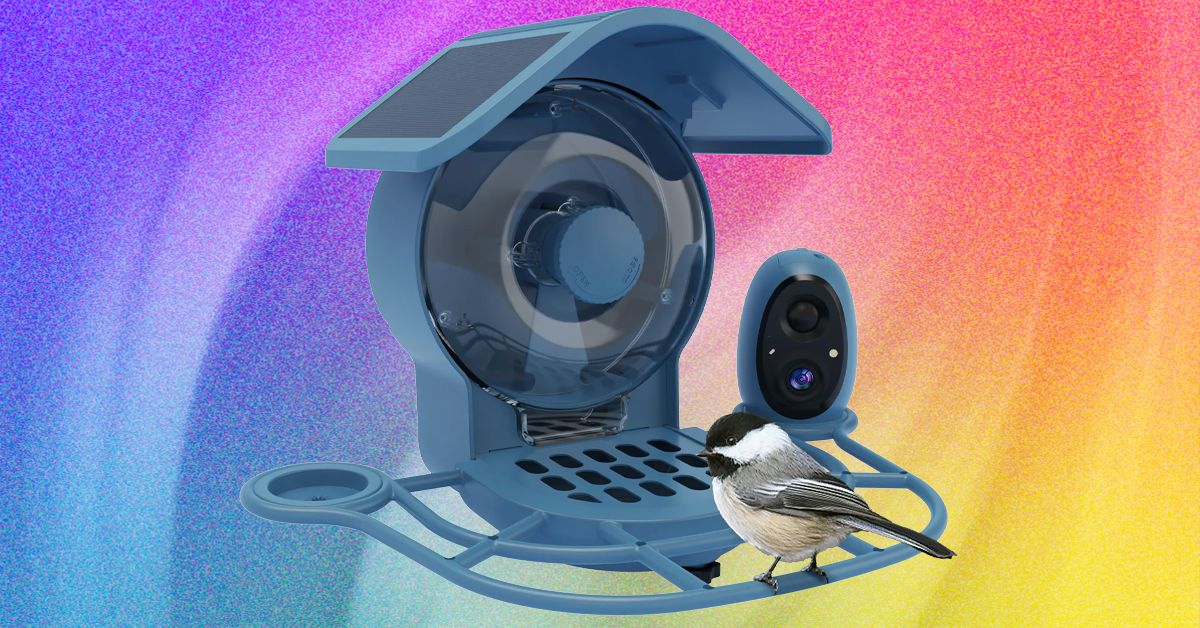
Assembly was quick and tool-free, requiring only a handful of included knob screws. I also like that it included both fence- and pole-mounting options, the latter of which is critical for preventing squirrel damage.
ScreenshotCoolfly app via Kat Merck
Smart feeder companies continue to upgrade their cameras’ quality with each new model, but the general range still seems to be anywhere from 1080p photos and 2K video on the low end (as with the Birdfy Lite), all the way up to 32-MP photos and 4K video (as with Camojojo’s new Hibird Pro). The Aura falls somewhere in the middle of this range, with 4-MP photos and a respectable 2.5K Ultra HD video.
The camera’s 150-degree field of view is wider than that of a typical bird feeder camera, and it helps to capture all angles of what’s really the Aura’s signature feature—a wraparound perch with little platforms on the left and right sides, where you can position the camera upright (which shows pictures in a horizontal “landscape mode”) at the angle you prefer. If you want the camera to be on its side (vertical “portrait mode”), there’s a little adapter that connects to the back and screws into the platform. Do note, though, that despite some marketing photos showing the Aura with two cameras, it only comes with one camera, and when it’s on its side, it can only be mounted on the right side of the perch.
Portrait mode (the camera mounted on its side) allows for greater detail in photos, but it wasn’t always successful at capturing all the action, depending on where a bird stood. The biggest issue with this camera orientation, however, is that the app’s AI identification doesn’t work with it. I asked Coolfly if this was an error, but it turns out it’s how the camera was designed.
“To offer users ‘Limited Free AI’ without monthly subscription fees, our bird ID algorithm is hardcoded directly into the device’s hardware,” Coolfly’s rep told me. “Because this on-device neural network was trained exclusively on horizontal datasets, physically flipping the camera … disrupts the local algorithm’s spatial mapping.”
The solution? “If our users shoot vertically and spot an unknown bird, they can simply take a screenshot and send it to our in-app ChirpChat feature. Our interactive AI assistant will identify it perfectly from the image,” Coolfly’s rep said.
Though this step was cumbersome, it did correctly identify nearly all of the birds I proffered (as did the built-in AI ID). I liked seeing the birds slightly closer up with the side camera orientation, but it wasn’t a dramatic difference between the views. Certainly not dramatic enough to justify the hassle of losing the AI ID or of having to go out and fiddle with taking the camera on and off its little mount to switch modes. So for the majority of testing, I kept the camera in its default upright position.
Birds on Film
The Aura uses the Coolfly app, which isn’t as intuitive as some of the bigger brands’ apps, like Birdbuddy’s, but it was perfectly usable. There’s the ChirpChat, a bird search, and a Facebook-esque “social feed” where you can follow other Coolfly feeder users and see their posted videos and images. (Note that there were only about 10 users total at the time of my test.)
What I liked the most about the app was that it immediately IDs all the bird captures in the album with a little bird-head icon of that species. It helped me visually sort at a glance which visitors were new and noteworthy that day, and clicking the icon leads to an informational page on the bird, as well as a sound clip of the species’ typical call, so you can see if you’ve heard it around. What I liked the least, however, was the number of marketing push notifications the app would send, for sales and other irrelevant topics. It became so irritating, in fact, that I ended up turning off notifications altogether, which meant I was only aware of bird activity if I went into the app.
Let’s use our car again, but this time we’ll get real numbers from the accelerometer in our smartphone. Say we start at a red light and then accelerate at 2 m/s2 (meters per second squared) for five seconds. From the equation above, Δv1 would be 2 x 5 = 10 m/s, so that’s our velocity. Now, after cruising for a while, we accelerate again at 1 m/s2 for five more seconds. Δv2 is then 1 x 5 = 5 m/s. Adding these two changes, our velocity is now 15 m/s. And so on.
The only problem is that inertial measurement isn’t as accurate as the Doppler method over long periods, because small errors will keep accumulating. That means you need to recalibrate your system periodically using some other method.
Optical Navigation
On Earth, people have long navigated by the stars. In the northern hemisphere, just find Polaris. It’s called the North Star because Earth’s axis of rotation points right at it. That’s why it appears stationary, while the other stars seem to revolve around it. If you point a finger at Polaris you’ll be pointing north, and you can use that orientation to go in whatever direction you want.
Now, if you can measure the angle of Polaris above the horizon, you’ll also know your latitude. If the angle is 30 degrees, you’re at latitude 30 degrees. See, it’s easy. And once you can measure position, you just need to do it twice and record the time interval to find your velocity.
But celestial navigation works because we know how the Earth rotates, and that doesn’t help in a spacecraft. Oh well, can we just use the stars like you would use the cows on the side of the road? Nope. The stars are so far away, astronauts would need to travel for many, many generations to detect any shift in their position. Like the airplane flying over the sea, you’d seem to be stationary, even while traveling 25,000 mph.
But we can still use the basic idea. For optical navigation in space, a spacecraft can locate other objects in the solar system. By knowing the precise location of these objects (which change over time) and where they appear relative to the viewer, it’s possible to triangulate a position. And again, by taking multiple position measurements over time, you can calculate a velocity.
In the end, even though spaceships lack speedometers, it’s possible to track their speed indirectly with a little physics. But it’s just another example of how flying in space is really, totally different—and way more complicated—than driving or flying on Earth.
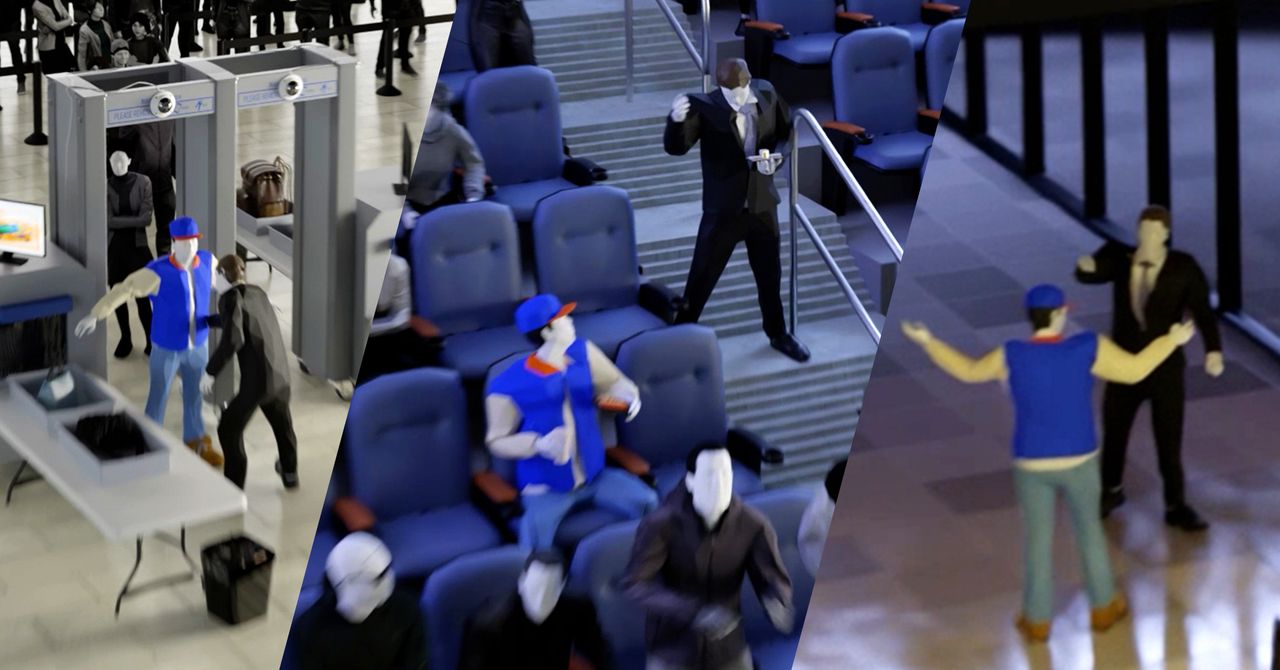
If those posts could be interpreted in any way as threats, Eversole would contact their hometown police, multiple security team sources say. “He would take it upon himself to reach out to someone somewhere and introduce himself as the CSO of Madison Square Garden and demand that the local PD take action,” the security veteran adds.
One teenager posted a tweet, and MSG security asked local law enforcement to visit him. “They scared the crap [poop emoji] out of some 14 year old kid in Colorado,” one MSG security staffer texted in a message we reviewed. Cops would at times ignore Eversole’s demands. He and his deputies would then “freak the fuck out when a PD somewhere would not play ball,” the second veteran continues.
Eversole would also allegedly push his subordinates to act more like municipal cops. He’d urge them to patrol the streets surrounding MSG, which is located in one of Manhattan’s more derelict neighborhoods, functionally acting as a second, ersatz police force—without formal permission of New York’s real one. “On many occasions, I was ordered to stop traffic, close sidewalks, and unlawfully detain individuals in the venue and demand identification,” Munn, the former security worker, wrote in his filing. Munn added that these orders were “against NY State/City laws without proper permits or NYPD’s authorization, which MSG did not maintain.” An NYPD spokesperson confirms that such authorization was never given.
Eversole would tell his teams to bust the guys selling knockoff merchandise and “remove scalpers and drug dealers daily, in areas outside and around MSG properties, without back up, communication, or assistance from MSG venue security or NYPD paid detail,” Ingrasselino alleged in his lawsuit.
Ingrasselino’s former colleagues emphasize that the work could be dangerous, possibly illegal, and in no way a normal task for a private security force. Ingrasselino, among others, claimed that a former NYPD assistant chief now working for MSG was once attacked by scalpers and sent to the hospital. In his filing, Munn claimed that during his time “overseeing all security aspects” of several Dolan properties, he had been “ordered to do many things I felt were unsafe, unethical, and illegal, all at the direction” of Eversole.
Ingrasselino also alleges in his suit that he was ordered to embed “in the middle of pro-Palestine or anti-Israel protests” that happened to be passing a Dolan venue. Other security sources say that they were not ordered to insert themselves into any demonstrations. But they confirm that they were asked to observe protests that went anywhere near a Dolan venue. Given those venues’ central location, it happened a lot.
Some protests would get special scrutiny. When the Professional Bull Riders tour came to the Garden, animal rights activists would at times gather outside, or in front of the MSG president’s apartment building. The leaders felt they were being singled out and surveilled.
Even people working for the state government found themselves in MSG’s sights.
In late 2022 and early 2023, when word about the lawyer bans began to spread and uproar over the face-recognition program was hitting a peak, the State Liquor Authority decided to look into it; per state law, according to the SLA, you’re not allowed to both serve booze and arbitrarily lock people out of your place. Dolan’s response may have been a touch over-the-top. He went on TV, held up a photograph of the then head of the liquor authority with the man’s phone number and email underneath, and told the audience to reach out to him, and “tell him to stick to his knitting.”


Burberry unveils High Summer 2026 lido-inspired campaign

2026 MLB draft rankings: Top 85 prospects, mini-mock draft

Iran declares Hormuz open for commercial vessels as Trump expects deal ‘soon’

-

 Tech1 week ago
As the Strait of Hormuz Reopens, Global Shipping Will Take Months to Recover
-

 Tech1 week ago
This AI Button Wearable From Ex-Apple Engineers Looks Like an iPod Shuffle
-

 Politics1 week ago
Indian airlines hit hardest after Dubai limits foreign flights until May 31
-

 Entertainment4 days ago
Palace left in shock as Prince William cancels grand ceremony
-

 Sports4 days ago
The case for Man United’s Fernandes as Premier League’s best
-

 Politics1 week ago
Chinese, Taiwanese will unite, Xi tells Taiwan opposition leader
-

 Entertainment6 days ago
Dua Lipa hits major career high ahead of wedding with Callum Turner
-
 Business4 days ago
UK could adopt EU single market rules under new legislation