

Tech
The New Power of Far-Right Influencers


In this episode of Uncanny Valley, we discuss the impacts of antifa’s designation as a domestic terrorist group as author Mark Bray faces new harassment from the far-right.
Source link







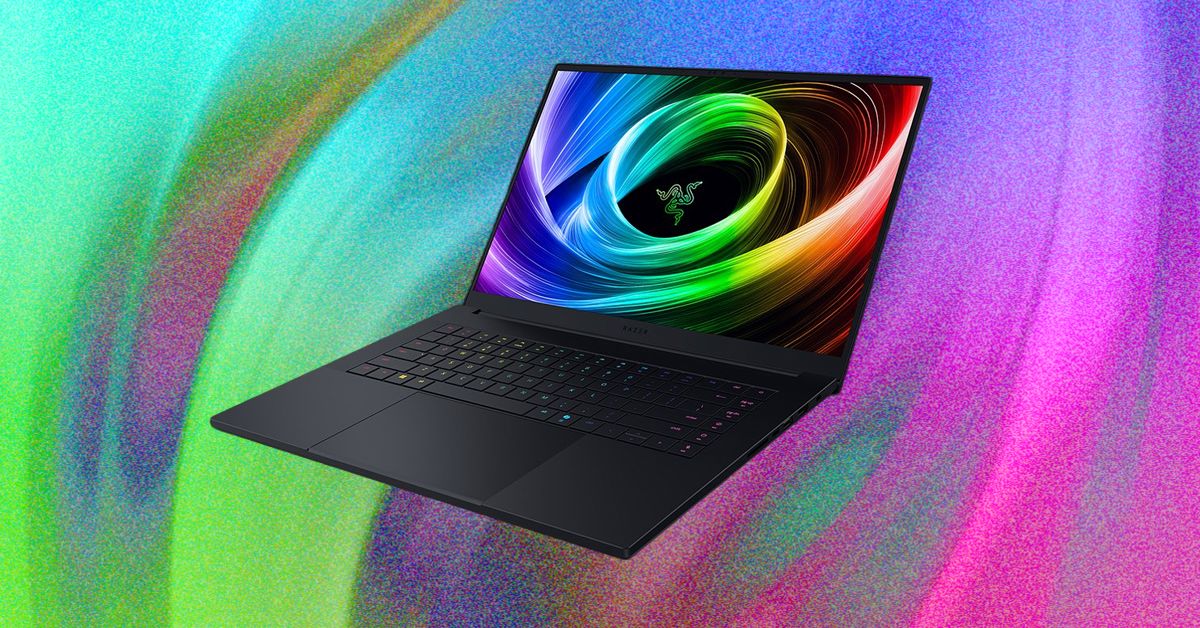
Now, there’s another class of high-end gaming laptop that focuses more on performance than being thin or portable. The Lenovo Legion 7i Gen 10 is one of my favorites in this class, featuring a beautiful white chassis and glossy OLED display. Unlike some OLED displays, the Legion 7i’s screen can be cranked up to over 1,000 nits of brightness. The result is some really splendid HDR performance that brings games to life. HDR is a powerful way of improving the visuals of your games without a performance cost. The Legion 7i Gen 10 is one of the very best in this regard.
It’s still fairly thin at 0.7 inches thick too, while a lot of the ports are found on the back. It’s the definition of a “clean” gaming laptop. It’s no slouch when it comes to performance either, offering either the RTX 5070 Ti or RTX 5080 for graphics.
Cheap Gaming Laptops That Are Worth It
No gaming laptops worth buying are actually cheap. High-refresh rate displays and discrete graphics will always make them more expensive than standard laptops. But as you get closer to $1,000, there is one laptop I always come back to: the Lenovo LOQ 15. Pronounced “Lock,” this Lenovo subbrand is known for cutting the fluff and focusing on giving gamers the performance they need at an affordable price. No laptop does that better than the LOQ 15. Many laptop manufacturers sell their RTX 5060 configurations for hundreds of dollars more. In reality, if you’re shopping around $1,000, there’s no reason to not buy the LOQ 15. Just do it.
If you do want to save some extra cash, there is another option that is cheaper than the LOQ 15 with a few compromises in key areas. The Acer Nitro V 16 is that laptop, which comes with an RTX 5050. This was as affordable as $600 at one point last year—before prices on laptops have risen due to the ongoing memory shortage—but it remains the only laptop cheaper than the Lenovo LOQ 15 that’s actually worth it. It’s fairly powerful for the RTX 5050, and while the screen is pretty shoddy, it’s not a bad-looking laptop. The one big caveat is that the 135-watt power supply it comes with doesn’t deliver quite enough power to keep it charged in Performance mode. Read more about this issue in my review, as it’s important to know about if you’re planning to buy it.
There are other cheap gaming laptops out there I’ve tested, such as the MSI Cyborg A15, but either the Acer Nitro V 16 or Lenovo LOQ 15 are better, cheaper options. You will also find lots of gaming laptops under $1,000 that use older graphics cards, such as the RTX 4050 or 3050. In general, I’d recommend staying away from these. They’re only one or two generations back, but remember: Nvidia only releases new laptop graphics cards every couple of years. So, an RTX 4050 laptop may be well over two years old already, and an RTX 3050 is over five years old. Not only do you get worse graphics performance, these laptops are much more likely to need to be replaced sooner.
Experimental Stuff
One of the exciting things about the world of gaming laptops right now is the experimentation. While clamshell gaming laptops with a conventional Nvidia GPU are the most standard way to go, there’s a few different ways to take your PC games on the go that stretch the boundaries. You might consider a gaming handheld, for example, like the Steam Deck or Xbox Ally X. These handhelds have their fans, and while you can’t also do your homework on these devices, they’re great on couches, trains, and planes.

In mid-April, astronomy enthusiasts will be able to enjoy one of the classic celestial spectacles. The meteor shower known as the Lyrids will illuminate the sky, especially in the northern hemisphere, and anyone will be able to see it with the naked eye, weather permitting—if they know where to look.
The Lyrids began to appear as early as April 14, but their activity peaks between the night of April 21 and the early morning of April 22, according to NASA. During those hours, the shower will show 15 to 20 meteors per hour under dark skies.
The shower gets its name because the meteors appear to emerge from the constellation Lyra. Locating the radiant is simple if you use an astronomical mapping app: Just find Vega, the fifth brightest star in the sky, surpassed only by Sirius, Canopus, Alpha Centauri A, and Arcturus. Once you locate it, look around it; the luminous traces of the Lyrids will seem to be projected from that point due to a perspective effect. Keep in mind that it takes 20 to 30 minutes for the human eye to adjust to darkness.
The moon will be in early crescent phase during the peak, so its light will interfere very little. With a dark sky, meteors should stand out easily. The shower is usually visible from 10 pm to dawn, although early morning offers the best conditions. It is best to stay away from light pollution and, if possible, to observe from high ground. An outing to the mountains works well.
Each meteor shower has a different origin. In April, Earth crosses the cloud of fragments left by comet C/1861 G1 (Thatcher) in its orbit around the sun. This comet, discovered in 1861, takes about 415 years to complete its journey. The grains of ice and rock that it released centuries ago enter the atmosphere at high speed and produce the flashes we know as the Lyrids.
After the Lyrids, the calendar still holds several spectacles for those who follow the night sky. The Eta Aquarids will arrive in May with debris from Halley’s Comet. The Perseids will appear in August, the Orionids will return in October, and the year will close with the Leonids in November and the Geminids in December. The latter is considered the most intense and reliable shower on the calendar.
This story originally appeared on WIRED en Español and has been translated from Spanish.

Over the weekend in China, a humanoid robot shattered world half-marathon record—the human record—by seven minutes.
The star performer was a robot developed by the Chinese company Honor (the smartphone maker), which finished the 13.1-mile race in 50 minutes, 26 seconds. The human record, set by Ugandan Olympic medalist Jacob Kiplimo, is 57 minutes, 20 seconds. The result marks an impressive milestone especially considering that, just a year earlier, the fastest robot at this half-marathon event took two and a half hours to complete the same distance.
But Honor’s robot was not the only participant. The event consisted of more than 100 humanoid robots from 76 institutions across China. The robots lined up alongside 12,000 human runners in Beijing’s E-Town, albeit on separate courses to avoid accidents. The contrast in performance between humans and robots was more than evident.
Run, Robot, Run
A humanoid robot is designed to mimic the structure and movement of the human body, with legs, arms, and sensors that allow it to interact with its environment. In this case, the winning robot incorporated features inspired by elite runners: long legs (almost a meter), advanced balance systems, and a liquid cooling mechanism, similar to that of smartphones, to prevent overheating during the race.
In addition, many of the participating robots operated autonomously, meaning without direct human control. Thanks to artificial intelligence algorithms, they could adjust their pace, maintain balance, and adapt to the terrain in real time. Notably, the Honor robot that achieved the 50-minute mark operated autonomously. The Chinese manufacturer presented another robot, operated by remote control, that ran the same stretch in even less time: 48 minutes, 19 seconds.
As expected, there were some accidents in the race. Some robots fell down, others veered off the path, and several needed technical assistance along the way. While the physical performance of humanoid robots has advanced rapidly, their reliability is still developing. Of course, the laughter and jeers are no longer as frequent as they used to be, replaced by applause and exclamations of surprise.
Robot Superiority
Just like the robots that went viral for their impressive martial arts display a few weeks ago, this long-distance race is part of a broader strategy by China to show off its leadership in the development of advanced robots.
You don’t need to be a robotics expert to see that this achievement demonstrates that machines can outperform humans at specific physical tasks under controlled conditions. (It’s hard to imagine that the winning robot could achieve the same result, for example, if it started to rain during the race.) But humans still have a few tricks up their sleeve: Running in a straight line is very different from performing complex real-world activities, such as manipulating delicate objects or interacting socially.
However, it’s understandable that the image of a robot crossing the finish line in record time, ahead of human athletes, raises several questions. Is this the beginning of a new era in which machines redefine physical limits?
One could argue that a car is a machine, and those have always been faster than humans. But a humanoid robot is designed to mimic humans. It’s more alarming to see one beat humanity at its own game—even if so many of them are still tripping over themselves.
This story originally appeared in WIRED en Español and has been translated from Spanish.


Soccer’s incredible shrinking shin guards could be a big problem

Leave, holidays and encashment: What India’s changing labour laws mean for employees – The Times of India

Here’s full list of airlines hit by cancellations, reroutes, delays

-

 Fashion5 days ago
France’s LVMH Q1 revenue falls 6%, shows resilience amid Iran war
-

 Sports1 week ago
The case for Man United’s Fernandes as Premier League’s best
-

 Entertainment1 week ago
Palace left in shock as Prince William cancels grand ceremony
-
 Business1 week ago
UK could adopt EU single market rules under new legislation
-

 Entertainment6 days ago
Is Claude down? Here’s why users are seeing errors
-

 Fashion1 week ago
Energy emerges as biggest cost driver in textile margins
-
 Business1 week ago
Delta Air Lines unveils first new Delta One suite in premium cabin arms race
-

 Fashion1 week ago
Asia claims largest share of markets on Kearney FDI Confidence Index