

Fashion
These ’90s fashion trends are making a comeback in 2017
Lorem ipsum dolor sit amet, consectetur adipisicing elit, sed do eiusmod tempor incididunt ut labore et dolore magna.


Temporibus autem quibusdam et aut officiis debitis aut rerum necessitatibus saepe eveniet ut et voluptates repudiandae sint et molestiae non recusandae. Itaque earum rerum hic tenetur a sapiente delectus, ut aut reiciendis voluptatibus maiores alias consequatur aut perferendis doloribus asperiores repellat.
Lorem ipsum dolor sit amet, consectetur adipisicing elit, sed do eiusmod tempor incididunt ut labore et dolore magna aliqua. Ut enim ad minim veniam, quis nostrud exercitation ullamco laboris nisi ut aliquip ex ea commodo consequat.
“Duis aute irure dolor in reprehenderit in voluptate velit esse cillum dolore eu fugiat”
Nemo enim ipsam voluptatem quia voluptas sit aspernatur aut odit aut fugit, sed quia consequuntur magni dolores eos qui ratione voluptatem sequi nesciunt.
Et harum quidem rerum facilis est et expedita distinctio. Nam libero tempore, cum soluta nobis est eligendi optio cumque nihil impedit quo minus id quod maxime placeat facere possimus, omnis voluptas assumenda est, omnis dolor repellendus.
Nulla pariatur. Excepteur sint occaecat cupidatat non proident, sunt in culpa qui officia deserunt mollit anim id est laborum.
Sed ut perspiciatis unde omnis iste natus error sit voluptatem accusantium doloremque laudantium, totam rem aperiam, eaque ipsa quae ab illo inventore veritatis et quasi architecto beatae vitae dicta sunt explicabo.
Neque porro quisquam est, qui dolorem ipsum quia dolor sit amet, consectetur, adipisci velit, sed quia non numquam eius modi tempora incidunt ut labore et dolore magnam aliquam quaerat voluptatem. Ut enim ad minima veniam, quis nostrum exercitationem ullam corporis suscipit laboriosam, nisi ut aliquid ex ea commodi consequatur.
At vero eos et accusamus et iusto odio dignissimos ducimus qui blanditiis praesentium voluptatum deleniti atque corrupti quos dolores et quas molestias excepturi sint occaecati cupiditate non provident, similique sunt in culpa qui officia deserunt mollitia animi, id est laborum et dolorum fuga.
Quis autem vel eum iure reprehenderit qui in ea voluptate velit esse quam nihil molestiae consequatur, vel illum qui dolorem eum fugiat quo voluptas nulla pariatur.












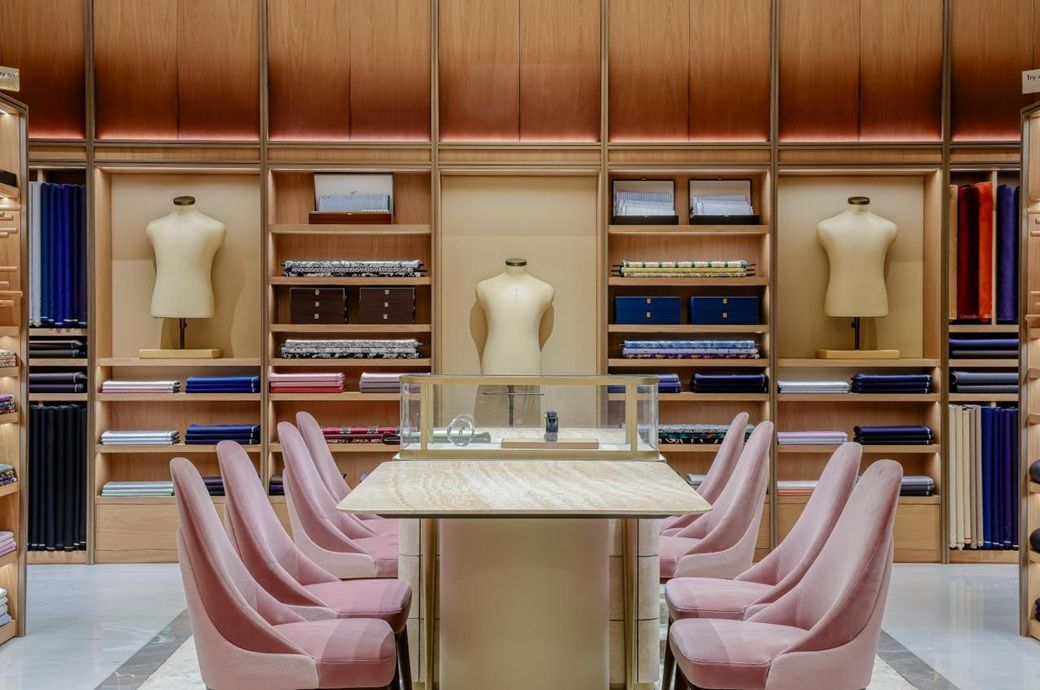
Chairman’s Collection reflects Raymond’s seamless transition from a heritage textile pioneer to a modern luxury menswear destination, now stepping into a more rarefied, couture-led space. One of the most ambitious expressions of luxury menswear retail, this new retail store is a sartorial experience for globally aware Indian consumers. Drawing from Renaissance and Baroque influences, layered with a contemporary European sensibility, the space is rooted in Indian craftsmanship while reflecting a distinctly global identity of the new-age India.
Raymond has unveiled its Chairman’s collection flagship in Bandra, marking its evolution into luxury menswear.
The 11,000 sq ft, two-level space offers couture fashion, fine jewellery, fragrances, and bespoke services.
Blending Indian craftsmanship with global design, it delivers an immersive, appointment-led experience with curated art, collectibles, and personalised styling.
THE COLLECTION: THREE DISTINCT WORLDS
Modern Opulence – Casual Couture
Elevated casualwear, reimagined through the grandeur of Renaissance motifs and the ornate richness of Baroque detailing on printed silk shirts, embroidered denim, and statement separates, offers a refreshing take on couture sensibility in the art of dressing.
Power Dressing – Contemporary Heirlooms
Power Dressing, elevated to an art form. Each suit is crafted in exquisite fabrics from across the world, offering impeccable fit and finished with the artisanal depth that is uniquely and unmistakably Indian.
Embellished jackets. Indo-Western silhouettes. Velvets, silks, and jewel tones that speak before you do. Every piece in the Chairman’s Collection reflects power dressing and is an act of self-expression, conceptualized for moments that demand presence, individuality, and the kind of authority that needs no introduction.
Art, Heritage & Experimentation – Indian Renaissance
A deeply artisanal expression combining Renaissance-inspired prints with traditional Indian techniques such as zardozi and hand embroidery, creating garments that transcend fashion to become collectible pieces.
BEYOND FASHION: A COMPLETE LUXURY EXPERIENCE
The Chairman’s Collection extends gracefully beyond apparel, embracing a far more holistic vision of modern luxury. Fine jewellery for men, lab-grown diamond pieces of exceptional provenance, and a curated edit of the world’s most coveted fragrance and watch brands – each chosen with the same discernment that defines every corner of this space.
A natural evolution of Raymond’s legacy, this launch marks a thoughtful foray into new luxury categories where style meets substance, and each coveted offering is a reflection of a life lived with intention. The store operates on an appointment-led model, ensuring a personalised experience from concept to execution. Be it bespoke tailoring or personalised styling, each element is designed to offer exclusivity.
A SPATIAL EXPERIENCE DESIGNED LIKE A JOURNEY
Spanning across two levels, the store unfolds through carefully designed environments:
- A lounge-inspired setting with leather armchairs and bespoke trunks, evoking exclusivity
- Gallery-style displays, where apparel and finest fabrics are presented as collectible pieces
- A refined tailoring zone, celebrating Raymond’s legacy in craftsmanship
- Curated display zones, where collectibles and design products add depth and narrative
Every detail of the space reflects a shift in luxury retail from transactional to experiential, immersive, and deeply personal.
WHERE FASHION MEETS ART & COLLECTIBLES
Woven seamlessly into the store are museum-worthy displays of rare collectibles, from Formula 1-inspired models to precision-crafted masterpieces that are a true reflection of the Chairman’s lifelong devotion to the art of the automobile, both vintage and contemporary. Impossible to overlook, the curated Art Deco-inspired pieces and handpicked artworks that grace the space have each been chosen with extraordinary intentionality, with every element in coherence with the store’s design language.
This layered, considered approach transforms the Chairman’s Collection into something far greater than a fashion destination, unraveling a world unto itself. Every corner, every curation, every carefully chosen object speaks to a man’s taste, his sensibility, and the life he has chosen to lead. The effect is singular and unmistakable – a space that does not merely dress a man, but defines him. Not just a philosophy of style, but a complete philosophy of living.
A NEW CHAPTER FOR RAYMOND
Speaking on the occasion, Satyaki Ghosh, CEO, Raymond Lifestyle Limited, said; “Chairman’s Collection reflects the pride of creating international-quality luxury, made in India, for the modern Indian man. Raymond being the pioneers in menswear, this is a logical brand evolution towards launching a first of its kind couture experience in India. Consumer centricity is at the core of Raymond and this latest endeavour is an affirmative step in the same direction.”
With Chairman’s Collection, moves forward not as a heritage brand resting on its century-old legacy, but as India’s homegrown brand paying homage to luxury that understands the new Indian identity, which is making its formidable presence being felt in the world.
Note: The headline, insights, and image of this press release may have been refined by the Fibre2Fashion staff; the rest of the content remains unchanged.
Fibre2Fashion News Desk (RM)
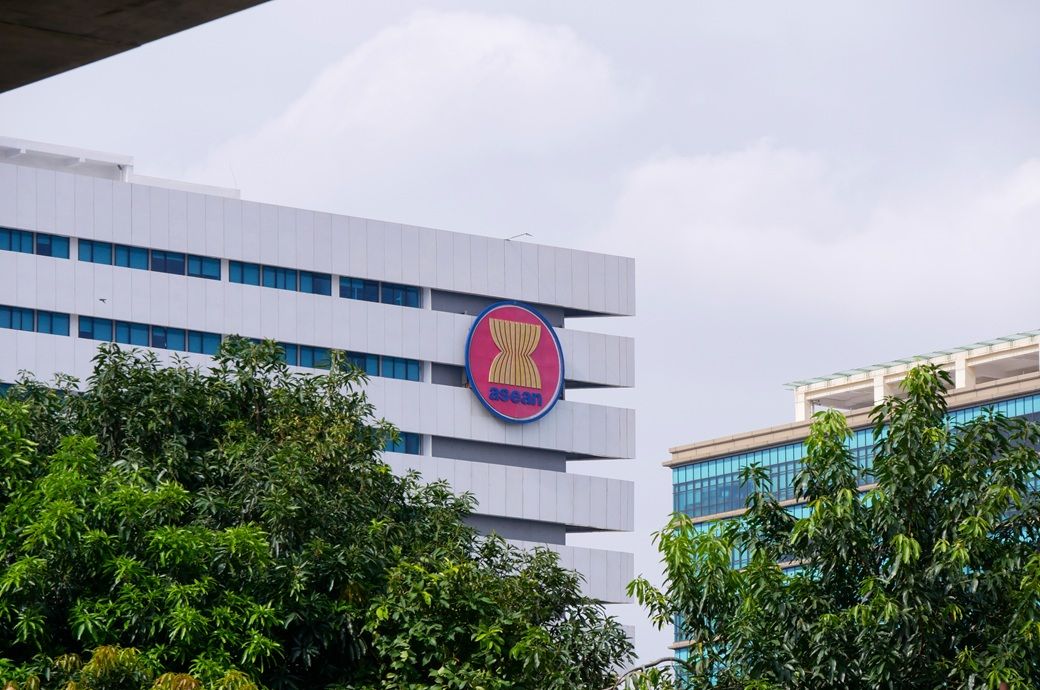
ASEAN+3 comprises the members of the Association of Southeast Asian Nations (ASEAN), China, South Korea and Japan.
Macroeconomic stabilisation in the ASEAN+3 nations has progressed while navigating the new energy shock triggered by the Middle East conflict.
Structural adjustments continue, according to the latest ASEAN+3 Regional Economic Outlook.
While vulnerabilities remain, the pace and direction of policy adjustment have improved significantly in the region.
In Singapore and Malaysia, strong institutional credibility, financial stability and well-developed investment frameworks support relatively stable economic management.
In Vietnam and Cambodia, manufacturing and services continue to underpin economic activity despite external headwinds.
Adjustment is also visible in economies that have faced more acute macroeconomic pressures, where policy measures to stabilise exchange rates, recalibrate fiscal policy and strengthen debt management have contributed to a marked improvement in macroeconomic conditions compared with earlier periods of stress, the report released by the ASEAN+3 Macroeconomic Research Office (AMRO) said.
While vulnerabilities remain, the pace and direction of policy adjustment have improved significantly, it noted.
Taken together, these experiences suggest that economic management in the region has evolved around a pragmatic combination of policy approaches rather than a single doctrinal model, the report remarked.
Regional economies are placing greater emphasis on strengthening flexibility and resilience in trade, foreign direct investment and financial flows.
At the same time, many economies across the region are investing in digitalisation, advanced manufacturing and emerging technologies.
Rather than narrow sectoral targeting, industrial strategies often emphasise foundational capabilities—human capital development, digital infrastructure and technological capacity. These efforts support adaptation to shifting global conditions while maintaining long-term competitiveness, it added.
Fibre2Fashion News Desk (DS)

Kornit Digital Ltd. (NASDAQ: KRNT “Kornit Digital”, “Kornit”, or the “Company”), a global pioneer in sustainable, on-demand digital fashion and textile production, today announced more than 500 leaders from across the apparel ecosystem are gathering in Hollywood, Florida for Konnections 2026 – Powered by Kornit. With more than 20 sessions across three days, the event takes place at a pivotal moment as the industry explores how technology is enabling new levels of agility.
Kornit’s Konnections 2026 gathers 500+ global leaders to advance on-demand apparel production.
With Atlas MATRIX and PrintFactory, the company is building a digital infrastructure linking demand, production, and fulfilment.
The event underscores a shift towards agile, real-time manufacturing with reduced inventory risk and scalable global consistency.
Now in its third year, Konnections has become a central global platform where the industry aligns around what comes next. The event brings together leading sports and fashion brands, digital platforms, creators, designers, software partners, fulfillment providers, investors, analysts, and media, all focused on one clear direction: accelerating the move from forecast-driven production toward agile, on-demand manufacturing.
Critical inflection point
The apparel industry is undergoing a structural shift. Demand is faster, more fragmented, and increasingly shaped by digital platforms and creators. Brands are seeking to reduce risk, improve margins, and operate more sustainably while delivering higher quality at greater speed. These dynamics are accelerating the transition toward demand-driven production, enabled by technologies allowing companies to respond in real time to market needs. Konnections highlights this shift not as a future vision, but as a transformation already underway across the global apparel industry.
From technology to infrastructure
At Konnections 2026, Kornit will unveil Atlas MATRIX, a breakthrough system enabling true on-demand manufacturing across all major fabric types, including cotton, polyester, and blends, within a single platform. By enabling consistent retail-quality production across multiple fabrics, Atlas MATRIX removes one of the largest barriers preventing digital production at scale.
In parallel, Kornit is highlighting the strategic acquisition of PrintFactory, a cloud-native color and production platform enabling consistent output across digital and analog environments. PrintFactory expands Kornit’s ability to support large global producers transitioning from analog to digital production while enabling distributed production at scale. This acquisition strengthens Kornit’s infrastructure connecting demand generation with consistent global fulfillment and expands Kornit’s reach into the large global screen-printing market.
Together, these innovations reflect a clear strategic direction: building a fully digital infrastructure linking demand generation with production and fulfillment, supporting scalable on-demand manufacturing globally. This integrated approach enables brands and demand generators to scale on-demand production globally with consistent quality, supporting faster response to market trends while reducing inventory risk.
“We are witnessing the gradual decline of traditional production models and the emergence of a new era in apparel manufacturing,” said Ronen Samuel, Chief Executive Officer of Kornit Digital. “Production is increasingly moving closer to demand, enabled by digital infrastructure connecting demand generation, production, and fulfillment. Konnections unifies the leaders shaping this transformation.”
A global ecosystem connected
Konnections brings together the full value chain enabling this shift, including global brands, sportswear leaders, digital-native platforms, designers, and fulfillment providers. Participants represent a truly global ecosystem with attendees from the Americas, Europe, and Asia. Keynote speakers include Nick Beighton, former CEO of ASOS; Alex Saltonstall, CEO of the combined Printful and Printify platform; Daymond John, entrepreneur and Shark Tank investor; and senior leaders from global brands including Legends, Custom Ink, Redbubble, Zumiez, Life is Good, Nine Line, Grand Style, and additional industry innovators.
Innovation in action
A central component of the event is the Konnections Solutions Showcase, where Kornit will highlight Atlas MATRIX, Apollo, and Presto MAX PLUS for roll-to-roll and technical applications, alongside innovations in materials, automation, and integrated production solutions. A broad ecosystem of partners will present complementary technologies spanning software, robotics, blank goods, and production automation, demonstrating how connected solutions enable faster, more efficient, and more responsive production environments.
Mr. Samuel concluded, “Konnections 2026 represents a defining moment for an industry increasingly shaped by agility, real-time production, and minimal waste. Konnections unifies the global ecosystem enabling this transformation and demonstrates how the future of apparel production is becoming a reality.”
Note: The headline, insights, and image of this press release may have been refined by the Fibre2Fashion staff; the rest of the content remains unchanged.
Fibre2Fashion News Desk (MS)


‘The Last Airbender’ Leaked Online. Some Fans Say Paramount Deserves the Fallout

Despite Yamal’s form, Atleti wash away Barça out of Champions League

Tigers, rookie Kevin McGonigle reach 8-year, $150M extension

-

 Fashion1 week ago
India’s exports face reset as EU links trade to carbon metrics: EY
-

 Entertainment1 week ago
Queen Elizabeth II emotional message for Archie, Lilibet sparks speculation
-

 Entertainment1 week ago
Lamar Odom shocking response to Khloé Kardashian account of his overdose
-

 Tech1 week ago
Azure customers up in arms over ‘full’ UK South region | Computer Weekly
-

 Tech1 week ago
As the Strait of Hormuz Reopens, Global Shipping Will Take Months to Recover
-

 Fashion1 week ago
CII submits 20-pt agenda to Indian govt to back firms hit by Iran war
-

 Tech7 days ago
This AI Button Wearable From Ex-Apple Engineers Looks Like an iPod Shuffle
-

 Politics6 days ago
Indian airlines hit hardest after Dubai limits foreign flights until May 31
Jawn Staff
July 7, 2017 at 2:50 pm
Quis autem vel eum iure reprehenderit qui in ea voluptate velit esse quam nihil molestiae consequatur, vel illum qui dolorem eum fugiat quo voluptas nulla pariatur.