

Business
This Indian-Origin Harvard Student Took Mark Zuckerberg To Court For ‘Stealing’ His Facebook Idea

Last Updated:
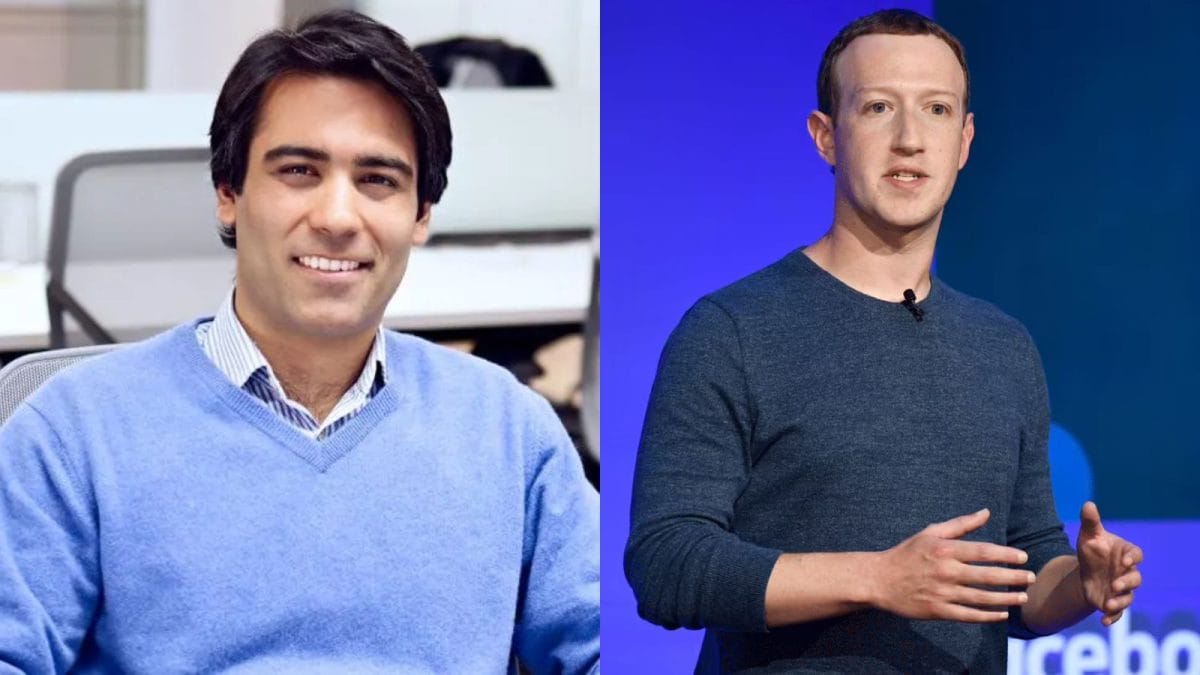
Divya Narendra and the Winklevoss twins accused Mark Zuckerberg of idea theft over HarvardConnection, leading to a $65 million settlement and inspiring ‘The Social Network’ film
Facebook grew at breakneck pace, spreading from Harvard to universities across the United States and then to the wider world.
Long before Facebook became a global habit, a small group of Harvard students believed they had spotted a gap in the internet. Among them was Divya Narendra, a New York-born Indian-origin student who later accused Mark Zuckerberg, now the face of the world’s biggest social network, of running away with their idea.
What followed was one of the most closely-watched legal tussles in the history of the tech industry.
In the early 2000s, when broadband internet was still a novelty and students largely relied on email, Narendra and his friends, the twins Cameron and Tyler Winklevoss, began work on a project called HarvardConnection (later renamed ConnectU). The idea was simple yet radical for its time; a closed online network where Harvard students could create profiles, discover classmates and build social connections.
Narendra, the son of doctor parents and a standout student through school, had secured admission into Harvard after studying at some of New York’s top institutions. At Harvard, the trio quickly bonded, and as the project took shape, they began looking for a gifted programmer to bring the platform to life.
According to court filings later made public, the group approached Mark Zuckerberg, then an undergraduate known on campus for his coding skills. Emails exchanged between the parties, many of which later surfaced in legal documents, showed detailed discussions about the proposed network, its scope and its expansion beyond Harvard.
Narendra and the twins believed Zuckerberg would help write the code. Instead, they alleged, communication slowed, replies tapered off, and on February 4, 2004, Zuckerberg launched ‘TheFacebook’, a site that bore striking similarities to their concept.
News of the launch spread rapidly across the campus. Shocked by what they believed was a case of idea theft, the trio complained to Harvard authorities and eventually took the matter to court.
A Legal Battle That Gripped The Tech World
The dispute ran from 2004 to 2008, with Narendra and the Winklevoss brothers accusing Zuckerberg of breaching an oral agreement and misappropriating their concept. Facebook, meanwhile, grew at breakneck pace, spreading from Harvard to universities across the United States and then to the wider world.
In 2008, the parties reached an out-of-court settlement reportedly valued at $65 million, a mix of cash and Facebook stock. Although Zuckerberg did not admit wrongdoing, the settlement was widely seen as acknowledgement that the complainants had a legitimate case.
The legal clash later formed a key plotline in the Oscar-winning Hollywood film ‘The Social Network’, where Narendra’s character featured prominently. He has since said that while the film dramatised events, it helped spotlight the Indian-origin role in Facebook’s origin story.
Life After Facebook, And Another Startup Story
Far from being defined by the controversy, Divya Narendra chose to move forward. He completed advanced degrees in finance and law before launching SumZero in 2008, a professional network for serious investors and analysts to share research and insights.
Unlike Facebook, SumZero caters to a niche audience of finance professionals. Today, the platform counts thousands of vetted members and is valued in the millions, making Narendra a significant name in the investment-tech space.
The Facebook episode continues to be debated in Silicon Valley circles as a cautionary tale about intellectual ownership, trust and the fine print of informal agreements in the startup world.
 Click here to add News18 as your preferred news source on Google.
December 30, 2025, 17:32 IST
Read More







It’s cheaper and faster to collect people’s opinions using AI, but will it make polls more accurate?
Source link
Business
Rivian renegotiates DOE loan down to $4.5 billion, adjusts capacity plans for Georgia plant

Rivian Automotive on Thursday said it has renegotiated a $6.57 billion loan from the U.S. Department of Energy down to $4.5 billion and is adjusting its production expectations at an under-construction plant in Georgia.
The DOE loan was previously set to support two phases of production for a total of 400,000 units annually. The amended loan covers one phase of production with a total capacity of 300,000 vehicles, the company said Thursday.
The changes enable Rivian to draw on the loan sooner and have greater initial production but lowers its total production capacity for the plant amid uncertain demand for all-electric vehicles.
The initial loan terms were negotiated under the Biden administration. It had been in limbo under the Trump administration, which has taken action to cut or reduce such loans and has pulled back government investments to promote EVs.
Rivian said it plans to tap into the loan in 2027, a year ahead of previously scheduled. The automaker also said production of the company’s upcoming R2 electric vehicle is on track to begin at the facility in late 2028, following its recent start to production at its current facility in Normal, Illinois.
Rivian CEO RJ Scaringe on Thursday told CNBC’s Phil LeBeau that any future expansion of the Georgia plant would be funded by the company, which has been raising capital through partnerships with companies such as Volkswagen and Uber.
The EV maker announced the new loan details in connection with its first-quarter results, which included a net loss of $416 million, or 33 cents per share, down from a loss of $541 million, or 48 cents per share, a year ago. Those per-share results were not comparable to Wall Street expectations.
Rivian’s revenue for the quarter was $1.38 billion, up from $1.24 billion a year earlier and slightly ahead of the $1.36 billion expected by analysts, according to LSEG.
The company’s gross profit, which is closely watched by investors, was $119 million — down $87 million during the first quarter compared with a year earlier. That included a $62 million loss for its automotive segment and a $181 million profit for its software and services division.
The decline in automotive profit was primarily due to a $100 million slump in sales of automotive regulatory credits and lower production volumes, Rivian said.
Business
Trump lifts whiskey tariffs: Scotland–Kentucky trade eased after King Charles & Queen Camilla US visit – The Times of India
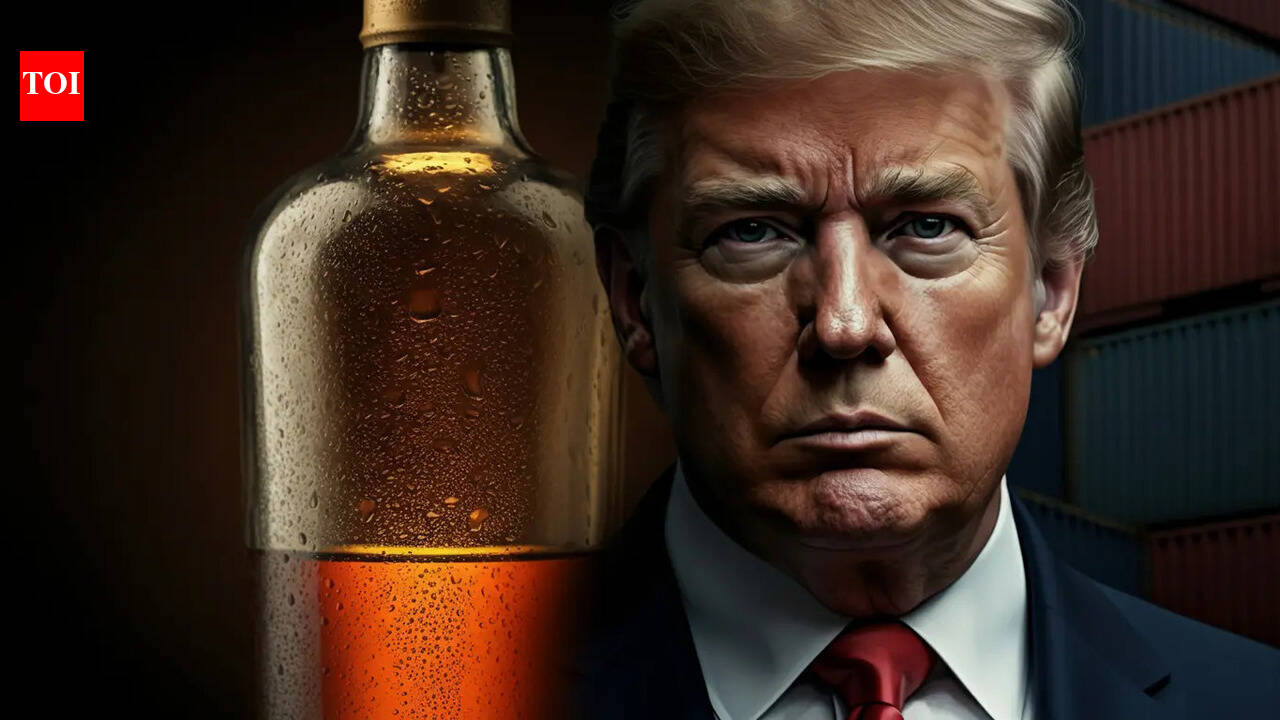
US President Donald Trump on Thursday announced that he would remove tariffs and restrictions on whiskey linked to trade between Scotland and the US state of Kentucky.In a post on Truth Social he wrote, “In Honor of the King and Queen of the United Kingdom, who have just left the White House, soon headed back to their wonderful Country, I will be removing the Tariffs and Restrictions on Whiskey having to do with Scotland’s ability to work with the Commonwealth of Kentucky on Whiskey and Bourbon, two very important Industries within Scotland and Kentucky. People have wanted to do this for a long time, in that there had been great Inter-Country Trade, especially having to do with the Wooden Barrels used. The King and Queen got me to do something that nobody else was able to do, without hardly even asking! A wonderful Honor to have them both in the USA.”This comes after King Charles and Queen Camilla visited the White House on a state visit, during which trade ties and cultural relations between the United Kingdom and the United States were discussed. The visit also included conversations around strengthening economic cooperation between key industries in both countries.According to Trump’s post, the decision was influenced by long-standing trade links between Scotland’s whisky industry and Kentucky’s bourbon sector, particularly the exchange of materials such as wooden barrels used in production. He also suggested that the royal visit played a role in encouraging the policy shift.The announcement comes against the backdrop of earlier tariff measures introduced by the Trump administration in 2025, which included a 10% baseline tariff on most British goods. Those measures had raised concerns in the Scotch whisky industry, which relies heavily on exports, particularly to the United States.Trade representatives had earlier warned that such tariffs could increase pressure on distillers and impact a sector that depends significantly on international markets.Following the latest announcement, the move is expected to be welcomed by the whisky industry. Industry representatives said distillers would be able to “breathe a little easier during a period of significant pressure on the sector,” Reuters reported.

Will AI lead to more accurate opinion polls?

Good Luck Getting a Mac Mini for the Next ‘Several Months’
Rivian renegotiates DOE loan down to $4.5 billion, adjusts capacity plans for Georgia plant

PSL 11: Hyderabad Kingsmen opt to field after winning toss against Multan Sultans

Trump administration in advanced talks for a rescue package for Spirit Airlines, source says
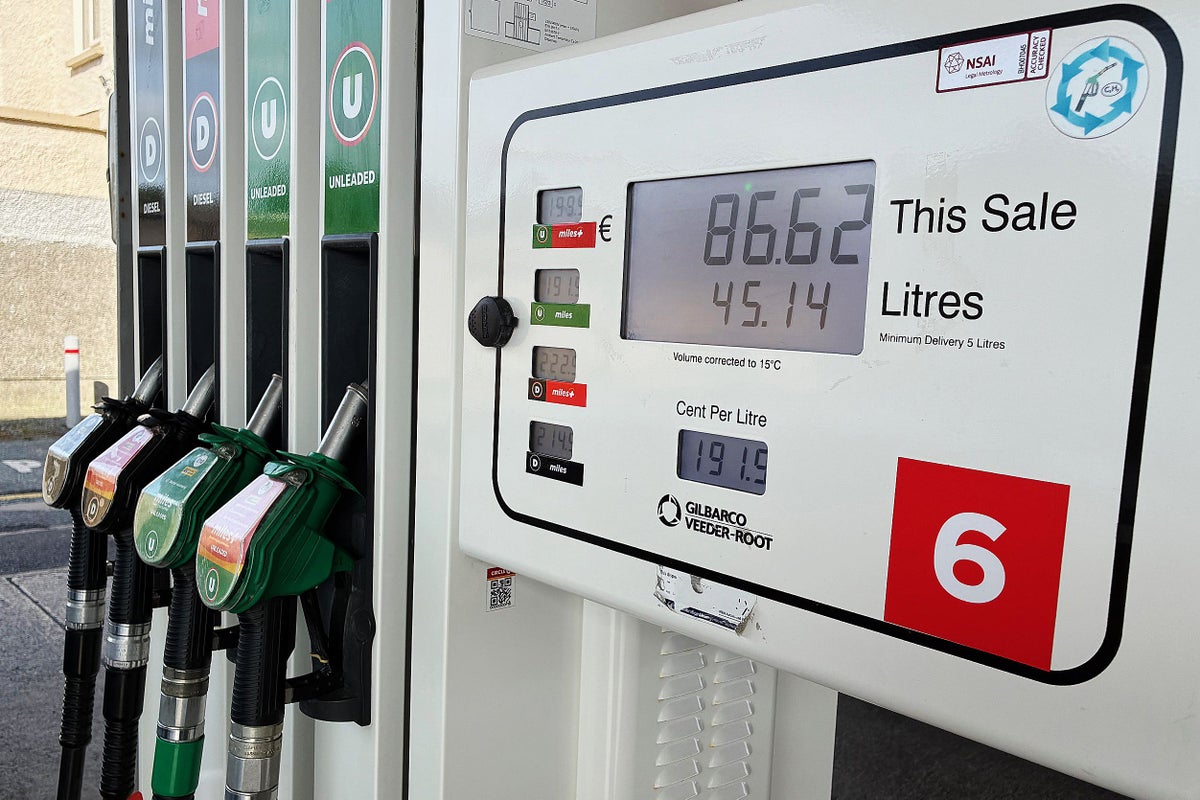
UK inflation accelerates after Iran war drives sharp rise in fuel prices

-
 Sports1 week ago
PSL 11: Hyderabad Kingsmen opt to field after winning toss against Multan Sultans
-
Business1 week ago
Trump administration in advanced talks for a rescue package for Spirit Airlines, source says
-
Business1 week ago
UK inflation accelerates after Iran war drives sharp rise in fuel prices
-

 Entertainment1 week ago
Anne Hathaway shares major news about ‘Princess Diaries 3’
-
 Tech1 week ago
Microsoft faces court battle in £2bn Windows Server class action | Computer Weekly
-
 Business1 week ago
Gold prices in Pakistan Today – April 23, 2026 | The Express Tribune
-

 Tech1 week ago
Blackbox replaces two racks of HPE storage with 8U of Everpure | Computer Weekly
-

 Fashion1 week ago
Bangladesh RMG units call for allowing local FOC raw material sourcing