

Business
Three petrol cargoes expected on Monday: Pervaiz Ali Malik | The Express Tribune

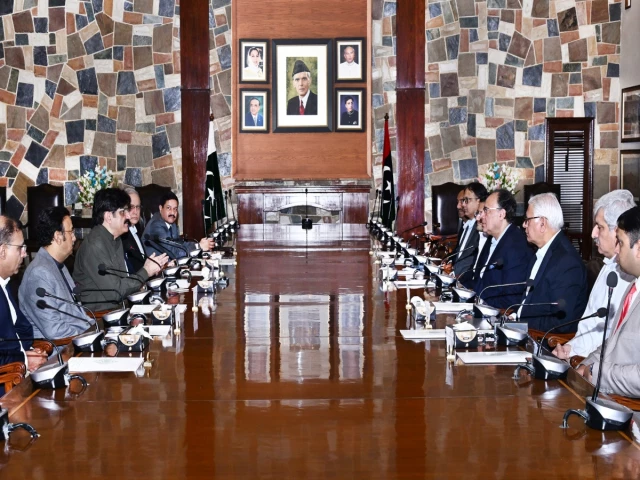
Aurangzeb warns oil price surge could raise Pakistan’s monthly import bill by up to $600m, pressuring external account
Petroleum Minister Ali Pervaiz Malik has said that three petrol cargoes were expected to reach Pakistan by Monday, as Middle East tensions threaten fuel supplies across the country.
Sindh Chief Minister (CM) Murad Ali Shah met Finance Minister Muhammad Aurangzeb and Petroleum Minister Malik to review the evolving regional situation and its potential impact on Pakistan’s energy sector and economy, according to a statement issued by the CM’s office.
“The meeting received a detailed briefing on rising global oil prices and the country’s current fuel reserves. Federal officials warned that if the Middle East conflict escalates further, crude oil prices could reach $120 per barrel, putting additional pressure on Pakistan’s economy,” it said.
The statement added that participants discussed emergency energy conservation measures aimed at managing fuel consumption and ensuring continuity of economic activity, the statement said, adding that officials noted concerns over potential hoarding at petrol pumps.
Sindh Chief Minister Syed Murad Ali Shah meets Federal Finance Minister Muhammad Aurangzeb and Federal Petroleum Minister Ali Pervaiz Malik at the CM House to review the impact of escalating tensions in Iran on Pakistan’s energy supplies and overall economy. pic.twitter.com/u5oGRoVx4H
— Sindh Chief Minister House (@SindhCMHouse) March 8, 2026
It further said the delegation was informed that Qatar had issued a force majeure declaration that could affect LNG supplies, further raising energy concerns. To maintain smooth fuel availability, the federal government is working with provinces to develop a joint dashboard for monitoring fuel stocks and supply, it added.
Petroleum minister said fuel conservation measures are essential to ensure that existing reserves last longer and remain available for essential sectors.
During meeting, FinMin Aurangzeb said the government is closely monitoring global energy markets and preparing contingency plans to mitigate the financial impact of rising oil prices. “If crude oil prices surge significantly, Pakistan’s monthly oil import bill could increase by up to $600 million, putting pressure on the country’s external account,” he added.
According to CM house, Murad emphasised responsible energy use and public cooperation. “The government’s priority is to keep the wheels of the national economy moving while managing the energy situation prudently,” he said, adding that proposals discussed at the meeting would be presented to the cabinet for further deliberation.
Read More: Govt drops ‘fuel bomb’
“Officials noted intensified diplomatic engagement with Saudi Arabia, Oman, and the United Arab Emirates to secure alternative fuel supplies via routes outside the Strait of Hormuz,” the statement said.
The meeting also decided to strengthen coordination between federal and provincial authorities to prevent hoarding and ensure smooth fuel distribution across the country, it added.
The statement said that, according to officials present at the meeting, the government plans to seek relief in the petroleum levy during upcoming discussions with the International Monetary Fund to ease the financial burden on consumers.
Participants agreed to maintain close coordination between federal and provincial governments to effectively manage the evolving energy situation and safeguard economic stability, the statement concluded.
Iran has also closed the Strait of Hormuz following airstrikes by the United States and Israel last week, halting the movement of oil supplies to many countries. As a result, crude oil prices on Friday recorded their strongest weekly gain since the extreme volatility during the COVID-19 pandemic in spring 2020, as shipping and energy exports through the key waterway were disrupted.
The government sharply increased diesel and petrol prices by Rs55 per litre, or 20% — marking the first in a series of similar surges expected in the coming days due to the ongoing US-Israel and Iran conflict, which has disrupted supply chains and pushed crude oil prices to a two-year high.
The increase in petrol prices was more than the surge in international markets, as the government chose to collect more money than required from motorcyclists and car owners to subsidise the use of diesel, mostly by the public transport and agriculture sectors.
Also Read: Iran says it could fight US and Israel for six months as regional conflict widens
A sharp increase of Rs55 per litre in petroleum prices has intensified the cost of living, with residents reporting higher transport fares and rising prices of daily-use items.
People also reported disputes at petrol pumps, where attendants were refusing to dispense fuel worth less than one litre. According to residents, many customers asked for petrol worth Rs150 or Rs200, but pump staff declined, saying the nozzle rate is fixed and fuel is either dispensed in smaller or larger quantities, leading to frequent arguments.
The rise in petrol prices also pushed up the cost of fruits, vegetables and other daily necessities. Shopkeepers said the transport cost of bringing fruits, vegetables and goods had previously been around Rs1,000 per trip but had now increased to between Rs2,500 and Rs3,000.
Drivers providing pick-and-drop services for schoolchildren have also raised their fares, with residents saying the entire burden has shifted to the public.
Business
Ticketmaster parent Live Nation reaches settlement with Department of Justice over antitrust concerns

Signs are seen at the Live Nation NYC headquarters on May 23, 2024 in New York City.
Michael M. Santiago | Getty Images
Live Nation Entertainment has reached a settlement with the Department of Justice over antitrust concerns surrounding its Ticketmaster platform, a senior DOJ official said Monday.
The settlement would see Ticketmaster unwind some of its exclusivity agreements with musical artists and open up the ticketing industry to greater competition. It still needs approval by more than 20 states that had filed suit and by the court.
As part of the settlement, Ticketmaster will offer a standalone third-party ticketing system for other companies like SeatGeek to use its technology. Live Nation has also agreed to divest at least 13 of its amphitheaters and will no longer be able to require artists to use other Live Nation products tied to its venues. It has also agreed to pay roughly $280 million in civil penalties.
Shares of Live Nation rose 5% in morning trading. Live Nation and Ticketmaster did not immediately respond to requests for comment.
Ticketmaster has long faced criticism that its dominance in the live events and ticketing space pushes up prices for consumers. The company has come under heightened scrutiny in recent years from fans who argue that it’s become harder and pricier to snag coveted event tickets.
In 2022, the backlash boiled over when the rollout of tickets for Taylor Swift’s Eras Tour was mishandled, leading to a probe of the company. And in 2024, the DOJ — along with more than two dozen states — sued to break up Live Nation and Ticketmaster, which merged in 2010.
In September, Live Nation was separately sued by the Federal Trade Commission over what the agency called “illegal” ticket resale tactics. The FTC said Ticketmaster controls roughly 80% of major concert venues’ ticketing.
In a Monday statement, New York Attorney General Letitia James said her office would continue to fight against Live Nation’s alleged monopoly even after its agreement with the DOJ.
“The settlement recently announced with the U.S. Department of Justice fails to address the monopoly at the center of this case, and would benefit Live Nation at the expense of consumers. We cannot agree to it,” said James, who is joined by the attorneys general of more than 20 other states.

The conflict in the Middle East could raise the cost of petrol, household energy bills and even food.
Source link

Oil prices surged past $115 (£86.47) a barrel on Monday as fuel shortages sparked rationing and violence in South Asia, as the Iran war continues to choke the world’s most critical energy route.
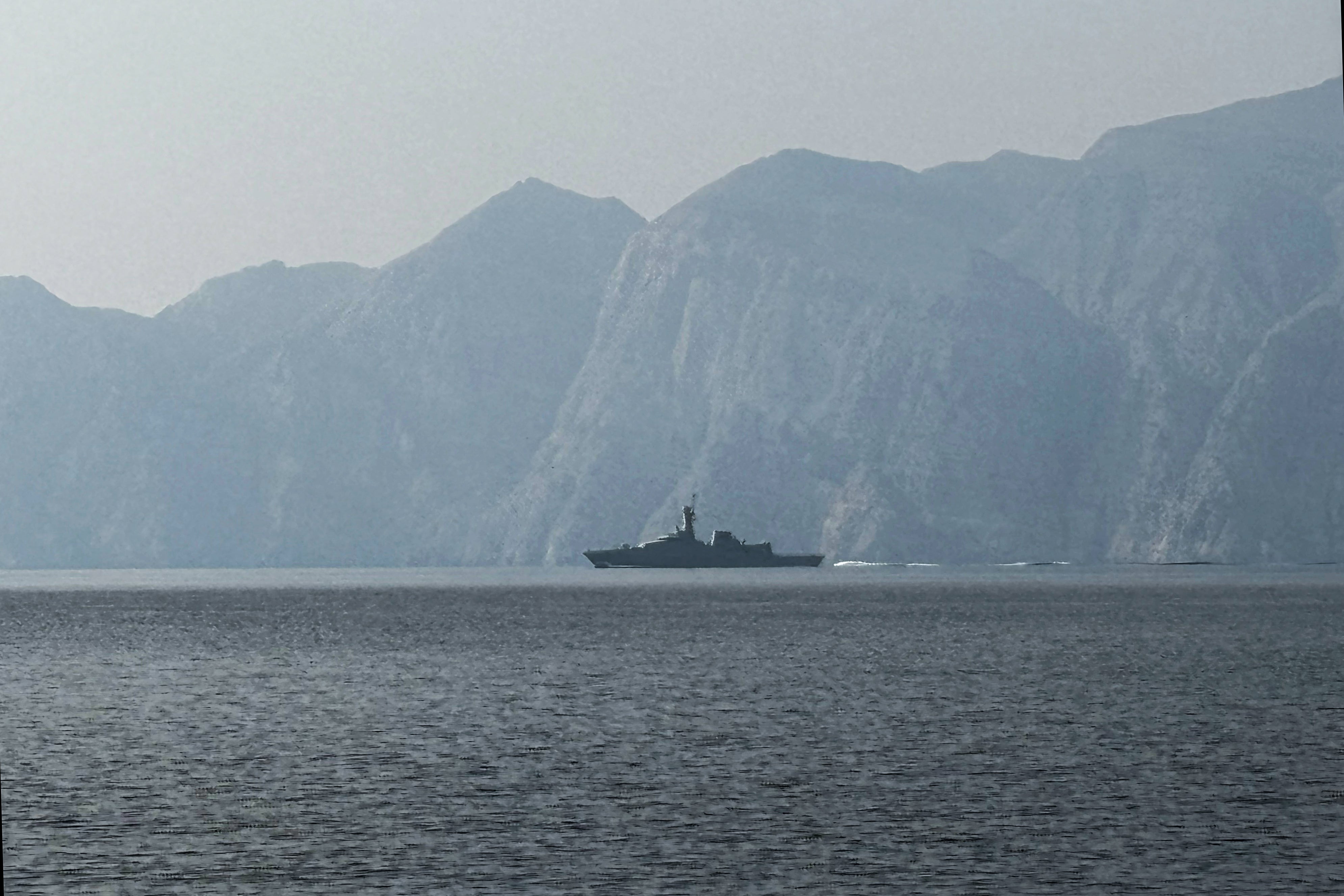
Brent crude rose to $115.31 (£86.47) a barrel, up 24 per cent from Friday’s close and the highest since 2022, as the US–Israeli war with Iran entered its second week. The Strait of Hormuz remained effectively closed to most operators.
West Texas Intermediate crude hit $116.33 (£87.41), up 28 per cent. Brent has not traded at current levels since Russia invaded Ukraine in 2022.
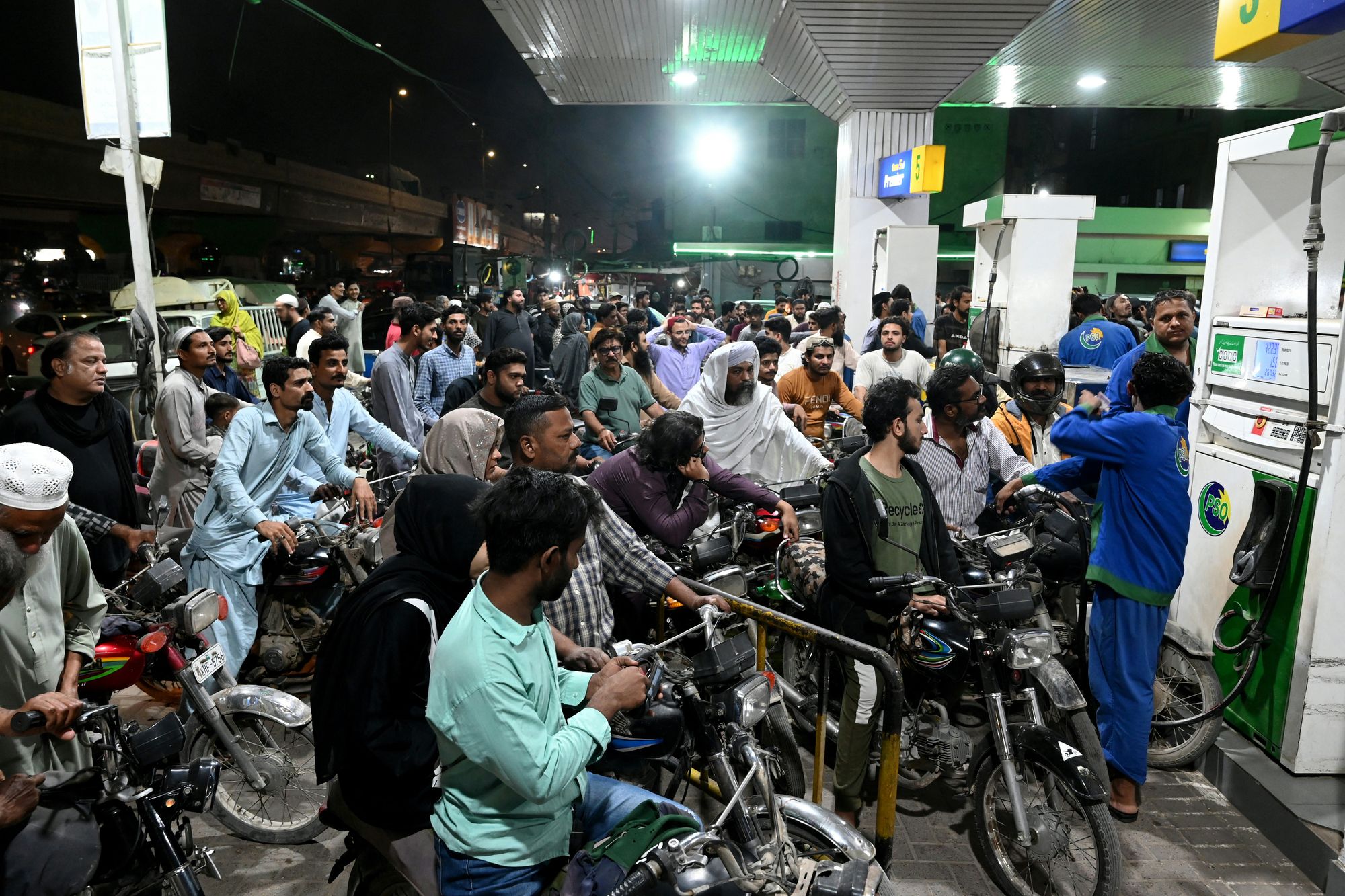
The surge in energy prices is causing rationing and closure of petrol stations in import-dependent South Asia.
In Sialkot, Pakistan, a man opened fire at a petrol station on Saturday after workers refused to fill jerry cans, killing one worker and critically injuring two others. Separately, a man was killed in Karachi in another fuel queue altercation.
Pakistan raised petrol prices by PKR55 (£0.15) per litre on Friday, the largest ever single increase, to PKR321 per litre, after weeks of warnings that its exposure to Hormuz-linked supply was among the highest of any emerging market.
In Bangladesh, authorities on Monday brought forward university Eid holidays as an emergency measure to cut electricity use and ease fuel pressure after Qatar suspended Liquefied natural gas (LNG) deliveries.
Officials said university campuses consume large amounts of electricity for residential halls, classrooms, laboratories and air conditioning, and the early closure would help ease pressure on the country’s strained power system.
Five of the country’s six fertiliser factories have also closed.
Bangladesh already imposed daily fuel limits last week – motorcyclists are capped at two litres, private cars at 10 – after panic buying emptied stations across the country.
“About 95 per cent of our fuel must be imported,” Bangladesh Petroleum Corporation said, urging consumers not to hoard.
Meanwhile, bigger economies are also affected. Japan said on Sunday it had instructed a national oil reserve storage site to prepare for a possible release of crude, the first such directive since 2022.
Japan holds 254 days of emergency reserves, one of the highest, but sources 95 per cent of its crude from the Middle East, with roughly 70 per cent shipped through the Strait.
India, which imports more than 88 per cent of its oil, sought to calm concerns. Oil minister Hardeep Puri said the country held “sufficient stocks” and directed all LPG (liquefied petroleum gas) refineries, public and private, to increase production.
Analysts are now warning that oil prices could exceed $150 a barrel – a level that could be catastrophic for the global economy.
“Oil prices have now gathered all the ingredients for a perfect storm,” Muyu Xu, senior oil analyst at Kpler, told Reuters. “If the disruption in the Strait of Hormuz persists for another one to two weeks, we could see prices move toward $130–150 a barrel.”
BMI, a unit of Fitch Solutions, said Pakistan and India are the most vulnerable major emerging markets, citing their energy import dependence and high exposure to Hormuz. Egypt and Turkey, it said, face the greatest risk outside the Gulf because of fragile external positions and large energy subsidies.
The shortages come as Iraq, Kuwait and the UAE cut oil production as storage tanks fill due to the reduced ability to export through the Strait.
Iran‘s parliament speaker, Mohammad Bagher Ghalibaf, warned that the war’s impact on the oil industry “would spiral” after Israeli strikes on oil depots in Tehran and a petroleum transfer terminal killed four people overnight.
Roughly 15 million barrels of crude oil, about 20 per cent of global supply, typically pass through the Strait each day, according to Rystad Energy.
The energy minister of Qatar, one of the world’s largest LNG producers, warned that it expects all Gulf energy producers to shut down exports within weeks if the Iran conflict continues.
“Everybody that has not called for force majeure we expect will do so in the next few days if this continues,” Saad al-Kaabi told FT on Friday. “All exporters in the Gulf region will have to call force majeure.”
US energy secretary Chris Wright told CNN on Sunday that gas prices would be back under $3 a gallon “before too long”, describing the spike as “a weeks, not a months thing”.


NASA crashes spacecraft into asteroid moonlet, successfully deflects its orbit

Anthropic Sues Department of Defense Over Supply-Chain Risk Designation

Nigeria forms textile steering committee to set up CTGDB

-
 Politics2 days ago
India let Iran warship dock the day US sank another off Sri Lanka, say officials
-

 Sports3 days ago
Pakistan set for FIH Pro League debut | The Express Tribune
-

 Sports1 week ago
College basketball star suspended by team for spitting toward opposing fan
-

 Entertainment1 week ago
Al Jazeera broadcast interrupted by emergency missile alert in Qatar
-

 Entertainment2 days ago
Harry Styles kicks off new era with ‘One Night Only’ comeback show
-
 Business1 week ago
Labour parliamentarians urge UK Government to oppose Rosebank oil field
-

 Sports1 week ago
Michigan loses L.J. Cason for rest of season with torn ACL
-
 Business3 days ago
Home heating oil: ‘Most of my pension has gone on home heating oil’