

Entertainment
Three weeks in, Iran war escalates beyond Trump’s control

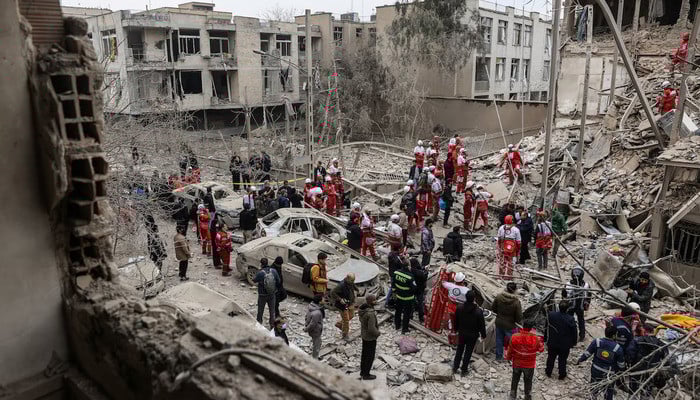
President Donald Trump ends the third week of the Iran war confronting a crisis that seems to be slipping out of his hands: Global energy prices are surging, the United States stands isolated from allies and more troops are preparing to deploy despite his promise the war would be only a “short excursion.”
A defensive Trump called other Nato countries “cowards” for refusing to help secure the Strait of Hormuz and insisted the campaign was unfolding according to plan. But his declaration on Friday that the battle “was Militarily WON” clashed with the reality of a defiant Iran that is choking off Gulf oil and gas supplies while launching missile strikes across the region.
Trump, who took office promising to keep the US out of “stupid” military interventions, now appears to control neither the outcome nor the messaging of a conflict he helped to initiate. The lack of a clear exit strategy carries risks both for his presidential legacy and his party’s political prospects as Republicans scramble to defend narrow majorities in Congress in the November midterm elections.
“Trump has built himself a box called the Iran war, and he can’t figure out how to get out of it,” said Aaron David Miller, a former Middle East negotiator for Republican and Democratic administrations. “That’s his biggest source of frustration.”
A White House official challenged that characterisation, with many of Iran’s top leaders eliminated in targeted killings, most of its navy sunk and its ballistic missile arsenal largely destroyed.
“This has been an undisputed military success,” the official said.
Limits of Trump’s powers
The limits of Trump’s power — diplomatically, militarily and politically — were thrown into sharp relief over the past week.
He was caught off-guard by the resistance of fellow Nato members and other foreign partners to deploying their navies to help secure the Strait of Hormuz, according to another White House official who, like other officials Reuters spoke to for this story, was granted anonymity to discuss internal deliberations.
With the president not wanting to appear isolated, some White House aides have advised Trump to quickly find an “off-ramp” and set limits on the military operation’s scope, said one person close to the discussions. But it was unclear whether that argument was enough to sway Trump.
In the view of some analysts, allies’ unwillingness reflects not only their reluctance over entanglement in a war they were not consulted on, but a backlash against his belittling of traditional US alliances since his return to office 14 months ago.
Differences with Israel also have begun surfacing, with Trump insisting that he knew nothing in advance about the Israeli attack on Iran’s South Pars gas field, while Israeli officials said the strike had indeed been coordinated with the US.
Trump now finds himself at a crossroads in Operation Epic Fury with no clear sign of which path he might take, analysts say.
He could go all-in and intensify the US offensive, possibly even seizing Iran’s oil hub on Kharg Island or deploying troops along Iran’s coast to hunt for missile launchers. But that would risk a long-term military commitment that the American public would mostly oppose.
Or, with both sides rejecting negotiations for now, Trump could declare victory and try to walk away, which could alienate Gulf allies who would be left with a wounded, hostile Iran – one that could still pursue a crude nuclear weapon and still exert control over shipping in the Gulf. Iran has denied it is seeking a nuclear weapon.
Reuters reported on Friday that the US military is deploying thousands of additional Marines and sailors to the Middle East, although no decision had been made to send troops into Iran itself.
The war has also shown Trump’s once-iron grip over his MAGA movement is weakening, with prominent influencers speaking out against the conflict. While his base has mostly stood with him so far, analysts say that Trump’s control could weaken in the coming weeks if gas prices keep rising and US troops are deployed.
“As the economics play themselves out,” Republican strategist Dave Wilson said, “people will start to say: ‘Why am I paying high gas prices again? … Why is the Strait of Hormuz now determining whether or not I can take a vacation next month?'”
As the economics play themselves out,” Republican strategist Dave Wilson said, “people will start to say: ‘Why am I paying high gas prices again? … Why is the Strait of Hormuz now determining whether or not I can take a vacation next month?'”
Miscalculations
Since the war’s start on February 28, there has been a growing realisation within the administration that the conflict and its consequences should have been better mapped out in advance, according to two sources familiar with White House thinking, although the first White House official countered that the campaign was extensively planned and well-equipped for any potential action.
Analysts say Trump’s biggest misjudgment was over how Iran would respond to a conflict that it considers existential.
Tehran has retaliated with its remaining missiles and a fleet of armed drones to offset its foes’ military superiority, striking neighboring Gulf states and mostly shutting down the Strait of Hormuz, the conduit for one-fifth of the world’s oil.
Whether or not Trump and his aides foresaw the dangers, they have been unable to counter them effectively.
“They failed to think through the contingencies around ways in which a conflict with Iran could go sideways, where it might not go according to the plan as they laid out,” said former US ambassador John Bass, who served in Afghanistan and Turkey.
As the conflict has dragged on, there have been increasing signs of Trump’s frustration with his inability to control the narrative. In recent days, he has torn into the news media, advancing unfounded allegations of “treason” for reporting that he sees as undermining the war effort.
“He’s finding it difficult to drive the news cycle, as he’s accustomed to, because he still can’t explain why he’s taken this country to war and what comes next,” said Brett Bruen, a former foreign policy adviser in the Obama administration who now heads the Situation Room strategic consultancy in Washington. “He seems to have lost his mojo on messaging.”
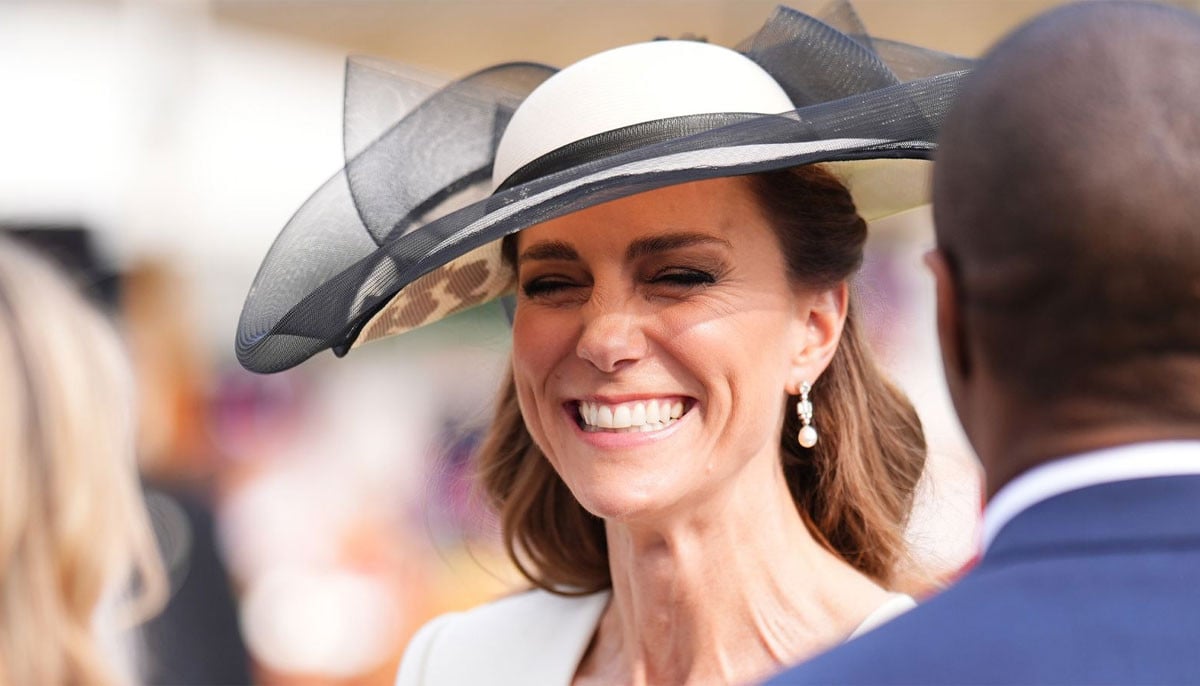
Princess Kate begins her first overseas royal tour to Italy after cancer diagnosis.
Source link
- Tuesday’s request for physical remand was rejected.
- Police later filed fresh plea for custody for investigation.
- Pinky arrested from Garden area, wanted in ‘multiple’ cases.
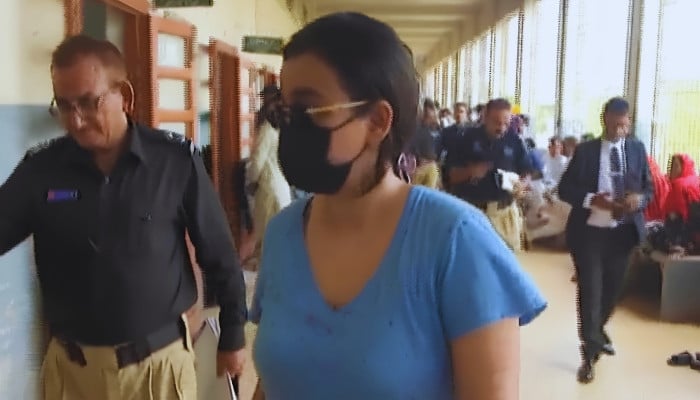
A local court in Karachi on Wednesday approved a three-day physical remand of a high-profile woman “drug peddler”, Anmol alias Pinky, in a case registered by Karachi South Police.
The police approached the court a day after a request for her physical remand was rejected. The suspect had earlier been sent to jail on judicial remand.
The investigating officer had cited three main grounds in the remand report: identifying the source of cocaine supply, determining her financial resources, and conducting a Criminal Record Office (CRO) check.
During Wednesday’s hearing, the investigating officer once again sought physical remand in the case registered against Pinky. The DIG South said that a fresh plea for physical remand was filed before the court, adding that the details of previous cases against Anmol alias Pinky have also been collected.
Pinky, who was arrested from Karachi’s Garden area, was a highly wanted suspect and had been absconding in at least 10 different cases, according to police.
Police said weapons, cocaine, and other drugs worth around Rs1.5 million were recovered from her custody, adding that she was allegedly running a drug supply network in the port city.
‘Pinky’s voice note’
Separately, the investigators recovered multiple audio messages from her mobile phone. In one recording, she is heard warning contacts about a possible arrest and suggesting that her network would continue through another individual handling her operations.
“Hi friends! If you are listening to this message, it means either something has happened to me or I am no longer alive. If anything happens to me, someone will continue contacting you from this same number,” Pinky can be heard saying this in the alleged voice note.
“The contact person will be a man, my friend, who will handle the work. If something happens to me, the work will continue through the same number.”
SSP South removed from inquiry
In a separate development, the SSP South has been removed from the inquiry and was replaced by DIG West Irfan Baloch, according to a notification.
Irfan Baloch has been assigned to investigate all matters that surfaced during Pinky’s court appearance on Tuesday. The inquiry will also examine alleged violations of protocol.
The DIG West has been directed to submit his report within three days, as per the notification. The Additional IG said that strict action will be taken against any officers or officials found guilty of negligence or misconduct.
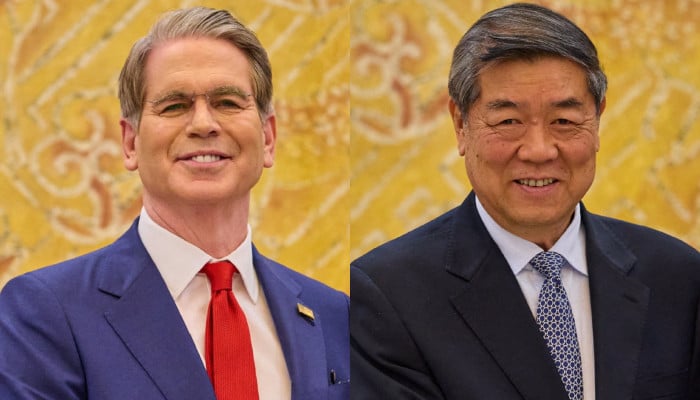
- Bessent and He Lifeng hold talks at the airport.
- Each met South Korean president separately.
- Talks to set stage for Trump-Xi summit in Beijing.
INCHEON, South Korea: US Treasury Secretary Scott Bessent and Chinese Vice Premier He Lifeng started talks in South Korea on Wednesday to lay the groundwork ahead of this week’s summit of the leaders of the world’s two biggest economies in Beijing.
Bessent and He began the talks at Incheon airport after each met South Korean President Lee Jae Myung at the presidential Blue House, Reuters witnesses said.
The discussions are expected to cover a range of issues to prepare for talks in Beijing between US President Donald Trump and Chinese President Xi Jinping that are set to run from Thursday to Friday.
The talks between Bessent and He were likely to be exploratory with limited immediate outcomes, said Kim Tae-hwang, a professor of international trade at Myongji University in Seoul.
“Both sides are essentially in a holding pattern ahead of the summit, sounding each other out, rather than seeking breakthroughs,” he said.
China’s lead trade negotiator, Vice Commerce Minister Li Chenggang, and Vice Finance Minister Liao Min were among the officials accompanying He.
At the Beijing summit, the leaders are expected to agree to set up forums to ease mutual trade and investment, while China is expected to announce purchases related to Boeing aeroplanes, American agriculture and energy, US officials have said.
Beijing also wants the United States to relax curbs on exports of advanced semiconductors, and has raised concerns about a bill to keep critical chip-making equipment from China.
They are considering extending a truce on China’s export curbs on rare earths at the summit, but Chinese customs data shows Beijing is still throttling shipments of the materials vital for defence and manufacturing.
The summit talks may also encompass the Iran war, as China, which maintains ties with Iran, is a major buyer of its oil.
Trump said on Tuesday, however, he did not think he would need China’s help to end the conflict, even as hopes for a lasting peace deal dwindled and Tehran tightened its grip over the Strait of Hormuz.
Neither side has strong incentives to make early concessions, however, said Kim, the academic, adding that the United States is unlikely to ease curbs on key technologies such as semiconductors.
China, in turn, buoyed by relatively resilient growth and trade performance, is under less pressure to offer significant compromises, he said.


Trains at 220 kmph on Indian Railways soon! Cabinet approves Ahmedabad-Dholera semi high-speed rail project; check details – The Times of India

Canada, Vietnam seek broader trade cooperation
Rupee at 95.74: INR hits all-time low as oil prices pressure economy – The Times of India

-

 Tech1 week ago
DHS Demanded Google Surrender Data on Canadian’s Activity, Location Over Anti-ICE Posts
-

 Tech5 days ago
A new frontier: Identity stack evolves for agentic systems | Computer Weekly
-

 Tech5 days ago
‘Orbs,’ ‘Saucers,’ and ‘Flashes’ on the Moon: Pentagon Drops New UFO Files
-

 Sports5 days ago
Shaheen Afridi achieves landmark feat during opening Test against Bangladesh
-

 Tech5 days ago
What Microsoft Executives Really Thought About OpenAI in 2018
-

 Tech5 days ago
Nick Bostrom Has a Plan for Humanity’s ‘Big Retirement’
-
 Business1 week ago
India among most resilient large EMs, better placed for future global shocks; policy reforms & strong buffers help: Moody’s – The Times of India
-

 Fashion5 days ago
New orders in German manufacturing up 5% MoM in Mar 2026: Destatis