

Tech
TikTok Is Now Collecting Even More Data About Its Users. Here Are the 3 Biggest Changes

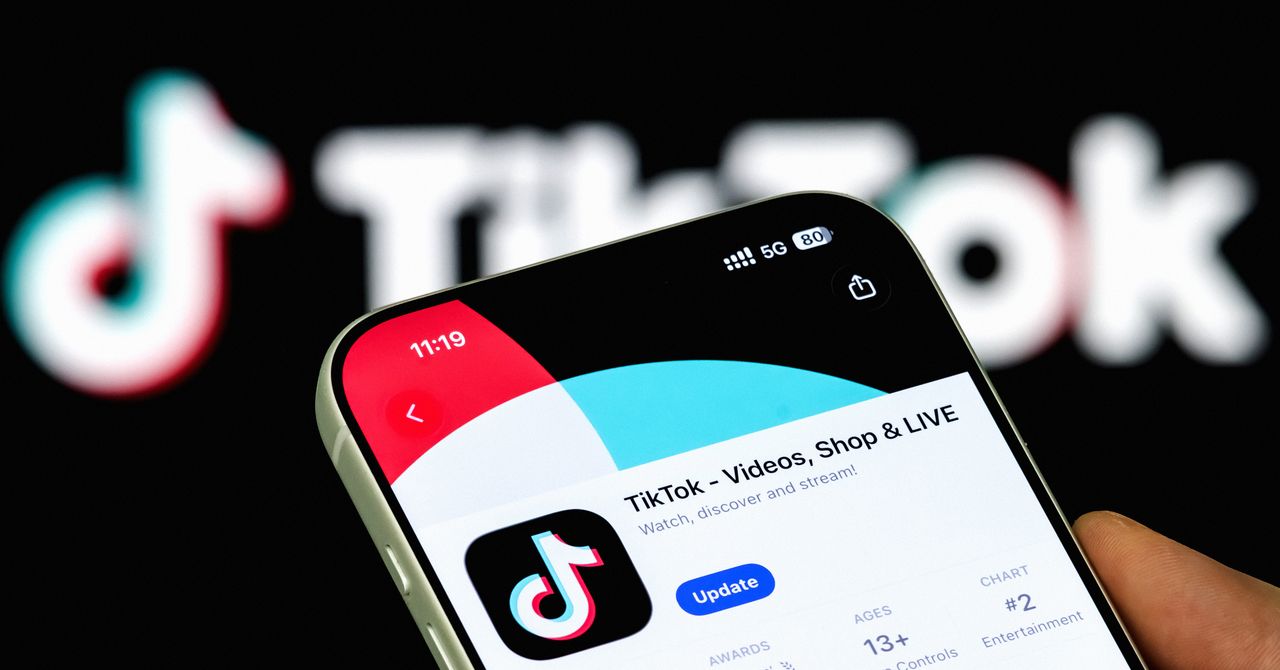
When TikTok users in the US opened the app today, they were greeted with a pop-up asking them to agree to the social media platform’s new terms of service and privacy policy before they could resume scrolling.
These changes are part of TikTok’s transition to new ownership. In order to continue operating in the US, TikTok was compelled by the US government to transition from Chinese control to a new, American-majority corporate entity. Called TikTok USDS Joint Venture LLC, the new entity is made up of a group of investors that includes the software company Oracle.
It’s easy to tap Agree and keep on scrolling through videos on TikTok, so users might not fully understand the extent of changes they are agreeing to with this pop-up.
Now that it’s under US-based ownership, TikTok potentially collects more detailed information about its users, including precise location data. A spokesperson for TikTok USDS declined to comment.
Here are the three biggest changes to TikTok’s privacy policy that users should know about.
TikTok Adds Precise Location Tracking
TikTok’s change in location tracking is one of the most notable updates in this new privacy policy. Before this update, the app did not collect the precise, GPS-derived location data of US users. Now, if you give TikTok permission to use your phone’s location services, then the app may collect granular information about your exact whereabouts. Similar kinds of precise location data is also tracked by other social media apps, like Instagram and X.
Old Privacy Policy:
We collect information about your approximate location, including location information based on your SIM card and/or IP address. In addition, we collect location information (such as tourist attractions, shops, or other points of interest) if you choose to add the location information to your User Content. Current versions of the app do not collect precise or approximate GPS information from US users.
New Privacy Policy:
Location information about your approximate location based on your device and network information, such as SIM card region, IP address, and device system settings. We also collect information, such as tourist attractions, shops, or other points of interest, if you choose to add the location to your user content. Also, if you choose to enable location services for the TikTok app within your device settings, we collect approximate or precise location information from your device.
TikTok Now Tracks AI Interactions
Rather than an adjustment, TikTok’s policy on AI interactions adds a new topic to the privacy policy document. Now, users’ interactions with any of TikTok’s AI tools explicitly fall under data that the service may collect and store. This includes any prompts as well as the AI-generated outputs. The metadata attached to your interactions with AI tools may also be automatically logged.
Old Privacy Policy:
(These AI interactions are not explicitly mentioned in the past policy.)
New Privacy Policy:
When you create an account, upload content, contact us directly, or otherwise use the Services, you may provide some or all of the following information … AI interactions, including prompts, questions, files, and other types of information that you submit to our AI-powered interfaces, as well as the responses they generate.
We automatically collect certain information from you when you use the Services, including … metadata that is automatically uploaded in connection with your user content, messages, or AI interactions, such as how, when, where, and by whom the user content was created, or message or prompt was sent. Metadata may also include information, such as your username, that enables your user content to be traced back to your account by other users.
TikTok Expands Its Ads Network
This change to TikTok’s privacy policy may not be as immediately noticeable to users, but it will likely have an impact on the types of ads you see outside of TikTok. So, rather than just using your collected data to target you while using the app, TikTok may now further leverage that info to serve you more relevant ads wherever you go online. As part of this advertising change, TikTok also now explicitly mentions publishers as one kind of partner the platform works with to get new data.
Old Privacy Policy:












As passengers return to the US from the cruise that saw a rare hantavirus outbreak, much of the country is lacking a basic public health tool: a test to diagnose the illness in the earliest stages of infection. Nebraska may be the first state with the ability to do so.
In just a few days, a lab at the University of Nebraska Medical Center in Omaha developed its own diagnostic test for the Andes virus in anticipation of receiving 16 American passengers from the ship.
“I believe we might be the only lab in the nation that has this test available at the moment,” Peter Iwen, director of the Nebraska Public Health Laboratory tells WIRED, referring to polymerase chain reaction (PCR) testing, which was important during the Covid-19 pandemic. Its ability to detect tiny quantities of the virus before patients have full-blown symptoms makes it crucial for identifying cases quickly, getting patients prompt medical treatment, and preventing the spread of disease.
The university’s medical center is home to a highly specialized biocontainment unit designed to care for patients with severe infectious diseases that lack vaccines or treatments. Staff members previously treated patients during the 2014 Ebola outbreak and cared for some of the first Americans diagnosed with Covid in 2020.
When Nebraska was notified that it would be receiving some of the passengers, Iwen contacted the US Centers for Disease Control and Prevention to see if it had tests on hand. He learned that the CDC has the ability to run a serological test, which looks for the presence of hantavirus antibodies. But people don’t develop antibodies until they are actively sick and their body has had time to mount an immune response.
Andrew Nixon, a spokesperson for the US Department of Health and Human Services, told WIRED that the CDC has a PCR test for the Andes virus but that it’s a research test that cannot be used for patient management. Research tests are used in scientific experiments, while diagnostic tests that are meant to confirm or rule out a disease in patients need to be rigorously tested, or validated, to make sure they are capable of producing consistent results. Nixon said the agency is working on validating its PCR test.
Iwen’s lab mobilized quickly to track down the materials needed to build and validate a PCR test from scratch. They called a lab in California—a state that has previously seen hantavirus cases—but their test was for a specific strain found in the US. Andes virus has previously only been detected in South America and isn’t found in rodents native to the US.
“Tests that we have available in the US will not detect that virus that’s found in South America,” he says, noting that the Andes virus is very different genetically from the primary hantavirus strain found in the US, known as the Sin Nombre virus.
The Nebraska team reached out to Steven Bradfute, a hantavirus scientist at the University of New Mexico. Frannie Twohig, a graduate student in Bradfute’s lab, had developed an Andes virus PCR test for research purposes as part of her PhD work. Bradfute’s lab also has genetic material of the Andes virus that’s not capable of causing disease which the Nebraska lab would need to validate its test.
On Friday, Bradfute shipped the genetic material and a box of chemical reagents needed to detect the virus in blood samples overnight to Nebraska. By Saturday morning, Iwen’s team had what it needed to start assembling and validating its test.
It was enough to run about 300 tests, which took all day Saturday and Sunday, Iwen says. His team added Andes genetic material in various concentrations to samples of healthy human blood to see if their test could detect it. Then, they compared the results to control samples. The team used up about a third of its tests on the validation process and now has the capacity to conduct a few hundred tests on patient samples.
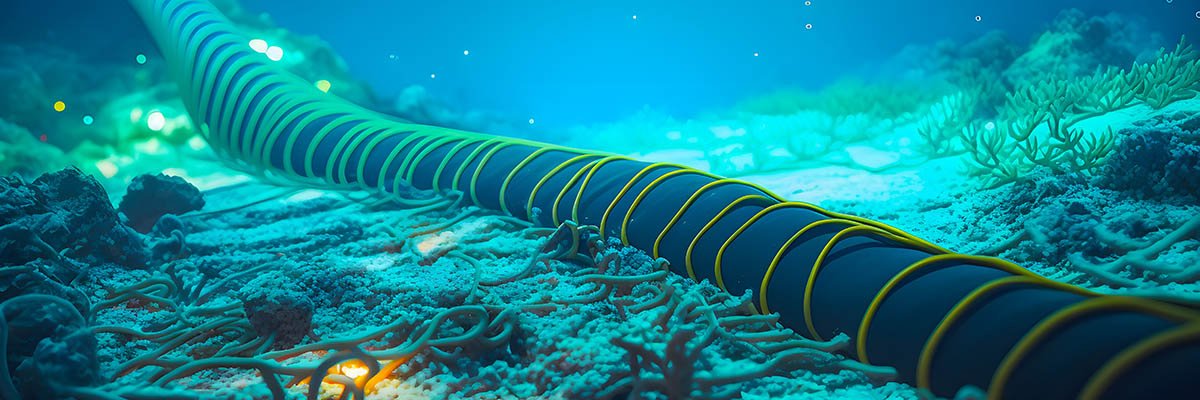
A subsea infrastructure project, Via Africa, has been unveiled to strengthen connectivity between Europe and Africa, aiming to enhance the resilience and diversity of West Africa’s international communications.
The Via Africa project will comprise a submarine cable system that will connect Europe to Africa along the Atlantic coast, and provide a subsea route alongside existing infrastructure at a time when, says the consortium, demand for cloud services, artificial intelligence (AI) workloads and international traffic is rapidly increasing across the continent.
The communications system aims to connect Europe to South Africa – including landing points in the UK, France and Portugal – with destinations along the Atlantic coastline such as the Canary Islands, Mauritania, Senegal, Guinea, Côte d’Ivoire and Nigeria. Including extensions further south, the net result will be to contribute to greater diversity and resilience of international connectivity serving Africa, by providing a different subsea route than existing infrastructure and strengthening the robustness of regional connectivity.
It will operate under a consortium model, and participating operators will be able to co-invest in the infrastructure and play a direct role in governance, deployment and future operation. By being managed as a consortium, the project is seen as enabling participating partners seeking autonomy and sovereignty to co-invest in the infrastructure and take part in its governance.
They add that such a “robust and proven” model allows investors to participate directly in the decisions regarding the design, deployment and exploitation of the system, and contribute to decisions that best meet their needs.
Major investors that have a signed a memorandum of understanding to initiate the scheme include major European telcos Vodafone and Orange Group, as well as Guilab, International Mauritania Telecom, Orange Côte d’Ivoire, Silverlinks, Senegalese operator Sonatel, and Canalink, whose business connects Africa, the Canary Islands and Europe.
The partners say they have a shared ambition to develop international connectivity, to support traffic growth and to strengthen the resilience of networks across the African continent. The initial telco and digital player partners say they are open to additional partners potentially joining the project in the future.
As part of the initial phase of the project, consortium members will jointly finance a cable route study to identify the optimal cable route that balances resilience, technical feasibility and overall economic efficiency. In parallel, the consortium is preparing the procurement process for selecting a cable supplier, marking the next step in the development of the system.
On behalf of Orange, Via Africa adds to the Medusa Submarine Cable System, designed to transform infrastructure in the Mediterranean region. Owned by African infrastructure and telecoms operator AFR-IX Telecom, and which made its first landing on European soil in October 2025, Medusa is 8,760km long, and will be the first and longest subsea cable to connect the main Mediterranean countries, providing access to telecommunications infrastructure and 16 landing points around the Mediterranean Sea.
Operationally, Medusa has two main regions: Europe and North Africa. In Europe, it has local operational branches in Ireland, Portugal, Spain, France, Italy, Greece and Cyprus. These branches hold licenses and permits. The Network Operations Centre is based in Europe. In North Africa, Medusa has agreements with local licensed operators for landing parties.
Medusa is seen as being crucial for developing the digital ecosystem of populations in North African countries, taking a significant step towards closing the digital divide between Europe and North Africa, connecting countries such as Morocco, Tunisia, Libya, Algeria and Egypt with high-capacity fibre-optic links to six European Union member states: Portugal, Spain, France, Italy, Greece and Cyprus.
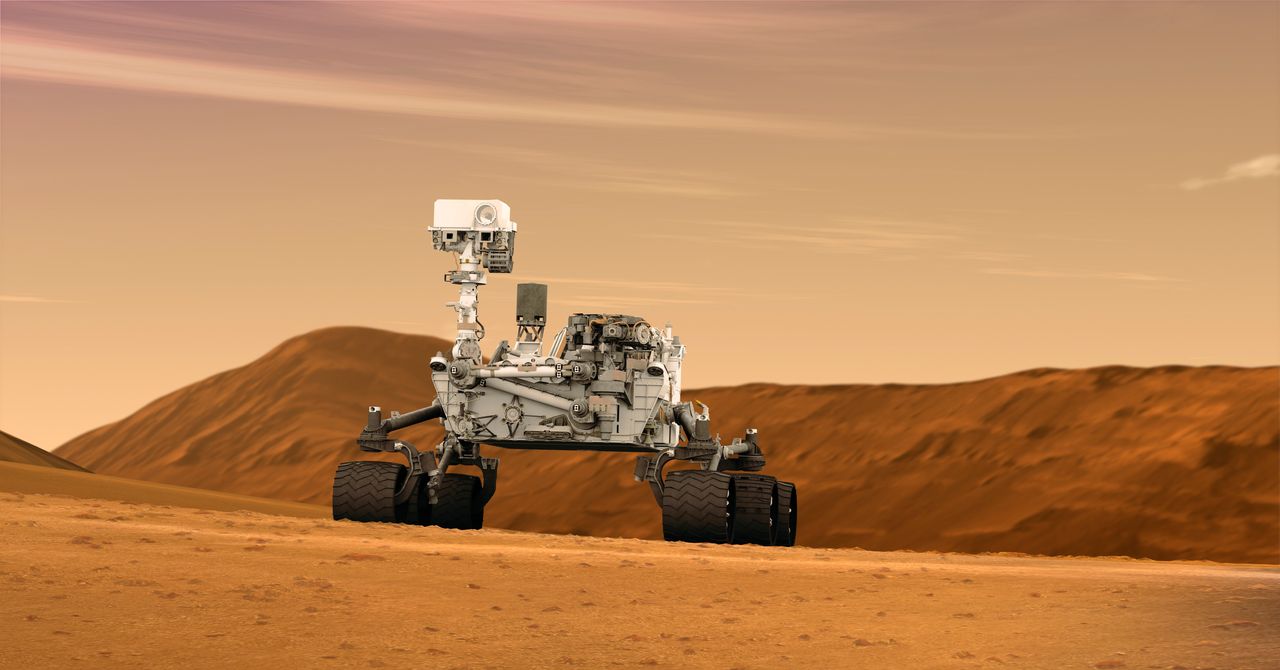
While it has enabled many exciting discoveries, the Curiosity Rover has also encountered its share of setbacks. The latest left NASA engineers speechless.
On April 25, Curiosity drilled into a rock nicknamed “Atacama” to collect a sample. When the rover retracted the robotic arm after drilling, the entire rock unexpectedly lifted off the Martian surface—all 28.6 pounds of it. While other Curiosity drilling operations have caused cracks or breaks in the upper layers of Martian rocks during the rover’s nearly 14-year mission, this is the first time one has remained stuck to the sleeve that surrounds the drill’s rotating tip.
As the space agency itself recounts, it was the black-and-white obstacle-detection cameras mounted on the front of the rover’s chassis that captured this peculiar “accident” in a sequence of images that allowed engineers to get to work immediately to free it, moving its robotic arm and operating the drill repeatedly over several days.
Engineers initially tried to remove the rock by vibrating the drill, to no avail. On April 29, they adjusted the position of the robotic arm and tried vibration again, but only managed to knock some sand off the rock. On May 1, the team gave it another try by tilting the drill more, rotating and vibrating it, and spinning the drill bit. The team expected to have to repeat these operations several times, but instead the rock broke loose on the first attempt, shattering into a multitude of pieces when it hit the Martian soil.
NASA’s Curiosity rover was developed by the Jet Propulsion Laboratory and landed on Mars in August 2012 with the purpose of looking for evidence that the Red Planet might have once had conditions that could support microbial life. In 2020, it conducted an experiment in the Glen Torridon region within Gale Crater, an area rich in clay minerals that strongly indicate the presence of water in the past and that it collected using onboard instruments known as Sample Analysis on Mars.
This story originally appeared in WIRED Italia and has been translated from Italian.


Christopher Nolan explained Travis Scott casting in ‘The Odyssey’

Geena Davis on “The Boroughs” and why she’s drawn to supernatural projects

Cricket legend Shahid Afridi conferred Hilal-e-Imtiaz

A new frontier: Identity stack evolves for agentic systems | Computer Weekly

‘Orbs,’ ‘Saucers,’ and ‘Flashes’ on the Moon: Pentagon Drops New UFO Files

India among most resilient large EMs, better placed for future global shocks; policy reforms & strong buffers help: Moody’s – The Times of India

-
 Tech5 days ago
A new frontier: Identity stack evolves for agentic systems | Computer Weekly
-
 Tech5 days ago
‘Orbs,’ ‘Saucers,’ and ‘Flashes’ on the Moon: Pentagon Drops New UFO Files
-
Business1 week ago
India among most resilient large EMs, better placed for future global shocks; policy reforms & strong buffers help: Moody’s – The Times of India
-

 Tech5 days ago
Nick Bostrom Has a Plan for Humanity’s ‘Big Retirement’
-

 Tech6 days ago
What Microsoft Executives Really Thought About OpenAI in 2018
-

 Sports5 days ago
Shaheen Afridi achieves landmark feat during opening Test against Bangladesh
-

 Fashion5 days ago
New orders in German manufacturing up 5% MoM in Mar 2026: Destatis
-

 Tech5 days ago
The Canvas Hack Is a New Kind of Ransomware Debacle