

Politics
Top Sri Lankan Buddhist monk arrested over alleged sex abuse

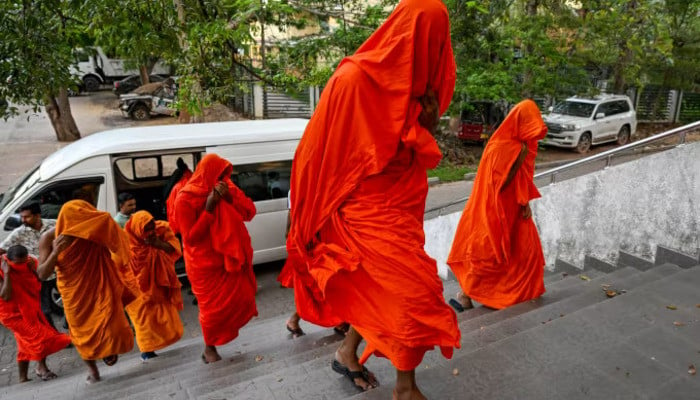
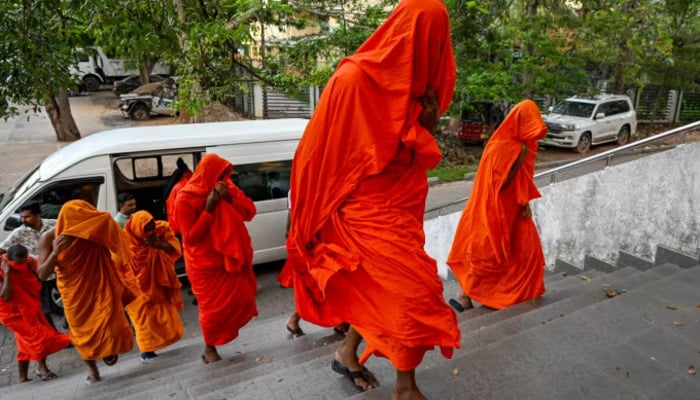
Sri Lankan authorities arrested a senior Buddhist monk on Saturday for the alleged sexual abuse of an underage girl, police said, marking the highest-profile case involving clergy in the country.
Pallegama Hemarathana, 71, was arrested at a private hospital in the capital Colombo, where he had sought treatment over the weekend amid an investigation into the alleged abuse of the 11-year-old girl in 2022.
The crime is alleged to have taken place at a highly venerated temple in Anuradhapura, around 200 kilometres (125 miles) north of Colombo, where Hemarathana is the chief priest.
“We will be guided by the magistrate on further action,” a police statement said Saturday.
The monk will soon be presented before a judge.
Authorities added that the victim´s mother has also been arrested for aiding and abetting the monk.
The development comes a day after a local court in Anuradhapura imposed a foreign travel ban on the monk.
There have been several cases of clergy abusing children in Sri Lanka, but the latest arrest involves the most senior monk to be accused of such a crime.
The 71-year-old is the chief custodian of a tree believed to have been grown from a sapling of the Bodhi tree in India that sheltered the Buddha when he attained enlightenment more than 2,500 years ago.
He is also the chief of eight highly venerated temples that are on a key Buddhist pilgrimage route.
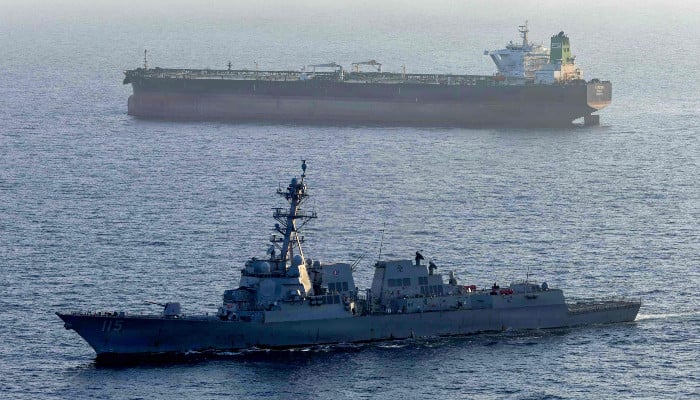
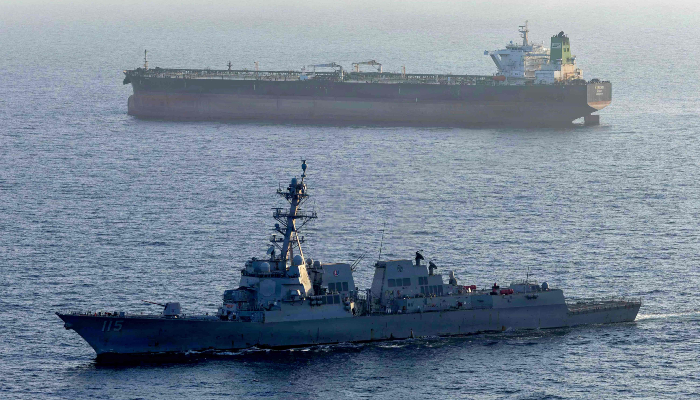
LONDON: Isolated and traumatised by drones and missiles, seafarers in the Gulf face grave mental suffering after more than two months stuck on board in the Middle East war, maritime charities warn.
From captains to cooks, engineers and other officers, the workers who keep global freight flowing have found themselves not just stranded but in some cases right in the firing line of the US-Israeli war with Iran.
“We hear stories of how frightened they are. It’s pretty scary,” said Gavin Lim, head of the Crisis Response Network for the Sailors’ Society, a UK-based seafarers’ charity, who spoke with one crew whose vessel was hit. “They thought: ‘We were going to die’.”
Trade vessels have been struck by projectiles and fired on by Iranian Revolutionary Guards in dozens of incidents, according to the British maritime security monitor UKMTO.
At least 11 seafarers have been killed, according to the International Maritime Organisation.
“They see drones flying, they see missiles flying, and then we see instances where the ships get hit,” said Lim. “You can imagine that anxiety and fear building up. ‘Are we just bait? Are we going to be a victim so that someone can make a point?'”
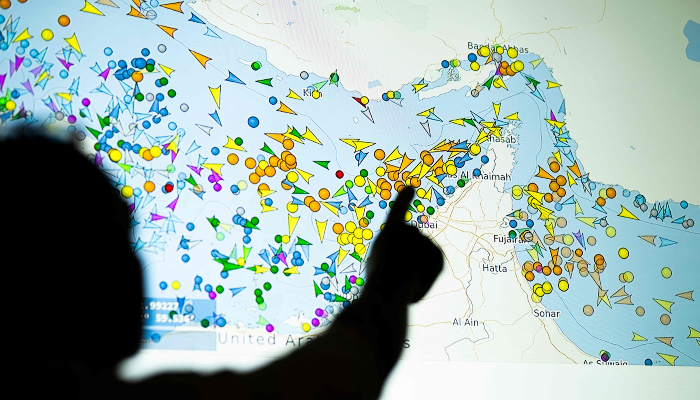
The Seafarers’ Charity cites hypervigilance, burnout, fatigue, loneliness, depression and anxiety as some of the mental strains facing the 20,000 seafarers stranded by Iran’s blockade of the Strait of Hormuz since February 28.
At least two commercial vessels have been seized by Iranian forces under their blockade of the vital trade route. A video showed masked guards with guns boarding a ship.
“We heard that one of the seafarers, an officer, suffered a panic attack while the vessel was being boarded,” said John Canias, maritime operations coordinator for the International Transport Workers’ Federation (ITF).
“Fortunately, the news is they have been taken care of… they have been allowed to speak to their family through the internet.”
Bereaved families
The strain extends to the seafarers’ families at home, worried about their stranded loved ones — or in the worst cases, bereaved.
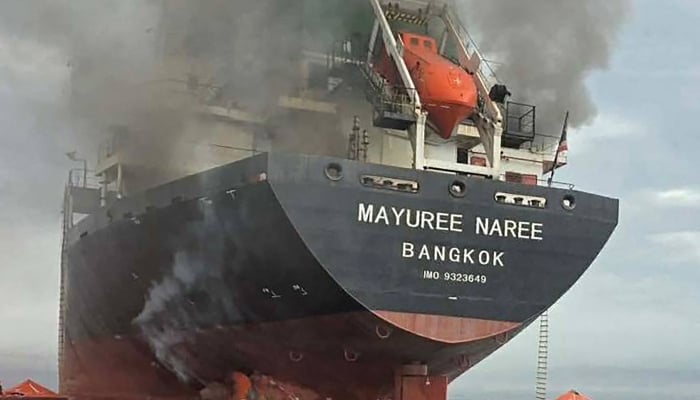
On March 1, the second day of the conflict, a projectile hit a tanker in the Gulf, killing a 25-year-old Indian seafarer as he started his shift in the engine room, said Melanie Warman, communications director for the Sailors’ Society, who spoke to his family.
“The mother has been in and out of hospital, not eating. It’s obviously a really desperate situation,” she told AFP.
“For the families, this is really, really difficult. We hear from families who can’t reach their loved ones on board ships and they’re really frantic with worry.”
Like the Sailors’ Society, another sailors’ helpline charity, the International Seafarers’ Welfare and Assistance Network (ISWAN), fields calls from trapped workers and offers them practical and psychological support.
“Most of the calls are around repatriation — what are their rights, how to go about it — and also obviously the sort of the stress and the worry about being in a conflict zone and not being trained or prepared for it,” said ISWAN’s chief executive, Simon Grainge.
Training to cope
Some charities are working with shipping companies to strengthen support for seafarers under unprecedented strain.
“The most up-to-date guidance we have on mental health and attacks is really based around Somali piracy, which is more under control” since attacks in the Indian Ocean surged in the early 2000s, said Deborah Layde, chief executive of the Seafarers’ Charity.
“One of the things that quite a few organisations are now calling for is really up-to-date guidance on how to deal with wartime issues,” she added. “This isn’t something that a lot of shipping companies are ready for.”
To that end, the charity has turned to mental health professionals to help provide guidelines and a webinar to guide seafarers to cope with the stress of the situation.
“There’s this constant higher level of stress and hypervigilance without that ability to reset as they might normally do. There’s exhaustion,” said Rachel Glynn-Williams, a psychologist working with seafarers who is involved in developing the webinar.
“At the point I pick up crew conversations, they will have been on hyper-alert for a sustained amount of time, so their nervous system will be heightened and it’s going to take a little time, depending on the individual, for that nervous system to reset,” she told AFP.
“For some people, it might be fairly soon afterwards, within a matter of days, if not hours. For others, it might take a little longer.”
- Starmer vows to fight on to deliver ‘change’.
- Voters punish Starmer’s party across Britain.
- Farage hails ‘historic shift’ in British politics.
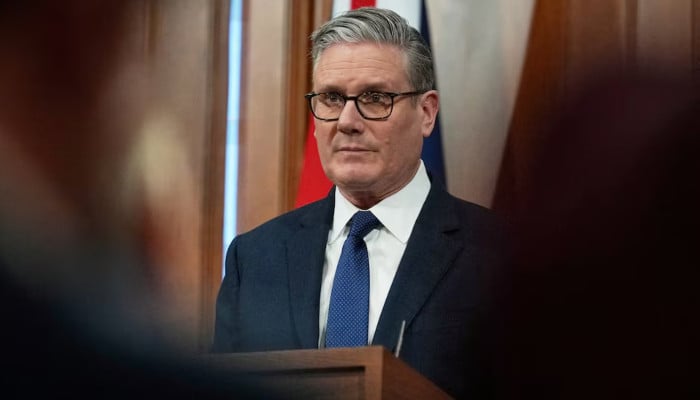
LONDON: British Prime Minister Keir Starmer vowed on Friday to stay in office to “deliver change” after his Labour Party suffered heavy losses in English local elections and parliamentary votes in Scotland and Wales, deepening doubts over his ability to govern.
Just under two years after winning a landslide national election, Starmer saw voters punish his Labour government, with support evaporating even in its traditional strongholds in London, former industrial regions in central and northern England, and in Wales.
The main beneficiary was the populist Reform UK party of Brexit campaigner Nigel Farage, which gained more than 1,000 council seats in England, and will likely form the main opposition in Scotland and Wales to the pro-independence Scottish National Party and Plaid Cymru.
Early results underscored the fracturing of Britain’s traditional two-party system, with the once-dominant Labour and Conservative parties losing votes not only to Reform, but to the left-wing Green Party at the other end of the political spectrum, and to nationalists in Scotland and Wales.
I am not going to walk away, says Starmer
Despite the losses, Starmer’s allies signalled their support for a man whose popularity ratings have sunk to among the worst for any British leader.
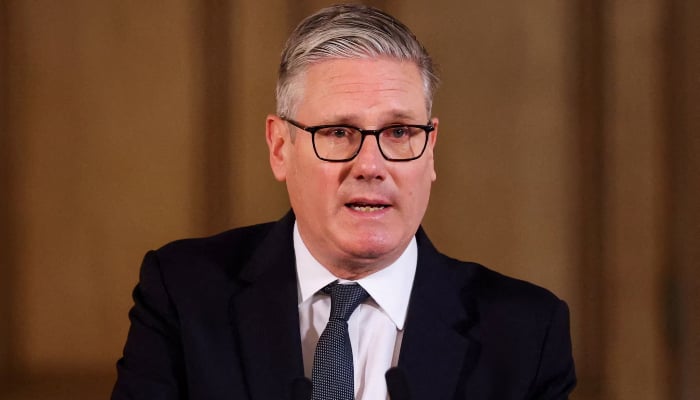
“I am not going to walk away,” Starmer told reporters in Ealing, west London, a rare bright spot where Labour retained control of the council.
To Labour activists, he showed a moment of contrition when he said he took full responsibility for the losses and admitted his government had made some “unnecessary mistakes” including failing to offer hope to Britain when the party took power.
But he argued voters were more frustrated with the pace of change than with his government, and vowed to set out “the steps that we will take to deliver the change that they want and that they deserve”.
In what seemed to be a nod to the latest government reset, Starmer said he would double down on efforts to tackle a cost-of-living crisis compounded by conflicts in Ukraine and Iran.
That message seemed to cheer investors. Sterling strengthened against the US dollar and British government borrowing costs fell – outperforming against US and German debt.
But even for Starmer, there was no denying the scale of the terrible losses for Labour in elections for 136 local councils in England, and the devolved parliaments in Scotland and Wales – the most significant test of public opinion before the next general election due in 2029.
While an immediate challenge to his leadership looked unlikely, more than 20 Labour lawmakers publicly and privately called on Starmer to consider his position and set out a timetable for his departure.
“The prime minister cannot take our party into the next election,” Simon Opher, a Labour lawmaker from southwest England said in a statement.
Defence minister John Healey rejected this, saying the last thing voters wanted was “the potential chaos of a leadership election”.
“He’s not going to go, and he’s not going to set a timetable,” Technology Secretary Liz Kendall told BBC News.
Insurgent parties fracture two-party system
Starmer may struggle to turn things around after Labour lost control of a swathe of councils, responsible for services ranging from adult social care to rubbish collection, and prospective nationalist governments in Scotland and Wales.
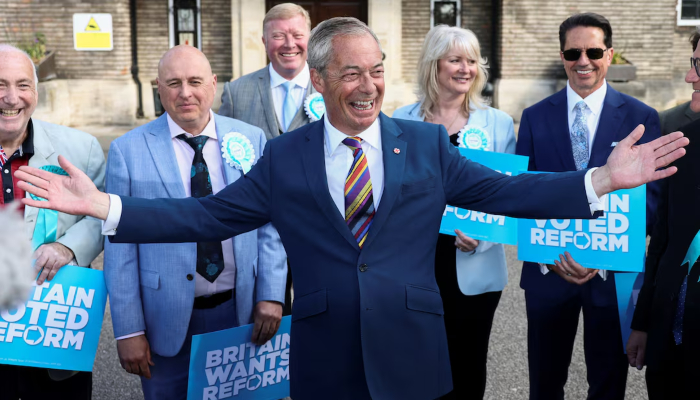
The party lost power in Tameside in Greater Manchester in northern England for the first time in almost 50 years and in nearby Wigan, which it has controlled for more than 50 years, Labour lost all of its 20 seats to Reform.
Reform also took control of a London borough for the first time, winning in Havering in the east of Britain’s capital, while the Greens won the mayoralty of traditionally Labour-supporting Hackney in east London.
In the town of Romford in Havering, retiree Gary Orford summed up the mood of many, by saying he wanted to give Farage a chance after being fed what he called a “pack of lies” by other politicians. “You can only give him a chance,” he said.
While incumbent governments often struggle in midterm elections, pollsters forecast that Labour could lose the most council seats since 1995.
The Reform UK party had added 1,151 council seats in England by Friday evening. Labour had lost 1,015 seats and the official opposition Conservative Party was down 466 seats. Plaid won the most seats for the Welsh Senedd assembly, followed by Reform, and the SNP was well ahead in the Scottish parliament election.
The results showed how far the British political system had changed since as recently as 2017, when the two traditionally dominant parties – Labour and the Conservatives – gained a combined 82% of the vote in a general election.
They also showed how quickly voters have turned against Starmer. Since 2024, his time in office has been marked by several attempts to reset his agenda, policy U-turns, a rotating cast of advisers and scandal over the appointment of Peter Mandelson as Britain’s ambassador to the United States.
- Ceasefire will remain effective from May 9 to 11.
- Swap of 1000 prisoners part of ceasefire: Trump.
- Trump appreciates Putin, Zelensky over agreement.
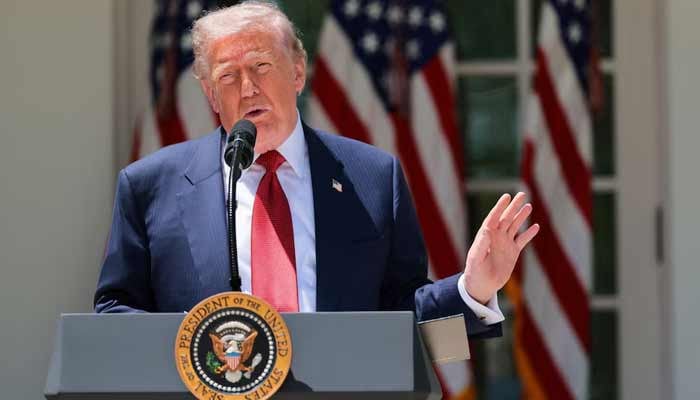
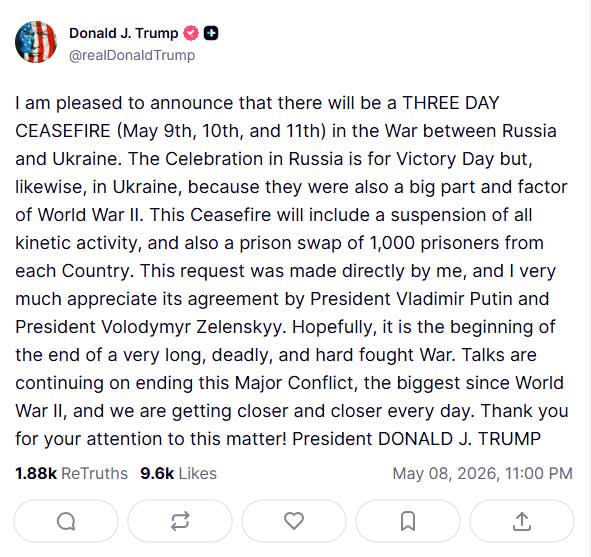
US President Donald Trump on Friday announced on social media that there would be a three-day ceasefire in the war between Russia and Ukraine from May 9 until May 11 to mark the end of World War Two for the Russians.
Trump had said after a phone call with Putin on April 29 that a temporary ceasefire was in the works. Putin announced a similar truce last year that lasted three days but was not agreed with Kyiv.
Trump said in a Truth Social post that the pause will include a suspension of all kinetic activity, and also a prison swap of 1,000 prisoners from each country.
“Hopefully, it is the beginning of the end of a very long, deadly, and hard-fought war,” he said, adding that there was constant progress in talks to end the conflict.
Russia announced a ceasefire for May 8 to 9 to coincide with commemorations of the Soviet Union’s victory over Nazi Germany in World War II and a military parade in Moscow’s Red Square.
Ukraine announced its own proposal for an open-ended ceasefire that started at midnight on Tuesday (2100 GMT), urging Russia to reciprocate.
Officials said on Thursday that Ukraine’s top negotiator, Rustem Umerov, had arrived in Miami for a series of meetings with US representatives as peace talks on ending Russia’s war in Ukraine have stalled in recent months.
The US-brokered talks are deadlocked over Ukraine’s eastern Donetsk region. Moscow demands Kyiv pull troops back from parts of the region it has failed to capture in its four-year full-scale invasion. Ukraine says it will not cede land that it controls.
Moscow and Kyiv have both accused each other of violating ceasefires that each has separately declared.

[CinePlex360] Please moderate: “Texas orders im

Timberwolves’ coach Finch blasts Tony Brothers for ‘unprofessional’ conduct

Top Sri Lankan Buddhist monk arrested over alleged sex abuse

-

 Politics6 days ago
Iran weighs US reply delivered via Pakistan as Trump signals opposition to deal terms
-

 Tech1 week ago
Almost half of UK businesses hit by cyber attacks | Computer Weekly
-

 Tech1 week ago
This Indigenous Language Survived Russian Occupation. Can It Survive YouTube?
-

 Fashion1 week ago
Canada’s Lululemon appoints Esi Eggleston Bracey to board of directors
-

 Fashion1 week ago
US’ J.Jill, Inc. appoints Kimberly Wallengren as CMO
-

 Entertainment1 week ago
David Allan Coe, country singer who wrote “Take This Job and Shove It,” dies at age 86
-
 Business1 week ago
Government hikes jet fuel prices by 5% for international airlines – The Times of India
-

 Entertainment1 week ago
China’s brain-control weapons race being led by Harvard scientist who was jailed in US