

Politics
Trump Criticizes Netanyahu Over Israel’s Strikes in Qatar

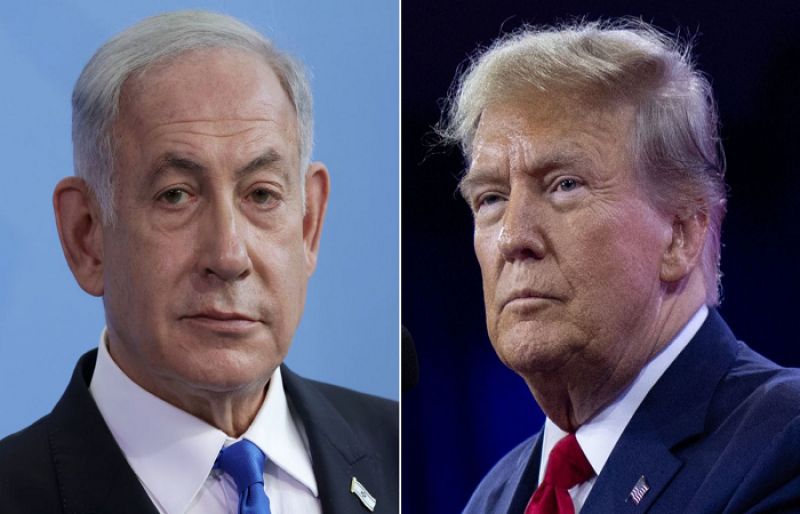

US President Donald Trump on Tuesday issued a rare rebuke to Benjamin Netanyahu over Israel’s strikes in Qatar, emphasizing that he had no involvement in the attack carried out by one close US ally against another.
Trump said he was not notified in advance of the Israeli attack on the Gulf state, a crucial broker in the negotiations between Israel and Hamas on ending the Gaza war and securing the release of hostages held by Palestinian militants.
“I’m not thrilled about the whole situation,” Trump told reporters during a rare outing to a Washington restaurant.
“We want the hostages back, but we are not thrilled about the way that went down today.”
The Israeli attack on Doha could hardly be more sensitive as Qatar, in addition to its role in the Gaza negotiations.
Is home to a huge US airbase and hosted Trump during a Middle East swing this year.
The fuel-rich emirate also recently gave the United States a luxury Boeing 747-8 jet for Trump to use as his presidential plane.
A move that sparked major ethical questions.
“This was a decision made by Prime Minister Netanyahu, it was not a decision made by me,” Trump said in a post on social media.
“I view Qatar as a strong Ally and friend of the U.S., and feel very badly about the location of the attack,” he said — although adding that eliminating Hamas was still a “worthy goal.”
In a statement that largely echoed one issued earlier by White House Press Secretary Karoline Leavitt, Trump focused on the possible damage to his efforts to end the war in Gaza.
“Unilaterally bombing inside Qatar, a Sovereign Nation and close Ally of the United States.
That is working very hard and bravely taking risks with us to broker Peace, does not advance Israel or America’s goals,” Trump said.
‘Too late’
The US president was at pains to point out that Washington was caught unawares by the Israeli attack.
He said the White House was “notified by the United States Military that Israel was attacking Hamas which, very unfortunately, was located in a section of Doha.”
“I immediately directed Special Envoy Steve Witkoff to inform the Qataris of the impending attack, which he did, however, unfortunately, too late to stop the attack.”
Trump said he had spoken to Netanyahu in the aftermath, and tried to put a positive gloss on the affair.
“The Prime Minister told me that he wants to make Peace. I believe this unfortunate incident could serve as an opportunity for PEACE,” he said.
Leavitt told reporters earlier that Trump had given Netanyahu a “very clear” message about his “concerns.”
Trump’s rebuke of Netanyahu was uncommon, as the US president has given the Israeli leader almost unstinting backing since returning to the Oval Office in January.
Israel’s ambassador to Washington Yechiel Leiter said in a Fox News interview Tuesday that the United States and Israel were “united in the effort of eliminating Hamas as being a threat to peace in the Middle East.”
“We have acted together in the past, we’ll act together in the future,” Leiter added.
As Qatar complained about the attack, Trump said he had now directed US Secretary of State Marco Rubio to finalize a defense cooperation agreement with Doha.
Trump added that he had assured Qatari Emir Sheikh Tamim bin Hamad Al Thani in a phone call that “such a thing will not happen again on their soil.”
Doha had earlier insisted it had no warning of the attack.
“The call received from an American official came as explosions sounded from the Israeli attack in Doha,” .
Qatari foreign ministry spokesman Majed al-Ansari said on social media.
Qatar has once again found itself caught in the crossfire of the turmoil in the Middle East.
Iran fired missiles at the US Al Udeid airbase in June in retaliation for US strikes on Iranian nuclear sites.
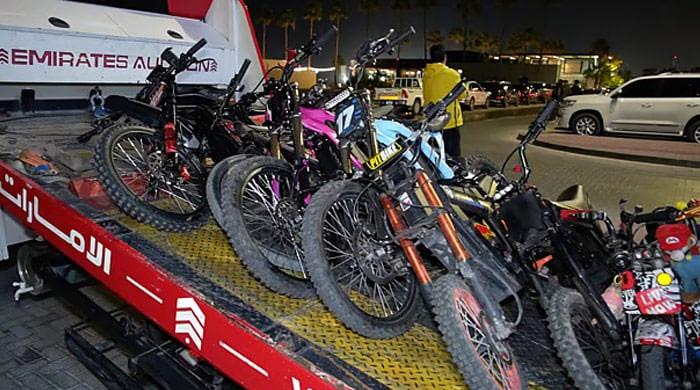
DUBAI: Dubai Police have seized several motorbikes after groups of young riders were reported performing dangerous stunts and causing disturbance in residential neighbourhoods following iftar during Ramadan.
Authorities said residents complained about loud noise, reckless riding and youths using motorbikes and quad bikes to carry out risky manoeuvres on public roads.
Police summoned the parents of the minors involved and took legal action, stressing that such behaviour poses a serious risk not only to the riders themselves but also to other road users and pedestrians.
“Reckless driving and stunts endanger lives and disturb community safety,” Dubai Police said, urging the public to report similar violations through the 901 helpline or via the Dubai Police mobile app.
A video shared by Dubai Police on social media showed some of the confiscated bikes and officers addressing the issue as part of ongoing efforts to ensure road safety during the holy month.
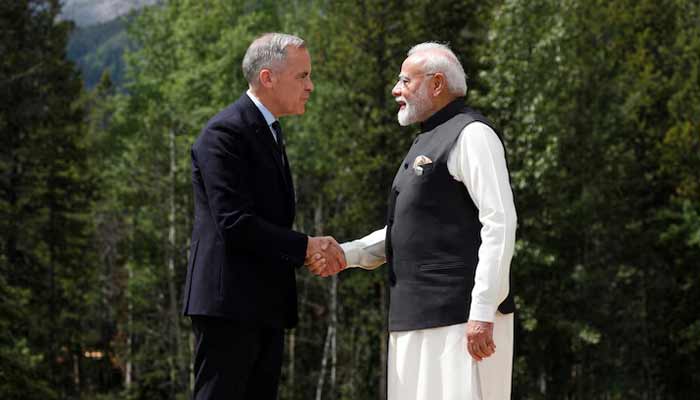
- Canadian PM to address finance leaders before meeting Indian PM.
- Carney wants more than double two-way trade with India by 2030.
- India hopes Canada to support to expand nuclear power capacity.
Canada PM begins key India visit, seeking to boost trade
Canadian Prime Minister Mark Carney landed in India on Friday for a visit he hopes would reset ties and double trade, offsetting the damage from his country’s fracturing relations with the United States.
Carney’s visit is a key step forward in ties that effectively collapsed in 2023 after Ottawa accused New Delhi of orchestrating a deadly campaign against Sikh activists in Canada.
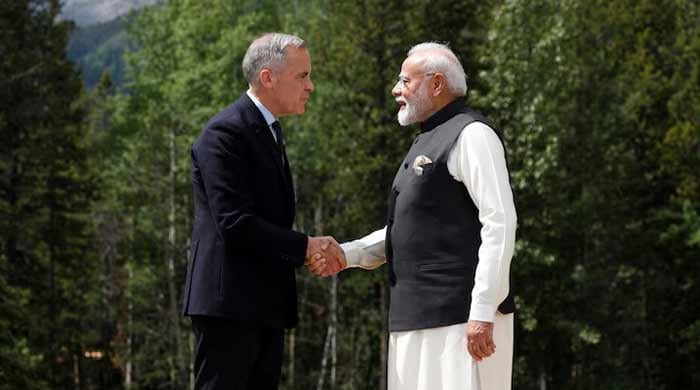
He arrived in the financial hub of Mumbai, where he is expected to address business leaders before travelling to the capital and meeting with Prime Minister Narendra Modi on Monday, the final day of his visit.
Indian broadcasters showed a police convoy as Carney was whisked through Mumbai.
Carney’s office said discussions would focus on “ambitious new partnerships in trade, energy, technology and artificial intelligence (AI), talent and culture, and defence”.
Last year, the two countries agreed to resume negotiations on a proposed free-trade agreement.
Carney has said he wanted to more than double two-way trade with India by 2030, eyeing an annual target of $51 billion.
Before Carney took office last year, Ottawa accused Modi’s government of direct involvement in the 2023 killing of Hardeep Singh Nijjar, a naturalised Canadian citizen who was part of a fringe group that advocated for an independent Sikh state called Khalistan.
Khalistan members have been blamed for the assassination of an Indian prime minister and the bombing of a passenger jet.
Former prime minister Justin Trudeau’s government further alleged India had directed a campaign of intimidation against Sikh activists across Canada.
India has repeatedly dismissed the allegations, which sent diplomatic relations into freefall, with both nations expelling a string of top diplomats in 2024.
Ties improved after Carney took office in March 2025, and envoys have since been restored.
Asked whether Canadian concerns about transnational repression would feature at the New Delhi talks, Foreign Minister Anita Anand told reporters: “That is always at the forefront of our minds.”
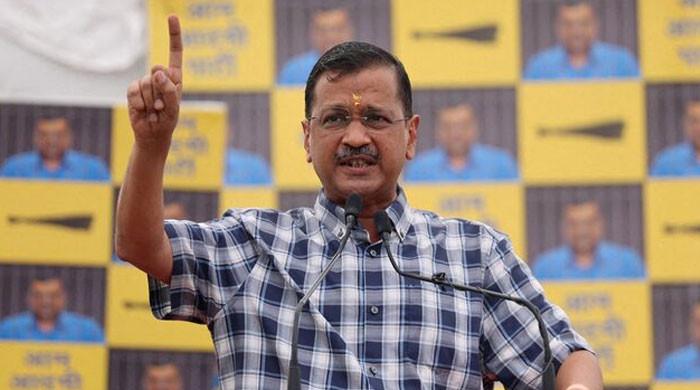
An Indian court acquitted the former chief minister of the capital Delhi on Friday in a long-running corruption probe the man had called a “political conspiracy” by the ruling party.
Opposition Aam Aadmi Party (AAP) leader Arvind Kejriwal was Delhi’s chief minister before losing elections in 2025 in the midst of the judicial proceedings.
Kejriwal, 57, who spent several months in jail after he was arrested in March 2024 on accusations that his administration received kickbacks from the allocation of liquor licenses, wept as he left court.
“Truth has won,” Kejriwal told reporters after the verdict, accusing Prime Minister Narendra Modi and Home Minister Amit Shah of using a “political conspiracy” to finish AAP.
On Friday, a Delhi court cleared him, his former deputy Manish Sisodia and 21 others of all charges.
A key opponent to Modi, he had consistently denied wrongdoing.
Rekha Gupta, a member of Modi’s Hindu-nationalist Bharatiya Janata Party, was elected as chief minister of the sprawling megacity of more than 30 million people in February 2025.
Kejriwal began his career as a tax collector but quit his civil service job to become an anti-corruption crusader, bringing him national fame.
Several of Modi’s opponents have faced criminal investigation or trial in recent years, including two state chief ministers.
In August 2025, the government introduced a bill to remove politicians if they are arrested and detained for 30 days, which opponents called a “chilling” bid to crush constitutional safeguards.


Lisa Rinna breaks silence on longtime feud with Andy Cohen

Warner Bros Discovery Inks USD110 Billion Deal with Paramount Skydance

Georgetown guard KJ Lewis (ankle) out for rest of season

-

 Tech1 week ago
A $10K Bounty Awaits Anyone Who Can Hack Ring Cameras to Stop Sharing Data With Amazon
-
 Business1 week ago
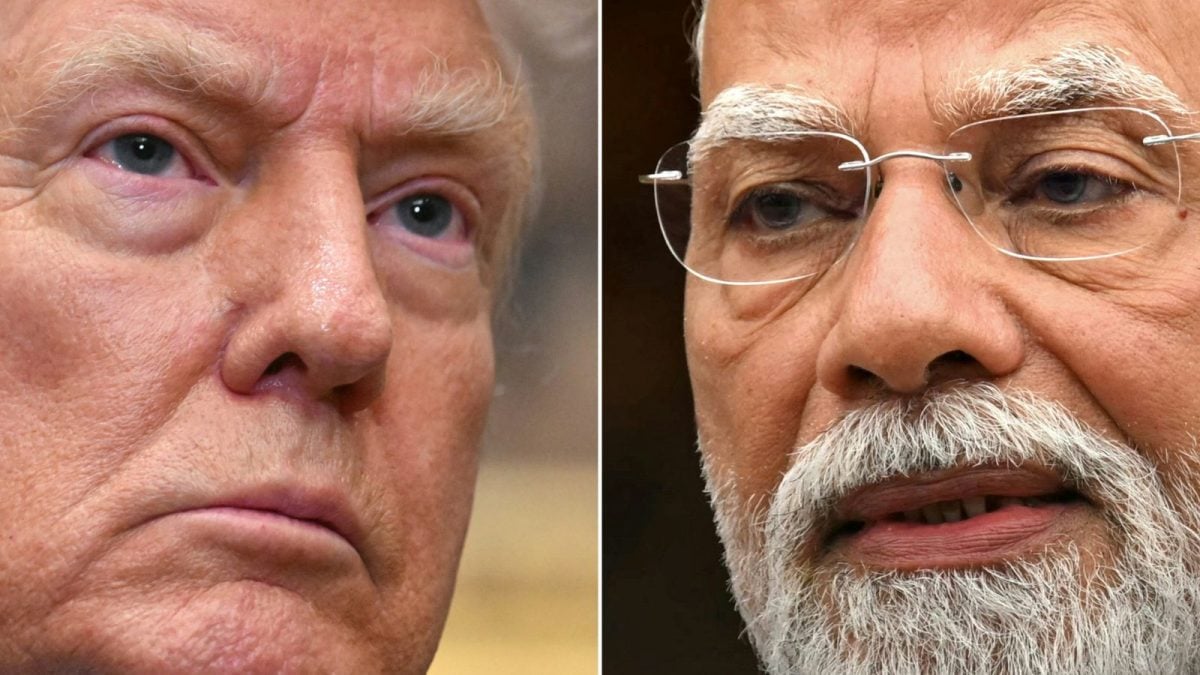
US Top Court Blocks Trump’s Tariff Orders: Does It Mean Zero Duties For Indian Goods?
-

 Fashion1 week ago
ICE cotton ticks higher on crude oil rally
-
 Politics6 days ago
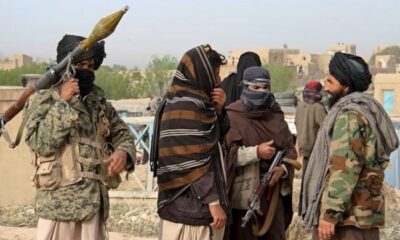
Pakistan carries out precision strikes on seven militant hideouts in Afghanistan
-
 Tech1 week ago
Donald Trump Jr.’s Private DC Club Has Mysterious Ties to an Ex-Cop With a Controversial Past
-

 Entertainment1 week ago
The White Lotus” creator Mike White reflects on his time on “Survivor
-
 Business7 days ago
Eye-popping rise in one year: Betting on just gold and silver for long-term wealth creation? Think again! – The Times of India
-

 Fashion1 week ago
India’s $28 bn reset: How 5 trade deals will reprice its T&A exports