

Business
Trump, Pfizer agree to lower U.S. drug prices, exempt company from pharma tariffs


U.S. President Donald Trump announces a deal with Pfizer to lower Medicaid drug prices in the Oval Office of the White House on Sept. 30, 2025 in Washington, DC.
Win McNamee | Getty Images
President Donald Trump on Tuesday announced an agreement with Pfizer to voluntarily sell its medications for less, as his administration pushes to link U.S. drug prices to cheaper ones abroad.
Pfizer has agreed to take measures to reduce U.S. drug prices, including selling its existing drugs to Medicaid patients at the lowest price offered in other developed nations, or what Trump calls the most-favored-nation price, according to the president. Pfizer will also guarantee the same “most-favored-nation” pricing on its new drugs for Medicare, Medicaid and commercial payers.
As part of the deal, Pfizer has also agreed to a three-year grace period during which the company’s products won’t face pharmaceutical-specific tariffs – as long as the drugmaker further invests in U.S. manufacturing. The company plans to invest $70 billion to reshore domestic drug manufacturing and research facilities.
Shares of Pfizer rose more than 4% on Tuesday after the announcement.
“Pfizer has agreed to provide some of the most popular current medications to our consumers at heavily discounted prices anywhere between 50% and even 100%,” Trump said, adding that those drugs will be available for direct purchase at a discount online on a website the administration is calling TrumpRx.gov.
Trump said he’s working with other drugmakers to secure similar agreements over the next week, adding that Pfizer is the first.
“If we don’t make a deal, we’re going to tariff them,” he said of the other companies’ drugs.
The White House confirmed with CNBC’s Eamon Javers that Eli Lilly is in negotiations with Trump for the next drug pricing deal, without providing further details on how far along talks are.
The deal comes as Pfizer and 16 other drugmakers face Trump’s Monday deadline to take steps to lower drug prices, as outlined in letters from the president. Trump in May signed an executive order reviving a controversial plan, the “most favored nation” policy, that aims to tie the prices of some medicines in the U.S. to the significantly lower ones abroad.
During the press conference, Pfizer CEO Albert Bourla said the company satisfied all four of the requests Trump outlined in his letter. Among the other steps is pursuing tougher price negotiations abroad and adopting models that sell its medicines directly to consumers or businesses.
“The big winner clearly will be the American patients, there is no doubt,” Bourla said. “They are the ones that will see a significant impact on their ability to buy medicines.” But he said “American innovation and and the American economy” will also be “winners” with the agreement.
Pfizer’s discounted drugs
Pfizer said it will offer a large share of its primacy care treatments and certain specialty branded drugs at discounts of 50% on average and up to 85%, according to a release from the company.
In a separate statement Tuesday, Pfizer said more than 100 million patients are impacted by diseases those medicines treat, such as migraines, rheumatoid arthritis, menopause and atopic dermatitis.
The company provided examples of discounted drugs under TrumpRx.gov. Duavee, a treatment for certain menopause symptoms, will be available for as little as $30 on the site, which is an 85% discount to its current price.
Patients will also be able to pay as low as $162 – an 80% reduction to the current price – for prescription ointment Eucrisa, which is used to treat mild-to-moderate eczema. Tovias, a medication for overactive bladder, will also be available on TrumpRx.gov for as little as $42, which is a 85% discount to the current price.
Pfizer said it also plans to offer products such as Abrilada for autoimmune diseases at a 60% discount, Xeljanz for rheumatoid arthritis at a 40% discount and the migraine drug Zazvpret at 50% discount.
Those drugs don’t appear to be significant revenue drivers for Pfizer. The company’s quarterly and full-year earnings reports only include product-specific revenue for Xeljanz, which generated $349 million in worldwide sales in 2024. Sales of the drug fell 29% operationally from 2023, primarily due to lower demand globally as well as lower net prices in the U.S.
The deal comes as drugmakers brace for Trump’s planned tariffs on pharmaceuticals imported into the country. Trump said in a Truth Social post Thursday that the U.S. will impose a 100% tariff on “any branded or patented Pharmaceutical Product” entering the country from Oct. 1.
The measure will not apply to companies building drug manufacturing plants in the U.S., Trump said. He added that the exemption covers projects where construction has started, including sites that have broken ground or are under construction.
In a note on Tuesday, BMO Capital Markets analyst Evan Seigerman said the deal is positive for Pfizer’s stock and the broader pharmaceutical sector, as it “adds certainty and shifts POTUS policies potentially away from Pharma tariffs.”
“Today’s deal seems to set a path for other pharmaceutical players to follow, allowing for headline pricing concessions and a Trump ‘win’ without more punitive implementation” of the most favored nation policy or tariffs, he added.



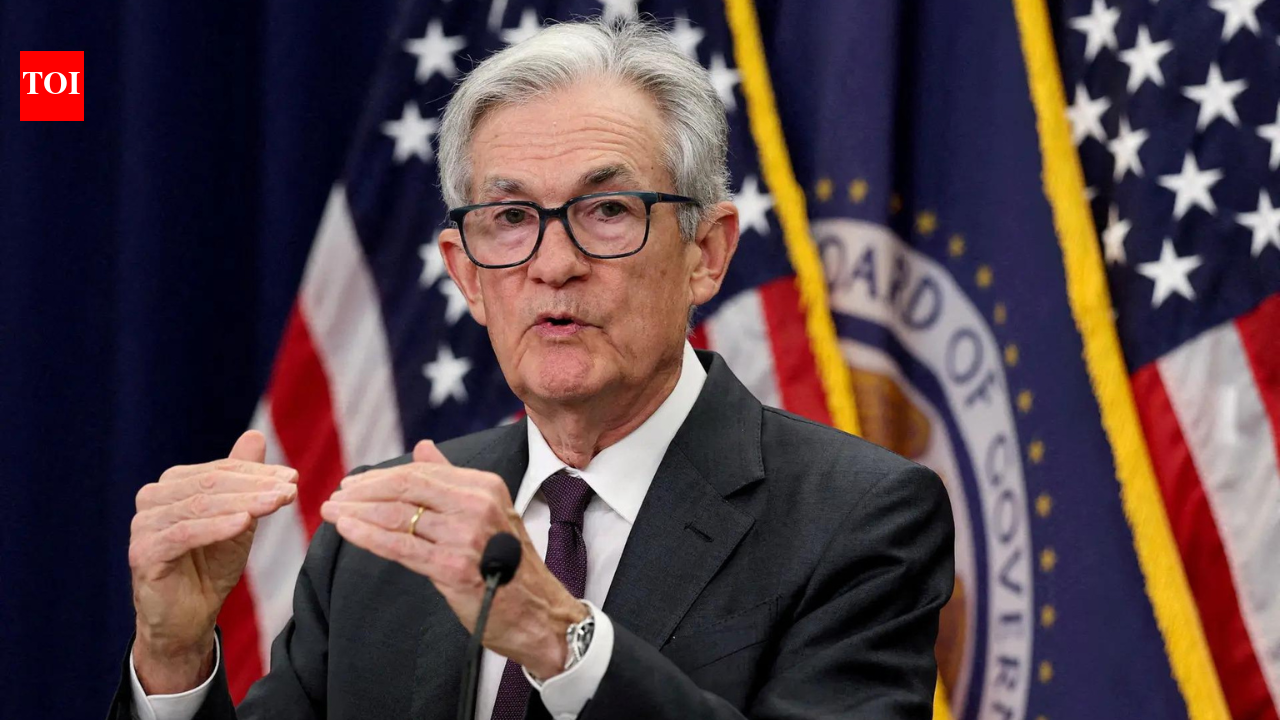

Citigroup initiated its coverage of Pine Labs with a buy rating and a target price of Rs 235. Analysts said that India’s payments fintech is on a monetization improvement trajectory, with leading players increasingly entrenched in respective core areas of leadership. While product, services and distribution build-outs into comprehensive plays will continue across the fintech ecosystem, large players don’t face significant disruption risks owing to: Across-the-board profitability push; rising regulatory costs and compliance requirements; and stickiness borne out of integration into enterprise business workflows. Further, while consumer payments have seen flux in competitive positioning in the past decade, there have been relatively fewer changes in positioning and leadership within segments in merchant payments.BoFA Securities has initiated its coverage of Groww (Billionbrains Garage Ventures) with a buy rating and a target price of Rs 235. Analysts said Groww is well positioned to capitalize on India’s retail investing tailwinds and they expect compounded annual growth rate (CAGR) for revenue at 30% over FY26-FY28. The company produces best-in-class profitability with further upside from operating leverage. Analysts have valued Groww at 39x FY28E price-to-earnings. They, however, said that the near-term risks for the stock are a weak capital market performance and the expiry of the six-month lock-in of shares post-IPO.Elara Capital initiated its coverage of Jindal Saw with a buy rating and a target price of Rs 280. Analysts said earnings recovery is expected over FY27–FY28, driven by water, and oil & gas demand. The company’s order book is at an all-time high, indicating strong visibility. They also feel Jal Jeevan Mission spending revival to drive domestic pipe demand, while the global pipeline capex is supported by energy security concerns. Analysts also pointed out that exports are rising, with diversification reducing dependence on domestic capex. The company’s capacity expansion to support margins and operating leverage. They feel the stock’s valuations are attractive, with rerating potential driven by execution and growth.Jefferies has downgraded Indus Towers to underperform from buy with a target price cut to Rs 375 from Rs 530. Analysts downgrade the stock due to site-renewal risks bunched up over second half of 2026 (H2CY26) and first half of 2027 (H1CY27) which could impact revenues and growth. Elevated capex levels due to higher growth and maintenance capex which will impact earnings growth as well free cash flow and payouts. They cut Indus Towers’ revenue and profit after tax (PAT) estimates by 2-6% to factor renewal risks post which stock offers 3% EPS growth and a 4% yield. They said risks on growth outlook should weigh on re-rating potential too.Kotak Institutional Equities has a buy on Ujjivan SFB with a target price of Rs 72. Analysts said that the RBI has returned Ujjivan SFB’s application for a universal bank license, citing need for further loan portfolio diversification. While the outcome is clearly not favourable, the regulator has flagged no concerns relating to governance, compliance or operational soundness. Analysts said their investment thesis did not factor in any benefit from a potential transition to a universal bank. Hence, they maintained a buy but remained watchful of any sharp changes in asset mix strategy in response to RBI’s feedback.(Disclaimer: Recommendations and views on the stock market, other asset classes or personal finance management tips given by experts are their own. These opinions do not represent the views of The Times of India)

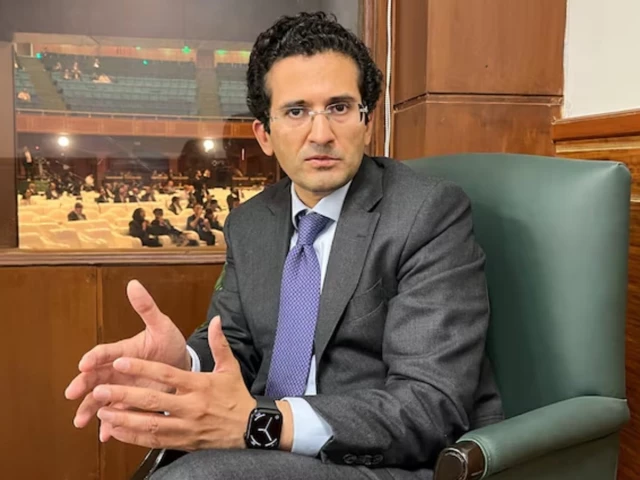
The better-than-expected GDP data comes as Asian countries have been hit hard by the impact of the conflict.
Source link
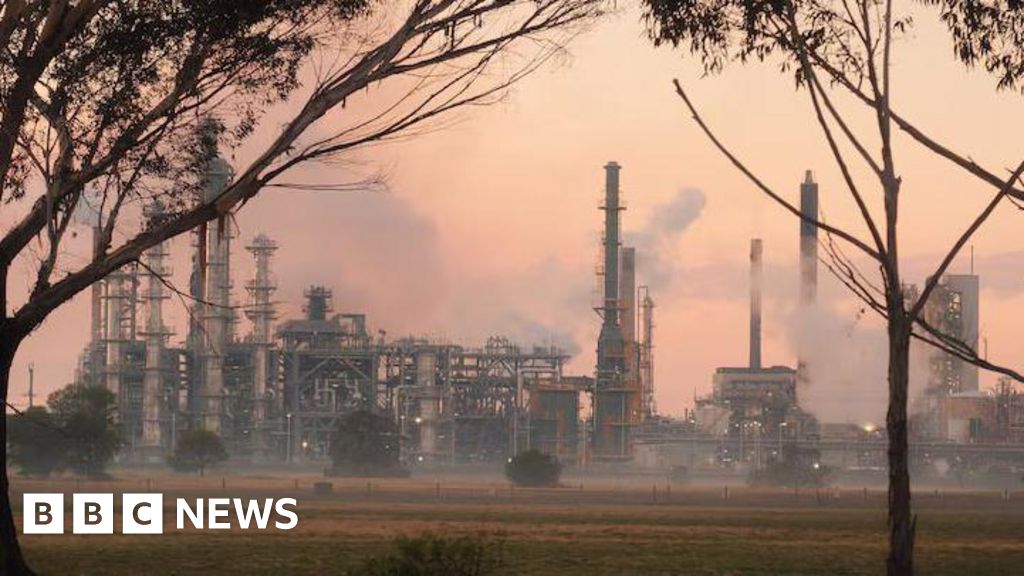
The fire has deepened fears over the nation’s petrol supplies amid a global crunch.
Source link


No vote after NCAA urges further study of age eligibility changes to college sports

Taylor Swift on bond with Dakota Johnson: ‘Curious’
Pine Labs, Groww & more: Top stocks to watch on April 16 – The Times of India

-

 Fashion1 week ago
India’s exports face reset as EU links trade to carbon metrics: EY
-

 Entertainment1 week ago
Queen Elizabeth II emotional message for Archie, Lilibet sparks speculation
-

 Entertainment1 week ago
Lamar Odom shocking response to Khloé Kardashian account of his overdose
-

 Tech1 week ago
Azure customers up in arms over ‘full’ UK South region | Computer Weekly
-

 Tech1 week ago
As the Strait of Hormuz Reopens, Global Shipping Will Take Months to Recover
-

 Fashion1 week ago
CII submits 20-pt agenda to Indian govt to back firms hit by Iran war
-

 Tech7 days ago
This AI Button Wearable From Ex-Apple Engineers Looks Like an iPod Shuffle
-

 Politics6 days ago
Indian airlines hit hardest after Dubai limits foreign flights until May 31