

Business
Trump, Pfizer agree to lower U.S. drug prices, exempt company from pharma tariffs


U.S. President Donald Trump announces a deal with Pfizer to lower Medicaid drug prices in the Oval Office of the White House on Sept. 30, 2025 in Washington, DC.
Win McNamee | Getty Images
President Donald Trump on Tuesday announced an agreement with Pfizer to voluntarily sell its medications for less, as his administration pushes to link U.S. drug prices to cheaper ones abroad.
Pfizer has agreed to take measures to reduce U.S. drug prices, including selling its existing drugs to Medicaid patients at the lowest price offered in other developed nations, or what Trump calls the most-favored-nation price, according to the president. Pfizer will also guarantee the same “most-favored-nation” pricing on its new drugs for Medicare, Medicaid and commercial payers.
As part of the deal, Pfizer has also agreed to a three-year grace period during which the company’s products won’t face pharmaceutical-specific tariffs – as long as the drugmaker further invests in U.S. manufacturing. The company plans to invest $70 billion to reshore domestic drug manufacturing and research facilities.
Shares of Pfizer rose more than 4% on Tuesday after the announcement.
“Pfizer has agreed to provide some of the most popular current medications to our consumers at heavily discounted prices anywhere between 50% and even 100%,” Trump said, adding that those drugs will be available for direct purchase at a discount online on a website the administration is calling TrumpRx.gov.
Trump said he’s working with other drugmakers to secure similar agreements over the next week, adding that Pfizer is the first.
“If we don’t make a deal, we’re going to tariff them,” he said of the other companies’ drugs.
The White House confirmed with CNBC’s Eamon Javers that Eli Lilly is in negotiations with Trump for the next drug pricing deal, without providing further details on how far along talks are.
The deal comes as Pfizer and 16 other drugmakers face Trump’s Monday deadline to take steps to lower drug prices, as outlined in letters from the president. Trump in May signed an executive order reviving a controversial plan, the “most favored nation” policy, that aims to tie the prices of some medicines in the U.S. to the significantly lower ones abroad.
During the press conference, Pfizer CEO Albert Bourla said the company satisfied all four of the requests Trump outlined in his letter. Among the other steps is pursuing tougher price negotiations abroad and adopting models that sell its medicines directly to consumers or businesses.
“The big winner clearly will be the American patients, there is no doubt,” Bourla said. “They are the ones that will see a significant impact on their ability to buy medicines.” But he said “American innovation and and the American economy” will also be “winners” with the agreement.
Pfizer’s discounted drugs
Pfizer said it will offer a large share of its primacy care treatments and certain specialty branded drugs at discounts of 50% on average and up to 85%, according to a release from the company.
In a separate statement Tuesday, Pfizer said more than 100 million patients are impacted by diseases those medicines treat, such as migraines, rheumatoid arthritis, menopause and atopic dermatitis.
The company provided examples of discounted drugs under TrumpRx.gov. Duavee, a treatment for certain menopause symptoms, will be available for as little as $30 on the site, which is an 85% discount to its current price.
Patients will also be able to pay as low as $162 – an 80% reduction to the current price – for prescription ointment Eucrisa, which is used to treat mild-to-moderate eczema. Tovias, a medication for overactive bladder, will also be available on TrumpRx.gov for as little as $42, which is a 85% discount to the current price.
Pfizer said it also plans to offer products such as Abrilada for autoimmune diseases at a 60% discount, Xeljanz for rheumatoid arthritis at a 40% discount and the migraine drug Zazvpret at 50% discount.
Those drugs don’t appear to be significant revenue drivers for Pfizer. The company’s quarterly and full-year earnings reports only include product-specific revenue for Xeljanz, which generated $349 million in worldwide sales in 2024. Sales of the drug fell 29% operationally from 2023, primarily due to lower demand globally as well as lower net prices in the U.S.
The deal comes as drugmakers brace for Trump’s planned tariffs on pharmaceuticals imported into the country. Trump said in a Truth Social post Thursday that the U.S. will impose a 100% tariff on “any branded or patented Pharmaceutical Product” entering the country from Oct. 1.
The measure will not apply to companies building drug manufacturing plants in the U.S., Trump said. He added that the exemption covers projects where construction has started, including sites that have broken ground or are under construction.
In a note on Tuesday, BMO Capital Markets analyst Evan Seigerman said the deal is positive for Pfizer’s stock and the broader pharmaceutical sector, as it “adds certainty and shifts POTUS policies potentially away from Pharma tariffs.”
“Today’s deal seems to set a path for other pharmaceutical players to follow, allowing for headline pricing concessions and a Trump ‘win’ without more punitive implementation” of the most favored nation policy or tariffs, he added.







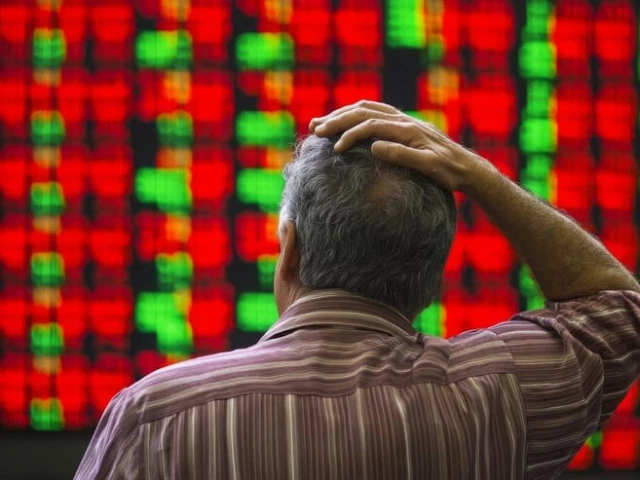

Pakistan’s inflation rose to 7% in February 2026, marking the highest level since October 2024, as electricity price hikes and rising global uncertainty pushed consumer costs upward.
According to the Pakistan Bureau of Statistics, the Consumer Price Index (CPI) increased 6.98% year-on-year, compared to 5.8% in January and 1.5% in February last year.
Electricity Tariffs Drive Surge
The biggest impact came from higher electricity prices after subsidy cuts and revised tariff structures.
Housing, water, electricity, gas & fuels index rose 9.65% annually
Electricity prices alone increased 10.03% month-on-month
These adjustments significantly burdened households already coping with high living costs.
Core Inflation & Interest Rates
Core inflation showed slight easing:
Urban core inflation: 7.1% (down from 7.2%)
Rural core inflation: Stable at 8.3%
The rise in CPI reduced real interest rates by around 120 basis points. The State Bank of Pakistan kept its policy rate unchanged at 10.5% last month.
Food Prices Mixed
Food inflation rose to 5.8%, up from 3.9% in January.
Major increases:
Tomatoes: +82%
Wheat: +42.6%
Wheat flour: +25.9%
Meat: +11.3%
Milk powder: +9.4%
Price declines:
Potatoes: -40%
Chicken: -21.8%
Gram pulse: -21.7%
Onions: -17%
Wholesale Pressure Rising
The Wholesale Price Index (WPI) increased to 1.0%, signaling growing producer-level cost pressures that could pass on to consumers in coming months.
External Risks Loom
Analysts warn that escalating Middle East tensions could:
Raise global oil prices
Increase Pakistan’s import bill
Pressure the rupee
Worsen inflation further
With millions of Pakistanis working in Gulf countries, any prolonged instability could also affect remittances — a key pillar of the economy.
Last Updated:
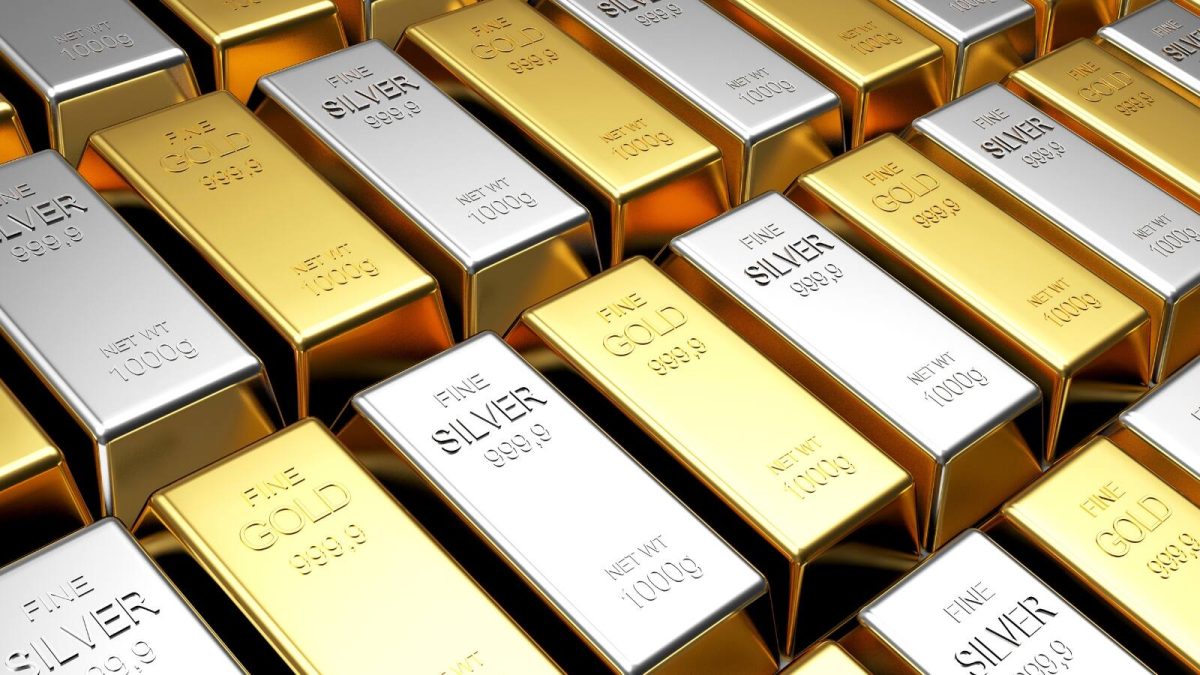
Gold and silver prices in India eased after a rally driven by Middle East conflict. 24-carat gold is Rs 1,70,020 per 10gm, silver below Rs 3,00,000.




Amid escalating tensions in the Middle East, gold and silver prices have witnessed a sharp surge, with market experts warning of further increases if the conflict intensifies.
Gold and silver prices: Gold and silver prices across India eased slightly after rallying as investors rushed towards safe havens due to the conflict in the Middle East. The price of 24-carat gold stood at Rs 1,70,020 per 10 grams, while 22k gold was available at Rs 1,55,850 per 10 grams. These rates do not include GST and making charges.
Silver also fell by Rs 20,000 to come down below Rs 3,00,000.
On MCX, gold futures, whose expiry is on April 02, 2026, was traded at Rs 1,66,199 per 10 gram, with a rise of 2.53 per cent. While silver futures expiring on March 05, 2026, were trading at Rs 2,80,090 per kg, with a fall of 0.90 per cent.
What Is The Price Of 22kt, 24kt Gold Rates Today In India Across Key Cities On March 03?
| City | 22K Gold (per 10gm) | 24K Gold (per 10gm) |
|---|---|---|
| Delhi | Rs 1,56,000 | Rs 1,70,170 |
| Jaipur | Rs 1,56,000 | Rs 1,70,170 |
| Ahmedabad | Rs 1,55,900 | Rs 1,70,070 |
| Pune | Rs 1,55,900 | Rs 1,70,070 |
| Mumbai | Rs 1,55,850 | Rs 1,70,020 |
| Hyderabad | Rs 1,55,850 | Rs 1,70,020 |
| Chennai | Rs 1,55,850 | Rs 1,70,020 |
| Bengaluru | Rs 1,55,850 | Rs 1,70,020 |
| Kolkata | Rs 1,55,850 | Rs 1,70,020 |
What Factors Affect Gold Prices In India?
International market rates, import duties, taxes, and fluctuations in exchange rates primarily influence gold prices in India. Together, these factors determine the daily gold rates across the country.
In India, gold is deeply cultural and financial. It is a preferred investment option and is key to celebrations, particularly weddings and festivals.
With constantly changing market conditions, investors and traders monitor fluctuations closely. Staying updated is crucial for effectively navigating dynamic trends.
 Click here to add News18 as your preferred news source on Google.
Follow News18 on Google. Join the fun, play games on News18. Stay updated with all the latest business news, including market trends, stock updates, tax, IPO, banking finance, real estate, savings and investments. To Get in-depth analysis, expert opinions, and real-time updates. Also Download the News18 App to stay updated.
March 03, 2026, 09:52 IST
Read More

Shop price inflation eased in February but consumers are still paying 3.5% more for food than a year ago, figures show.
Overall shop inflation fell slightly to 1.1% from January’s 1.5%, in line with the three-month average of 1.1%, as fierce competition between retailers kept price rises in check and customers benefited from promotions across health, beauty and fashion, according to the British Retail Consortium (BRC) and NIQ.
Prices of products other than food were down 0.1% year on year, a significant drop from January’s growth of 0.3%.
Overall food inflation fell slightly to 3.5% from 3.9% in January, while fresh food prices remained 4.3% higher than last February, a slight drop from January’s 4.4% and above the three-month average of 4.2%.
However falling global costs pushed ambient food inflation down to 2.3% – its lowest level in four years and a significant fall from January’s 3.1%.
BRC chief executive Helen Dickinson said: “Households got some welcome relief in February as shop price inflation eased.
“While the direction of travel is promising, prices are still rising, and many consumers remain under pressure.”
Mike Watkins, head of retailer and business insight at NIQ, said: “Since the start of the year, we have seen some competitive pricing across both the food and non-food channels which is helping to bring down inflation.
“Whilst the inclement weather and weak sentiment is making consumer demand rather unpredictable for retailers, at least shoppers are now seeing some of their cost-of-living pressures start to ease.”


Retech to showcase precision godet technology at Techtextil 2026

Football is life! ‘Dani Rojas’ from Ted Lasso is on trial at a USL club
Inflation Climbs to 16-Month High at 7% in February – SUCH TV

-

 Politics5 days ago
What are Iran’s ballistic missile capabilities?
-
 Business6 days ago
Households set for lower energy bills amid price cap shake-up
-

 Sports5 days ago
Sri Lanka’s Shanaka says constant criticism has affected players’ mental health
-
 Business6 days ago
Lucid widely misses earnings expectations, forecasts continued EV growth in 2026
-
 Business1 week ago
Haryana Govt bars IDFC First Bank, AU Small Finance Bank over alleged Rs 590 crore fraud
-

 Sports1 week ago
Top 50 USMNT players of 2026, ranked by club form: USMNT Player Performance Index returns
-
 Business4 days ago
Attock Cement’s acquisition approved | The Express Tribune
-

 Tech6 days ago
Here’s What a Google Subpoena Response Looks Like, Courtesy of the Epstein Files