

Politics
Trump, Putin to meet in Alaska on Aug 15 amid hopes for Ukraine peace deal

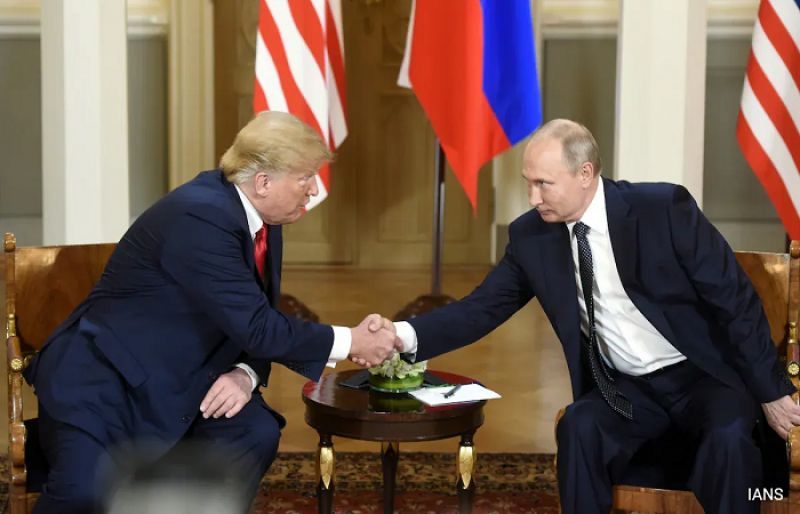

US President Donald Trump announced Friday that he will meet Russian President Vladimir Putin in Alaska on August 15 to discuss ending the war in Ukraine. Trump revealed the much-anticipated news on social media, saying that the parties including Ukrainian President Volodymyr Zelensky were nearing a ceasefire agreement that could end the three-and-a-half-year conflict, though it may require Ukraine to cede significant territory.
Speaking to reporters at the White House earlier in the day, Trump hinted the deal could involve territorial exchanges.
“There’ll be some swapping of territories to the betterment of both,” the Republican president remarked.
The Kremlin later confirmed the summit in an online statement, with Putin aide Yuri Ushakov noting that the talks would “focus on exploring options for a lasting peaceful resolution to the Ukrainian crisis.”
“This will evidently be a challenging process, but we will engage in it actively and energetically,” Ushakov said.
In his evening address to the nation on Friday, Zelensky said it was possible to achieve a ceasefire as long as adequate pressure was applied to Russia.
He said he had held more than a dozen conversations with leaders of different countries and his team was in constant contact with the United States.
Putin claims four Ukrainian regions Luhansk, Donetsk, Zaporizhzhia and Kherson as well as the Black Sea peninsula of Crimea, which he annexed in 2014.
His forces do not fully control all the territory in the four regions.
Earlier, Bloomberg News reported that US and Russian officials were working towards an agreement that would lock in Moscow’s occupation of territory seized during its military invasion.
A White House official said the Bloomberg story was speculation. A Kremlin spokesperson did not respond to a request for comment.
Reuters was unable to confirm aspects of the Bloomberg report.
Ukraine has previously signalled a willingness to be flexible in the search for an end to a war that has ravaged its towns and cities and killed large numbers of its soldiers and citizens.
But accepting the loss of around a fifth of Ukraine’s territory would be painful and politically challenging for Zelensky and his government.
Tyson Barker, the US State Department’s former deputy special representative for Ukraine’s economic recovery, said the peace proposal, as outlined in the Bloomberg report, would be immediately rejected by the Ukrainians.
“The best the Ukrainians can do is remain firm in their objections and their conditions for a negotiated settlement, while demonstrating their gratitude for American support,” said Barker, a senior fellow with the Atlantic Council.
Under the putative deal, according to Bloomberg, Russia would halt its offensive in the Kherson and Zaporizhzhia regions along current battle lines.
Trump and Putin
The last time Alaska hosted a high-stakes diplomatic gathering was in March 2021, when senior officials from the administration of Democratic former president Joe Biden met with top Chinese officials in Anchorage.
The get-together involving Biden’s top diplomat, Antony Blinken and his Chinese counterpart, Yang Jiechi, quickly turned into a stunning public clash in front of the cameras, with both sides levelling sharp rebukes of the other’s policies that reflected the high tension in bilateral ties.
Since his return to the White House in January, Trump has moved to mend relations with Russia and sought to end the war.
In his public comments, he has veered between admiration and sharp criticism of Putin.
In a sign of his growing frustration with Putin’s refusal to halt Russia’s military offensive, Trump had threatened to impose new sanctions and tariffs from Friday against Moscow and countries that buy its exports unless the Russian leader agreed to end the conflict, the deadliest in Europe since World War Two.
It was unclear by Friday evening whether those sanctions would take effect or be delayed, or be cancelled.
The administration took a step toward punishing Moscow’s oil customers on Wednesday, imposing an additional 25% tariff on goods from India over its imports of Russian oil, marking the first financial penalty aimed at Russia in Trump’s second term.
Trump’s special envoy, Steve Witkoff, held three hours of talks with Putin in Moscow on Wednesday that both sides described as constructive.
Prime Minister Donald Tusk of Poland, a close ally of Ukraine, said earlier on Friday that a pause in the conflict could be close. He was speaking after talks with Zelensky.
“There are certain signals, and we also have an intuition, that perhaps a freeze in the conflict – I don’t want to say the end, but a freeze in the conflict – is closer than it is further away,” Tusk told a news conference. “There are hopes for this.”
Tusk also said Zelensky was “very cautious but optimistic” and that Ukraine was keen that Poland and other European countries play a role in planning for a ceasefire and an eventual peace settlement.
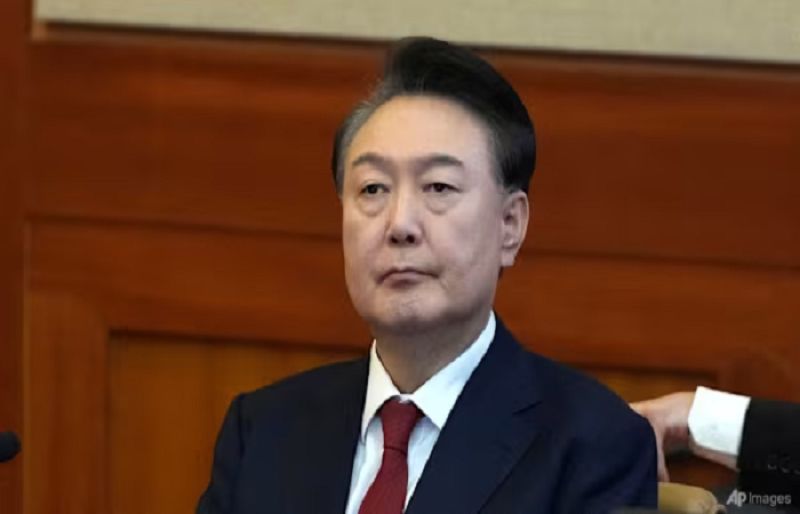

A South Korean court on Friday sentenced former President Yoon Suk Yeol to five years in prison on charges that included obstructing attempts by authorities to arrest him following his failed bid to impose martial law in December 2024.
The Seoul Central District Court found Yoon guilty of mobilising the presidential security service to block authorities from executing an arrest warrant that had been legally issued by a court to investigate him for his martial law declaration.
In televised proceedings, he was also found guilty of charges that included fabricating official documents and failing to comply with the legal process required for martial law.
The ruling is the first related to the criminal charges Yoon faces over his botched martial law declaration.
“The defendant abused his enormous influence as president to prevent the execution of legitimate warrants through officials from the Security Service, which effectively privatised officials … loyal to the Republic of Korea for personal safety and personal gain,” the lead judge on the three-justice panel said.
Speaking outside the court immediately after the decision, one of Yoon’s lawyers, Yoo Jung-hwa, said the former president would appeal the ruling. “We express regret that the decision was made in a politicised manner,” she said.
He could face the death sentence in a separate trial on a charge of masterminding an insurrection by declaring martial law without justification.
Yoon has argued it was within his powers as president to declare martial law and that the action was aimed at sounding the alarm over the obstruction of government by opposition parties.
Yoon, who also denied Friday’s charges, could have faced up to 10 years in jail over the obstruction charges related to when he barricaded himself inside his residential compound in January last year and ordered the security service to block investigators.
He was finally arrested in a second attempt involving more than 3,000 police officers. Yoon’s arrest was the first ever for a sitting president in South Korea.
Parliament, joined by some members of Yoon’s conservative party, voted within hours to overturn his surprise martial law decree and later impeached him, suspending his powers.
He was removed from office in April last year by the Constitutional Court, which ruled he violated the duties of his office.
While Yoon’s bid to impose martial law lasted only about six hours, it sent shockwaves through South Korea, which is Asia’s fourth-largest economy, a key US security ally, and long considered one of the world’s most resilient democracies.
- Judge finds Yoon guilty of obstructing justice and other crimes.
- Separate insurrection verdict is scheduled for February 19.
- Yoon faces another trial over alleged drone flights to North Korea.
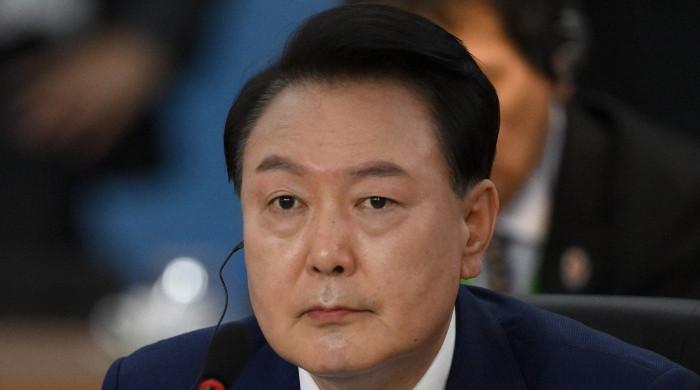
SEOUL: A South Korean judge sentenced former president Yoon Suk Yeol on Friday to five years in prison for obstructing justice and other crimes linked to his disastrous martial law declaration and in its chaotic aftermath.
It is the first in a series of verdicts for the disgraced ex-leader, whose brief suspension of civilian rule in South Korea on December 3, 2024 prompted massive protests and a showdown in parliament.
Now ousted from power, he faces multiple trials for actions taken during that debacle and in the turmoil that followed.
On Friday Judge Baek Dae-hyun at Seoul’s Central District Court said he found Yoon guilty of obstruction of justice by blocking investigators from detaining him.
Yoon was also found guilty of excluding cabinet members from a martial law planning meeting.
“Despite having a duty, above all others, to uphold the Constitution and observe the rule of law as president, the defendant instead displayed an attitude that disregarded the… Constitution,” Baek said.
“The defendant’s culpability is extremely grave,” he said.
But Yoon was not guilty of forging official documents due to lack of evidence, the judge said.
Yoon has seven days to appeal, he added.
Prosecutors had called for a 10-year prison term, while Yoon had insisted no law was broken.
Yoon defiant
It comes days after prosecutors in a separate case demanded Yoon be sentenced to death for his role as the “ringleader of an insurrection” in orchestrating the imposition of martial law.
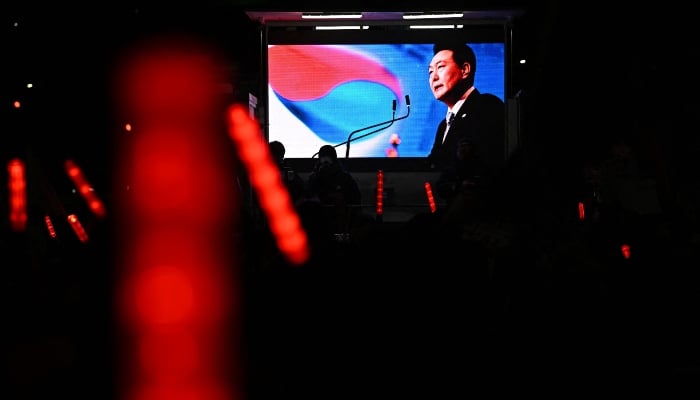
They argued Yoon deserved the severest possible punishment as he had shown “no remorse” for actions that threatened “constitutional order and democracy”.
If he is found guilty it is highly unlikely the sentence will actually be carried out, as South Korea has had an unofficial moratorium on executions since 1997.
Yoon was seen smiling in court as the prosecutors demanded the punishment.
And the former leader and top prosecutor has remained defiant, saying his martial law declaration was a lawful exercise of his presidential authority.
In closing remarks on Tuesday, he insisted the “exercise of a president’s constitutional emergency powers to protect the nation and uphold the constitutional order cannot be deemed an act of insurrection”.
He accused the then-opposition party of having imposed an “unconstitutional dictatorship” through their control of the legislature.
“There was no other option but to awaken the people, who are the sovereign.”
The court is scheduled to rule on the insurrection charges on February 19.
Yoon also faces a separate trial on charges of aiding the enemy, over allegations he ordered drone flights over North Korea to bolster his case for declaring martial law.
- Machado says meeting was ‘excellent,’ but did not elaborate.
- Encounter comes as Trump has praised Caracas’ interim leader.
- Trump has prioritised securing access to Venezuelan oil.
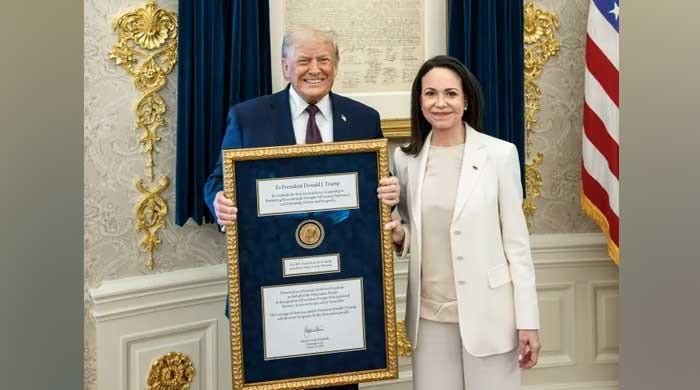
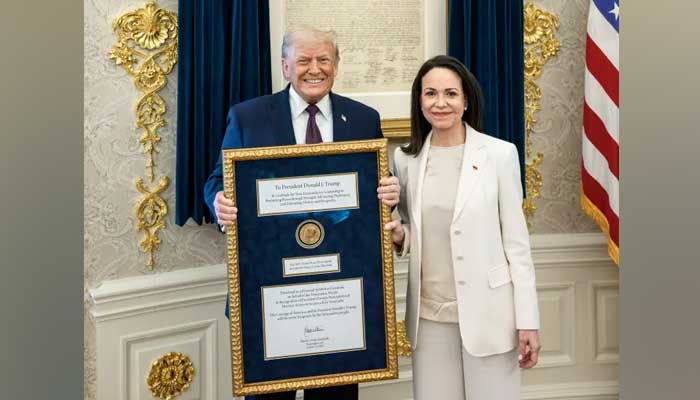
WASHINGTON: Venezuelan opposition leader Maria Corina Machado gave her Nobel Peace Prize medal to US President Donald Trump on Thursday during a White House meeting, as she tries to gain some influence over how the president shapes the South American country’s political future.
A White House official confirmed that Trump intends to keep the medal.
In a social media post on Thursday evening, Trump wrote: “Maria presented me with her Nobel Peace Prize for the work I have done. Such a wonderful gesture of mutual respect. Thank you Maria!”
Machado, who described the meeting as “excellent,” said the gift was in recognition of what she called his commitment to the freedom of the Venezuelan people.
Machado’s attempt to sway Trump came after he dismissed the idea of installing her as Venezuela’s leader to replace the deposed Nicolas Maduro. Trump openly campaigned for the prize before Machado was awarded it last month and complained bitterly when he was snubbed.
Though Machado gave Trump the gold medal that honorees receive with the prize, the honor remains hers; the Norwegian Nobel Institute has said the prize cannot be transferred, shared or revoked.
Asked on Wednesday if he wanted Machado to give him the prize, Trump told Reuters: “No, I didn’t say that. She won the Nobel Peace Prize.”
The Republican president long expressed interest in winning the prize and has at times linked it to diplomatic achievements.
The lunch meeting, which appeared to last slightly over an hour, marked the first time the two have met in person. Machado then met with more than a dozen senators, both Republican and Democratic, on Capitol Hill, where she has generally found more enthusiastic allies.
While the visit was ongoing, White House press secretary Karoline Leavitt said Trump had been looking forward to meeting Machado, but that he stood by his “realistic” assessment that she did not currently have the support needed to lead the country in the short term.
Machado, who fled Venezuela in a daring seaborne escape in December, is competing for Trump’s ear with members of Venezuela’s government and seeking to ensure she has a role in governing the nation going forward.
After the US captured Maduro in a snatch-and-grab operation this month, various opposition figures, members of Venezuela’s diaspora and politicians throughout the US and Latin America have expressed hope that Venezuela will begin the process of democratisation.


H&M India unveils official Lollapalooza India 2026 collection

Fundamental shift from savers to investors: What Indian households are doing with their money? – The Times of India
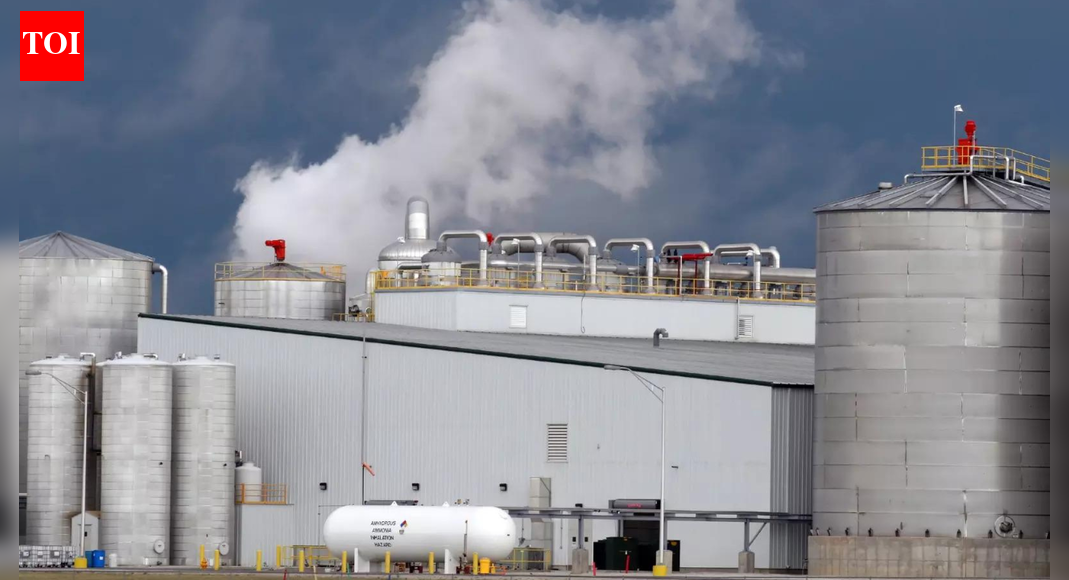
Green energy exports: $10-bn green ammonia project positions India as global clean-fuel supplier; Kakinada plant nears key milestone – The Times of India

-

 Politics1 week ago
UK says provided assistance in US-led tanker seizure
-

 Entertainment1 week ago
Does new US food pyramid put too much steak on your plate?
-

 Entertainment1 week ago
Why did Nick Reiner’s lawyer Alan Jackson withdraw from case?
-
 Sports5 days ago
Clock is ticking for Frank at Spurs, with dwindling evidence he deserves extra time
-
 Business1 week ago
Trump moves to ban home purchases by institutional investors
-
 Sports1 week ago
PGA of America CEO steps down after one year to take care of mother and mother-in-law
-
 Tech4 days ago
New Proposed Legislation Would Let Self-Driving Cars Operate in New York State
-
 Business1 week ago
Bulls dominate as KSE-100 breaks past 186,000 mark – SUCH TV