

Politics
Trump rejects Iran peace terms, Tehran warns of new attacks

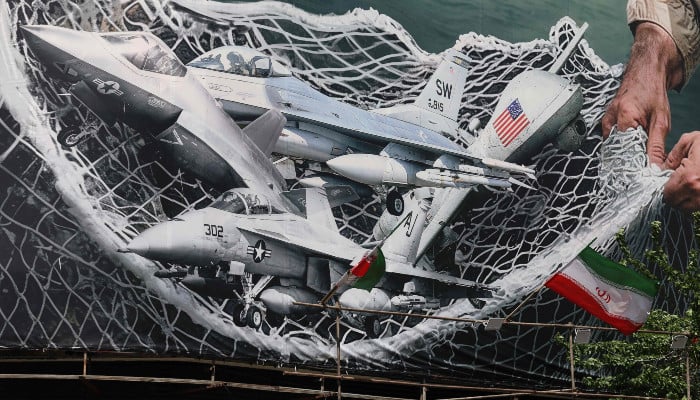
- Brent jumps above $104 per barrel.
- Netanyahu demands uranium removal.
- Foreign ships warned off Hormuz.
WASHINGTON: US President Donald Trump on Sunday branded Iran’s terms for ending the Middle East war “totally unacceptable,” raising the likelihood of renewed conflict after weeks of negotiations.
Iran had responded to Washington’s latest peace proposal earlier in the day, while warning it would not hold back from retaliating against any new US strikes or permit more foreign warships in the Strait of Hormuz.
Trump himself provided no details on Tehran’s counterproposal, but in a brief post on his Truth Social platform made clear he was rejecting it.
“I have just read the response from Iran’s so-called ‘Representatives.’ I don’t like it — TOTALLY UNACCEPTABLE!” Trump said.
The back and forth came as Israeli Prime Minister Benjamin Netanyahu — whose forces launched the war on Iran along with the US military on February 28 — insisted the conflict was not over until Iran’s enriched uranium was removed and its nuclear facilities dismantled.
Tehran publicly maintained its defiant line, despite behind-the-scenes diplomacy.
“We will never bow down to the enemy, and if there is talk of dialogue or negotiation, it does not mean surrender or retreat,” Iranian President Masoud Pezeshkian said Sunday on X.
According to state broadcaster IRIB, Tehran’s response to the US plan, passed to Pakistani mediators, focuses on ending the war “on all fronts, especially Lebanon” — where Israel has kept up its fight with Iran-backed Hezbollah — as well as on “ensuring shipping security.”
It offered little detail, though the US proposal had reportedly focused on extending the truce in the Gulf to allow for talks on a final settlement of the conflict and on Iran’s contested nuclear program.
The impasse unnerved global energy markets, with oil prices opening sharply higher Monday. The international benchmark Brent crude jumped 2.69% to $104.01 a barrel on July delivery.
Netanyahu said in an interview which aired Sunday that Iran’s stockpile of enriched uranium must be removed before the war can end.
“It’s not over, because there’s still nuclear material — enriched uranium — that has to be taken out of Iran. There’s still enrichment sites that have to be dismantled,” Netanyahu told CBS’s “60 Minutes.”
He added that Trump was on the same page about the enriched uranium, though the president said in a recent interview that the US could remove it “whenever we want,” and that it was “very well surveilled” where it is now.
Trump is expected to press President Xi Jinping of China — a major buyer of Iranian oil — on Iran when he visits Beijing this coming week, a senior US administration official said.
No Hormuz ‘interference’
Meanwhile The Wall Street Journal, citing people familiar with the matter, said Iran laid out its own demands to Washington and proposed to have some of its highly enriched uranium diluted, and the rest transferred to a third country.
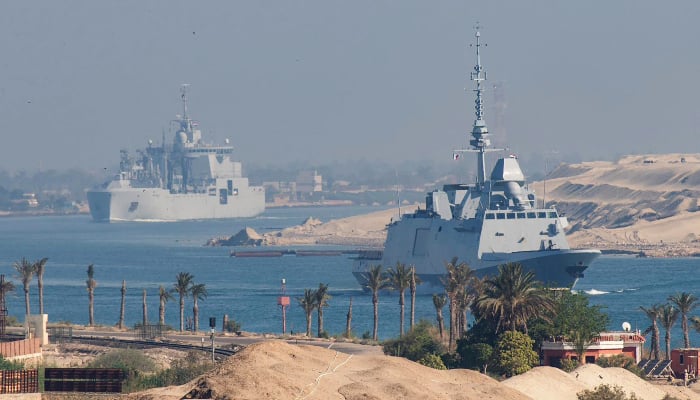
In its response, delivered through mediator Pakistan, Iran sought guarantees that the transferred uranium will be returned if negotiations fail or Washington quits the agreement later, sources told the Journal.
Trump made no mention of such details in rejecting Iran’s response.
Iran imposed a blockade on the vital Strait of Hormuz early in the war, sending global oil prices soaring and rattling financial markets.
It has since set up a payment mechanism to extract tolls from ships crossing the strait, but US officials have stressed it would be “unacceptable” for Tehran to control an international waterway and the route for a fifth of the world’s oil and other vital materials.
The US Navy, meanwhile, is blockading Iran’s ports, at times disabling or diverting ships heading to and from them.
Britain and France are leading efforts to create an international coalition to secure the strait after a peace deal is reached, with both countries sending vessels to the region in advance.
The two countries on Tuesday will host a multinational meeting of defence ministers from more than 40 nations on military plans to restore trade flows through the Strait of Hormuz, the British government said.
But Iran warned Sunday that Britain and France would meet “a decisive and immediate response” should they deploy their ships to the strait.
“Only the Islamic Republic of Iran can establish security in this strait and it will not allow any country to interfere in such matters,” Deputy Foreign Minister Kazem Gharibabadi posted on X.
French President Emmanuel Macron later insisted his country had “never envisaged” a naval deployment in Hormuz, but rather a security mission “coordinated with Iran.”
‘Restraint over’
Fresh drone attacks Sunday in the Gulf were the latest to rattle the ceasefire after multiple recent flare-ups.
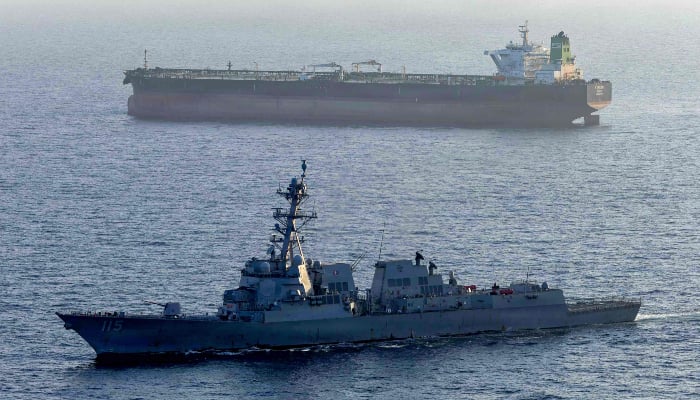
The United Arab Emirates said its “air defence systems successfully engaged two UAVs launched from Iran.”
Kuwait reported an attempted attack as well, saying its armed forces dealt with “a number of hostile drones in Kuwaiti airspace.”
And Qatar’s defence ministry said a freighter arriving in its waters from Abu Dhabi was hit by a drone.
There was no immediate claim of responsibility, but Iran’s Fars news agency reported that “the bulk carrier that was struck near the coast of Qatar was sailing under a US flag.”
In a social media post Sunday, the spokesman for the Iranian parliament’s national security commission warned Washington: “Our restraint is over as of today.”
“Any attack on our vessels will trigger a strong and decisive Iranian response against American ships and bases,” Ebrahim Rezaei said.
- US-mediated ceasefire appears under serious strain today.
- 200 clashes taken place since Saturday: Ukrainian officials.
- Zelenskiy expects US to guarantee swap of 1,000 prisoners.
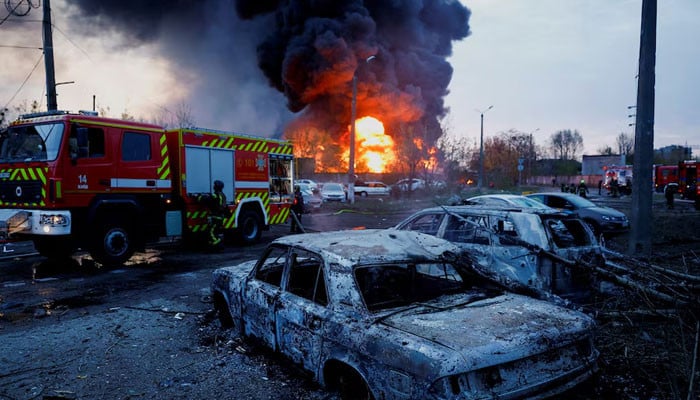
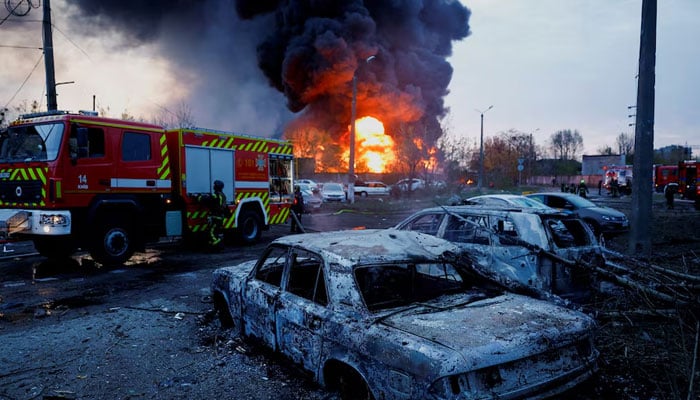
A US-mediated ceasefire between Russia and Ukraine appeared under serious strain on its second day on Sunday, with both sides accusing the other of violating the deal through weekend attacks.
The three-day pause, announced on Friday by President Donald Trump, is part of a broader US-led push for peace that has so far failed to end the more than four-year-old war despite months of shuttle diplomacy.
Three people were killed in Russian drone strikes on areas near the front line, and more than 200 battlefield clashes had taken place since early Saturday, Ukrainian officials reported on Sunday.
President Volodymyr Zelenskiy said Russia had refrained from large-scale aerial and missile attacks but continued assaults along parts of the front where its forces are advancing.
“In other words, the Russian army is not observing any silence on the front and is not even particularly trying to,” he said in his evening address, adding that Ukrainian troops were responding and defending their positions.
On Sunday, Russia’s Defence Ministry accused Ukraine of flouting the pause, saying it had downed 57 Ukrainian drones over the past day and “responded in kind” on the battlefield.
Zelenskiy said he expected the US to guarantee a swap of 1,000 prisoners of war from each side that had been part of the deal.
Earlier this week, Russia and Ukraine had each announced separate ceasefires — starting on Friday and Wednesday, respectively — but quickly accused one another of breaking them.
Dead and wounded in Ukraine
One person each in Ukraine’s Zaporizhzhia, Dnipropetrovsk and Kherson regions were killed in Russian drone attacks, regional governors and police said in separate reports on Sunday.
In the northeastern Kharkiv region, governor Oleh Syniehubov said eight people, including two children, were wounded in drone strikes on the regional capital and nearby settlements.
Seven people, including a child, were also wounded in the Kherson region in drone or artillery attacks since early Saturday, regional governor Oleksandr Prokudin said on Sunday.
The State Emergencies Service said Russian forces attacked one of its rescue vehicles in the Dnipropetrovsk region with a drone, wounding a 23-year-old driver.
Kyiv’s air force said Russia had launched 27 long-range drones at Ukraine overnight – a lower number than usual – but that air defences had downed all of them.
Ukraine’s General Staff said on Sunday afternoon that nearly 210 clashes had taken place along the sprawling, 1,200-km front line since early Saturday.
Reuters could not immediately verify the battlefield reports.
Stalled diplomacy
Russian forces are pressing an offensive to seize the remaining parts of Ukraine’s eastern Donetsk region, which Moscow has demanded Kyiv cede before it considers ending its war.
US-backed peace talks between Kyiv and Moscow have stalled over the matter, as well as over control of the Russian-occupied Zaporizhzhia nuclear power plant – Europe’s largest.
Russian officials had sent mixed signals on Saturday, with Kremlin spokesman Dmitry Peskov saying peace in Ukraine was a “very long way” away but President Vladimir Putin suggesting the war was “coming to an end”.
US envoy Steve Witkoff and Jared Kushner will visit Moscow “soon enough” to continue talks with Russia, news agency Interfax reported Kremlin adviser Yuri Ushakov as saying on Sunday.
On Friday, Kyiv’s top negotiator, Rustem Umerov, said he had met Witkoff and Kushner in Miami for talks on humanitarian issues and to “coordinate further steps” toward peace.
Separately, Germany on Sunday dismissed a suggestion by Putin that former Chancellor Gerhard Schroeder could coordinate talks with the European Union to secure a peace deal in Ukraine.
- LPG prices rise in India after Hormuz disruptions.
- Modi urges citizens to prefer metro travel, carpooling.
- Modi urges virtual meetings to save energy and fuel.
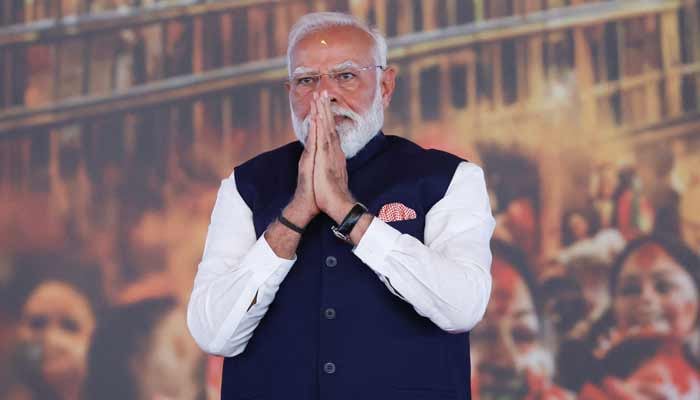
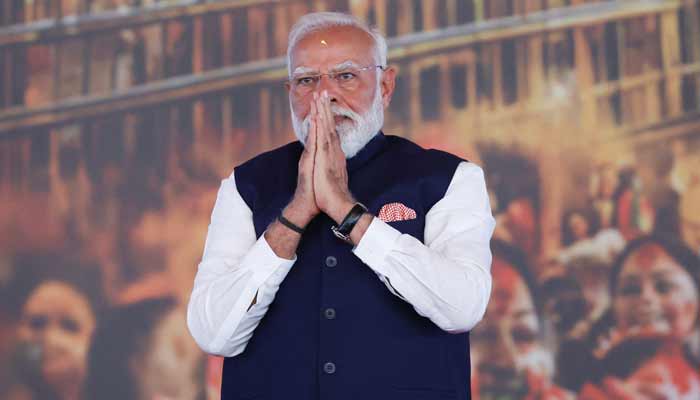
Indian Prime Minister Narendra Modi on Sunday urged the people of India to cut down on petrol and diesel consumption amid supply disruptions due to the Middle East war.
India is one of the few countries in the region that has not increased the prices of petrol and diesel for domestic consumers or rationed supplies.
But it has increased prices of liquefied petroleum gas (LPG) — a primary cooking fuel in this country — after disruptions following the US-Israeli strikes on Iran, which led to Iran’s near-total blockade of the strategic Strait of Hormuz.
“We have to reduce our use of petrol and diesel. In cities with metro lines, we should try to travel by metro…If we must use a car, then we should try to carpool,” he said, addressing a gathering in southern Telangana state.
He added that restrictions on use were also necessary to save foreign currency spent on fuel imports.
“We must also place a strong emphasis on saving foreign exchange, as petrol and diesel have become so expensive globally.”
Modi also urged people to resume energy-saving schemes that were in place during the Covid pandemic.
“We should prioritise work from home, online conferences, and virtual meetings again,” he said.
- Proposal put forward by US would formally end war.
- Qatari tanker passes Strait of Hormuz towards Pakistan.
- US criticises allies over lack of support to reopen strait.
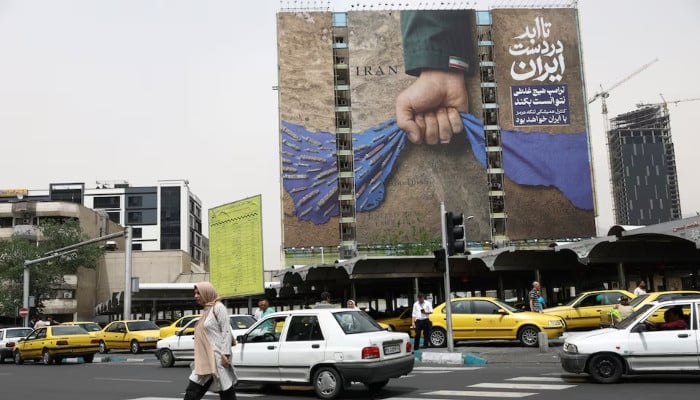
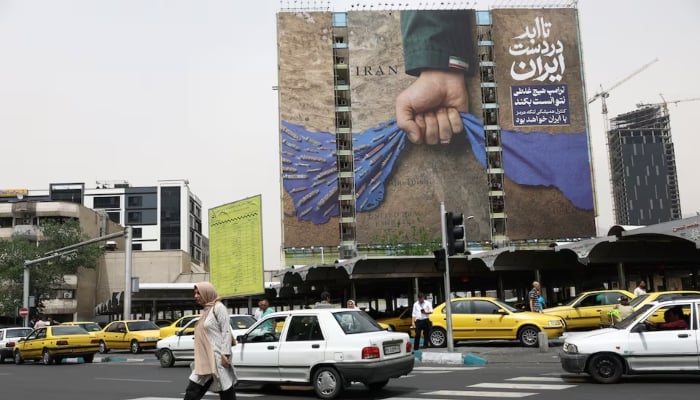
Iran has sent its response to a US proposal to begin peace talks to end the war, the Irna news agency reported on Sunday.
The Irna report said the response, sent to mediator Pakistan, would focus at this stage on ending the war, but no details were immediately available.
After some 48 hours of relative calm following sporadic clashes last week, hostile drones were detected over several Gulf countries on Sunday, underlining the threat still facing the region despite a month-old ceasefire.
The proposal put forward by the United States would formally end the war before the start of talks on more contentious issues, including Iran’s nuclear programme.
Trump under pressure to end war
With US President Donald Trump due to visit China this week, there has been mounting pressure to draw a line under the war, which has ignited a global energy crisis and poses a growing threat to the world economy.
But, despite diplomatic efforts to break a deadlock between the two sides, the threat to shipping lanes and the economies of the region remained high.
On Sunday, the UAE said it intercepted two drones coming from Iran, while Qatar condemned a drone attack that hit a cargo ship coming from Abu Dhabi in its waters. Kuwait said its air defences had dealt with hostile drones that entered its airspace.
Tehran has largely blocked non-Iranian shipping through the narrow Strait of Hormuz, which before the war carried one-fifth of the world’s oil supply and which has emerged as one of the central pressure points in the war.
Qatari Prime Minister Mohammed bin Abdulrahman al‑Thani, who discussed Pakistan’s mediation efforts to end the war with US Secretary of State Marco Rubio in Miami on Saturday, told Iran’s Foreign Minister Abbas Araghchi that using the Strait of Hormuz as a “pressure tool” would only deepen the crisis.
He told Araghchi in a phone call that freedom of navigation should not be compromised, the Qatari foreign ministry said on Sunday, without specifying the exact date of the call.
Iranian lawmakers have said they are drafting a bill to formalise Iran’s management of the strait, with clauses including forbidden passage to vessels of “hostile states”.
Recent days have seen the biggest flare-ups in fighting in and around the strait since a Pakistan-mediated ceasefire began a month ago. The UAE came under renewed attack on Friday, and sporadic clashes were reported between Iranian forces and US vessels in the strait.
US berates allies for not helping to reopen strait
Washington imposed a blockade on Iranian vessels last month but Tehran has so far taken its time before responding to calls to end a war that surveys show is unpopular with US voters facing ever-higher gasoline prices.
A CIA assessment indicated Iran would not suffer severe economic pressure from a US blockade for about another four months, according to a US official familiar with the matter.
A senior intelligence official characterised as false the “claims” about the CIA analysis, which was first reported by the Washington Post.
The US has also found little international support in the conflict, with Nato allies refusing calls to send ships to open the Strait of Hormuz without a full peace deal and an internationally mandated mission.
After meeting Italian Prime Minister Giorgia Meloni on Friday, Rubio questioned why Italy and other allies were not backing Washington’s efforts to reopen the strait, warning of a dangerous precedent if Tehran were allowed to control an international waterway.
Britain, which has been working with France on a proposal to ensure safe transit through the strait once the situation stabilises, said on Saturday it was deploying a warship to the Middle East in preparation for such a multinational mission.


Bangladesh extend lead after early wickets despite Pakistan fightback

Trump rejects Iran peace terms, Tehran warns of new attacks

Jewellery stocks today: Share prices sink up to 9% after PM Modi calls to cut gold purchases – The Times of India

-
 Politics1 week ago
Iran weighs US reply delivered via Pakistan as Trump signals opposition to deal terms
-

 Fashion1 week ago
US cotton export sales show strong recovery, Upland rise 36%
-

 Sports1 week ago
Sajid Ali Sadpara summits world’s fifth-highest peak
-

 Tech7 days ago
DHS Demanded Google Surrender Data on Canadian’s Activity, Location Over Anti-ICE Posts
-
 Business1 week ago
Heineken to invest £44.5m in hundreds of pubs creating 850 jobs
-

 Fashion1 week ago
ICE cotton witnesses sharp rise on weaker dollar, strong exports
-
 Business1 week ago
Government notifies FDI changes on China funds – The Times of India
-
 Business1 week ago
UK airlines to be allowed to cancel flights in advance over fuel shortages