

Business
Trump said he’d ‘remember’ companies that didn’t apply for tariff refunds. Many of them are anyway


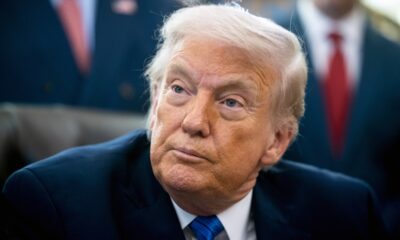
President Donald Trump suggested last month he would look out for companies that didn’t seek tariff refunds after the Supreme Court struck down his wide-ranging global duties.
At first, some major firms like Amazon appeared to be holding off on asking for money back over concerns they’d offend the often transactional president and end up in his crosshairs, CNBC reported earlier this year. But now some of the largest U.S. companies from Walmart to Apple have confirmed they’re seeking what they’re owed — regardless of the consequences.
Home Depot, General Motors, John Deere, FedEx and Costco are among the other major U.S. corporations that have said they are trying to get refunds. The moves may not represent a sea change in how companies handle their relationships with Trump. Even so, they show key examples of when they’re willing to publicly break with the president, after he told CNBC he would “remember” if companies decided not to seek refunds.
There’s a strong business incentive to apply — as well as, for many, a fiduciary responsibility. Major companies have a chance to regain potentially billions of dollars and maximize returns for shareholders.
More than $35 billion in refund money has already been processed and is on its way to businesses’ bank accounts, U.S. Customs and Border Protection said in a court filing earlier this month. The government owes roughly $166 billion in refunds overall.
‘I’ll remember them’

When Trump appeared on “Squawk Box” last month, CNBC’s Andrew Ross Sorkin said that at the time, Apple was among the companies that had held off on applying for a refund over apparent concerns it would upset the president. In response, Trump said it was “Brilliant if they don’t do that.”
“Actually, if they don’t do that, they’ve got to know me very well,” he said. “I’m very honored by what you just said.”
“If they don’t do that, I’ll remember them,” Trump said.
The comments made waves around Washington, where lobbyists and business groups say it initially gave some importers pause over whether to apply for the money they were due. Companies have been trying to parse what exactly the president might have meant with his remark, and whether and how the administration could retaliate against them for moving through the process.
But the threat has not deterred the largest U.S. companies from trying to claw back what they paid in tariffs. Take the largest U.S. retailer Walmart, which drew Trump’s ire last year when it said it could have to raise prices in response to the duties, sparking Trump to tell the retailer to “eat the tariffs” and warn he would be “watching.”
In an interview with CNBC on Thursday, Walmart finance chief John David Rainey confirmed that the company applied to get back the money it paid for so-called IEEPA tariffs, but doesn’t expect a major windfall if and when it is paid back.
“We have availed ourselves of the option to participate in those refunds. For us, it’s a relatively small part of our overall business,” said Rainey when discussing the company’s fiscal first-quarter results. “To be eligible for those refunds, you need to be the importer of record, and for us, where we are the importer of record, it’s about half of 1% of our U.S. sales.”
In its most recent full fiscal year 2026, Walmart U.S. saw $483 billion in net sales, so half of 1% would total about $2.42 billion. While that total is larger than many companies’ annual revenue, Rainey said it’s hardly material for a business that saw more than $713 billion in total revenue last fiscal year.
Still, “every little bit matters,” he said.
“We’re going to prioritize those refunds if and when we get them towards investing in price for our customers,” he said. “We recognize that given where we are right now with both the stress on the consumer as well as the retention of the share gains that we’ve seen, the best ROI on that dollar of capital is to invest in price for our customers.”
Walmart is among the companies that have said they could try to use the money to benefit customers, even in indirect ways. Deploying the refunds to keep prices low for consumers has become a theme among companies applying for them.
“What we have heard most of all in terms of uses is, this is going to help us avoid raising prices as quickly as we thought we were going to have to,” said Neil Bradley, chief policy officer with the U.S. Chamber of Commerce. “That’s a hard thing to telegraph, but it’s real.”
Walmart confirmed it was seeking money back Thursday after Target CFO Jim Lee said on Wednesday the company was “working through the process” of getting a refund. Home Depot finance chief Richard McPhail also said Tuesday the retailer had applied for and had “received an immaterial amount to date.”
“We have assumed that that could provide a significant offset to those [tariff] costs,” he told analysts.
Some firms have sought to find ways to spend any refund money in ways that would appease both the White House and their customers, one representative of an influential business group said. For example, Apple has said since Trump’s comments that it is applying for a tariff refund.
It plans to reinvest any money it gets back into “U.S. innovation and advanced manufacturing,” a major priority for Trump, Apple CEO Tim Cook said on a call with analysts last month.
Meanwhile, other major companies have stayed quiet about whether they’ll try to claw back their tariff payments.
Amazon, which was sued in a class action lawsuit last week over its decision not to pursue a refund, hasn’t responded to requests for comment on whether it’ll apply to get money back.
Others aren’t ready to admit their refund plans one way or another. On Wednesday, Lowe’s CEO Marvin Ellison would not say whether the retailer is applying.
“We’re just monitoring the situation,” said Ellison. “We haven’t talked publicly about whether we filed or not, but what we have done is paid really close attention to the situation, understanding that when tariff refunds go out, they go out to everybody, and so we’re right now trying to determine if and when those refunds happen.”




Business
After petrol, diesel, CNG prices hiked third time, sees increase by Re 1 per kg – check rates in your city
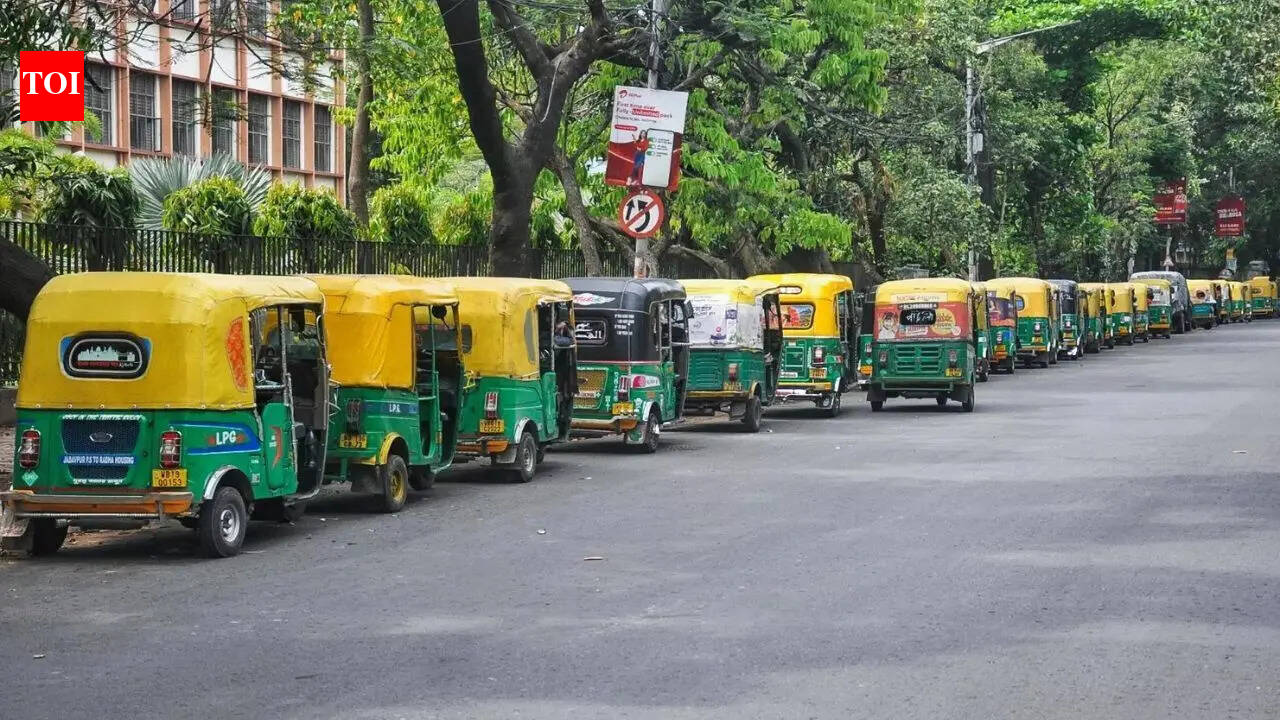
NEW DELHI: Compressed Natural Gas (CNG) prices were increased by Re 1 per kg on Saturday, marking the third hike in less than 10 days amid rising global energy prices linked to the ongoing West Asia conflict and disruptions around the Strait of Hormuz.With the latest revision coming into effect immediately, CNG in Delhi will now cost Rs 81.09 per kg. Prices in Noida, Greater Noida and Ghaziabad have risen to Rs 89.70 per kg, while Gurugram will see CNG priced at Rs 86.12 per kg.The latest hike follows a Rs 2 per kg increase announced on May 15 and another Re 1 per kg hike on May 17. With the latest revision, CNG prices in Delhi climbed to Rs 80.09 per kg, breaching the Rs 80-mark for the first time.
Revised rates of CNG in major cities
| City | Prices |
| Delhi | Rs 81.09 per Kg |
| Noida | Rs 89.70 per Kg |
| Ghaziabad | Rs 89.70 per Kg |
| Greater Noida | Rs 89.70 per Kg |
| Gurugram | Rs 86.12 per Kg |
The fresh revision comes even as petrol and diesel prices were also increased again on Saturday, marking the third hike in less than 10 days.Petrol prices were raised by up to 87 paise per litre, while diesel prices increased by as much as 91 paise per litre across major cities.In Delhi, petrol now costs Rs 99.51 per litre, up from Rs 98.64, while diesel prices rose from Rs 91.58 to Rs 92.49 per litre.The consecutive hikes in CNG, petrol and diesel prices come amid mounting pressure on global energy markets due to escalating tensions in the Middle East and continued disruptions around the Strait of Hormuz, a key global energy corridor through which nearly one-fifth of the world’s oil and gas trade passes.Global crude oil prices, which were hovering around $70–72 per barrel before the conflict, surged past $120 at one stage and are currently trading in the $104–110 range. India’s crude oil basket has averaged nearly $113–114 per barrel in recent months, compared to around $69 per barrel in February.India imports nearly 90 per cent of its crude oil requirements, making domestic fuel prices highly sensitive to international market movements.The back-to-back hikes in CNG, petrol and diesel prices are expected to increase transportation costs for private vehicle owners, cab drivers and commuters who depend on CNG as a relatively affordable fuel option.Meanwhile, commercial vehicle operators and taxi unions continued their protest across Delhi-NCR against rising fuel prices and stagnant fares.Transport bodies, including the All India Motor Transport Congress and Chalak Shakti Union, have demanded a rollback of recent fuel hikes, withdrawal of CNG surcharge and a revision in taxi fares, warning that mounting operational costs are severely impacting drivers’ livelihoods.Also read: Petrol, diesel prices hiked third time, sees increase by around 90 paise — check rates in your city

Temperatures hit 28.4C in parts of England on Friday, while delays have been reported at the Port of Dover and Birmingham Airport ahead of the bank holiday weekend.
Source link

A Walmart store is seen on Feb. 3, 2026 in Austin, Texas.
Brandon Bell | Getty Images
Two top Walmart executives are departing the company, nearly four months after CEO John Furner took over, CNBC learned on Friday.
Tom Ward, the chief operating officer of Walmart’s warehouse Sam’s Club, is retiring, while Cedric Clark, Walmart’s executive vice president of U.S. store operations, is leaving the business, internal memos viewed by CNBC shows.
A replacement for Clark is expected to be announced in the “coming weeks,” the memo stated. It’s unclear when the company expects to fill Ward’s position.
The leadership shuffle comes after Furner took over as Walmart’s CEO in February. Alongside Furner’s promotion, the company elevated four new top executives to work alongside him earlier this year. Seth Dallaire was promoted to chief growth officer, overseeing the company’s marketplace and advertising businesses, David Guggina was elevated to CEO of Walmart U.S., Chris Nicholas became CEO of Walmart International and Latriece Watkins became CEO of Sam’s Club.
Furner took over the largest U.S. retailer during a period of sustained growth, fueled by gains with higher-income consumers and the expansion of its e-commerce business.
Walmart announced fiscal first-quarter earnings on Thursday, where it issued mixed results and said its business remained strong despite consumer pressures and high gas prices.
The leadership changes were first reported by the Wall Street Journal.


L.L.Bean’s Rugged, Water-Resistant Tote Bag Is Tough Enough to Survive Baggage Claim

Oophs! Kate Cassidy leaves airport security shocked over passport photo mismatch

Hajj pilgrim numbers surpass 2025 arrivals despite Middle East conflict

-

 Entertainment7 days ago
Where Pete Davidson, Elsie Hewitt stand after breakup: Details revealed
-
 Business1 week ago
Jersey Election 2026: Cost of living concern in St Helier Central
-

 Entertainment1 week ago
Emilia Clarke recalls near-death incident while filming ‘Game of Thrones’
-

 Politics7 days ago
Rising diesel costs from Iran war strain US school budgets
-

 Entertainment1 week ago
Drake drops highly anticipated "Iceman" album, plus two surprise albums
-

 Politics1 week ago
UK’s Starmer faces survival battle as potential rivals circle
-
 Politics1 week ago
Trump says China will order 200 Boeing jets
-
 Tech1 week ago
Greg Brockman Officially Takes Control of OpenAI’s Products in Latest Shakeup