

Politics
Trump says Iran wants US to open Hormuz Strait ‘as soon as possible’

- Iranian plan would set aside nuclear issue until war ends.
- Trump unhappy with delaying deal on nuclear programme.
- Iran demands blockade be lifted before any negotiations begin.
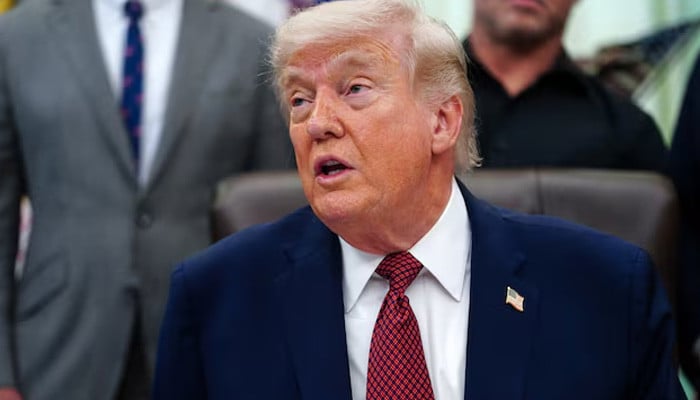
Donald Trump said Iran had informed him it was in a “state of collapse” and was figuring out its leadership situation, as efforts to end the conflict appeared at an impasse on Tuesday, with the US president unhappy at the latest plans from Tehran.
Iran’s most recent proposal on resolving the two-month war would set aside discussion of its nuclear programme until the conflict was concluded and disputes over shipping from the Gulf were resolved.
Trump wants nuclear issues dealt with from the outset, a US official briefed on Trump’s Monday meeting with his advisers said.
In a post on Truth Social on Tuesday, Trump said: “Iran has just informed us that they are in a ‘State of Collapse’. They want us to ‘Open the Hormuz Strait,’ as soon as possible, as they try to figure out their leadership situation (Which I believe they will be able to do!). Thank you for your attention to this matter!”.
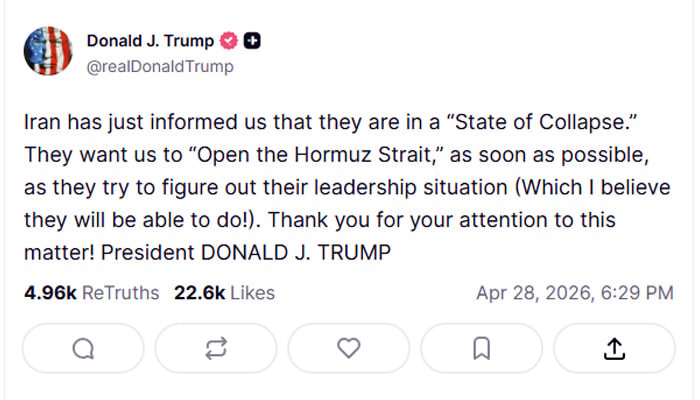
It was not clear from Trump’s social media post how Iran might have communicated that message.
Gulf leaders meet in Saudi Arabia
Meanwhile, Gulf leaders met in person in Saudi Arabia on Tuesday for the first time since their states became a front in the Iran war. A Gulf official said the meeting aimed to craft a response to the thousands of Iranian missile and drone attacks they faced since the US and Israel launched the war on Iran on February 28.
Attacks have subsided since a ceasefire on April 8, though Gulf capitals remain wary of resumed conflict.
Iran’s previous nuclear deal with the United States and other powers in 2015 sharply curtailed its nuclear programme, which it has long maintained is for peaceful, civilian purposes. But that deal fell apart when Trump unilaterally withdrew in his first term in office.
Hopes of reviving peace efforts in a conflict that has killed thousands, thrown energy markets into turmoil and disrupted global trade routes, have receded since Trump last weekend scrapped a visit by his special envoy Steve Witkoff and son-in-law Jared Kushner to mediator Pakistan.
Iranian Foreign Minister Abbas Araqchi shuttled in and out of Islamabad twice during the weekend. He also visited Oman and on Monday went to Russia, where he met President Vladimir Putin and received words of support from a longstanding ally.
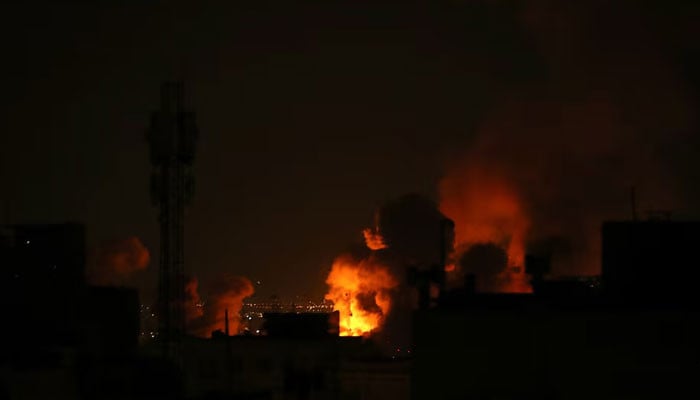
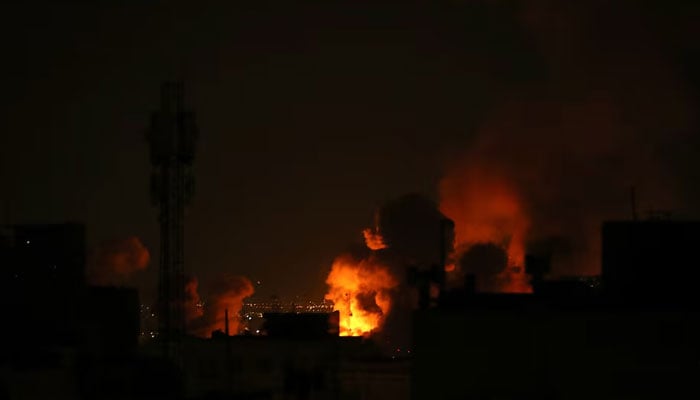
The ongoing Middle East conflict has entered a Cold War-like phase, with both the United States and Iran holding firm to their positions and claiming battlefield success, while the consequences of the confrontation are being felt across the world.
Citing US officials, Axios, a US-based media outlet, reported that there is currently no immediate end in sight to the US-Iran stalemate.
The conflict has entered “a Cold War-like phase, with financial sanctions, gunboat interdictions, and talks about having talks,” it added.
The US is being drawn into a “frozen conflict of no war and no deal”, the report said quoting the officials, adding that in this case, Washington would have to keep its forces in the region for many more months.
If that were to happen, the Strait of Hormuz would remain closed, the US blockade would continue, and both sides would carry on waiting for the other to “blink or fire first,” the US-based media outlet reported.
The report claimed that US President Donald Trump is “undecided” on whether to launch new military strikes or wait to see if his “maximum pressure” and financial sanctions will bring Iran to the negotiating table.
An official close the president said that a “frozen conflict” is the worst thing for Trump politically and economically as midterm elections coming closer.
“I would describe him [Trump] as frustrated but realistic,” the official said. “He [Trump] doesn’t want to use force. But he’s not backing down.”
The report further said that some of Trump’s senior advisers are urging him to maintain the US blockade of the Strait of Hormuz for now and increase economic sanctions on Iran before considering further bombing.
US-Israel war on Iran
The Mideast conflict emerged when the US and Israel launched a war on Iran on February 28, killing top Iranian leadership, including Supreme Leader Ayatollah Ali Khamenei.
In response, Iran launched missile strikes on US bases across Gulf countries and Israel, inflicting heavy losses.
On April 8, US President Donald Trump said he had agreed to a two-week ceasefire with Iran, less than two hours before his deadline for Tehran to reopen the Strait of Hormuz was set to expire, following discussions with Prime Minister Shehbaz Sharif and Chief of Army Staff and Chief of Defence Forces Field Marshal Asim Munir.
Earlier, Trump had warned that “a whole civilisation will die tonight” if his demands were not met.
In order to solve the Mideast crisis Pakistan hosted peace talks between the US and Iran earlier this month. However, after more than 21 gruelling hours of negotiations, American and Iranian diplomats left Pakistan’s capital on April 12 without a formal agreement.
On April 22, President Donald Trump extended the US ceasefire with Iran to allow more time for peace talks, at Pakistan’s request.
Meanwhile, Gulf leaders met in person in Saudi Arabia on Tuesday (today) for the first time since their states became a front in the Iran war. A Gulf official said the meeting aimed to craft a response to the thousands of Iranian missile and drone attacks they faced since the US and Israel launched the war on Iran.
Trump faces domestic pressure to end war
With his approval ratings falling, Trump faces domestic pressure to end a war for which he has given the US public shifting rationales.
Senior Iranian officials, speaking on condition of anonymity, told Reuters the proposal carried by Araghchi to Islamabad over the weekend envisioned talks in stages, with the nuclear issue to be set aside at the start.
A first step would require ending the US-Israeli war on Iran and providing guarantees that the US cannot start it up again. Then negotiators would resolve the US Navy’s blockade of Iran’s trade by sea and the fate of the Strait of Hormuz, which Iran aims to reopen under its control.
Only then would talks look at other issues, including the longstanding dispute over Iran’s nuclear programme, with Iran still seeking some kind of US acknowledgment of its right to enrich uranium.
— With additional input from Reuters
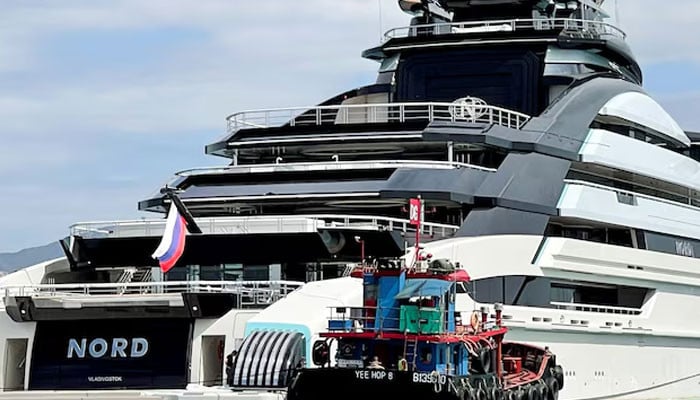
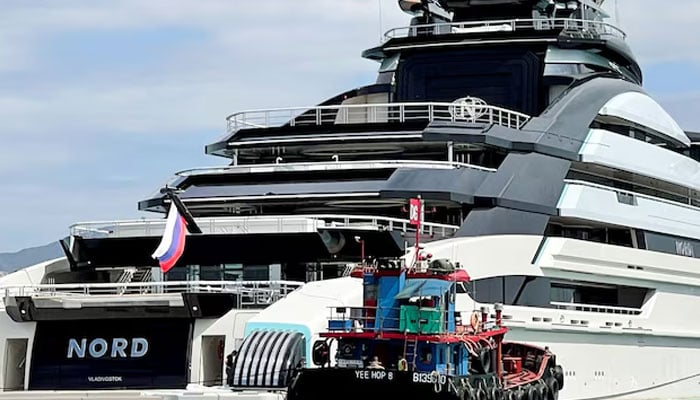
A superyacht owned by Russian billionaire Alexey Mordashov was able to transit the blockaded Strait of Hormuz after undergoing maintenance in Dubai because neither Iran nor the United States objected, a source close to Mordashov said on Tuesday.
It has been unclear how the multi-deck pleasure vessel, worth over $500 million, gained permission to sail on Saturday through the commercially important waterway at the heart of the US-Iran conflict, where traffic has been severely restricted since February.
Sailing under a Russian flag, the yacht, called Nord, crossed the strait on an approved route in compliance with international maritime law, the source said.
“Iran did not interfere with the movement of the yacht, as it is a civilian vessel of a friendly country conducting a peaceful transit. The American side also raised no questions regarding the yacht’s movement, as it did not call at Iranian ports and has no connection to Iran,” the source said.
Just a few, mainly merchant vessels, have been passing daily through the crucial waterway at the entrance to the Gulf as Washington and Tehran maintain an uneasy ceasefire. This represents a fraction of the average 125 to 140 daily passages before the Iran war began on February 28. In response, the US has imposed a blockade of Iranian ports.
Russia is a longstanding ally of Iran. Iranian Foreign Minister Abbas Araqchi travelled to St Petersburg on Monday for a meeting with Russian President Vladimir Putin, after discussions with peace mediators in Pakistan and Oman over the weekend.
After crossing the Strait, Nord has been located near the coast of Oman since Sunday, according to LSEG data.
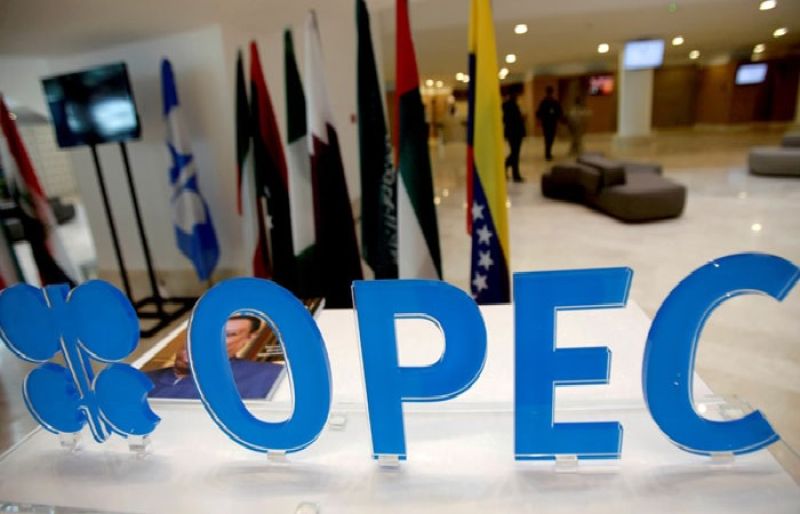
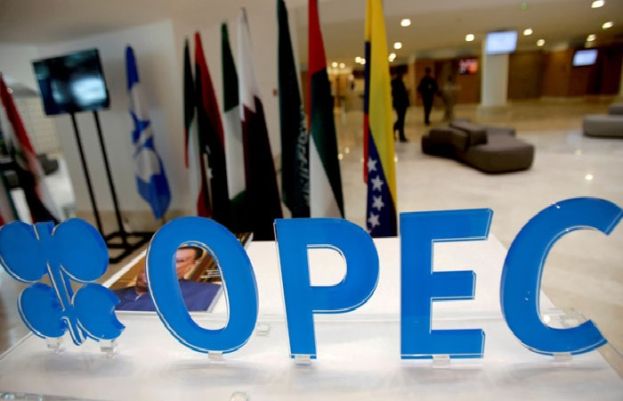
The United Arab Emirates said on Tuesday it quit Opec and Opec+, dealing a heavy blow to the oil exporting groups, at a time when the Iran war has caused a historic energy shock and unsettled the global economy.
The stunning loss of the UAE, a longstanding Opec member, could create disarray and weaken the group, which has usually sought to show a united front despite internal disagreements over a range of issues from geopolitics to production quotas.
Opec Gulf producers have already been struggling to ship exports through the Strait of Hormuz, a narrow chokepoint between Iran and Oman through which a fifth of the world’s crude oil and liquefied natural gas normally passes, because of Iranian threats and attacks against vessels.
But the UAE exit from Opec represents a big win for US President Donald Trump, who has accused the organisation of “ripping off the rest of the world” by inflating oil prices.
Trump has also linked US military support for the Gulf with oil prices, saying that while the US defends Opec members, they “exploit this by imposing high oil prices”.
The move came after the UAE, a regional business hub and one of Washington’s most important allies, criticised fellow Arab states for not doing enough to protect it from numerous Iranian attacks during the war.
Anwar Gargash, the diplomatic adviser for the UAE president, criticised the Arab and Gulf response to the Iranian attacks in a session at the Gulf Influencers Forum on Monday.
“The Gulf Cooperation Council countries supported each other logistically, but politically and militarily, I think their position has been the weakest historically,” Gargash said.
“I expect this weak stance from the Arab League and I am not surprised by it, but I haven’t expected it from the (Gulf) Cooperation Council and I am surprised by it,” he said.
Oil prices hit $110
Stocks fell and oil rose on Tuesday as investors assessed the stalemate in the Iran conflict and worried the AI boom was losing momentum, while the dollar climbed.
The US was reviewing Tehran’s latest proposal to resolve the war. A US official said President Donald Trump was unhappy with the plan as it did not address Iran’s nuclear programme.
The two-month-long conflict is at an impasse and energy and other supplies are still failing to cross through the critical Strait of Hormuz, pushing oil prices above $110 a barrel on Tuesday.
Brent crude oil LCOc1 rose 3% to $111.40 a barrel, a three-week high, while US oil CLc1 was up 3.8% at $100.
Oil prices have steadily climbed in recent days as hopes have ebbed for an imminent peace deal, pushing up bond yields around the world.
Futures for the US benchmark S&P 500 stock index ESc1 fell 0.7% on Tuesday, while those for tech-focused Nasdaq dropped 1.3%.
“Earnings season has helped markets look through the disruption, but the longer key oil flows remain constrained, the greater the risk that higher energy costs begin to bite,” said Matt Britzman, senior equity analyst at Hargreaves Lansdown.


‘It’s Undignified’: Hundreds of Workers Training Meta’s AI Could Be Laid Off

EU considers sanctioning Israel: Here’s why

Mideast conflict enters Cold War-like phase amid US-Iran deadlock: report

-

 Sports1 week ago
NCAA men’s gymnastics championship: All-time winners list
-

 Sports1 week ago
WWE WrestleMania 42 Night 2: Live match results and analysis
-

 Politics1 week ago
UK’s Starmer seeks to deflect blame over Mandelson appointment
-

 Fashion1 week ago
UK’s Sosandar returns to profitability amid robust FY26 performance
-
 Business1 week ago
How Trump’s psychedelics executive order could unlock stalled cannabis reform
-
 Entertainment1 week ago
Lee Anderson, Zarah Sultana kicked out of UK Parliament for calling PM ‘liar’
-

 Fashion1 week ago
India, US to resume BTA talks today
-
 Business1 week ago
Us-India Trade Talks: US–India trade deal: Where do talks stand & what to expect – explained – The Times of India