

Fashion
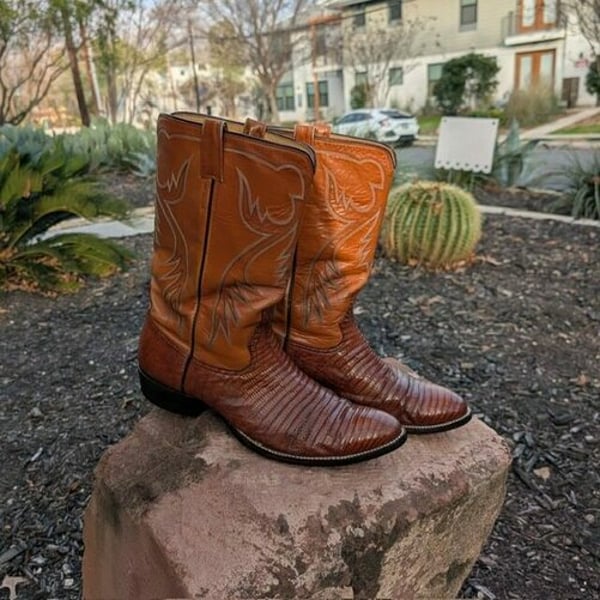
Trump tariffs a stone in the shoe of ‘made in USA’ cowboy boots

By
AFP
Published
August 15, 2025
The manufacture of iconic “made in the USA” cowboy boots is set to suffer from President Donald Trump‘s 30% tariffs on South African exports that came into force in August.
Texas’s most renowned makers of the southern US fashion staple source the ostrich leather they require exclusively from the small South African town of Oudtshoorn, 400 kilometres (250 miles) east of Cape Town.
Known as the world’s “ostrich capital”, Oudtshoorn is nestled in the semi-arid Little Karoo valley just inland from the southern coast and is home to a few hundred thousand people and about as many of the giant flightless birds.
“We just don’t know how bad the impact will be, but positive it wouldn’t be,” said ostrich farmer Laubscher Coetzee of the tariffs that kicked in after South Africa appeared unable to negotiate a new trade deal with Trump.
More than half of the global supply of ostrich-derived products — from feathers to leather and meat — comes from nearly 200 farmers around Oudtshoorn who are joined in the Cape Karoo International (CKI) group, said its managing director Francois de Wet.
South Africa as a whole supplies about 70% of the world’s production, he said.
Luxury handbag manufacturers in France and Italy are among the CKI’s main clients. It also ships 20% of its ostrich leather to top Texas bootmakers such as Lucchese, Justin and Rios of Mercedes, whose boots are sold at several hundreds of dollars a pair.
Ostrich is “an extremely important leather in our industry”, Ryan Vaughan, CEO of the Rios of Mercedes manufacturer, told AFP.
“It’s very resilient, it forms to the foot,” he said, wearing a typical cowboy hat. Coming from “a long line of cattle ranchers”, his family brand was born in Texas in 1853 and employs 250 people.
The tariffs “would make a dramatic impact in our business and in the western industry,” he said, “because it’s not just us that build a lot of cowboy boots out of ostrich leather”.
It is also the case of Tony Lama, an El Paso bootmaker supplied by CKI that has given a pair to every recent Republican president. Donald Trump received cowboy boots emblazoned with “MAGA” made out of “American alligator” skin, according to a press release.
De Wet from the CKI said he believed the South African supply of ostrich leather to the US manufacturers did not run counter to a push by the Trump administration for production to be brought home. The United States did not have enough ostriches to provide the required leather, he said.
“We export the raw material, the ostrich leather. They can’t produce it from local ostriches in the US. They don’t have them,” he told AFP.
“They do all the value-adding in the United States,” he said. “So therefore, in terms of the pure definition of what the Trump administration would like to see, in this case, we do it already.”
The soft skins, recognisable by spots left by the large ostrich feathers, are currently sold to American manufacturers for around $20 a square foot.
“We exported more than the usual volume of ostrich leather to the US in the past two-three months, so we have a little bit of a buffer,” said de Wet.
“For the moment we don’t expect any layoffs in the short term,” he said. But “in the long term, if we have to pick up the full tariff, it will definitely… cause a shrinkage of our business.”
The consumer could also not be expected to pay an extra 30% for the already pricey boots, he said. “So the tariff will have to be split between the exporter… and the importer, and preferably also a part paid by the end consumer.”
It is the unique climate of the Little Karoo, which gets less than 400 millimetres (nearly 16 inches) of rain a year, that makes it ideal for ostrich rearing, said Coetzee, a fourth-generation Oudtshoorn farmer. “That is the reason the ostrich industry is still here 200 years after (it started),” he said.
His great-grandfather built the family home in 1896, when the price of ostrich feathers rivalled that of gold because of their value to the women’s fashion industry.
The extravagant “ostrich palaces” of the time are a reminder of the industry’s previous major crisis, when the market collapsed in the early 1900s as the arrival of the low-roofed motor car ended the fashion for high-feathered hats.
Copyright © 2025 AFP. All rights reserved. All information displayed in this section (dispatches, photographs, logos) are protected by intellectual property rights owned by Agence France-Presse. As a consequence you may not copy, reproduce, modify, transmit, publish, display or in any way commercially exploit any of the contents of this section without the prior written consent of Agence France-Presses.








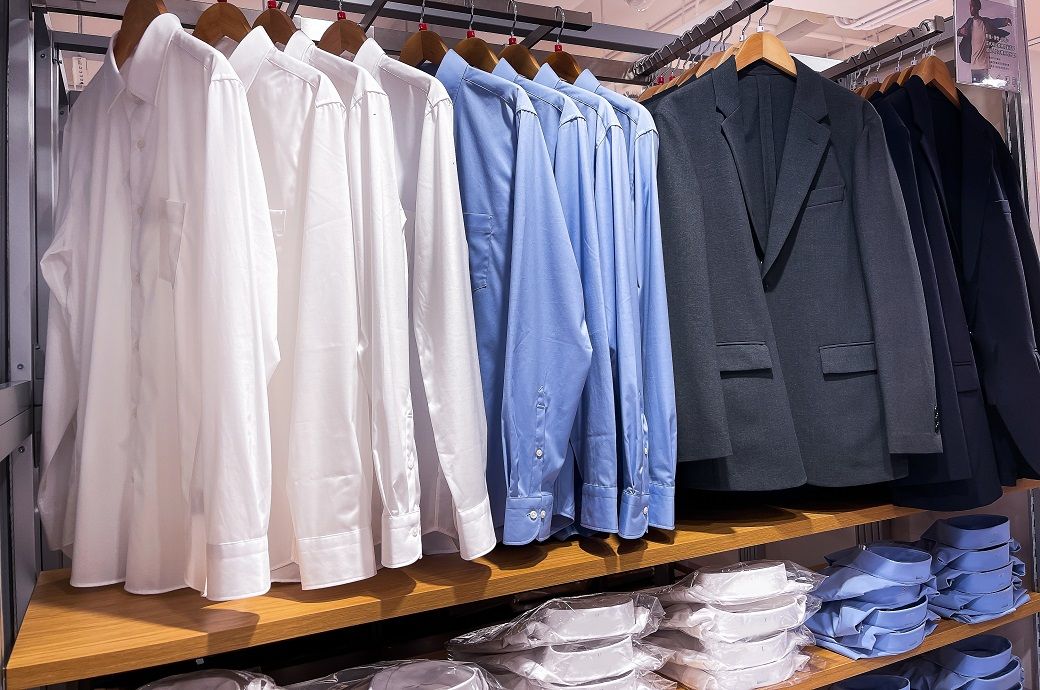
Apparel imports (code **) eased to Au$*.*** billion (~$*.*** billion), compared with Au$*.*** billion a year earlier. In November ****, imports fell sharply by **.** per cent year on year to Au$*.*** billion (~$*.*** billion) from Au$*.*** billion. The November contraction points to retailers delaying replenishment amid weak consumer confidence, promotional stock overhangs, and a preference for tighter inventory management ahead of the peak sales season.
Imports of textile yarn, fabrics, and made-up articles (code **) increased *.** per cent to Au$*.*** billion (~$*.*** billion) from Au$*.*** billion in the same period last year. However, November **** shipments under this category slipped to Au$*** million, down from Au$*** million in November ****, indicating short-term moderation after earlier restocking by manufacturers and converters.

The CFDA x NY Forward Grant Fund, developed with funding from both the New York State Department of State and Ralph Lauren Corporation (Ralph Lauren), will provide partially matching grants to designers and manufacturers based in New York City’s Garment District. The U.S. Fashion Manufacturing Fund, created with Ralph Lauren as founding partner, will support apparel manufacturers nationwide. Both programs aim to help companies to modernize equipment, expand services, and train workers – building the capacity and resilience of American fashion manufacturing.
CFDA has launched two new grant programmes with Ralph Lauren to strengthen American fashion manufacturing.
The CFDA x NY Forward Grant Fund will support New York City’s Garment District, while the US Fashion Manufacturing Fund will aid manufacturers nationwide, focusing on modernisation, workforce training, innovation and long-term industry resilience.
These programs build on the success of the CFDA’s Fashion Manufacturing Initiative (FMI), launched in 2013 in affiliation with the New York City Economic Development Corporation (NYCEDC), Andrew Rosen, and with the long-term support of Ralph Lauren, among others. To date, Ralph Lauren has contributed $2 million as FMI’s Premier Underwriter, enabling grants to 54 factories and positively impacting more than 2,000 jobs.
“Strengthening American manufacturing to ensure designers have local partners has long been at the core of CFDA’s mission,” said Steven Kolb, CEO and President of the CFDA. “We are proud to extend our decade-plus work with Ralph Lauren Corporation and expand to a national level while also continuing our local NYC investments alongside our first-ever partnership with the New York State Department of State.”
Together, these new grant programs mark a landmark commitment: sustaining New York’s Garment District while bolstering U.S. manufacturing nationwide — ensuring that American fashion continues to lead globally through innovation, craftsmanship and community.
“Our expanded partnership with the CFDA reflects Ralph Lauren’s enduring commitment to advancing innovation and supporting American fashion,” said Katie Ioanilli, Chief Global Impact & Communications Officer, Ralph Lauren Corporation. “This is not only an investment in our industry — it’s an investment in a vital part of American culture that we share with the world.”
Note: The headline, insights, and image of this press release may have been refined by the Fibre2Fashion staff; the rest of the content remains unchanged.
Fibre2Fashion News Desk (RM)
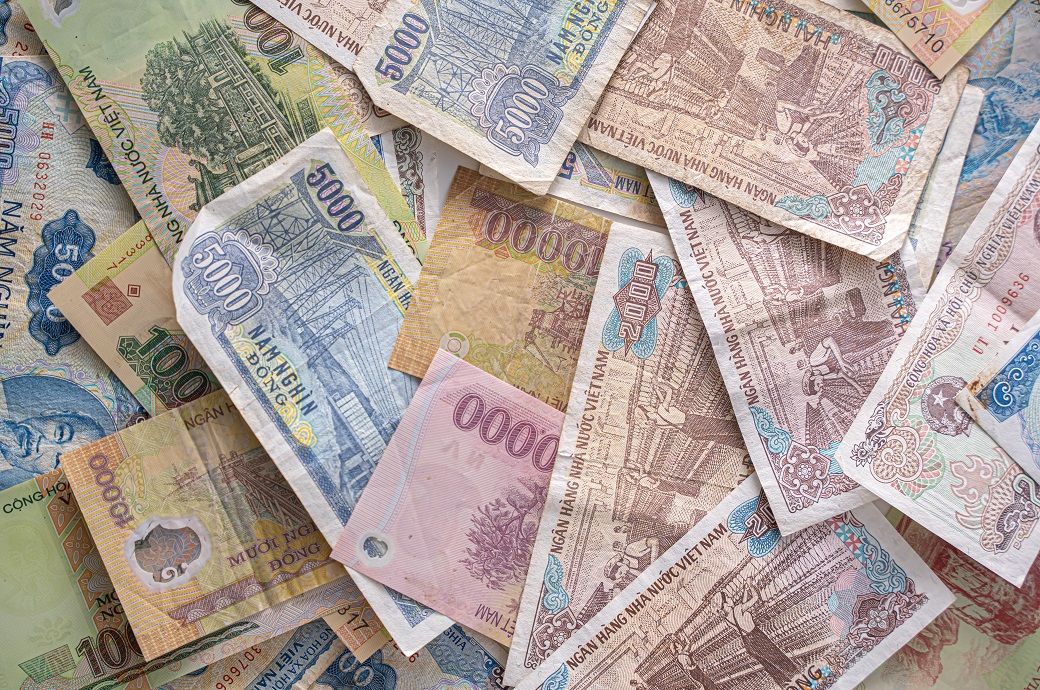
Economic momentum remained strong at the end of 2025, with real GDP expanding 8.4 per cent year on year (YoY) in the fourth quarter, the fastest pace in several years. Growth was driven by robust export-oriented industrial production. Credit growth surged to 19.4 per cent YoY by December, well above deposit growth of 14 per cent, SBV said in a release.
Vietnam’s interbank rates, which rose sharply in late 2025, are expected to ease in 2026 as credit growth and economic momentum cool.
GDP expanded 8.4 per cent year on year in Q4, while credit growth of 19.4 per cent outpaced deposits.
Despite a strong 2025, US tariff risks remain.
The SBV is likely to keep rates steady while targeting slower credit growth.
While Vietnam enters 2026 on a positive footing after achieving an estimated 8 per cent growth in 2025, external risks remain significant for the export-driven economy. Goods exports to the US, which account for around 30 per cent of the total, face the lagged impact of 20 per cent reciprocal tariffs, uncertainty over transshipment duties, and the risk of additional sectoral measures, including possible semiconductor levies.
Monetary authorities have signalled a cautious policy stance for 2026 despite an official GDP growth target of 10 per cent, which analysts view as difficult to achieve. Growth is expected to moderate to around 6.5 per cent, while the SBV has set a lower credit growth target of 15 per cent to limit overheating and resource misallocation risks.
The refinancing rate is expected to remain unchanged at 4.50 per cent, though the possibility of an unexpected rate hike cannot be ruled out if liquidity strains persist.
Fibre2Fashion News Desk (HU)


Budget 2026 Should Support MSMEs, Critical Minerals For Boosting Trade Resilience: Deloitte

Australia’s apparel imports fall, textiles rise in July-Nov 2025

Robert Downey Jr. hails Timothée Chalamet as ‘one of the greats’

-

 Politics1 week ago
UK says provided assistance in US-led tanker seizure
-

 Entertainment1 week ago
Does new US food pyramid put too much steak on your plate?
-

 Entertainment1 week ago
Why did Nick Reiner’s lawyer Alan Jackson withdraw from case?
-

 Sports5 days ago
Clock is ticking for Frank at Spurs, with dwindling evidence he deserves extra time
-
 Business1 week ago
Trump moves to ban home purchases by institutional investors
-

 Sports1 week ago
PGA of America CEO steps down after one year to take care of mother and mother-in-law
-

 Tech3 days ago
New Proposed Legislation Would Let Self-Driving Cars Operate in New York State
-
 Business1 week ago
Bulls dominate as KSE-100 breaks past 186,000 mark – SUCH TV