

Entertainment
Trump weighs Iran strikes to inspire renewed protests, say sources

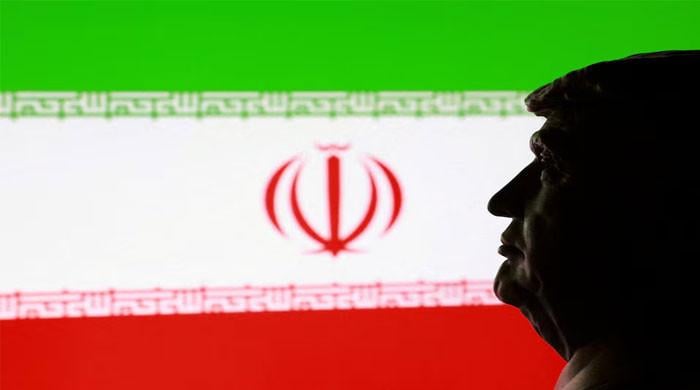
- President Trump not decided which path to take, says source.
- Tehran prepares for military confrontation: Iranian official.
- Israeli, Arab officials doubt airstrikes alone can topple Iran’s govt.
US President Donald Trump is weighing options against Iran that include targeted strikes on security forces and leaders to inspire protesters, multiple sources said, even as Israeli and Arab officials said air power alone would not topple the clerical rulers.
Two US sources familiar with the discussions said Trump wanted to create conditions for “regime change” after a nationwide protest movement earlier this month.
To do so, he was looking at options to hit commanders and institutions that Washington holds responsible for the violence, to give protesters the confidence that they could overrun government and security buildings, they said.
One of the US sources said the options being discussed by Trump’s aides also included a much larger strike intended to have a lasting impact, possibly against the ballistic missiles that can reach US allies in the Middle East or their nuclear enrichment programmes.
The other US source said Trump has not yet made a final decision on a course of action, including whether to take the military path.
The arrival of a US aircraft carrier and supporting warships in the Middle East this week has expanded Trump’s capabilities to potentially take military action, after he repeatedly threatened intervention over Iran’s crackdown.
Four Arab officials, three Western diplomats and a senior Western source whose governments were briefed on the discussions said they were concerned that instead of bringing people onto the streets, such strikes could weaken the movement.
Alex Vatanka, director of the Iran Programme at the Middle East Institute, said that without large-scale military defections, Iran’s protests remained “heroic but outgunned”.
The sources in this story requested anonymity to talk about sensitive matters. Iran’s foreign office, the US Department of Defence and the White House did not respond to requests for comment. The Israeli Prime Minister’s office declined to comment.
Trump urged Iran on Wednesday to come to the table and make a deal on nuclear weapons, warning that any future US attack would be more severe than a June bombing campaign against three nuclear sites. He described the ships in the region as an “armada” sailing to Iran.
A senior Iranian official told Reuters that Iran was “preparing itself for a military confrontation, while at the same time making use of diplomatic channels.” However, Washington was not showing openness to diplomacy, the official said.
Iran, which says its nuclear programme is civilian, was ready for dialogue “based on mutual respect and interests” but would defend itself “like never before” if pushed, Iran’s mission to the United Nations said in a post on X on Wednesday.
Trump has not publicly detailed what he is looking for in any deal. His administration’s previous negotiating points have included banning Iran from independently enriching uranium and restrictions on long-range ballistic missiles and on Tehran’s network of armed proxies in the Middle East.
Limits of air power
A senior Israeli official with direct knowledge of planning between Israel and the United States told Reuters that Israel does not believe airstrikes alone can topple the Islamic Republic, if that is Washington’s goal.
“If you’re going to topple the regime, you have to put boots on the ground,” he said, noting that even if the United States killed Supreme Leader Ayatollah Ali Khamenei, Iran would “have a new leader that will replace him.”
Only a combination of external pressure and an organised domestic opposition could shift Iran’s political trajectory, the official said.
The Israeli official said Iran’s leadership had been weakened by the unrest but remained firmly in control despite the ongoing deep economic crisis that sparked the protests.
Multiple US intelligence reports reached a similar conclusion, that the conditions that led to the protests were still in place, weakening the government, but without major fractures, two people familiar with the matter said.
The Western source said they believed Trump’s goal appeared to be to engineer a change in leadership, rather than “topple the regime,” an outcome that would be similar to Venezuela, where US intervention replaced the president without a wholesale change of government.
Khamenei retains control but less visible
At 86, Khamenei has retreated from daily governance, reduced public appearances and is believed to be residing in secure locations after Israeli strikes last year decimated many of Iran’s senior military leaders, regional officials said.
Day-to-day management has shifted to figures aligned with the Islamic Revolutionary Guard Corps (IRGC), including senior adviser Ali Larijani, they said. The powerful Guards dominate Iran’s security network and big parts of the economy.
However, Khamenei retains final authority over war, succession and nuclear strategy — meaning political change is very difficult until he exits the scene, they said. Iran’s foreign ministry did not respond to questions about Khamenei.
In Washington and Jerusalem, some officials have argued that a transition in Iran could break the nuclear deadlock and eventually open the door to more cooperative ties with the West, two of the Western diplomats said.
But, they cautioned, there is no clear successor to Khamenei. In that vacuum, the Arab officials and diplomats said they believe the IRGC could take over, entrenching hardline rule, deepening the nuclear standoff, and regional tensions.
Any successor seen as emerging under foreign pressure would be rejected and could strengthen, not weaken, the IRGC, the official said.
Across the region, from the Gulf to Turkey, officials say they favour containment over collapse — not out of sympathy for Tehran, but out of fear that turmoil inside a nation of 90 million could unleash instability far beyond Iran’s borders.
A fractured Iran could spiral into civil war as happened after the 2003 US invasion of Iraq, two of the Western diplomats warned, unleashing an influx of refugees, and disrupting oil flows through the Strait of Hormuz, a global energy chokepoint.
The gravest risk, analyst Vatanka warned, is fragmentation into “early-stage Syria”, with rival units and provinces fighting for territory and resources.
Regional blowback
Gulf states — long-time US allies and hosts to major American bases — fear they would be the first targets for Iranian retaliation that could include Iranian missiles or drone attacks from the Tehran-aligned Houthis in Yemen.
Saudi Arabia, Qatar, Oman and Egypt have lobbied Washington against a strike on Iran. Saudi Crown Prince Mohammed bin Salman has told Iranian President Masoud Pezeshkian that Riyadh will not allow its airspace or territory to be used for military actions against Tehran.
“The United States may pull the trigger,” one of the Arab sources said, “but it will not live with the consequences. We will.”
Mohannad Hajj-Ali of the Carnegie Middle East Centre said the US deployments suggest planning has shifted from a single strike to something more sustained, driven by a belief in Washington and Jerusalem that Iran could rebuild its missile capabilities and eventually weaponise its enriched uranium.
The most likely outcome is a “grinding erosion — elite defections, economic paralysis, contested succession — that frays the system until it snaps,” analyst Vatanka said.
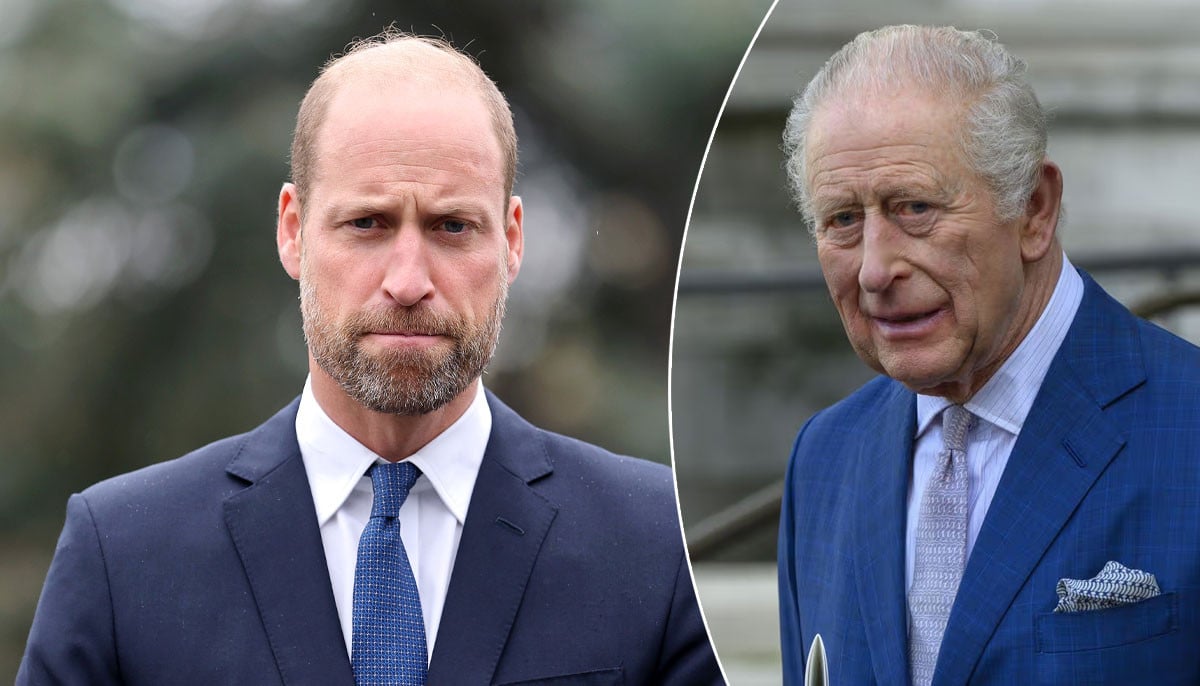
Prince William appears to be growing worried for his cancer-stricken father King Charles after the latest health update causes major concerns in the Palace.
The Prince of Wales, who has been receiving more significant duties from the Palace, is fully aware of his royal in the family but he also deeply cares for his father.
King Charles, along with Queen Camilla, were joined by the Prince and Princess of Wales for Nigeria’s State Banquet last week, and William had expressed his concerns about the monarch’s health at the time.
However, he was quickly shut down by Camilla. According to an insider cited by Closer, William “did not feel Charles was well enough” for the engagements.
“William wants his father to slow down and take a proper step back,” the source said. However, every time William had brough it up, there’s a sense that Camilla “is encouraging Charles to continue his duty, especially at a time the family is receiving so much criticism”.
The heir to the throne believes that his father will improve if he is allowed to take proper rest.
“It’s very upsetting for him because he can see how quickly his father Charles is deteriorating and he feels totally helpless to do anything about it,” the source noted, adding that Camilla “blocks him at every turn”.
Meanwhile, King Charles is “incredibly proud” and he wants to continue as long as he possibly can. Even though William admires the trait in his father but he believes there has to be a line.
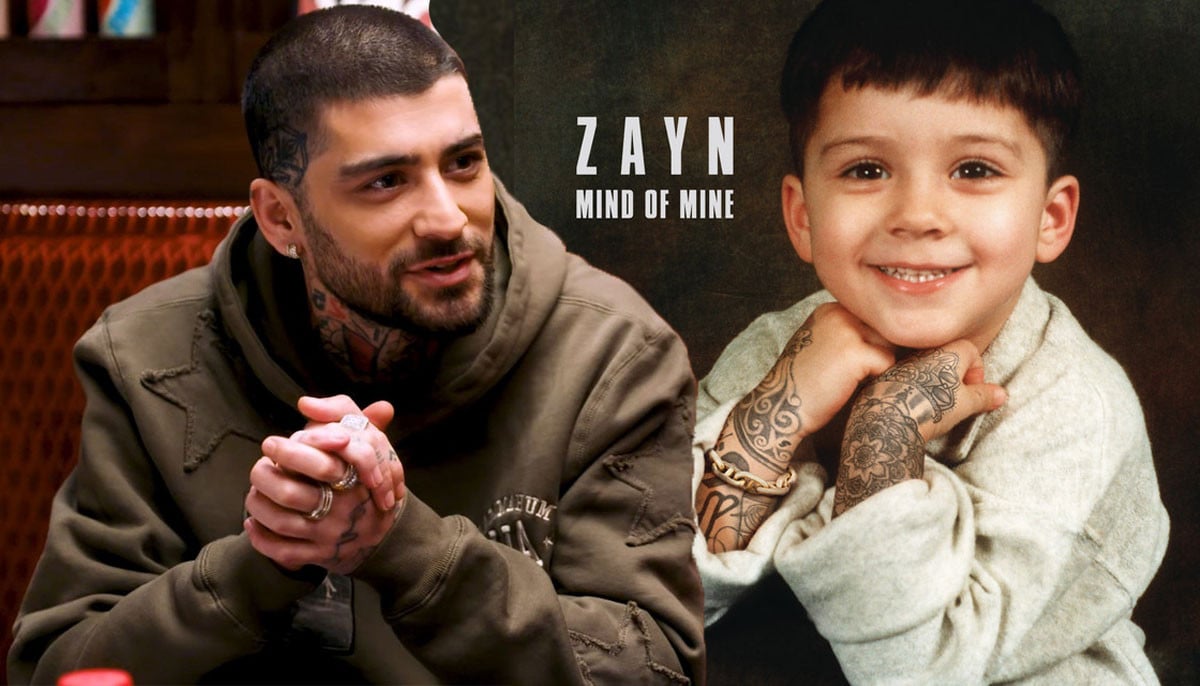
Zayn Malik is celebrating 10 years of his debut solo album Mind of Mine with a heartfelt message.
Earlier this week, the former One Direction star took to his Instagram Stories to post a short video of himself sharing the milestone with his supporters.
Clad in a black leather jacket the Dusk Till Dawn hitmaker expressed his gratitude for all the love all this time.
“Zayn here,” he began in the brief clip. “It’s been exactly 10 years since the release of Mind of Mind, so I thought I’d just do a little video just to say thank you so much for all the support.”

“Love you guys,” the Die For Me singer continued. “It means the world.”
He wrapped up the personal video message, joking, “hopefully I don’t look too old,” flashed a bright smile and waved at his admirers.
For the unversed, Zayn, now 32, released Mind of Mine, his debut solo studio album on March 25, 2016.
It came out exactly one year after his departure from the boy band, consisting of Liam Payne (late), Harry Styles, Niall Horan and Louis Tomlinson.
The lead single, Pillowtalk, debuted at number one in both the UK and US, making Zayn the first British male artist to achieve this with a debut single.
He dropped Like I Would as the second official single, which leaned more toward an uptempo, dance-pop sound.
A collaboration, titled Wrong, with American singer Kehlani served as the final single from the album.
Moreover, a notable track is Intermission: Flower, a Sufi devotional sung in Urdu, reflecting Zayn’s British-Pakistani heritage.
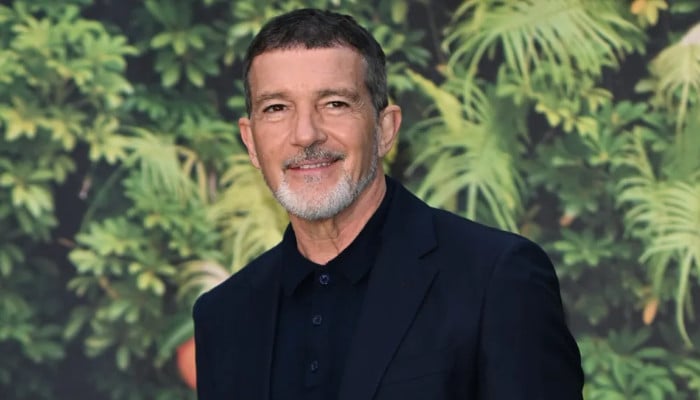
Antonio Banderas has spoken candidly about the ethnic stereotyping he faced when he first arrived in Hollywood, recalling being told bluntly that his Hispanic background limited him to villainous roles, and explaining why breaking out of that box still means so much to him.
“They said, you are here, like the blacks and the Hispanics, to play the bad guys,” the Oscar-nominated actor told The Times.
The irony of what came next is something he clearly savours.
“The problem was a few years later I had a mask, hat, sword and cape and the bad guy was Captain Love, who was blond and had blue eyes.”
That role was, of course, Zorro, the gutsy hero Banderas played in The Mask of Zorro in 1998 and The Legend of Zorro in 2005.
But it was a cat, not a swordsman, that he considers the most culturally significant step forward.
Puss in Boots, the character he first voiced in Shrek 2 in 2004, reached an audience that nothing else could quite match.
“Even more important is Puss in Boots, because it’s for young kids. They see a cat that has a Spanish, even an Andalusian accent and he’s a good guy.”
He has now voiced the character across five films, including the critically lauded Puss in Boots: The Last Wish in 2022, which earned an Oscar nomination.
However, the 65-year-old confirmed last year that he has not yet been approached for Shrek 5, due in cinemas on 30 June 2027.
“I’m not so far, and I’m not being called for that,” he told Parade.
“Puss in Boots did very well. Number two got a nomination for the Oscar, and the movie behaved beautifully at the box office. But I am totally satisfied with the five Puss in Boots that I did. I don’t know what is going to happen in the future. Maybe they [will] call me tomorrow.”


King Charles health update leaves Prince William worried: ‘upsetting’

Zayn Malik shares personal video message on ‘Mind of Mine’ 10th anniversary

Alabama’s ‘complicated’ season ends in Sweet 16 defeat

-
 Business1 week ago
Flipkart group CFO to leave co amid IPO plans – The Times of India
-
 Business1 week ago
Video: The Effects of High Oil Prices
-

 Fashion1 week ago
China’s textile & apparel exports surge 17% to $50 bn in Jan-Feb 2026
-

 Sports1 week ago
Rating Adidas’ 2026 World Cup away shirts: Argentina, Spain, Mexico and more
-

 Sports1 week ago
American Conference Commissioner Tim Pernetti thanks Trump for Army-Navy game executive order
-
Tech1 week ago
The Corsair 4000D RS PC Case Keeps Your System Cool
-

 Tech1 week ago
‘Uncanny Valley’: Nvidia’s ‘Super Bowl of AI,’ Tesla Disappoints, and Meta’s VR Metaverse ‘Shutdown’
-

 Tech1 week ago
Gamers Hate Nvidia’s DLSS 5. Developers Aren’t Crazy About It, Either