

Politics
Trump’s AI image of himself as Jesus-like figure follows feud with Pope Leo

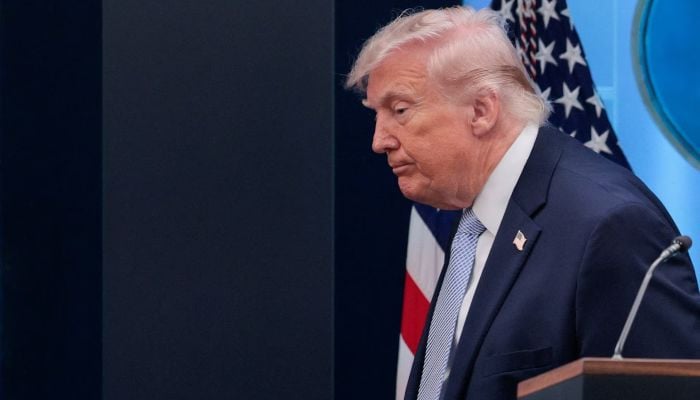
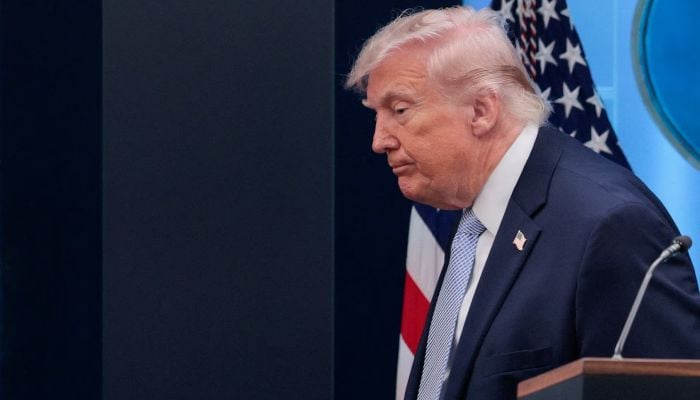
- Trump’s post depicts him in white robe with hand on man’s head.
- Some supporters criticise image, which was later deleted.
- Pope Leo says he has no fear of Trump administration.
US President Donald Trump posted an AI-generated image of himself as a Jesus-like figure on Sunday, drawing widespread criticism even from some religious conservatives who typically support him, before deleting the post on Monday.
The post on Trump’s Truth Social platform, which Trump later said was meant to portray him as a doctor, came amid his escalating feud with Pope Leo, who has criticised the war that started with US-Israeli strikes on Iran as inhumane. Shortly before publishing the image, the president posted a lengthy screed against Pope Leo, calling him “WEAK on crime and terrible for Foreign Policy.”
Leo, the first US-born pope, said in response to Trump’s attacks that he had “no fear” of the Trump administration and would continue to speak out. In a forceful speech on Monday in Algiers, he denounced “neocolonial” world powers who are violating international law, without specifically referring to the United States.
Sunday’s post, depicting Trump in a white robe with an apparently healing hand on a supine man’s head, could create a rift between Trump and the religious right, whose support was critical to his victory in the 2024 election.
In the painting-like image, Trump holds a glowing orb in one hand and uses his other hand to touch a seemingly sick man on the forehead. The Statue of Liberty, fireworks, a fighter jet and eagles could be seen in the background.
Trump denied on Monday that the image was intended to show him as a Jesus-like figure.
“It’s supposed to be me as a doctor making people better, and I do make people better,” he told reporters at the White House, soon after the post was deleted.
Brendan McMahon, an art history professor at the University of Michigan, found that explanation “highly suspicious” given that the image depicts another figure in scrubs, and because Trump is depicted bathed in a bright light used to signify the divine in countless works of religious art through various centuries. Light also emanates from Trump’s hands in the image.
“It’s borrowing from this long tradition of Christian imagery with Christ as healer,” McMahon said. “Style-wise, it seems like it’s gesturing towards social realism of the interwar period in the States, like WPA murals, imagery about enfranchising working-class Americans.”
Brilyn Hollyhand, who served as the co-chair of the Republican National Committee Youth Advisory Council, had a sharper critique, writing on X: “This is gross blasphemy. Faith is not a prop. You don’t need to portray yourself as a saviour when your record should speak for itself.”
Riley Gaines, a former collegiate swimmer and outspoken critic of transgender athletes in women’s sports who has appeared with Trump at rallies, wrote on X she could not understand why Trump posted the image.
“Does he actually think this?” she wrote. “Either way, two things are true. 1) a little humility would serve him well 2) God shall not be mocked.”
Christian voters, including Catholics, have formed a critical part of Trump’s political base. Trump, who does not attend church regularly, won large majorities of Christian voters in the 2024 election, including Catholics, who had previously been closer to a split.
After Trump narrowly survived an assassination attempt in July 2024, some evangelical supporters said it was evidence he had been blessed by God.
Trump feud could test Catholic voter loyalty
David Gibson, the director of the Centre on Religion and Culture at Fordham University, a Catholic school, said it was difficult to understand Trump’s motive in attacking Leo and for posting the image, but that it was also hard to say whether American Catholics would turn against him.
“Will this move cross a red line for them? Will they finally punish Trump and the GOP at the ballot box?” he said. “This is a watershed moment – will Catholics in America choose the pope or the president?”
Bishop Robert Barron, who serves on a Trump-created religious liberty commission, said on X that the president owed Leo an apology for his “inappropriate” statements on social media. But he also praised Trump in the same post for his outreach to Catholics.
Trump told reporters on Monday he had “nothing to apologise for” to the pope.
In recent weeks, Leo has become one of the most prominent critics of the war in Iran, even making an unusual direct appeal to Trump and urging him to find an “off-ramp.”
Trump-Vatican tensions deepen over Iran
Leo has also said that Jesus cannot be used to justify war and that God rejects the prayers of those who start conflicts.
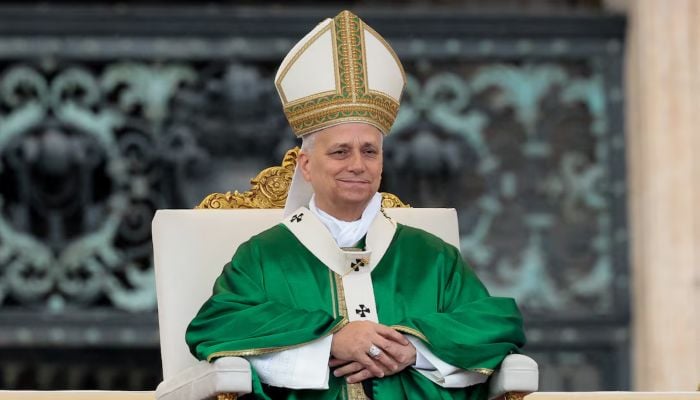
Those remarks were widely seen as a rebuke to Trump officials like US Secretary of Defence Pete Hegseth, who has cited scripture to justify the use of “overwhelming violence” against enemies and likened the rescue of a US airman inside Iran to the resurrection of Jesus Christ.
Trump also feuded at times with Leo’s predecessor, Francis, who publicly opposed Trump’s deportation campaign as un-Christian. Last year, after Francis’ death, Trump posted an image showing himself as pope, prompting outrage from many Catholics.
But Trump’s attacks on Leo have gone well beyond his swipes at Francis.
“American presidents and American Catholics have disagreed with popes in the past,” Gibson said. “But this is disrespect. Disrespect is way different than disagreement, and that’s the danger for Trump here.”
At least eight members of Trump’s cabinet are Catholic, including Vice President JD Vance and Secretary of State Marco Rubio.
Vance, speaking to Fox News Channel’s “Special Report with Bret Baier,” played down the Jesus-like image, saying Trump made it jokingly. Vance added it was sometimes better for the “Vatican to stick to matters of morality.”
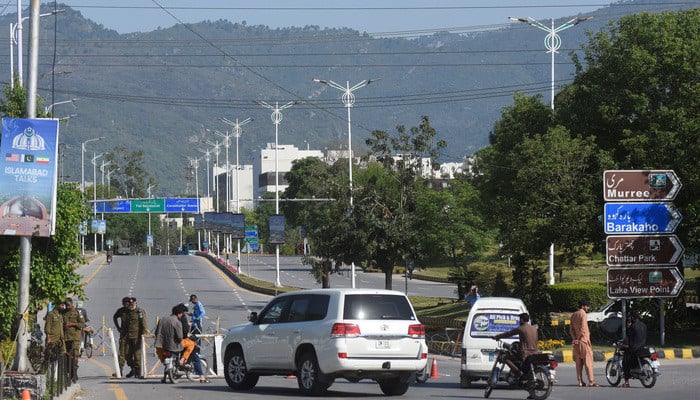
- Pakistan continues mediation as US and Iran explore options for renewed talks.
- Fresh negotiations likely before ceasefire expiry; venue yet to be finalised.
- Backchannel diplomacy continues after inconclusive US-Iran meeting.
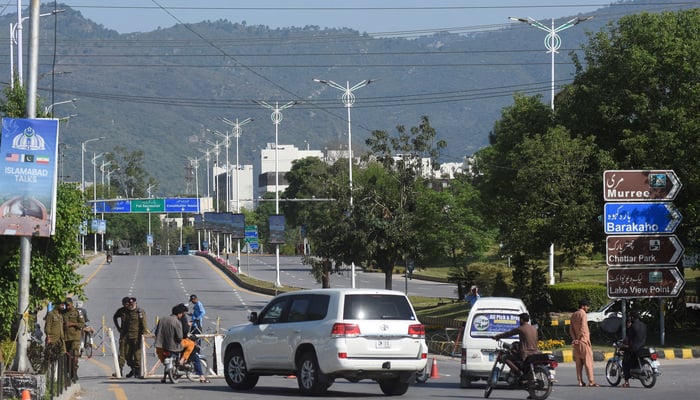
Pakistan has proposed hosting a second round of talks between the United States and Iran in Islamabad in the coming days, before the current ceasefire expires on April 21, the Associated Press reported, citing two Pakistani officials.
The officials, speaking on condition of anonymity, said the proposal would depend on whether the two sides prefer an alternative venue. They added that the earlier negotiations in Islamabad were part of a continuing diplomatic process rather than a one-off engagement.
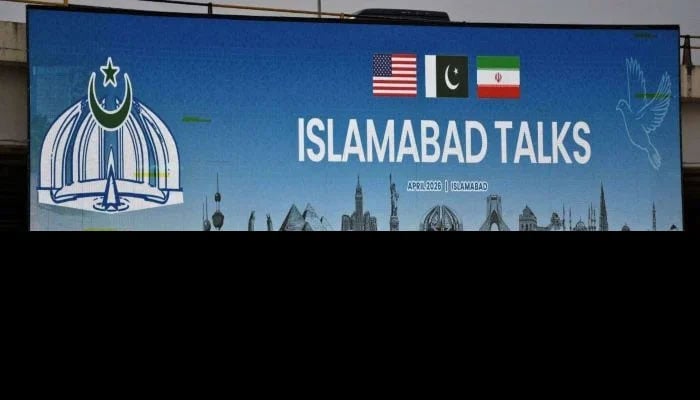
The initial round of US-Iran talks, hosted by Pakistan in Islamabad, brought together senior delegations in what officials described as intensive, closed-door negotiations aimed at ending weeks of conflict. The trilateral “Islamabad Talks” lasted nearly 21 hours after beginning on the afternoon of April 11, reflecting the complexity and high stakes involved.
Despite extensive discussions, the first round ended without a formal agreement. US Vice President JD Vance, who led the American delegation, said the negotiations had failed to produce a deal, though both sides used the platform to outline their positions in detail. Pakistani officials, however, viewed the meeting as a significant step in opening direct channels of communication between Washington and Tehran.
According to Reuters and the Associated Press, engagement between the two sides has continued since the Islamabad meeting, with the possibility of a second round being considered as early as Thursday. Diplomats say Islamabad is again being discussed as a potential venue, although Geneva remains another option.
Sources told Reuters that Pakistan has continued to play a mediating role by relaying messages between Tehran and Washington. A US official said there was ongoing engagement and forward movement towards a possible agreement, while Vance noted in a television interview that “a lot of progress” had been made, adding that the next move rests with Iran.
The Islamabad talks were widely seen as a rare instance of direct engagement facilitated by a third party, with Pakistan coordinating closely with both sides to bring them to the table. Officials familiar with the process said the discussions focused on narrowing differences over ceasefire terms, regional security and broader political concerns.
The conflict, which began on February 28 following coordinated US-Israeli strikes on Iranian targets, has killed more than 2,000 people and destabilised the wider region. Iran responded with retaliatory actions, including disrupting shipping through the Strait of Hormuz and targeting US and Israeli interests.
A ceasefire announced on April 8 — brokered with Pakistan’s involvement — has temporarily halted hostilities, but major disagreements remain. Washington has proposed a 15-point framework covering nuclear and missile issues, sanctions relief and maritime security, while Tehran has put forward a 10-point plan seeking broader sanctions removal and greater control over key waterways.
The international community has broadly welcomed Pakistan’s role in hosting the “Islamabad Talks” and facilitating dialogue, with its continued diplomatic efforts seen as key to sustaining momentum towards a potential agreement.
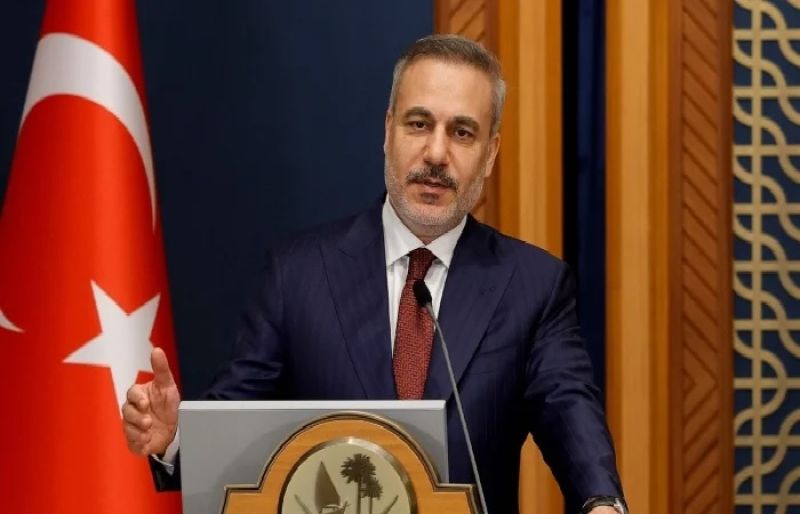

Israel “cannot live without an enemy” and its government is now trying to portray Turkiye as one, Turkish Foreign Minister Hakan Fidan said on Monday.
“After Iran, Israel cannot live without an enemy,” Fidan said in a televised interview with the state-run Anadolu news agency.
“We see that not only Netanyahu’s administration but also some figures in the opposition — though not all — are seeking to declare Turkiye the new enemy,” he said.
“This is a new development in Israel… turning into a state strategy,” he added.
Tensions between Turkiye and Israel have steadily escalated since the Gaza war erupted following Hamas’s October 7, 2023, attack in Israel.
The dispute entered a new phase over the weekend after President Recep Tayyip Erdogan warned his US counterpart Donald Trump of “possible provocations and sabotage” that could jeopardise an initial ceasefire arrangement in the US-Israeli war on Iran.
Prime Minister Shehbaz Sharif announced the two-week ceasefire between Tehran and Washington on April 8, ending the six-week war that began on February 28, when the US launched a joint bombing campaign with Israel against Iran.
Following President Erdogan’s warning about possible sabotage of the ceasefire, Israeli Prime Minister Benjamin Netanyahu vowed that Israel would continue to confront Tehran and its regional allies.
In response, Turkiye said that Netanyahu’s current objective was “to undermine ongoing peace negotiations and continue his expansionist policies in the region”.
In a statement on April 11, the ministry said that the Israeli prime minister risked being tried in his own country and is likely to be sentenced to imprisonment on corruption charges.
“Netanyahu, who has been described as the Hitler of our time due to the crimes he has committed, is a well-known figure with a clear track record,” the Turkish foreign ministry added.
The ministry also noted the arrest warrant issued by the International Criminal Court against the Israeli prime minister on charges of war crimes and crimes against humanity.
Nato urged to reset ties with Trump
During the same interview, the Turkish foreign minister said that North Atlantic Treaty Organisation (Nato) allies should use their July summit in Ankara to reset ties with US President Donald Trump and prepare for a potential reduction of US involvement in the alliance.
Fidan said that Turkiye believed Trump would attend the Nato leaders’ summit on July 7-8 due to his “personal respect” for President Erdogan, but added he understood Trump was otherwise reluctant to come to the meeting.
Trump has criticised Nato for years and last week threatened to pull the United States out of the alliance over European members’ refusal to send ships to unblock the Strait of Hormuz near Iran. That compounded friction within the bloc over his earlier plans to acquire Greenland.
Fidan said that allies had long considered Trump’s criticisms to be rhetoric, but were now planning around the possibility of reduced US involvement and ramping up their own defensive capacities.
“Nato countries need to turn this Ankara Summit into an opportunity to put ties with the United States on a systematic basis,” he said.
“If there will be a US withdrawal from some Nato mechanisms, there needs to be a plan and programme to phase this out so nobody is left in the open,” he added.
Nato Secretary General Mark Rutte has said he understood Trump’s frustrations with the alliance, but that the “large majority of European nations” had been helpful to Washington’s war effort in Iran.
A senior White House official told Reuters last week that Trump, as part of his frustration with Nato, had also considered the option of removing some US troops from Europe.
- Trump says Iranians want to make a deal.
- Iran warns of harsh response to blockade.
- Oil prices jump back over $100 per barrel.
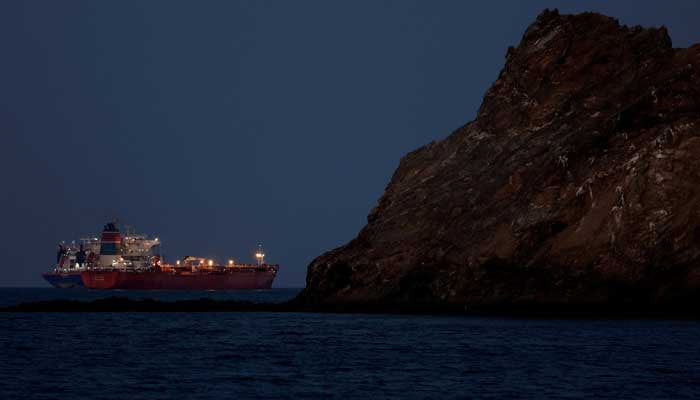
WASHINGTON: The US military began a blockade of ships leaving Iran’s ports on Monday, President Donald Trump said, and Tehran threatened to retaliate against ports of its Gulf neighbours after weekend talks on ending the war broke down.
Oil prices climbed back over $100 per barrel, with no sign of a swift reopening of the Strait of Hormuz to ease the biggest ever disruption in supplies and broader concerns over the durability of a two-week ceasefire agreement reached last week.
Trump said that Iran had been in touch on Monday and wanted to make a deal but that he will not sanction any agreement that allows Tehran to have a nuclear weapon.
“Iran will not have a nuclear weapon,” Trump told reporters at the White House. “We can’t let a country blackmail or extort the world.”
Since the war started on February 28, Iran has effectively shut the Strait of Hormuz to all vessels except its own, saying passage would be permitted only under Iranian control and subject to a fee.
Trump said earlier that Washington would block Iranian vessels and any ships that paid such tolls and that any Iranian “fast-attack” ships that went near the blockade would be eliminated.
Brigadier General Reza Talaei-Nik, a spokesperson for Iran’s Ministry of Defence, warned that efforts by foreign military to police the strait would escalate the crisis and instability in global energy security.
Nato allies, including Britain and France, said they would not be drawn into the conflict by taking part in the blockade, stressing instead the need to reopen the waterway, through which about one-fifth of the world’s oil normally passes.
Ceasefire under strain
The ceasefire that halted six weeks of US and Israeli airstrikes looked in jeopardy, with only a week left to run. Washington said Tehran rejected its demands at weekend talks in Islamabad, the highest-level discussions since Iran’s 1979 Islamic Revolution.
The US military’s regional Central Command said the blockade would be “enforced impartially against vessels of all nations” entering or leaving Iranian ports in the Gulf and the Gulf of Oman.
“The blockade will not impede neutral transit passage through the Strait of Hormuz to or from non-Iranian destinations,” Central Command said in a note to seafarers seen by Reuters on Monday.
Two Iranian-linked tankers, the Aurora and New Future, laden with oil products, left the strait on Monday before the deadline, according to LSEG data.
An Iranian military spokesperson called any US restrictions on international shipping “piracy,” warning that if Iranian ports were threatened, no port in the Gulf or Gulf of Oman would be secure. Any military vessels approaching the strait would violate the ceasefire, Iran’s Revolutionary Guards said.
Trump said that Iran’s navy had been “completely obliterated” during the war, adding that only a small number of “fast-attack ships” remained.
Lebanon faces attacks
Israel has continued to bombard Hezbollah in Lebanon and on Monday Israeli troops launched an attack to seize a key south Lebanon town from the group. Israel and the US have said the campaign against Hezbollah was not part of the ceasefire, while Iran has insisted it is.
Iran has brought new demands, including recognition of its control of the waterway, lifting of sanctions and the withdrawal of forces from US military bases across the Middle East.
Prime Minister Shehbaz Sharif said efforts were still on to resolve the conflict after the direct talks between the US and Iran in Islamabad at the weekend.
Trump has declared victory, despite failing to achieve the objectives he set out at the start of the war: to eliminate Iran’s ability to strike its neighbours, end its nuclear programme and make it easier for Iranians to topple their government.
Benchmark oil prices, which had eased last week after the ceasefire was announced, traded around 6% higher on Monday, off the day’s peaks but still above $100 a barrel.


Ryan Reynolds ‘unwantedly’ caught in Blake Lively legal mess

Transfer rumors, news: Bayern, Barça eye move for Milan’s Leão

British Fashion Council 2030 to strengthen UK fashion industry

-

 Fashion7 days ago
India’s exports face reset as EU links trade to carbon metrics: EY
-

 Entertainment6 days ago
Queen Elizabeth II emotional message for Archie, Lilibet sparks speculation
-

 Tech6 days ago
As the Strait of Hormuz Reopens, Global Shipping Will Take Months to Recover
-

 Tech6 days ago
Azure customers up in arms over ‘full’ UK South region | Computer Weekly
-

 Entertainment7 days ago
Lamar Odom shocking response to Khloé Kardashian account of his overdose
-

 Sports1 week ago
With Messi goal, Inter Miami open new stadium with dream moment
-

 Tech5 days ago
This AI Button Wearable From Ex-Apple Engineers Looks Like an iPod Shuffle
-

 Fashion6 days ago
CII submits 20-pt agenda to Indian govt to back firms hit by Iran war