

Business
Trump’s ICE tactics force CEOs to choose between staying silent and risking White House backlash


The fatal shooting this weekend of a second American citizen by federal immigration agents in Minnesota has forced corporate leaders to do something they’ve rarely done since President Donald Trump returned to office last year: publicly disagree with his policies.
For months, executives have kept quiet as the Trump administration expanded its sprawling immigration crackdown. The Department of Homeland Security in recent weeks has sent thousands of U.S. Immigration and Customs Enforcement and Border Patrol agents into Minnesota, leading to violent clashes with protestors.
It wasn’t until the Jan. 24 killing of intensive care unit nurse Alex Pretti by federal agents that more CEOs started to break their year of near silence on the president’s actions. The following day, dozens of executives from Minnesota-based corporations co-signed a letter calling for an “immediate de-escalation” in the state.
Even then, it was clear the business leaders were treading carefully — they didn’t mention the name of the shooting victim, the president by name or his policies. Instead of speaking out individually, they published the message as a group.
The reluctance of business leaders — among the most powerful and wealthiest Americans — to explicitly speak out against the president’s policies illustrates how Trump has used his power during his second term. Trump has sued media companies, law firms, universities and banks, and he has threatened corporations with regulatory scrutiny and the review of lucrative government contracts.
“They don’t want to speak out alone because they are afraid,” Jeffrey Sonnenfeld, a Yale School of Management professor, told CNBC. “They know that they will be shaken down, coerced, intimidated [by the administration]. Retaliatory gestures are quite severe.”
In subzero temperatures, demonstrators marched in downtown Minneapolis on Jan. 23, 2026, waving signs decrying ongoing immigration enforcement operations in the Twin Cities metro area.
Alex Kormann | The Minnesota Star Tribune | Getty Images
Some CEOs have been slightly more bold: Days before Pretti’s killing, JPMorgan Chase’s Jamie Dimon became the first prominent U.S. CEO to criticize Trump’s immigration crackdown.
In the days that followed Pretti’s death, OpenAI CEO Sam Altman and Apple CEO Tim Cook have spoken out, too. Altman made pointed comments in a Slack message to OpenAI employees, saying that “part of loving the country is the American duty to push back against overreach” and that “what’s happening with ICE is going too far.”
In his own internal message to Apple’s workforce on Tuesday, Tim Cook described himself as “heartbroken by the events in Minneapolis” and called for “de-escalation,” adding that he had privately expressed concerns to Trump.
Trump has in recent days appeared to soften his approach to DHS’ presence in Minneapolis, using language of de-escalation that mirrored the executives’ public letter and saying he had “very respectful” calls with Minnesota Gov. Tim Walz. But he has yet to pull ICE agents from Minneapolis, and it’s unclear when he will do so.
Trump’s change in tone comes as the risk rises of a partial government shutdown later this week, with Democrats vowing to oppose funding for the DHS in large part because of opposition to the administration’s Minneapolis operation.
Experts said one thing has been made clear: Pretti’s death and the viral spread of videos and analysis surrounding his final moments show there are limits to the obedience of the business community.
Minneapolis, home to mega corporations like Target, UnitedHealth and 3M, has become the testing ground for when and how far corporate leaders will wade into escalating political tensions, heightened by a president who pushes the bounds of state power.
An ICE patch and badge are seen on a Department of Homeland Security agent while Vice President JD Vance gives remarks following a roundtable discussion with local leaders and community members amid a surge of federal immigration authorities in the area, at Royalston Square in Minneapolis, Jan. 22, 2026.
Jim Watson | Pool | Getty Images
Weaponizing power
There are examples of corporate leaders having used their influence and turning the tide before. In the fall, Trump planned ICE enforcement in San Francisco. Yet the president called it off in part due to conversations with Bay Area business leaders, including Salesforce CEO Marc Benioff and Nvidia CEO Jensen Huang.
Since ICE and Border Patrol agents poured into Minnesota late last year in a plan dubbed Operation Metro Surge, videos have shown agents shoving protestors, detaining children, spraying demonstrators with chemical irritants and, in at least two cases, using their firearms.
The operation followed similar efforts in cities including Chicago and New Orleans, sparking concerns of what some saw as agency overreach.
″I don’t like what I’m seeing, with five grown men beating up little women,” JPMorgan’s Dimon said during an onstage interview at the World Economic Forum in Davos, Switzerland. “I think we should calm down a little bit on the internal anger about immigration.”
Later in that discussion, Dimon’s interviewer, The Economist Editor-in-Chief Zanny Minton Beddoes, told the veteran CEO that she was surprised at how careful he and other leaders were in speaking about Trump.
“I’m genuinely struck by the unwillingness of CEOs in America to say anything critical,” Minton Beddoes said. “There is a climate of fear in your country.”
Dimon, who has spoken of the need for immigration reform for years, pushed back: “I think they should change their approach to immigration,” Dimon said. “I’ve said it. What the hell else do you want me to say?”
The day after Dimon’s comments, Trump sued JPMorgan and Dimon for $5 billion for closing his bank accounts after the Jan. 6, 2021, attack on the U.S. Capitol. While Trump had warned he would sue JPMorgan days before Dimon’s comments at Davos, the implication was clear: Companies face retribution for perceived slights against the president.
“If you’re a corporate CEO, this man has the potential to tank your stock,” Tad DeHaven, a policy analyst at the Cato Institute, said of the president. “We’ve seen this administration weaponize every conceivable lever of power it has.”
A CNBC poll of corporate leaders, conducted in the days following Pretti’s killing, found 56% said it is “a lot more challenging” to speak out today when it comes to social and political causes. The CNBC Councils flash poll surveyed 34 companies about ICE’s presence in Minnesota.
Only one of the 34 corporate leaders surveyed reported they had spoken out publicly about the situation in Minneapolis, with about a third saying it was not relevant to their business, 21% saying they were still contemplating making public comments and 18% saying they were worried about backlash from the Trump administration.
Some of those companies remained silent even as they acknowledged the challenges were close to home: Among the surveyed businesses, about 15% said they were aware of company employees who had been personally impacted by ICE enforcement in the last 12 months.

In addition to the risk of retribution from the White House, companies have also become hesitant to speak out and anger a divided American public, said Eli Yokley, U.S. politics analyst for Morning Consult.
“A number of them are probably thinking about the post-‘woke’ backlash that came at least culturally and put some of them on their heels,” he said. “If you are a consumer-facing brand, the last thing you want to engage in is politics today in a world that is so polarized.
“People can react pretty fiercely,” Yokley said.
What’s more, the public isn’t united even in whether they think corporate leaders should weigh in on Trump or his policies.
Forty percent of Americans say CEOs who criticize Trump are acting responsibly, but only 28% say they should speak out publicly when they disagree with the president’s policies, according to a Morning Consult survey of about 1,000 U.S. adults conducted on Jan. 20.
About 38% of respondents said they would view a company less favorably if a CEO praised Trump publicly, while 25% said they would view a company more favorably, the survey found.
Around immigration enforcement, specifically, Americans are similarly divided on corporations’ role.
The share of Morning Consult respondents who said companies should cooperate fully with ICE enforcement, 23%, was nearly equal to the share who said that companies should actively resist, at 22%.
Demonstrators participate in a rally and march during an “ICE Out” day of protest on Jan. 23, 2026, in Minneapolis.
Stephen Maturen | Getty Images
Close to home
Target, one of the most prominent Minneapolis-based companies, captures the shift in corporate responses to policy from Trump’s first term to his second.
In 2020, four days after George Floyd was killed by a police officer just a short distance from the big-box retailer’s headquarters, Target CEO Brian Cornell wrote an emotional statement, describing Floyd’s death as murder and naming other Black people who had been killed by law enforcement.
Cornell and Target pledged to take action in support of diversity and inclusion as the Black Lives Matter movement gained steam across the country in the wake of Floyd’s death.
“As a Target team, we’ve huddled, we’ve consoled, we’ve witnessed horrific scenes similar to what’s playing out now and wept that not enough is changing,” he wrote at the time. “And as a team we’ve vowed to face pain with purpose.”
Compare that to the current environment. Earlier this month, after Minnesotan Renee Good was killed by an ICE agent, Target leaders did not make a public statement. Instead, the company circulated internal memos from the firm’s human resources chief, which acknowledged that employees are experiencing “a wide range of emotions” and stressing the company’s focus on employee and customer safety.
A FAQ linked in the memos said the retailer “does not have cooperative agreements with ICE” and that federal agents, including ICE, have legal authority to enter its parking lots and guest-facing parts of stores without a warrant.
On Monday, Target’s incoming CEO Michael Fiddelke shared a video message with employees that more directly acknowledged current events, but stopped short of calling for ICE agents to leave the city or for a review of the two shooting deaths there. Fiddelke didn’t reference Good, Pretti or Trump by name.
“The violence and loss of life in our community is incredibly painful,” he said. “I know it’s weighing heavily on many of you across the country, as it is with me.”
Target may have reason to be skittish: Its sales have been hit in recent years by boycotts from both Trump supporters and liberal critics who felt the retailer caved to Trump’s push against diversity, equity and inclusion programs.
But local leaders say the company has a responsibility to protect its community, too.
Over the past three weeks, a group of religious leaders in Minneapolis have called on the company to take a harsher stance against ICE action in Minneapolis, particularly after two Target employees in Minneapolis, both U.S. citizens, were taken by a team of ICE agents the day after Good’s death.
Target’s signature on the joint letter among other Minnesota companies didn’t go far enough, the group said.
“It’s almost worse than silence, because it felt like nothing,” said Martha Bardwell, pastor of Our Saviours Lutheran Church in Minneapolis.
“We know that if Trump is going to listen to anybody, corporate leaders have a lot of power,” Bardwell said. “We are looking to CEOs to be very clear and use the power they have.”
Bardwell was part of a small group of Twin Cities clergy who met with Target CEO Cornell last week to encourage him to step up the company’s response. Those clergy said they left the meeting without any new pledges from Target.




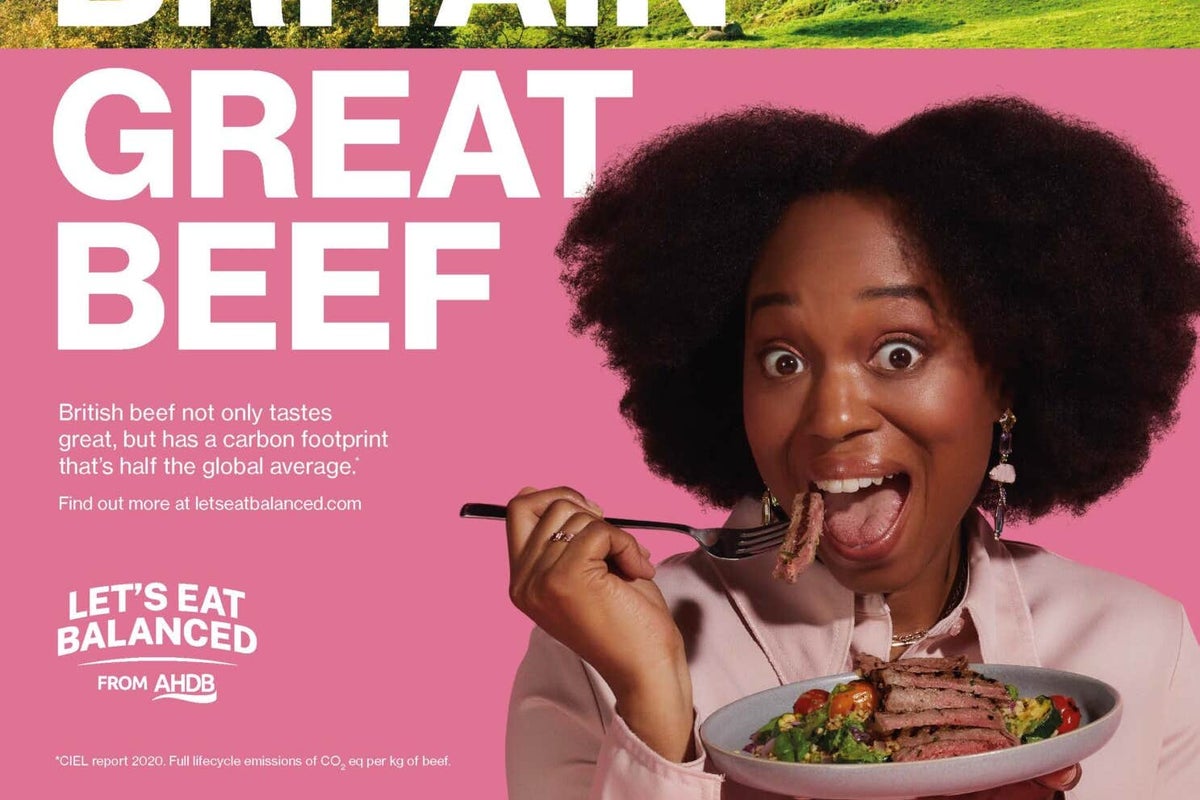
Two ads promoting British beef and milk have been banned after television presenter and environmental campaigner Chris Packham complained that they misled consumers about the products’ carbon footprints.
Both ads for the Agriculture and Horticulture Development Board’s (AHDB) Let’s Eat Balanced campaign used the carbon footprint of British beef and milk to promote the products, firstly stating: “British beef not only tastes great, but has a carbon footprint that’s half the global average*.”
The asterisk linked to text that stated: “Full lifecycle emissions of CO2 eq (carbon dioxide equivalent) per kg of beef.”
The ad for milk stated: “British milk not only tastes good, but is also produced to world-class standards, and has a carbon footprint a third lower than the global average.”
Packham complained to the Advertising Standards Authority (ASA) that the ads, and specifically the carbon footprint claims, were misleading as they did not reflect the full environmental impact of British meat and dairy.
The AHDB said the ads’ mention of carbon emissions would be understood in relation to the environmental impact of beef and milk that occurred between the “cradle-to-retail” stages.
But the ASA said the average consumer “being reasonably well-informed, observant and circumspect” would understand the claims to apply beyond the retail stage and include actions such as cooking and wastage.
The ASA said: “While we acknowledged the potential difficulties in producing post-retail emissions data, the claims in the ads suggested those emissions were included and we therefore expected the evidence provided to also include them.
“We therefore concluded that the evidence presented was insufficient to support the full life-cycle claims in the ads, which was how the average consumer was likely to interpret them.
“We reminded AHDB that environmental claims should be based on the full life cycle unless the ad stated otherwise.”
AHDB’s director of communications and market development, Will Jackson, said: “Let’s Eat Balanced is doing what it was designed to do, providing clear, factual, evidence-led information about British food, nutrition and farming standards.
“Since the investigation began, we have conducted independent consumer research which found that the majority of respondents interpreted these adverts as relating to the production phase only, from farm to retail.
“This research provides important insight into consumer understanding and supports our belief that consumers were not misled by the information we shared in these two specific adverts.”

BENGALURU: India’s Gen Z workforce is embracing what experts describe as “portfolio careers” – balancing multiple professional identities and income streams simultaneously. New research from LinkedIn shows that 75% of Gen Z entrepreneurs in India now manage multiple income streams, significantly higher than the 62% among Gen X entrepreneurs. The findings point to a growing preference among younger professionals for flexibility, autonomy and diversified sources of income. “We’re also seeing the rise of the ‘portfolio era’, with more professionals creating multiple income streams and redefining what a career can look like. This shift is making entrepreneurship more accessible than ever before,” said LinkedIn India country manager Kumaresh Pattabiraman.Rather than depending on a single full-time role, many professionals are simultaneously building businesses, freelancing, consulting, creating online content and monetising specialised skills through digital platforms. The trend comes amid a broader rise in entrepreneurial activity in India. LinkedIn recorded a 104% year-on-year increase in members adding “Founder” to their profiles – the highest growth among all global markets.AI is also emerging as a major enabler of this shift. The report found that 85% of Gen Z entrepreneurs consider AI and digital tools important to their business operations.
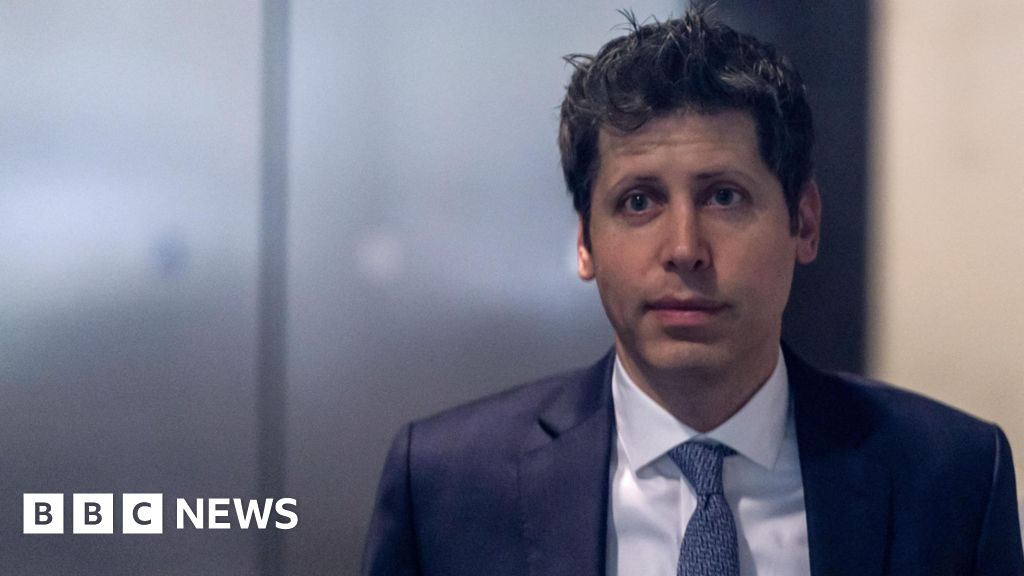
Sam Altman said Elon Musk tried many times for total control of OpenAI, which he’s now suing.
Source link


India’s apparel sourcing window reopens—for now

Will LeBron James retire after current season?

South Korea reviews phased support for Strait of Hormuz security efforts

-
 Tech1 week ago
DHS Demanded Google Surrender Data on Canadian’s Activity, Location Over Anti-ICE Posts
-
 Business1 week ago
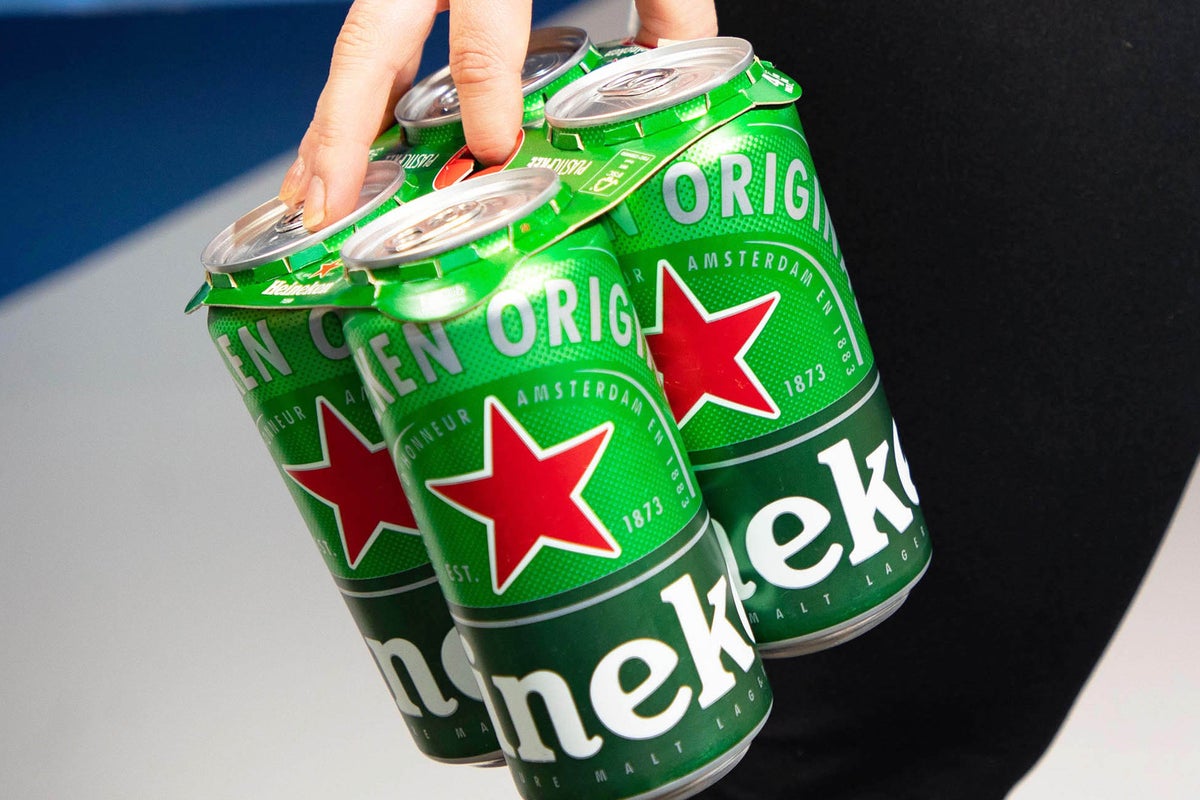
Heineken plans huge investment in hundreds of UK pubs ahead of World Cup
-

 Tech5 days ago
A new frontier: Identity stack evolves for agentic systems | Computer Weekly
-

 Tech4 days ago
‘Orbs,’ ‘Saucers,’ and ‘Flashes’ on the Moon: Pentagon Drops New UFO Files
-
 Business1 week ago
India among most resilient large EMs, better placed for future global shocks; policy reforms & strong buffers help: Moody’s – The Times of India
-

 Sports5 days ago
Shaheen Afridi achieves landmark feat during opening Test against Bangladesh
-

 Tech5 days ago
What Microsoft Executives Really Thought About OpenAI in 2018
-

 Fashion5 days ago
New orders in German manufacturing up 5% MoM in Mar 2026: Destatis