

Politics
Two years into Gaza war, U.S. Jews increasingly denounce Israel’s actions: Survey



This change in sentiment mirrors a broader global reckoning with Israel’s prolonged assault on Gaza, launched after Hamas’s October 7 attack. From Washington to Sydney, public opinion is turning against Israel’s actions.
A recent survey revealed that 42% of U.S. adults disapprove of the government’s handling of the conflict, while support for sanctions against Israeli leaders is rising in countries such as Australia.
Even within Israel, a majority now believes that the Gaza war should come to an end.
According to a Washington Post poll, a majority of American Jews disapprove of Israel’s conduct in Gaza, with 61% saying Israel has committed war crimes and around 40% describing the campaign as genocide against Palestinians. Nearly a third believe the United States has been too supportive of Israel.
The poll also showed that over two-thirds of respondents hold a negative view of Prime Minister Benjamin Netanyahu’s leadership, while opinions about Israel’s overall military strategy remain divided.
Despite this growing criticism, most American Jews said they remain emotionally connected to Israel and view its survival as essential to the Jewish future.
A similar majority continues to support U.S. military aid to Israel, though nearly one-third reported feeling unsafe in the United States amid rising tensions.
The survey further revealed that over 80% of U.S. Jews are deeply concerned about civilian casualties in Gaza, the fate of Israeli hostages held by Hamas, the safety of Israeli soldiers, and the ongoing instability in the region.
Majorities of respondents said that Israel, Hamas, Netanyahu, and the United States all share responsibility for the continuation of the war.
According to the poll, US Jews disapprove of the prime minister, with 68% rating his leadership of Israel negatively, including 48% who call it poor. By contrast, 32% approve of Netanyahu’s leadership.
A Pew Research Centre survey finds that nearly two years into Israel’s military operation in the Gaza Strip, Americans’ skepticism of Israel’s operation and its government is higher than at earlier points in the conflict.
It suggests about six-in-ten now have an unfavorable view of the Israeli government, with a rising share saying Israel is ‘going too far’.
39% now say Israel is going too far in its military operation against Hamas.
This is up from 31% a year ago and 27% in late 2023. 59% now hold an unfavorable opinion of the Israeli government, up from 51% in early 2024.
16% say Israel is taking about the right approach to the conflict, and 10% say it isn’t going far enough.
A third of adults say they aren’t sure. Large shares of Americans continue to express uncertainty across several questions about the ongoing war in the Middle East and the US government’s response.
A new national survey from Pew Research Centre, conducted September 22-28 among 3,445 adults, finds that 42% of US adults disapprove of the Trump administration’s response to the conflict between Israel and Hamas, while 30% approve. Roughly a quarter (27%) say they are not sure.
Republicans are far more likely than Democrats to approve of Trump’s handling of the conflict and to say he is striking the right balance between the Israelis and the Palestinians. But the shares saying Trump is favoring the Israelis too much have risen in both partisan coalitions.
A third of adults (33%) say the United States is providing too much military assistance to Israel. By comparison, 35% say the US is not providing enough humanitarian aid to Palestinian citizens in Gaza.
Eight-in-ten Americans say they are at least somewhat concerned about starvation among Palestinians in Gaza, Israeli military strikes killing Palestinian civilians and the remaining Israeli hostages not being returned to Israel.
While more Americans disapprove (42%) than approve (30%) of the Trump administration’s response to the conflict between Israel and Hamas in Gaza. About a quarter (27%) say they are unsure.
And 36% of Americans say President Donald Trump is favouring Israel too much in the conflict (up from 31% in March), while 23% say he is striking the right balance. Few (2%) say he is favouring the Palestinians too much. More than a third — 38% — say they are not sure.
A YouGov poll, commissioned by the Australia Palestine Advocacy Network (APAN), shows the majority of Australians want Israel to end its assault on Gaza, with 69% agreeing 53% “strongly” agreeing the Netanyahu government’s military campaign should stop. 14% disagreed.
Australians are supportive of placing tough sanctions on Israel and its leaders for their role in attacking Gaza, with a new poll finding more than half of voters agree the federal government should extend sanctions placed on Russia to Israel.
The survey of 1,500 voting-aged Australians suggests the public is broadly supportive of the government playing a more decisive role in bringing the bloody two-year war to an end.
According to a poll by the Israel Democracy Institute, a majority of Israelis believe the time has come to end the war in Gaza, with the top reason being the endangerment of hostages.
The survey found that 66 percent of Israelis say the time has come to end the war a figure 13 points higher than the result from a year ago when respondents were asked the same question compared to 27% who think or are certain that the time has not yet come, and 7% who are unsure.
The top reason both Jewish (50.5%) and Arab Israeli (34.5%) respondents gave that the war should end is the endangerment of the hostages.
“The one thing that everyone could be sure of as the events of October 7, 2023, unfolded was that Israel would emerge from the Hamas attack a changed country.
It was not just the immediate trauma of the roughly 1,200 dead and 250 hostages, but also how much it upset the assumptions that Israelis had made in the years before that the country was more safe and secure than any time in its history, that the Arab world was slowly accepting the inevitability of a predominantly Jewish state and prepared to push aside concerns about the future of Palestinians, and that Israel’s high-tech prowess could not just generate prosperity but also ensure security as well,” an analysis in the Foreign Policy magazine stated.
“A final reckoning on such a cataclysmic event will take years to emerge. In the meanwhile, the most dire predictions Israel becoming ensnared in prolonged, deadly, and destructive wars with Hezbollah and Iran; a tanking economy; and a deep crisis of confidence have failed to materialize.
The conflicts with Hezbollah and Iran ended in Israel’s favour with relatively little collateral damage. Economic growth has slowed, but Israel has absorbed the shock better than many expected. Trust in the military and many of the country’s key institutions has not declined significantly, if at all.
Israel’s genocidal war on Gaza has claimed over 67,000 lives in the past two years, following Hamas’s October 7 attack, which the Palestinian group insisted was a “historic response” to Israel’s actions against the Palestinians.
“We reaffirm that the Al-Aqsa Flood on October 7 was a historic response to attempts to eradicate the Palestinian cause,” Fawzi Barhoum, a senior Hamas official, said in a televised speech. The attack, according to Israeli officials, resulted in the deaths of 1,219 people.
United Nations Secretary-General Antonio Guterres said he was repeating his previous appeals “with even greater urgency: Release the hostages, unconditionally and immediately.”
“End the suffering for all… Put an end to the hostilities in Gaza, Israel and the region now. Stop making civilians pay with their lives and their futures. “After two years of trauma, we must choose hope. Now.”
Israel’s foreign ministry said, “Two years ago, Israel faced the darkest day in its history… we pray for the return of the hostages still held in Gaza, and we stand united against terror,” “Hamas must be dismantled to end this war,” the ministry said on X. “Light will rise over darkness.”
Besides calling for the hostages’ release, British Prime Minister Keir Starmer suggested pro-Palestinian protests planned for the anniversary of “”that awful day” were disrespectful. “This is not who we are as a country,” the under-fire premier wrote in The Times.
“It’s un-British to have so little respect for others. And that’s before some of them decide to start chanting hatred towards Jewish people all over again.”
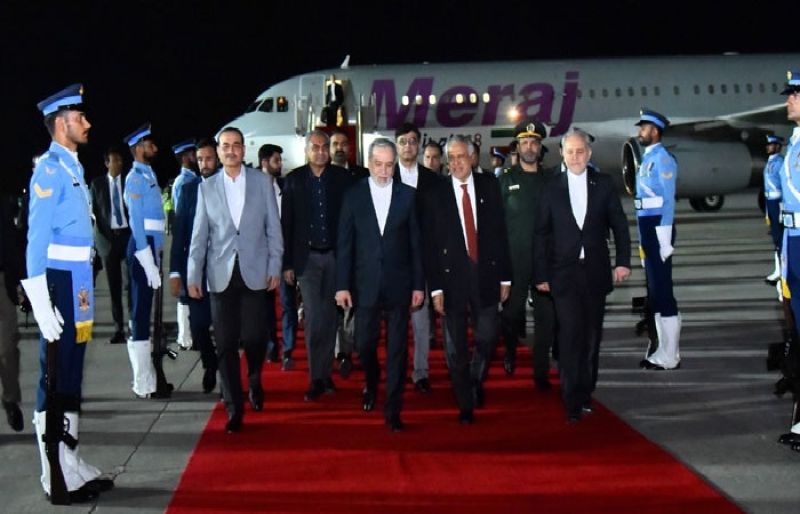
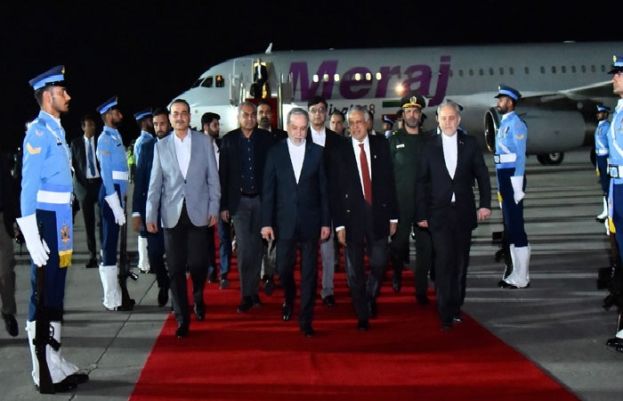
Iranian Foreign Minister Abbas Araghchi touched down in Islamabad on Friday night amid expectations of renewed engagement between Iran and the United States to end the Middle East conflict.
FM Araghchi will hold meetings with Prime Minister Shehbaz Sharif and Deputy Prime Minister and Foreign Minister Senator Ishaq Dar during the visit.
The Iranian delegation was received by Deputy Prime Minister and Foreign Minister Senator Mohammad Ishaq Dar, Chief of Defence Forces (CDF) and Chief of Army Staff (COAS) Field Marshal Asim Munir, along with other senior officials upon arrival in Islamabad, the Ministry of Foreign Affairs said in a statement.
During the visit, the Iranian FM will hold meetings with Pakistan’s senior leadership to discuss the latest regional developments as well as ongoing efforts for regional peace and stability, it added.
Earlier today, Iranian state media reported that Araghchi will depart on Friday (today) for a tri-nation tour that includes visits to Islamabad, Muscat and Moscow.
“The purpose of this visit is to hold bilateral consultations and discuss current developments in the region, as well as the latest situation in the war imposed by the United States and the Israeli regime against Iran,” the state news agency IRNA said.
Meanwhile, US envoys Steve Witkoff and Jared Kushner will head to Pakistan on Saturday for a new round of talks with Iran on ending the war, the White House said.
“I can confirm Special Envoy Witkoff and Jared Kushner will be off to Pakistan again tomorrow morning to engage in talks,” White House Press Secretary Karoline Leavitt told Fox News on Friday.
Leavitt said that Vance remained ready to fly to Pakistan but will not for now. “Everyone will be on standby to fly to Pakistan if necessary,” she said.
A US logistics and security team is already present in the federal capital ahead of the potential second round of peace talks, sources said.
They said that the development was the result of pivotal conversations conducted by Pakistan’s mediation team.
The talks would come more than two weeks after Vice President JD Vance held the first round of talks with Iranian representatives in Pakistan.
The development emerged shortly after Deputy Prime Minister and Foreign Minister Ishaq Dar urged continued dialogue and engagement to resolve disputes between the US and Iran, saying the diplomatic process was essential for advancing regional peace and stability.
DPM Dar made the remarks during a phone call with Araghchi, in which they also discussed the ongoing US-Iran ceasefire, according to a statement issued by the Foreign Office.
DPM Dar and Araghchi also exchanged views on the ongoing diplomatic efforts being pursued by Islamabad in the context of US-Iran engagement.
The Iranian FM lauded Pakistan’s consistent and constructive role in facilitating peace talks between the US and Iran.
A second round of talks between Tehran and Washington faced ambiguity after both sides failed to agree on their respective measures in and around the Strait of Hormuz.
Tehran blocked the waterway after the US and Israel launched attacks across Iran on February 28. Apart from closing Hormuz, Tehran also launched strikes against Israel and US bases across the Middle East.
Prime Minister Shehbaz Sharif mediated a two-week ceasefire between the two sides on April 8 and then facilitated the first round of talks in Islamabad on April 11.
However, the talks concluded without a deal on a permanent end to the conflict.
Following an inconclusive first round of talks, US President Donald Trump announced a US naval blockade of Iranian ports.
Iran declared Hormuz open on April 17, citing a ceasefire agreement between Lebanon and Israel. However, it closed the strait the following day due to the US blockade of Iranian maritime trade, a measure Tehran considers an act of war.
Despite the hostilities on both sides, Islamabad continued its diplomatic outreach to bring Tehran and Washington back to the table and extend the two-week ceasefire.
Hours before the expiry of the ceasefire on April 22, US President Donald Trump announced extending the truce until an Iranian proposal was submitted and discussions were concluded.
In a post on Truth Social, the US president said he was acting at the request of Pakistan to hold off attacks until Iranian leaders and representatives could come up with what he called a unified proposal.
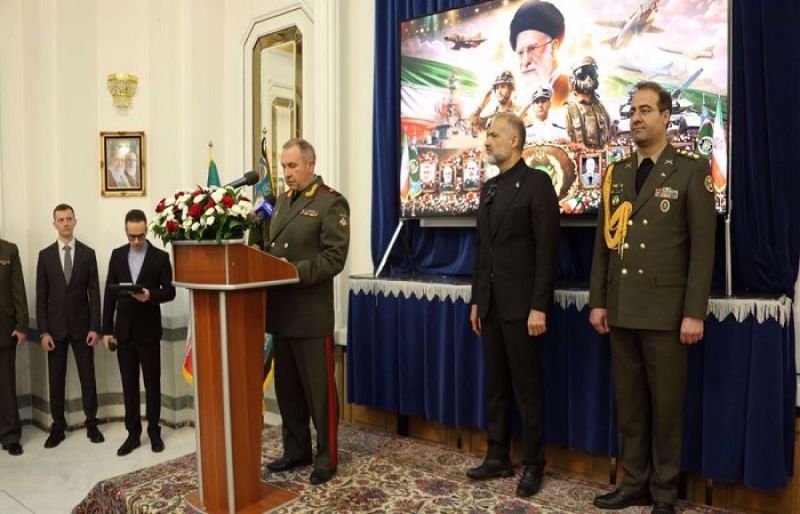
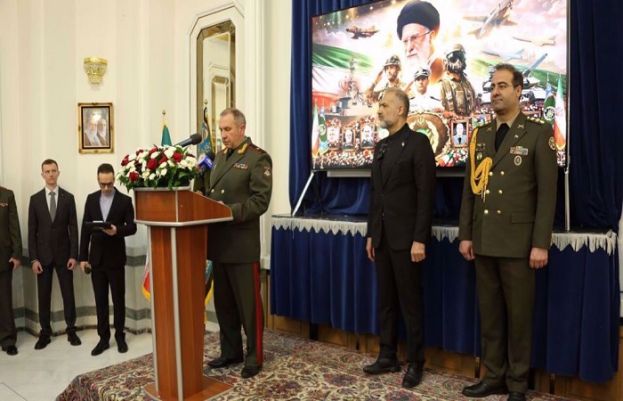
The first deputy head of the Main Directorate of International Military Cooperation of the Russian Defense Ministry says Iran demonstrated a “shining example” of defense during the recent illegal US-Israeli war of aggression.
“Iranian Armed Forces showed to the world a shining example of their firm resolve to defend their country’s interests,” Major-General Yevgeny Ilyin said during a ceremony in Moscow on Thursday, marking Iran’s National Army Day.
Iranian forces, he added, stand ready to deliver a proper and proportionate response to emerging challenges and threats.
The Russian military official said the Islamic Republic of Iran Army, with its steadfastness and courage, has protected the country’s defense and security and turned into a reliable guarantor for the nation’s independence and stability.
The unprovoked US-Israeli aggression on Iran began on February 28 with airstrikes that assassinated senior Iranian officials and commanders.
Iranian armed forces unleashed 100 waves of successful retaliatory strikes against sensitive and strategic American and Israeli targets throughout the region.
On April 8, forty days into the war, a Pakistan-brokered two-week ceasefire went into effect but the first round of Tehran-Washington negotiations failed to reach an agreement.
Referring to the strategic partnership pact signed between Iran and Russia, Ilyin said that both states have maintained their cooperation in many fields.
Iran-Russia defense relations are multifaceted, encompassing areas from the deep sea to space, he added.
The military official also reiterated Russia’s resolve to implement previous agreements with Iran and continue working on plans for bilateral military cooperation.
During the ceremony, Iran’s military attaché to Russia Sadeq Rezaei Moqaddam said Iranian Armed Forces have always been committed to moral principles and differentiated between military and civilian targets.
On the contrary, he said, the US and the Israeli regime perpetrated horrible war crimes by killing 170 students and teachers at an elementary school in the city of Minab, and targeting the Iranian Dena destroyer which was returning home from a naval drill in India.
The attacks on civilian infrastructure and educational centers represent the enemies’ strategic failure to deal a blow to the will of the Iranian nation, Rezaei Moqaddam asserted.
The perfect coordination of the Army units and other forces caused the aggressors to step back and thwarted their calculations, he said.
He further stressed that enhanced technical and military cooperation between the Iranian and Russian armed forces not only guarantees the national security of both nations, but is also the main pillar to safeguarding stability in Eurasia and countering unilateralism and organized international crimes.
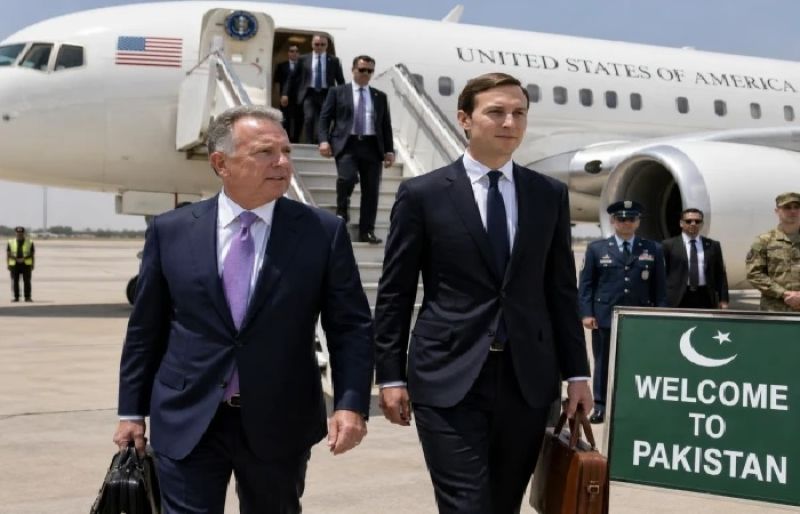
US President Donald Trump’s special envoy Steve Witkoff and son-in-law Jared Kushner will travel to Islamabad on Saturday morning for talks with Iran mediated by Pakistan, White House press secretary Karoline Leavitt said in an interview with Fox News.
“Everyone will be on standby to fly to Pakistan if necessary, but first, Steve and Jared will be going over there to report back to the president, the vice president and the rest of the team,” Leavitt said on the Fox News show “America Reports.”
Iran’s Foreign Minister Abbas Araqchi was expected in the Pakistani capital Islamabad on Friday to discuss proposals for restarting peace talks with the United States.


Eminem’s daughter Hailie Jade shares ‘the craziest thing’ of her life

Clock ticks on Spirit Airlines as bondholders weigh Trump bailout. Here’s what could happen next

NASCAR makes major change in front office, including new CEO in unprecedented move: report

-

 Fashion1 week ago
France’s LVMH Q1 revenue falls 6%, shows resilience amid Iran war
-

 Tech1 week ago
CYBERUK ’26: UK lagging on legal protections for cyber pros | Computer Weekly
-

 Sports5 days ago
WWE WrestleMania 42 Night 2: Live match results and analysis
-

 Sports1 week ago
Faheem Ashraf backs Islamabad United’s push, calls league a ‘career-changing platform’
-

 Sports5 days ago
NCAA men’s gymnastics championship: All-time winners list
-
 Business1 week ago
PepsiCo earnings beat estimates as North American food business improves
-

 Tech1 week ago
Anthropic Plots Major London Expansion
-

 Entertainment4 days ago
Lee Anderson, Zarah Sultana kicked out of UK Parliament for calling PM ‘liar’