

Politics
UAE fast-tracks new oil route as Strait of Hormuz closure hits global supplies

- West-East Pipeline to double oil export capacity via Fujairah.
- New pipeline expected to be operational by 2027.
- Strait of Hormuz’s effective closure has boosted energy prices.
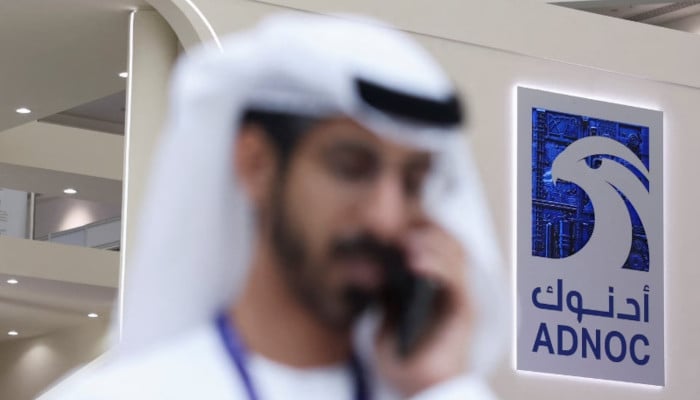
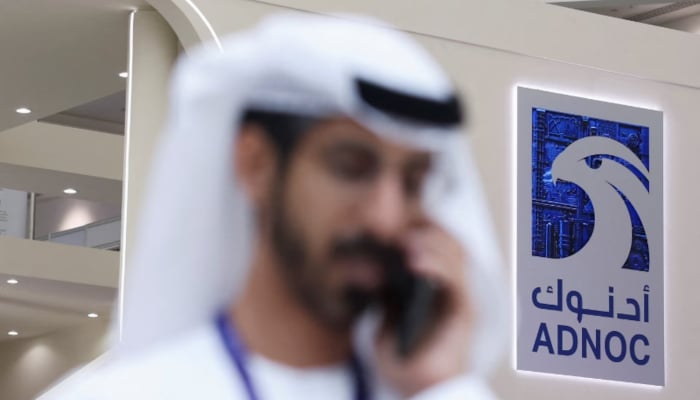
The United Arab Emirates will accelerate construction of a new oil pipeline to double its export capacity through Fujairah by 2027, the government’s Abu Dhabi Media Office said on Friday, vastly expanding its ability to bypass the Strait of Hormuz.
Abu Dhabi Crown Prince Sheikh Khaled bin Mohamed bin Zayed directed the Abu Dhabi National Oil Company (ADNOC) to fast-track the West-East Pipeline project during an executive committee meeting, ADMO said, adding the pipeline is under construction and expected to start operating in 2027.
It did not disclose the original timeline for the project.
The UAE’s existing Abu Dhabi Crude Oil Pipeline (ADCOP), also known as the Habshan-Fujairah pipeline, can carry up to 1.8 million barrels per day, and has proved crucial as the country seeks to maximise direct exports from the Gulf of Oman coast.
The UAE and Saudi Arabia are the only Gulf producers with pipelines that export crude outside the Strait of Hormuz, while Oman has a long coastline on the Gulf of Oman.
The narrow waterway between Iran and Oman was effectively shuttered by Iran in response to a US-Israeli air and naval campaign that began on February 28, choking off about a fifth of global oil supplies that normally flow to Asia and elsewhere.
Kuwait, Iraq, Qatar and Bahrain are almost wholly reliant on the strait for shipments.
Energy prices have surged due to the disruption to supplies, prompting governments to ration fuel and raising fears of an economic downturn as inflation builds.
- Araghchi says Iran ready to resume fighting if diplomacy fails.
- Iran’s FM welcomes Chinese mediation, calls China strategic partner.
- Iran aims to normalise Hormuz traffic if negotiations progress: FM.
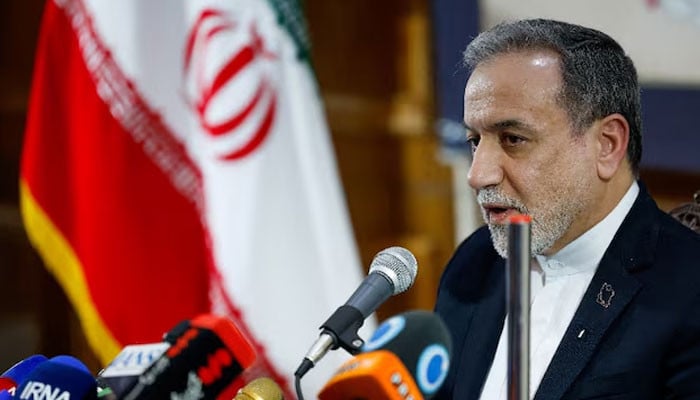
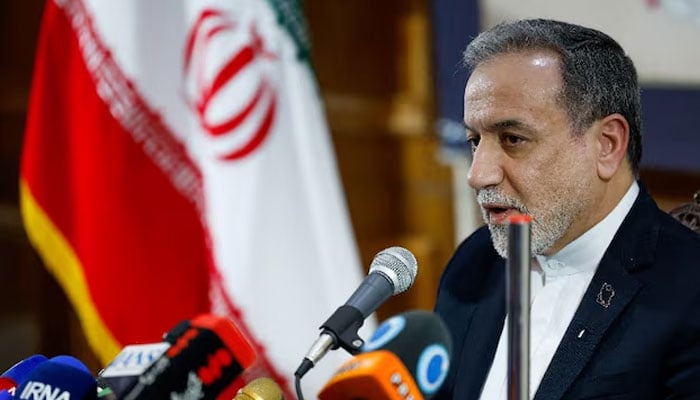
Tehran has “no trust” in the US and is interested in negotiating with Washington only if it is serious, Iran’s Foreign Minister Abbas Araghchi said on Friday, as talks on ending the war remained on hold.
All vessels can pass through the Strait of Hormuz except those at war with Tehran, Araqchi told reporters in New Delhi during a visit to attend the Brics foreign ministers’ meeting, adding that vessels wanting to transit should coordinate with its navy.
The situation around the key conduit was “very complicated”, he said.
Iran effectively shut the strait, which earlier handled about one-fifth of the world’s oil and gas supply, to most shipping traffic after its war with the US and Israel erupted in February.
Washington and Tehran announced a ceasefire last month but have been struggling to thrash out a permanent peace pact. Talks, mediated by Pakistan, have been suspended since Iran and the US each rejected the other’s most recent proposals last week.
“Contradictory messages” have made us reluctant about the real intention of the Americans on negotiations, Araghchi said, adding that the mediation process by Pakistan has not failed but is in “difficulty”.
Araghchi also said that Tehran is open to any support, including from China, to help resolve the conflict in the Middle East
Iran is trying to keep the ceasefire to give diplomacy a chance but is also prepared to go back to fighting, he said.
The issues holding up negotiations between the two sides include Iran’s nuclear ambitions and its control of the Hormuz.
Araqchi’s statement on Friday came hours after US President Donald Trump said his patience with Iran was running out and agreed in talks with Chinese President Xi Jinping that Tehran must reopen the strait.
JERUSALEM: Israel on Thursday threatened to take The New York Times to court over a piece it published denouncing allegedly widespread sexual abuse against Palestinian detainees.
Prime Minister Benjamin Netanyahu and Foreign Minister Gideon Saar have ordered the “initiation of a defamation lawsuit against The New York Times”, according to a joint statement issued by their offices.
The offices said that the piece by Nicholas Kristof, a prominent opinion columnist, was “one of the most hideous and distorted lies ever published against the State of Israel in the modern press, which also received the backing of the newspaper”.
Kristof’s investigation is based on testimonies gathered in the Israeli-occupied West Bank from 14 men and women who said that they had been sexually assaulted by Israeli settlers or members of the security forces.
The report described “a pattern of widespread Israeli sexual violence against men, women and even children — by soldiers, settlers, interrogators in the Shin Bet internal security agency and, above all, prison guards”.
The New York Times responded that any legal claim over the “deeply reported opinion column” lacked merit.
“This threat, similar to one made last year, is part of a well-worn political playbook that aims to undermine independent reporting and stifle journalism that does not fit a specific narrative,” Danielle Rhoades Ha, a spokesperson for the newspaper, said in a statement.
Kristof’s piece said there was no evidence that Israeli leaders ordered rapes.
The Israeli foreign ministry alleged that Kristof had based his piece “on unverified sources tied to Hamas-linked networks”.
It also accused the paper of deliberately timing the publication to “undermine” an independent Israeli report on Hamas sexual violence perpetrated during its October 7, 2023, attack on Israel, which was published on the same day.
Israeli forces have detained thousands of Palestinians in the West Bank since Hamas’s 2023 attack.
The United States has high protections for journalistic expression, with libel suits needing to prove that information was purposefully untrue and with harmful intent.
President Donald Trump and his allies have nonetheless filed a number of lawsuits against media outlets, some of which have reached settlements rather than risk repercussions from his administration.
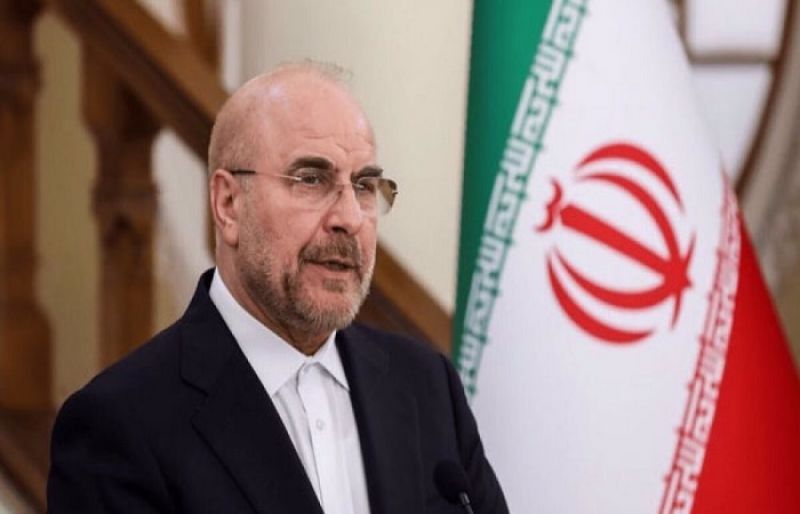
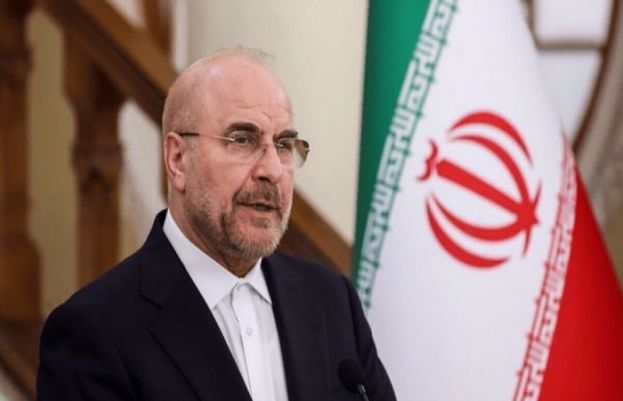
Iran’s Majlis (Parliament) speaker has warned that the United States’ efforts at sustaining military escalation near the Strait of Hormuz could trigger a fresh global financial crisis at a time when Washington’s national debt already stands at a whopping $39 trillion.
Mohammad-Baqer Qalibaf made the remarks in a post on X on Thursday after it was reported that yields on 30-year US Treasury bonds had climbed above five percent for the first time since before the 2008 global financial crisis, amid mounting concerns over inflation and war-driven energy costs.
“So you’re funding [Pete] Hegseth the failed TV host at rates unheard of since 2007, so he can cosplay as Secretary of War in our backyard in Hormuz?” Qalibaf wrote, referring to the US official’s former career in television.
The top legislator noted how the US’s funding crisis had caused the debt to snowball and its continued aggressive posture at astronomical costs only served a “live action role-playing (LARP)” in Hormuz.
“You know what’s crazier than $39 trillion in debt? Paying a pre-GFC (global financial crisis) premium to fund a LARP and all you’ll get is a brand new GFC,” he wrote.
On April 13, US President Donald Trump announced continuation of an illegal blockade of Iran’s vessels and ports in violation of the terms of a ceasefire he had announced earlier that month.
Iran, which had already shut down the strait to enemies and their allies in retaliation for the unprovoked American-Israeli aggression that targeted the country from February 28 to April 7, then began imposing far stricter controls over the waterway.
The Islamic Republic has refused to rejoin negotiations with Washington unless Tehran’s demands, including removal of the blockade, realization of a definitive end to whatever aggression on all fronts, and provision of compensation, were met.
Both Hegseth and Trump have been painting victorious pictures of either the war or the current American posture towards Iran.
Numerous reports, however, have been proving otherwise, including those pointing to the US secretary of war’s misleading Trump about “American success” against the Islamic Republic.


Companies Keep Slashing Employees’ Benefits for the Worst Reasons

John Krasinski and Michael Kelly reunite for “Tom Clancy’s Jack Ryan: Ghost War”

In boost to feeder international traffic, AI starts Ludhiana-Delhi flights

-

 Tech1 week ago
A new frontier: Identity stack evolves for agentic systems | Computer Weekly
-

 Tech7 days ago
‘Orbs,’ ‘Saucers,’ and ‘Flashes’ on the Moon: Pentagon Drops New UFO Files
-

 Fashion1 week ago
New orders in German manufacturing up 5% MoM in Mar 2026: Destatis
-

 Tech1 week ago
Nick Bostrom Has a Plan for Humanity’s ‘Big Retirement’
-

 Fashion1 week ago
US’ Carter’s taps retail veteran Sharon Price John as new CEO
-

 Tech1 week ago
What Microsoft Executives Really Thought About OpenAI in 2018
-

 Sports1 week ago
Shaheen Afridi achieves landmark feat during opening Test against Bangladesh
-

 Entertainment7 days ago
Rihanna embraces new tattoo given by children