

Business
UBS Opens New GCC: How India Becoming The World’s Back Office Powerhouse


Last Updated:
UBS has inaugurated a GCC in India, underlining the country’s rising prominence as a global hub for corporate shared services, technology, and high-value operations




GCC
UBS has inaugurated a new Global Capability Centre (GCC) in India, underlining the country’s rising prominence as a global hub for corporate shared services, technology, and high-value operations. This development comes amid robust growth in India’s GCC ecosystem, which now spans more than 1,700 centres employing over 1.9 million professionals, and is projected to expand to 2,400 GCCs with 2.8 million jobs by 2030, according to the FICCI-ANAROCK report Workplaces 2025: India Commercial Real Estate Reimagined.
India’s GCC Market on a Growth Trajectory
India’s GCC market, valued at USD 64 billion in 2024, is expected to reach USD 105–110 billion by 2030, growing at a CAGR of 10%. The sector’s rapid expansion has been fueled by demand from IT/ITeS, BFSI, Healthcare & Life Sciences, and ER&D.
Bengaluru continues to dominate the GCC landscape, hosting over 875 centres, nearly 29% of India’s total GCCs, driven by its deep talent pool, mature ecosystem, and global investment appeal. Other key cities include Pune, Delhi-NCR, and Hyderabad, while emerging Tier 2 cities such as Jaipur, Kochi, Indore, Coimbatore, and Surat are increasingly attracting GCC investments, marking the next frontier of growth.
In 2025, GCCs accounted for over 32.5 million sq. ft. of leased office space out of a total 80.5 million sq. ft. across India’s top seven cities. The top 7 cities collectively now hold around 800 million sq. ft. of Grade-A office stock, with Bengaluru and NCR accounting for nearly half the total supply.
PropTech and AI Driving the Future of Offices
A parallel trend accelerating GCC growth is the adoption of PropTech and AI in India’s commercial real estate, as highlighted in Cushman & Wakefield’s report From Square Footage to Smart Footage. Over 2,200 PropTech firms now operate across India’s commercial building lifecycle, introducing technologies that improve operational efficiency, digital connectivity, wellness, and sustainability.
AI-enabled workplace solutions and certifications such as WELL, WiredScore, and green building ratings have become baseline expectations for Grade-A offices, with 52% of India’s office stock green-certified by H1 2025. Institutional ownership, including REITs, now commands around 90% of REIT-owned office portfolios with digital and sustainability standards embedded.
GCCs are leading the demand for such digitally enabled workspaces, particularly for AI, cloud, and data-centric functions, which are expected to nearly double their share by 2030, pushing landlords and developers to offer future-ready, compliance-ready campuses.
Economic and Policy Tailwinds
India’s attractiveness as a GCC hub is further reinforced by the Union Budget 2026, which introduces a uniform safe harbour margin of 15.5% across IT services, and increases the threshold from ₹300 crore to ₹2,000 crore. This simplifies compliance and incentivises the migration of high-value tech functions to Indian GCCs.
The IFSC model has also proven popular, particularly for financial services GCCs, offering tax benefits for up to 20 years and automated, rule-driven approvals. These measures, along with India’s skilled workforce and cost efficiencies, have transformed GCCs from purely cost centres to strategic hubs, handling complex, high-value operations for global corporations.
As India’s GCC footprint expands beyond metro cities into Tier 2 centres, the sector is expected to fuel office leasing, job creation, and infrastructure development over the next decade. The combination of robust real estate supply, PropTech adoption, and supportive policy frameworks positions India to consolidate its status as a preferred destination for global capability centres, drawing both multinational corporations and institutional real estate investors.
Anuj Puri, Chairman of ANAROCK Group, summarised: “India’s GCC market is not only growing in size but also in strategic importance. With rising demand for premium workspaces, skilled talent, and digital capabilities, India is set to remain the preferred hub for global corporations over the next decade.”
 Click here to add News18 as your preferred news source on Google.
February 12, 2026, 12:53 IST
Read More










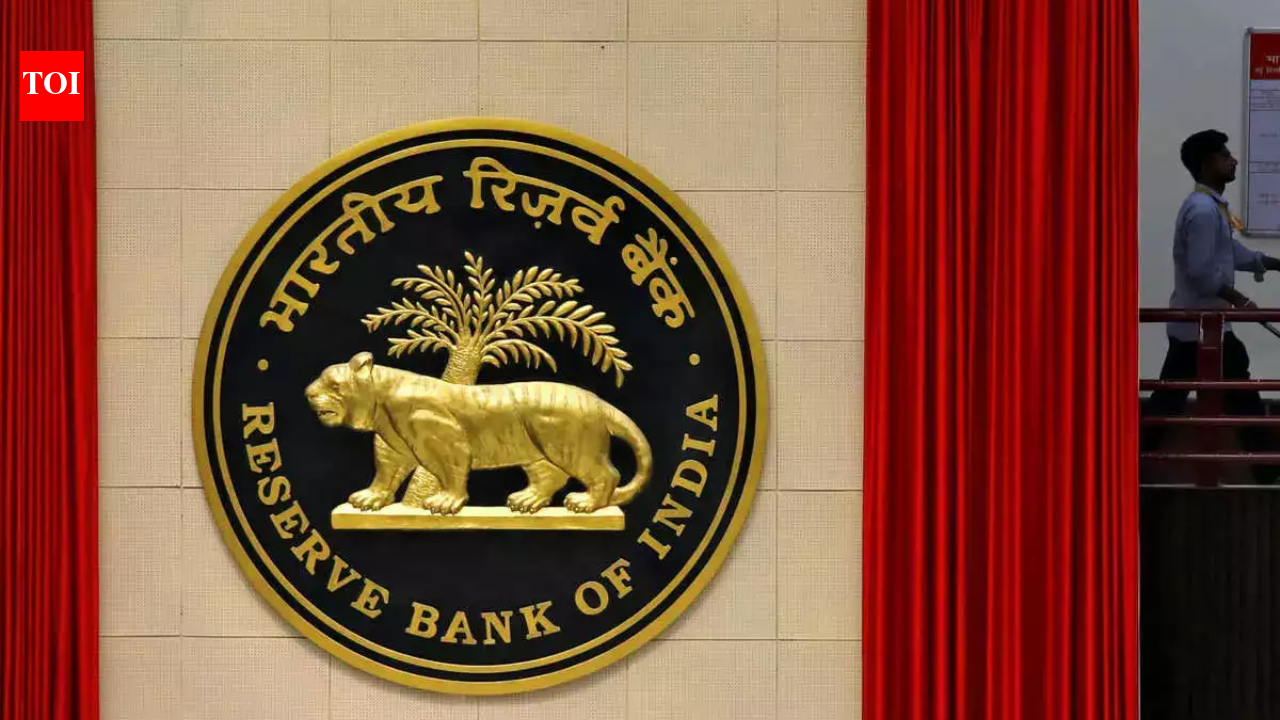
The Reserve Bank of India (RBI) on Monday decided against activating the countercyclical capital buffer (CCyB), indicating that current financial and credit conditions do not warrant an additional capital requirement for banks, PTI reported.The central bank said the decision followed a review and empirical assessment of indicators used under the CCyB framework.“Based on review and empirical analysis of CCyB indicators, it has been decided that it is not necessary to activate CCyB at this point in time,” RBI said in a statement.Under the RBI (Commercial Banks – Prudential Norms on Capital Adequacy) Directions, 2025, the CCyB framework is activated when financial conditions indicate rising systemic risks linked to excessive credit growth.The framework primarily relies on the credit-to-GDP gap as a key indicator, along with supplementary metrics.According to the RBI, the CCyB mechanism is intended to serve two broad objectives.Firstly, it requires a bank to build up a buffer of capital in good times, which may be used to maintain the flow of credit to the real sector in difficult times.Secondly, it achieves the broader macro-prudential goal of restricting the banking sector from indiscriminate lending in the periods of excess credit growth that have often been associated with the building up of system-wide risk.The framework was introduced globally after the 2008 financial crisis as part of measures proposed by the Group of Central Bank Governors and Heads of Supervision (GHOS) under the Basel framework to strengthen financial system resilience.

The company has announced plans to build seven new models in Europe including a small electric hatchback.
Source link

“Today’s policymaking is constrained by a more volatile external environment with more frequent and overlapping shocks, a rising public interest bill, in part reflecting market concerns with countries’ elevated debt, and the long-standing challenge of weak productivity growth,” he said.


Turkiye’s current account deficit expected to widen in 2026: Minister

UK’s clothing imports fall 3% in Q1, sharply lower than Q4 2025
RBI sees no signs of excess credit risk, keeps countercyclical capital buffer inactive

-

 Entertainment6 days ago
Conan O’Brien hat tricks as Oscar host
-

 Tech1 week ago
Could Contact-Tracing Apps Help With the Hantavirus? Not Really
-

 Fashion5 days ago
Italy’s Zegna Group’s Q1 growth boosted by strong organic performance
-

 Sports1 week ago
Bobby Cox, legendary Atlanta Braves manager who led 1995 World Series champions, dead at 84
-

 Entertainment1 week ago
Martin Short: Facing tragedy with joy
-

 Entertainment1 week ago
Tom Brady gets back at Kevin Hart during Netflix roast
-

 Sports1 week ago
Jacob Fatu unleashes vicious assault on Roman Reigns after World Heavyweight Championship loss at WWE Backlash
-

 Entertainment1 week ago
Martha Stewart: How to make an omelet