

Tech
UK government seeks collaborators for AI tutoring tools for schools | Computer Weekly

The UK government is looking for education tech (EdTech) and artificial intelligence (AI) companies to help with its push to create AI tutoring tools for use in schools.
Up to eight companies will be chosen to work alongside teachers to develop these tutoring tools aimed at helping students from underrepresented backgrounds to have a more level playing field in the classroom.
Minister for digital government Ian Murray said: “The best educational support outside school has too often been the privilege of those who can afford it. AI gives us a genuine opportunity to change that – to put the kind of personalised, one-to-one tutoring into the hands of all pupils, regardless of their background, and giving teachers the best technology to complement their work.
“That is why I’m calling on edtech companies and AI labs to help us design safe and evidence-based tutoring tools that will deliver real educational improvements.”
As it stands, AI skills are not even widespread among tech workers, and access to AI and the ability to use it depends on many factors including gender and socioeconomic background.
The AI divide is not the only barrier many children face when it comes to effectively accessing education, with many children not having access to technology at home and families being unable to afford private tutoring.
This call for assistance from Edtech and AI firms to help develop tools comes as part of the government’s plans to use AI tutoring to bridge this educational divide, with the goal of reaching up to 450,000 pupils by the end of 2026.
AI labs and Edtech companies will be bidding to become part of the Pioneer Group, each of which will receive £300,000 for design and testing.
The tools must be developed with the national curriculum in mind, be useable in a classroom environment and clearly show how will be benefit students from less advantaged backgrounds, proving they are accessible, inclusive and usable. Aimed at students in Year 9 and Year 10, the tools will cover English, maths, science and modern foreign languages.
Personalisation is also an important aspect of the proposed tools – the AI tutors will need to adapt to the needs of individual pupils, highlighting what parts of their study require more focus.
Bid-winning companies will test their proposed solutions in classrooms over the summer with help from teachers, and will be scaled nationally in 2027 once tested in schools this year. Teacher involvement is a pivotal part of the initiative, particularly in ensuring the tools are fit for purpose and will enable teachers to provide extra support to students where it would not otherwise be available.
The government is developing national benchmarks for AI tools to ensure their safety, and will be giving access to its AI Content Store so tech companies can look at educational resources to support their own development of AI services.
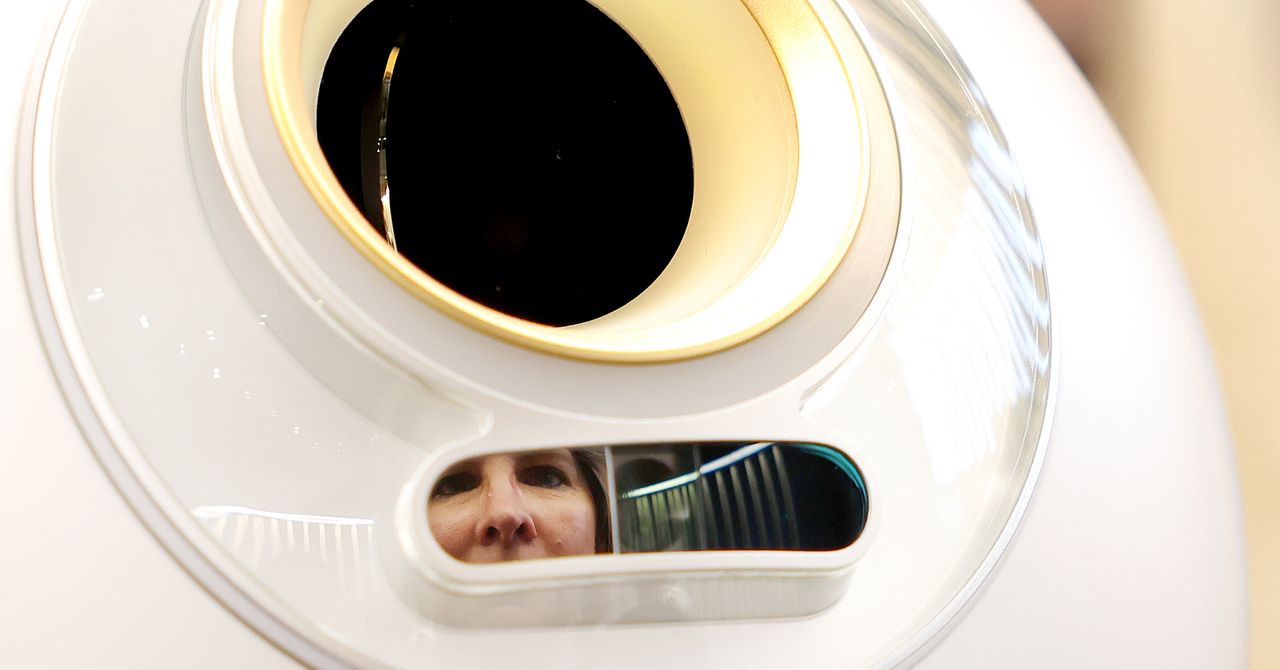
Sam Altman’s iris-scanning, humanity-verifying World project announced at an event in San Francisco on Friday that Tinder users around the globe can now put a digital badge on their profiles signaling to potential suitors that they’re a real human, provided they’ve already stared into one of World’s glossy white Orbs and allowed their eyes to be scanned. The announcement follows a pilot project for Tinder verification that World previously conducted in Japan.
The global Tinder expansion is one of the biggest tests yet for World, and the company’s bet that everyday consumers will be willing to sign up for biometric verification services to use internet applications. Founded in 2019 by Altman and Alex Blania, the World project was designed for a future where the internet is overrun with highly capable AI agents that make it incredibly difficult, if not impossible, to tell who is really human. As companies like OpenAI—where Altman is CEO—and Anthropic push AI agents into the mainstream, the problem World was built to solve feels increasingly urgent.
But World has struggled to achieve mainstream adoption, and it has encountered resistance from governments around the globe that have probed the company over suspected violations of data protection laws. The company says 18 million people have now been verified with an Orb, up from 12 million last year.
In addition to the Tinder global expansion, Tools for Humanity, the company behind World, announced a number of other consumer and enterprise partnerships on Friday at its Lift Off event in San Francisco. The startup says Tinder users who verify with their World ID will receive five free “boosts,” typically a paid feature that increases the number of users who see a profile by up to 10 times for 30 minutes. The videoconferencing platform Zoom also says that users can now require other participants to verify their identity with World before joining a call. Docusign, the contract signing software, will allow users to require World’s identity verification technology.
Tiago Sada, Tools for Humanity’s chief product officer, tells WIRED the company sees major platform partnerships as key to helping World become a mainstream identity-verification technology. Sada said he’s especially interested in working with social media companies in the future, and was encouraged to see that Reddit has started testing World as a solution to help users distinguish bots from real people.
World is also launching a tool called Concert Kit, which lets artists reserve concert tickets for verified humans, a pitch aimed squarely at the bot-driven scalping problem that critics say has plagued sites like TicketMaster. World will test the feature on the upcoming Bruno Mars World Tour featuring Anderson .Paak, who is scheduled to play a verified-humans-only show under his alias DJ Pee .Wee in San Francisco on Friday night.
No new hardware announcements or updates were made at Friday’s event. World first launched the iris-scanning Orb back in 2023, alongside a mobile app that contains “mini apps” for different verification and blockchain-related programs. After a person scans their eyeball with one of World’s Orbs, the startup creates a unique cryptographic key for each person—their World ID. This creates a private, decentralized way to verify people online, without requiring them to upload their government ID all over the internet.
The project was initially called Worldcoin, and in the early days the startup offered people free cryptocurrency to scan their irises. World still offers a cryptocurrency token and a wallet for digital currencies, but dropped the “coin” from its name in 2024 and has since shifted its focus to identity verification for the AI era. Jess Montejano, a spokesperson for Tools for Humanity, says the company still offers crypto as an incentive when new users sign up, but has also expanded its offerings to include Netflix and Apple TV subscription trials.
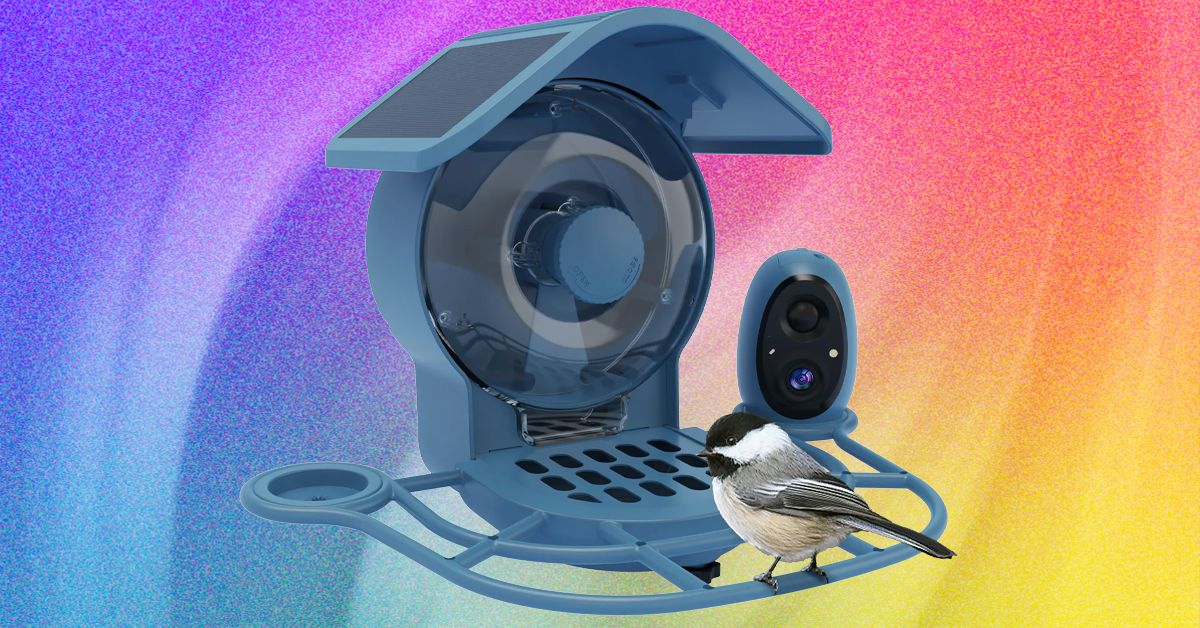
Assembly was quick and tool-free, requiring only a handful of included knob screws. I also like that it included both fence- and pole-mounting options, the latter of which is critical for preventing squirrel damage.
ScreenshotCoolfly app via Kat Merck
Smart feeder companies continue to upgrade their cameras’ quality with each new model, but the general range still seems to be anywhere from 1080p photos and 2K video on the low end (as with the Birdfy Lite), all the way up to 32-MP photos and 4K video (as with Camojojo’s new Hibird Pro). The Aura falls somewhere in the middle of this range, with 4-MP photos and a respectable 2.5K Ultra HD video.
The camera’s 150-degree field of view is wider than that of a typical bird feeder camera, and it helps to capture all angles of what’s really the Aura’s signature feature—a wraparound perch with little platforms on the left and right sides, where you can position the camera upright (which shows pictures in a horizontal “landscape mode”) at the angle you prefer. If you want the camera to be on its side (vertical “portrait mode”), there’s a little adapter that connects to the back and screws into the platform. Do note, though, that despite some marketing photos showing the Aura with two cameras, it only comes with one camera, and when it’s on its side, it can only be mounted on the right side of the perch.
Portrait mode (the camera mounted on its side) allows for greater detail in photos, but it wasn’t always successful at capturing all the action, depending on where a bird stood. The biggest issue with this camera orientation, however, is that the app’s AI identification doesn’t work with it. I asked Coolfly if this was an error, but it turns out it’s how the camera was designed.
“To offer users ‘Limited Free AI’ without monthly subscription fees, our bird ID algorithm is hardcoded directly into the device’s hardware,” Coolfly’s rep told me. “Because this on-device neural network was trained exclusively on horizontal datasets, physically flipping the camera … disrupts the local algorithm’s spatial mapping.”
The solution? “If our users shoot vertically and spot an unknown bird, they can simply take a screenshot and send it to our in-app ChirpChat feature. Our interactive AI assistant will identify it perfectly from the image,” Coolfly’s rep said.
Though this step was cumbersome, it did correctly identify nearly all of the birds I proffered (as did the built-in AI ID). I liked seeing the birds slightly closer up with the side camera orientation, but it wasn’t a dramatic difference between the views. Certainly not dramatic enough to justify the hassle of losing the AI ID or of having to go out and fiddle with taking the camera on and off its little mount to switch modes. So for the majority of testing, I kept the camera in its default upright position.
Birds on Film
The Aura uses the Coolfly app, which isn’t as intuitive as some of the bigger brands’ apps, like Birdbuddy’s, but it was perfectly usable. There’s the ChirpChat, a bird search, and a Facebook-esque “social feed” where you can follow other Coolfly feeder users and see their posted videos and images. (Note that there were only about 10 users total at the time of my test.)
What I liked the most about the app was that it immediately IDs all the bird captures in the album with a little bird-head icon of that species. It helped me visually sort at a glance which visitors were new and noteworthy that day, and clicking the icon leads to an informational page on the bird, as well as a sound clip of the species’ typical call, so you can see if you’ve heard it around. What I liked the least, however, was the number of marketing push notifications the app would send, for sales and other irrelevant topics. It became so irritating, in fact, that I ended up turning off notifications altogether, which meant I was only aware of bird activity if I went into the app.
Let’s use our car again, but this time we’ll get real numbers from the accelerometer in our smartphone. Say we start at a red light and then accelerate at 2 m/s2 (meters per second squared) for five seconds. From the equation above, Δv1 would be 2 x 5 = 10 m/s, so that’s our velocity. Now, after cruising for a while, we accelerate again at 1 m/s2 for five more seconds. Δv2 is then 1 x 5 = 5 m/s. Adding these two changes, our velocity is now 15 m/s. And so on.
The only problem is that inertial measurement isn’t as accurate as the Doppler method over long periods, because small errors will keep accumulating. That means you need to recalibrate your system periodically using some other method.
Optical Navigation
On Earth, people have long navigated by the stars. In the northern hemisphere, just find Polaris. It’s called the North Star because Earth’s axis of rotation points right at it. That’s why it appears stationary, while the other stars seem to revolve around it. If you point a finger at Polaris you’ll be pointing north, and you can use that orientation to go in whatever direction you want.
Now, if you can measure the angle of Polaris above the horizon, you’ll also know your latitude. If the angle is 30 degrees, you’re at latitude 30 degrees. See, it’s easy. And once you can measure position, you just need to do it twice and record the time interval to find your velocity.
But celestial navigation works because we know how the Earth rotates, and that doesn’t help in a spacecraft. Oh well, can we just use the stars like you would use the cows on the side of the road? Nope. The stars are so far away, astronauts would need to travel for many, many generations to detect any shift in their position. Like the airplane flying over the sea, you’d seem to be stationary, even while traveling 25,000 mph.
But we can still use the basic idea. For optical navigation in space, a spacecraft can locate other objects in the solar system. By knowing the precise location of these objects (which change over time) and where they appear relative to the viewer, it’s possible to triangulate a position. And again, by taking multiple position measurements over time, you can calculate a velocity.
In the end, even though spaceships lack speedometers, it’s possible to track their speed indirectly with a little physics. But it’s just another example of how flying in space is really, totally different—and way more complicated—than driving or flying on Earth.


Duchess Sophie says ‘peace is the only option’ in tribute to Sudan victims

How 50 days of Iran war lead to loss of $50 billion worth of oil

NBA star hits back at NYC Mayor Zohran Mamdani for blaming him over expensive playoff tickets

-

 Tech1 week ago
As the Strait of Hormuz Reopens, Global Shipping Will Take Months to Recover
-

 Tech1 week ago
This AI Button Wearable From Ex-Apple Engineers Looks Like an iPod Shuffle
-

 Politics1 week ago
Indian airlines hit hardest after Dubai limits foreign flights until May 31
-

 Entertainment5 days ago
Palace left in shock as Prince William cancels grand ceremony
-

 Sports4 days ago
The case for Man United’s Fernandes as Premier League’s best
-

 Politics1 week ago
Chinese, Taiwanese will unite, Xi tells Taiwan opposition leader
-

 Entertainment6 days ago
Dua Lipa hits major career high ahead of wedding with Callum Turner
-
 Business4 days ago
UK could adopt EU single market rules under new legislation