

Fashion
UK production output drops 0.3% QoQ during quarter to Aug 2025: ONS

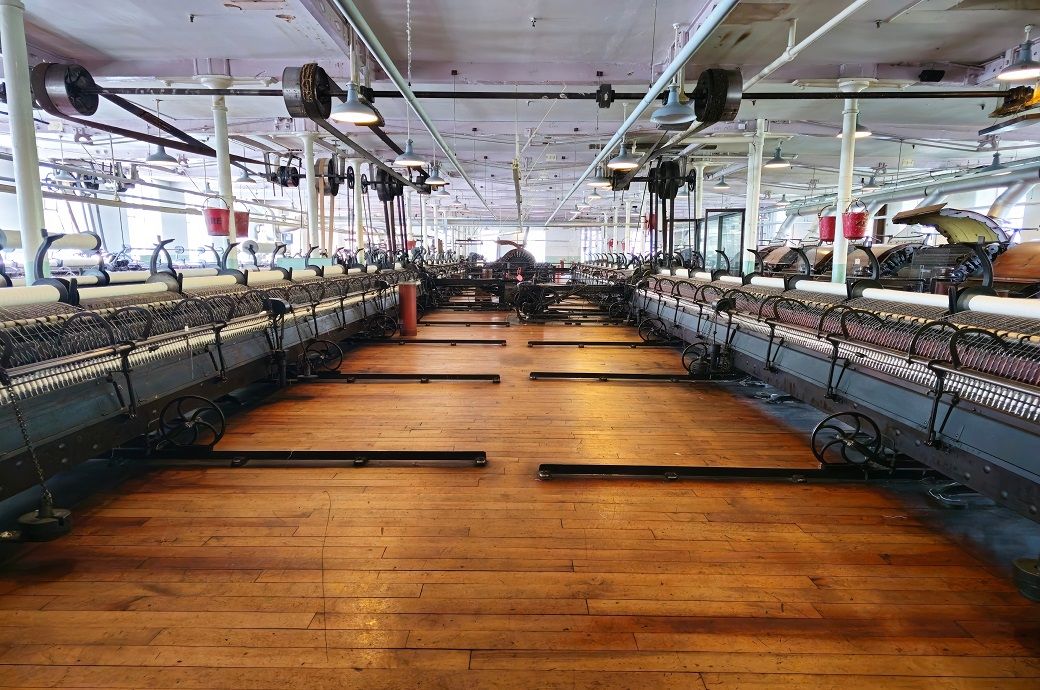
The largest negative contributor to the three-monthly fall in August came from electricity and gas (down by 2.6 per cent QoQ), while manufacturing remained flat.
UK production output was estimated to have decreased by 0.3 per cent quarter on quarter (QoQ) during the quarter to August.
The largest negative contributor to the three-monthly fall came from electricity and gas, while manufacturing remained flat.
Monthly production output was estimated to have increased by 0.4 per cent in the month, partly due to increases in manufacturing output.
Monthly production output was estimated to have increased by 0.4 per cent in the month. This followed a decline in July 2025 (down by 0.4 per cent month on month) and a rise in June 2025 (up by 0.9 per cent), an ONS release said.
The rise in monthly production output in August resulted partly from increases in manufacturing (up by 0.7 per cent). Eight of the 13 manufacturing sub-sectors saw a monthly increase.
Fibre2Fashion News Desk (DS)











The announcement was made during a summit in Brussels, where leaders from both sides emphasised the need to deepen transatlantic trade amid global economic uncertainty and shifting geopolitical dynamics.
Canada and the EU have agreed to modernise the Comprehensive Economic and Trade Agreement (CETA) following a summit in Brussels.
It aims to reduce trade barriers, support SMEs while expanding co-operation in digital services and cross-border data flows.
Leaders including Ursula von der Leyen said it will strengthen economic resilience, diversify trade partnerships and secure supply chains.
The initiative seeks to update the 2017 free trade deal by reducing remaining non-tariff barriers, improving regulatory co-ordination and creating clearer investment dispute mechanisms, particularly to support small and medium-sized enterprises.
Canadian Prime Minister Mark Carney has set a target of doubling Canada’s non-US trade within the next decade, positioning Europe as a key partner in achieving that goal. According to Canada’s Trade Minister Maninder Sidhu, the effort aligns with the country’s broader strategy to diversify trade beyond its largest partner, the United States, which currently accounts for nearly 70 per cent of Canadian exports and leaves the country vulnerable to shifts in American trade policy.
The agreement also launches talks on a digital trade framework covering data flows, cybersecurity, artificial intelligence regulation and digital services.
Maros Sefcovic, the EU’s Commissioner for Trade and Economic Security, said the initiative reflects the growing importance of digital commerce, noting that more than 40 per cent of EU-Canada services trade is already delivered digitally.
European Commission President Ursula von der Leyen highlighted that the partnership would support sustainable development, innovation and secure supply chains, particularly in areas such as rare minerals, clean energy and advanced technologies.
The modernisation effort underscores both partners’ commitment to strengthening economic resilience, promoting sustainable trade practices and deepening cooperation in the digital era.
Fibre2Fashion News Desk (CG)
Imports of knitted apparel and clothing accessories (Chapter **) were valued at $***.*** million in January ****, slightly lower than $***.*** million a year earlier. The imports of non-knitted apparel and clothing accessories (Chapter **) totalled $***.*** million, down *.** per cent from $***.*** million in January ****.
South Korea typically exports fabrics and textile materials while importing readymade garments. During January ****, exports of man-made filaments, strips and similar materials (Chapter **) were valued at $***.*** million, down *.** per cent from $***.*** million a year earlier. Exports of knitted or crocheted fabrics (Chapter **) reached $***.*** million, easing *.** per cent from $***.*** million.

The additional week in the fourth quarter of fiscal 2025, compared to the fourth quarter of fiscal 2024, contributed approximately $37.0 million in consolidated net sales. On a comparable week basis, net sales grew 3.4 per cent. On a reported basis including the extra week in fiscal 2025, the US retail, international, and US wholesale segments grew 9.4 per cent, 10.2 per cent, and 3.4 per cent, respectively. US retail comparable net sales increased 4.7 per cent. Changes in foreign currency exchange rates used for translation in the fourth quarter of fiscal 2025, as compared to the fourth quarter of fiscal 2024, had a favourable effect on consolidated net sales of approximately $3.0 million, or 0.3 per cent.
Carter’s reported Q4 fiscal 2025 sales of $925.5 million, up 7.6 per cent, boosted by a $37 million extra week; on a comparable basis, sales rose 3.4 per cent.
Growth spanned US retail, international, and wholesale segments.
Operating income edged up to $84.7 million, though margin dipped to 9.2 per cent.
Full-year sales increased 1.9 per cent to $2.9 billion.
Operating income increased $1.5 million, or 1.8 per cent, to $84.7 million, compared to $83.2 million in the fourth quarter of fiscal 2024. Operating margin decreased 50 basis points to 9.2 per cent, reflecting incremental tariff costs, investments in product mix and make, and higher performance-based compensation provisions, partially offset by higher pricing, lower corporate expenses, and an asset impairment charge in the prior year period.
“Carter’s delivered improved fourth quarter results with each of our business segments posting sales growth over last year. We see momentum building behind our products and demand creation initiatives, which have driven an improvement in the rate of traffic, new customer acquisition, higher realised pricing, and increased penetration of the best portions of our product assortments. All of this gives us confidence that our strategies are gaining traction,” said Douglas C Palladini, chief executive officer & president.
“2025 was a year of meaningful progress in stabilising our business while responding to significant new tariffs. We took actions to right-size our cost structure and we launched several important initiatives to improve the productivity of our merchandise assortments and store fleet. We also strengthened our balance sheet and liquidity with the successful refinancing of our long-term debt and a new asset-based revolving credit facility in place,” Palladini added.
Consolidated net sales increased $54.3 million, or 1.9 per cent, to $2.90 billion, compared to $2.84 billion in fiscal 2024, reflecting growth in our US retail and international segments that were partially offset by a decline in the US wholesale segment. The additional week in fiscal 2025, compared to fiscal 2024, contributed approximately $37.0 million in consolidated net sales. On a comparable week basis, net sales grew 0.6 per cent. On a reported basis including the extra week in fiscal 2025, the company’s US retail and international segments grew 3.5 per cent, and 6.3 per cent, respectively, while US wholesale net sales declined 2.0 per cent. US retail comparable net sales increased 1.4 per cent. Changes in foreign currency exchange rates used for translation in fiscal 2025, as compared to fiscal 2024, had an unfavourable effect on consolidated net sales of approximately $6.7 million, or 0.2 per cent, the company said in a press release.
“While we are encouraged by our progress, much work remains. Excluding the recent tariff developments, for 2026 we are planning growth in net sales as we build on the momentum of our product and demand creation strategies. We are also planning growth in operating income. We will remain focused and disciplined in our investments and overall spending and expect solid contributions from productivity initiatives. We believe the recent news regarding tariffs will be net positive for Carter’s, but it will take some time to fully understand the implications for our business and the broader marketplace. Our talented and dedicated teams and I are committed to returning Carter’s to long-term sustainable, profitable growth over time,” Palladini concluded.
Fibre2Fashion News Desk (RR)


Ball State fires Michael Lewis after 3 straight losing seasons

Iran Assures Neighbours of Non-Aggression Amid Regional Tensions

Paul McCartney's overlooked work

India Us Trade Deal: Fresh look at India-US trade deal? May be ‘rebalanced’ if circumstances change, says Piyush Goyal – The Times of India

LPGA legend shares her feelings about US women’s Olympic wins: ‘Gets me really emotional’

Bobby J. Brown, “The Wire” and “Law & Order: SUV” actor, dies of smoke inhalation after reported fire

-
Business1 week ago
India Us Trade Deal: Fresh look at India-US trade deal? May be ‘rebalanced’ if circumstances change, says Piyush Goyal – The Times of India
-
 Sports1 week ago
LPGA legend shares her feelings about US women’s Olympic wins: ‘Gets me really emotional’
-

 Fashion1 week ago
South Korea’s Misto Holdings completes planned leadership transition
-
 Entertainment1 week ago
Bobby J. Brown, “The Wire” and “Law & Order: SUV” actor, dies of smoke inhalation after reported fire
-

 Fashion1 week ago
Texwin Spinning showcasing premium cotton yarn range at VIATT 2026
-

 Entertainment1 week ago
Pakistan’s semi-final qualification scenario after England defeat New Zealand
-
 Business1 week ago
Greggs to reveal trading amid pressure from cost of living and weight loss drugs
-

 Politics1 week ago
Iran launches retaliation against Israel, launches ballistic missiles