

Politics
Ukraine’s Zelenskiy drops Nato ambition as Berlin peace talks begin

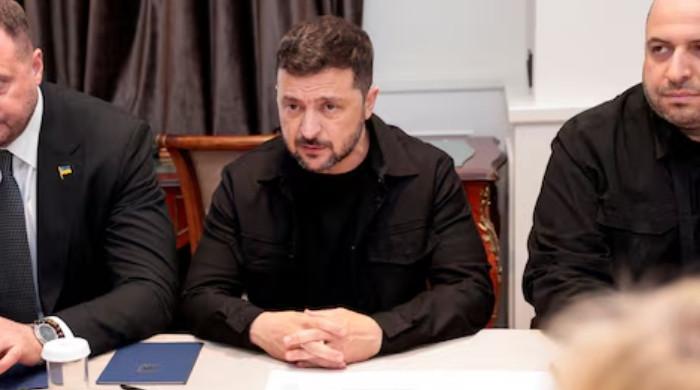

- Zelenskiy seeks Western security guarantees instead.
- Ukraine president meets Trump’s envoy Steve Witkoff.
- European leaders due in Germany for talks on Monday.
Ukraine has relinquished its aim to join the Nato military alliance in exchange for Western security guarantees as a compromise to end the war with Russia, President Volodymyr Zelenskiy said on Sunday as peace talks got underway in Berlin.
Zelenskiy aired the concession as he flew to the German capital, where he began meetings with US President Donald Trump’s envoy Steve Witkoff and son-in-law Jared Kushner in efforts to end Europe’s bloodiest conflict since World War Two.
The move marks a major shift for Ukraine, which has fought to join Nato as a safeguard against Russian attacks and has such an aspiration included in its constitution. It also meets one of Russia’s war aims, although Kyiv has so far held firm against ceding territory to Moscow.
Zelenskiy met the US envoys at talks hosted by German Chancellor Friedrich Merz, who a source said had made brief remarks before leaving the two sides to negotiate. Other European leaders are also due in Germany for talks on Monday.
Security guarantees from the United States, Europe and other partners instead of Nato membership represented a compromise on Ukraine’s side, Zelenskiy said ahead of Sunday’s discussions.
“From the very beginning, Ukraine’s desire was to join Nato, these are real security guarantees. Some partners from the US and Europe did not support this direction,” he said in answer to questions from reporters in a WhatsApp chat.
“Thus, today, bilateral security guarantees between Ukraine and the US, Article 5-like guarantees for us from the US, and security guarantees from European colleagues, as well as other countries — Canada, Japan — are an opportunity to prevent another Russian invasion,” Zelenskiy said.
“And it is already a compromise from our part,” he said, adding that the security guarantees should be legally binding.
Russian President Vladimir Putin has repeatedly demanded that Ukraine officially renounce its Nato ambitions and withdraw troops from the about 10% of Donbas which Kyiv still controls. Moscow has also said that Ukraine must be a neutral country and that no Nato troops can be stationed in Ukraine.
Russian sources said earlier this year that Putin wants a “written” pledge by major Western powers not to enlarge the US-led Nato alliance eastwards — shorthand for formally ruling out membership to Ukraine, Georgia, Moldova and other former Soviet republics.
Zelenskiy had earlier called for a “dignified” peace and guarantees that Russia would not attack Ukraine again.
Under pressure from Trump to sign a peace deal that initially backed Moscow’s demands, Zelenskiy accused Russia of dragging out the war through deadly bombings of cities and Ukraine’s power and water supplies.
Sending Witkoff, who has led negotiations with Ukraine and Russia on a US peace proposal, appeared to be a signal that Washington saw a chance of progress nearly four years after Russia’s 2022 invasion.
Zelenskiy said Ukraine, the Europeans and US are looking at a 20-point plan and that at the end of this there is a ceasefire. He said Kyiv has no direct talks with Russia.
A ceasefire along the current front lines would be a fair option, he added.
‘Critical moment’
Britain, France and Germany have been working to refine the US proposals, which in a draft disclosed last month called for Kyiv to cede more territory, abandon its Nato ambitions and accept limits on its armed forces.
European allies have described this as a “critical moment” that could shape Ukraine’s future, and sought to shore up Kyiv’s finances by leveraging frozen Russian central bank assets to fund Kyiv’s military and civilian budget.
Putin hosted Witkoff and Kushner at a meeting earlier in December that the Kremlin praised as “constructive”, although no major breakthroughs were reached.
Zelenskiy said hundreds of thousands were still without power after Russian strikes on energy, heating and water supplies across Ukraine,
“Russia is dragging out the war and seeks to inflict as much harm as possible on our people,” he said.
Russia’s full-scale invasion of Ukraine caused relations with the West to plummet and has cranked up warnings from Nato and European leaders that Putin would not stop there.
Nato Secretary General Mark Rutte said in a speech in Berlin on Thursday that Nato should be “prepared for the scale of war our grandparents or great-grandparents endured” and asserted that “we are Russia’s next target”.
The Kremlin has repeatedly dismissed such claims.
“This seems like a statement by a representative of a generation that has managed to forget what World War Two was actually like,” Kremlin spokesman Dmitry Peskov told state television reporter Pavel Zarubin on Sunday.
“They have no understanding, and unfortunately, Mr Rutte, making such irresponsible statements, simply does not understand what he is talking about,” Peskov added.
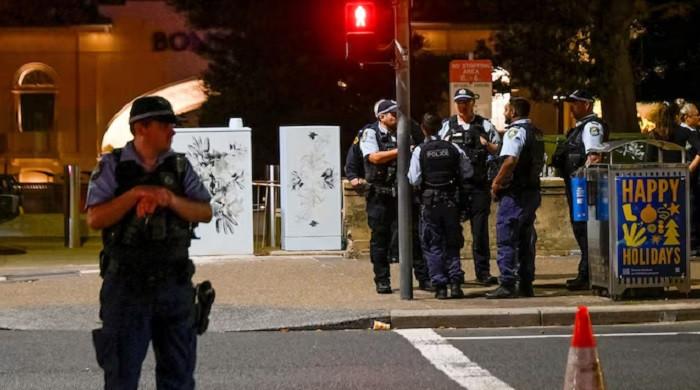

- Berlin, New York, Warsaw, London enhance police presence.
- Berlin’s menorah lighting includes prayer for Sydney victims.
- France boosts security around Jewish sites during Hanukkah.
Major cities, including Berlin, London and New York, stepped up security around Hanukkah events on Sunday following the attack on a Jewish holiday celebration at Sydney’s Bondi Beach.
Berlin police said they were ramping up measures around the German capital’s Brandenburg Gate, where a large electric menorah is being lit to mark the first night of Hanukkah.
“We have long planned comprehensive security for tonight’s Hanukkah event at the Brandenburg Gate – in light of the events in Sydney, we will further intensify our measures and maintain a strong police presence there,” a spokesperson said on X.
Meanwhile, New York Mayor Eric Adams said on X that extra protection was being deployed for Hanukkah celebrations and synagogues in New York City.
“We will continue to ensure the Jewish community can celebrate the holiday in safety — including at public Menorah lightings across the city. Let us pray for the injured and stand together against hatred,” Adams said.
In Warsaw’s main synagogue, armed security was doubled for its Sunday evening event.
Polish police also said they had decided to ramp up security.
“Due to the geopolitical situation and the attack in Sydney, we are strengthening preventive measures around diplomatic missions and places of worship,” a press officer for Poland’s National Police Headquarters told Reuters in a text message.
The officer specified this meant “intensified preventive measures in the area of diplomatic and consular missions, religious sites and other institutions related to Israel and Palestine.”
The event at Berlin’s Brandenburg Gate will also include a prayer for the victims of Sydney’s Bondi Beach shooting, which left several people dead in what Australian officials described as a targeted antisemitic attack.
Germany has long followed a policy of special responsibility for Jews and for Israel, known as the Staatsraeson, due to the legacy of the Nazi Holocaust.
Security measures at synagogues and other Jewish institutions are the norm in Berlin, but a police spokesperson said these would be ramped up for the Hanukkah period.
London’s Metropolitan Police said it had also increased security, but did not want to give details.
“While there is no information to suggest any link between the attack in Sydney and the threat level in London, this morning we are stepping up our police presence, carrying out additional community patrols and engaging with the Jewish community to understand what more we can do in the coming hours and days,” it said in a statement.
France’s Interior Minister Laurent Nunez asked local authorities to reinforce security around Jewish places of worship during the December 14 to 22 period, a spokesperson for the minister said.
Nunez called for increased deployment of security forces, with particular vigilance around religious services and gatherings that draw large crowds, especially when they take place in public spaces, the spokesperson added.
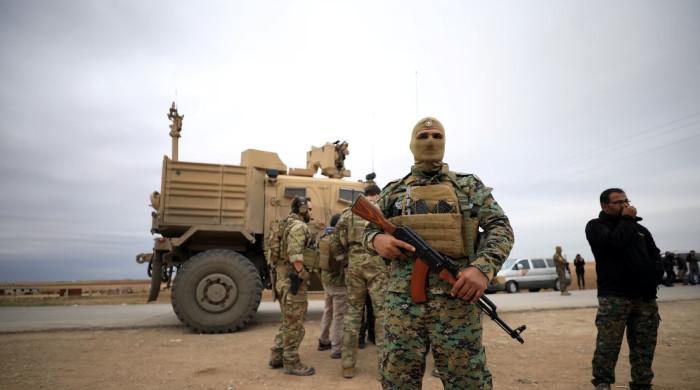
- Syrian govt describes attack on US convoy as “terrorist attack”.
- Syria arrests 11 security members after killing of US personnel.
- Washington says deadly attack carried out by Daesh militant.
Syria’s interior ministry on Sunday said the gunman who killed three Americans in the central Palmyra region the previous day was a member of the security forces who was to have been fired for extremism.
Two US troops and a civilian interpreter died in what the Syrian government described as a “terrorist attack” on Saturday, while Washington said it had been carried out by a Daesh militant who was then killed.
The Syrian authorities “had decided to fire him” from the security forces before the attack for holding extremist ideas and had planned to do so on Sunday, interior ministry spokesman Noureddine al-Baba told state television.
A Syrian security official told AFP on Sunday that “11 members of the general security forces were arrested and brought in for questioning after the attack”.
The official who spoke on condition of anonymity said the gunman had belonged to the security forces “for more than 10 months and was posted to several cities before being transferred to Palmyra”.
Palmyra, home to Unesco-listed ancient ruins, was controlled by Daesh at the height of its territorial expansion in Syria.
The incident is the first of its kind reported since the ouster of longtime Syrian ruler Bashar al-Assad in December last year.
US President Donald Trump vowed “very serious retaliation” following Saturday’s attack.
A Syrian defence ministry official told AFP on condition of anonymity that prior to the attack, US forces had “arrived by land from the direction of the Al-Tanf military base” in southeastern Syria, near the border with Jordan.
“The joint Syrian-American delegation first toured the city of Palmyra, then proceeded to the T-4 airbase before returning to a base in Palmyra”, the source added.
A Syrian military official who requested anonymity said on Saturday that the shots were fired “during a meeting between Syrian and American officers” at a Syrian base in Palmyra.
However, a Pentagon official speaking on condition of anonymity told AFP that the attack “took place in an area where the Syrian president does not have control.”
Warnings
Pentagon spokesman Sean Parnell said the soldiers “were conducting a key leader engagement” in support of counterterrorism operations when the attack occurred, while US envoy to Syria Tom Barrack said the ambush targeted “a joint US-Syrian government patrol”.
Trump called the incident a Daesh attack “against the US, and Syria, in a very dangerous part of Syria, that is not fully controlled by them”.
He said the three other US troops injured in the incident were “doing well”.
The official SANA news agency said the attack also wounded two members of the Syrian security forces.
Syrian Foreign Minister Asaad al-Shaibani said Damascus “strongly condemns the terrorist attack”.
In an interview on state television on Saturday, Syrian Interior Ministry spokesman Anwar al-Baba said there had been “prior warnings from the internal security command to allied forces in the desert region”.
The international coalition forces did not take the Syrian warnings of a possible Daesh infiltration into consideration, he said.
Daesh seized swathes of Syrian and Iraqi territory in 2014 during Syria’s civil war, before being territorially defeated in the country five years later.
Its fighters still maintain a presence, however, particularly in Syria’s vast desert.
Last month, during Syrian President Ahmed al-Sharaa’s historic visit to Washington, Damascus formally joined the US-led global coalition against Daesh.
US forces are deployed in Syria’s Kurdish-controlled northeast as well as at Al-Tanf near the border with Jordan.
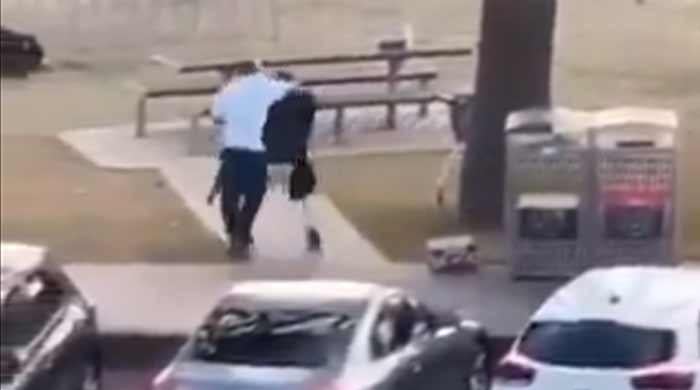
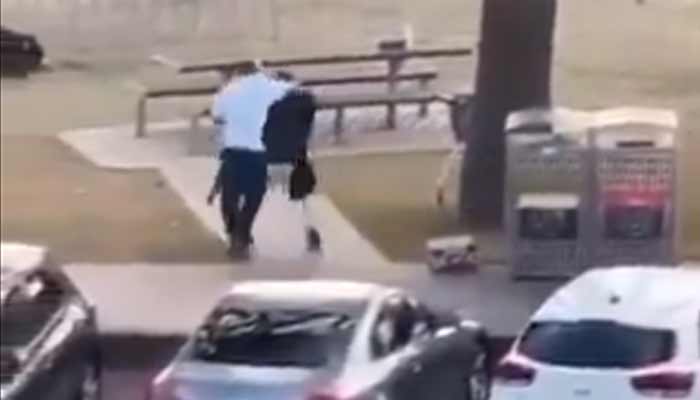
The bystander, who displayed an example of bravery by tackling and disarming a gunman who indiscriminately opened fire at Australia’s Bondi Beach on a Jewish holiday event that killed 11 people, has been identified as Ahmed el Ahmed.
Videos circulating on social media showed a man in a car park wearing a white shirt running up to a man in a dark shirt who is holding a rifle.
He then tackles the armed man from behind, wrenching the rifle from him with his hands before pointing the gun back at the man.
The video then shows the man in a dark shirt losing his footing, backing away towards a bridge where another shooter was located, while the bystander places the gun down on the ground.
During his incredible act of courage, Ahmed was hit by at least two bullets himself.
Ahmed’s cousin, identified only as Mustafa, spoke to Seven News outside St George Hospital, where he is undergoing surgery. Mustafa confirmed that Ahmed had taken on the gunman and later sustained bullet wounds to his upper arm and his hand.
“He’s in hospital, and we don’t know exactly what’s going on inside,” Mustafa said, adding: “We do hope he will be fine. He’s a hero 100%.”
Ahmed is from Sydney’s Sutherland Shire and owns a fruit business. He has no known experience with guns and was visiting Bondi when he saw the shooting unfolding, Seven News reported.
The footage of the bystander’s actions spread quickly on social media as people praised the man for his bravery, saying his actions had potentially saved many lives. His identity was not immediately known.
Addressing a press conference, Australian Prime Minister Anthony Albanese praised the actions of Australians who had “run towards danger in order to help others.
“These Australians are heroes, and their bravery has saved lives,” he said.
Chris Minns, the Premier of New South Wales state, where Sydney is located, said it was the “most unbelievable scene I’ve ever seen”.
One suspected gunman was killed, and another was in a critical condition following the shooting, and police said they were investigating whether a third gunman was involved.
Police were investigating whether a third gunman was involved in the shooting, and a bomb-disposal unit was working on several suspected improvised explosive devices, Lanyon said.
Mike Burgess, a top Australian intelligence official, said one of the suspected attackers was known to authorities but had not been deemed an immediate threat.
— With additional information from Reuters


Drace Montgomery explains excitement over ‘Stranger Things’ finale

Major cities heighten security around Hanukkah events after Sydney shooting

Lionel Messi statue unveiling in India marred by fan unrest

-
 Politics7 days ago
Thailand launches air strikes against Cambodian military: army
-
 Politics7 days ago
Zelenskiy says Ukraine’s peace talks with US constructive but not easy
-
 Fashion7 days ago
Germany’s LuxExperience appoints Francis Belin as new CEO of Mytheresa
-
 Politics1 week ago
17 found dead in migrant vessel off Crete: coastguard
-

 Tech1 week ago
WIRED Roundup: DOGE Isn’t Dead, Facebook Dating Is Real, and Amazon’s AI Ambitions
-
 Business4 days ago
Rivian turns to AI, autonomy to woo investors as EV sales stall
-
 Politics4 days ago
Trump launches gold card programme for expedited visas with a $1m price tag
-

 Tech5 days ago
Jennifer Lewis ScD ’91: “Can we make tissues that are made from you, for you?”