

Fashion
UK’s Burberry H1 FY26 revenue slips, Q2 sales show signs of recovery

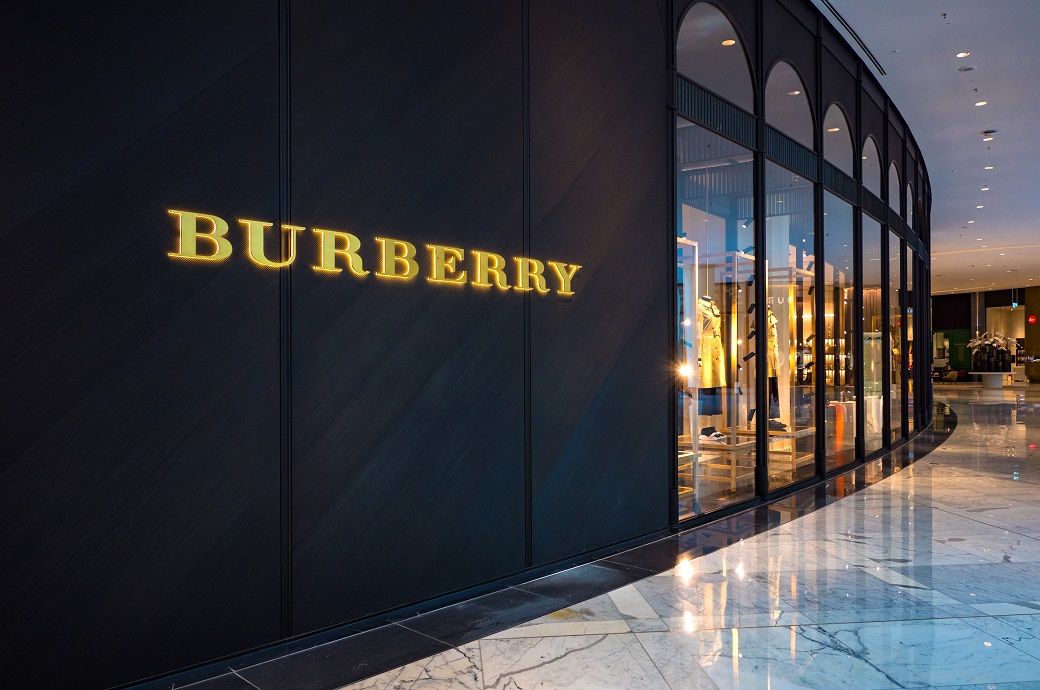
The gross profit rose to £701 million, while gross margin expanded sharply to 67.9 per cent from 63.4 per cent, an improvement of 450 basis points (bps) at reported rates (410 bps at constant exchange rates). The company attributed this largely to non-recurring inventory headwinds in the prior year, including provisioning and inventory exits.
Burberry’s H1 FY26 revenue fell to £1.03 billion (~$1.36 billion), though margins strengthened as gross profit rose and adjusted operating profit returned to £19 million (~$25.08 million).
Comparable sales stabilised, with Q2 growth of 2 per cent.
EMEIA and the Americas grew, while Greater China and Asia Pacific improved.
For FY26, Burberry expects retail space to remain broadly unchanged.
The adjusted net operating expenses fell 7 per cent at reported rates and 5 per cent at constant exchange rates to £682 million, reflecting the impact of the ongoing cost efficiency programme and the absence of prior year store impairment headwinds, partly offset by inflation and targeted investments, Burberry Group said in a press release.
As a result, the adjusted operating profit reached £19 million (~$25.08 million) in H1 FY26, compared with a £41 million adjusted operating loss a year earlier. The adjusted operating margin improved to 1.9 per cent from a negative 3.8 per cent, an uplift of 570 bps at reported rates.
Net finance expense increased modestly to £30 million from £27 million, leading to a loss before taxation of £48 million, an improvement on the £80 million loss a year earlier. The attributable loss to shareholders narrowed to £26 million versus £74 million. Adjusted loss before tax improved to £11 million from £68 million and adjusted diluted earnings per share moved back into positive territory at 0.6 pence, versus a loss of 18.3 pence in the prior year. Reported diluted loss per share narrowed to 7.1 pence from 20.8 pence.
The retail segment remained the core of the business, accounting for around 85 per cent of retail and wholesale revenue. Retail sales declined by 1 per cent at constant exchange rates and 3 per cent at reported rates in the half, but like-for-like sales stabilised overall and improved as the half progressed.
Retail revenue totalled £854 million, down from £885 million a year earlier. Wholesale revenue fell to £148 million from £169 million, a decline of 12 per cent at reported rates and 11 per cent at constant exchange rates, albeit slightly better than guidance for mid-teens declines due to phasing and improved in-season orders from strategic partners after stronger sell-out of the Autumn 25 collection. Burberry reiterated that it intends to operate a smaller, higher-quality wholesale business in future.
Europe, Middle East, India and Africa (EMEIA) grew 1 per cent for the half, with both quarters delivering 1 per cent growth, supported by resilient local customer spending that offset weaker tourism. The Americas rose 3 per cent in H1 (up 4 per cent in Q1 and 3 per cent in Q2), driven by new customer acquisition, offsetting weaker tourist traffic in the United States during the summer.
Greater China declined 1 per cent over the half but returned to growth in Q2, with sales moving from a 5 per cent decline in Q1 to a 3 per cent increase in Q2. Growth in local customers partially offset weaker outbound tourist flows.
Asia Pacific declined 2 per cent in H1 but improved sequentially, from a 4 per cent decline in Q1 to flat in Q2. South Korea was flat for the half (up 2 per cent in Q1 and down 2 per cent in Q2), while Japan declined 5 per cent overall but swung from a 10 per cent decline in Q1 to a 2 per cent increase in Q2.
By division, accessories revenue declined to £343 million from £367 million, down 7 per cent at reported rates and 4 per cent at constant exchange rates. Womenswear was broadly stable at £312 million, flat at reported rates and up 2 per cent at constant exchange rates. Menswear revenue declined to £304 million from £324 million, down 6 per cent at reported rates and 3 per cent at constant exchange rates. Children’s and other categories fell to £43 million from £50 million.
Burberry continued to refine its store portfolio while investing in elevated in-store experiences. The group opened four stores and closed eleven during the half, ending the period with 415 directly operated stores and 31 franchise stores.
The network included 225 full-price stores, 136 concessions and 54 outlets, with Asia Pacific and Greater China representing the largest store bases.
“One year into Burberry Forward, my belief in this extraordinary British luxury house is stronger than ever,” said Joshua Schulman, chief executive officer (CEO) at Burberry Group. “With the consistency of our Timeless British Luxury brand expression and an improved product offer, we have begun to see customers return to the brand they love, resulting in comparable store sales growth for the first time in two years. While it is still early days and there is more to do, we now have proof points that Burberry Forward is the right strategic path to restore brand relevance and value creation. We move forward with confidence that Burberry’s best chapters lie ahead.”
For FY26 Burberry is expecting its retail space to remain broadly stable, while wholesale revenue is projected to decline by a mid-single-digit rate. The company anticipates delivering £80 million in annualised cost savings in FY26, building on the £24 million achieved in FY25. Restructuring charges are forecast at around £50 million for the year as part of the ongoing transformation. Currency movements, based on spot rates as of October 24, 2025, are expected to create headwinds of about £50 million on revenue and £5 million on adjusted operating profit. Capital expenditure for the year is planned at approximately £120 million.
Fibre2Fashion News Desk (SG)










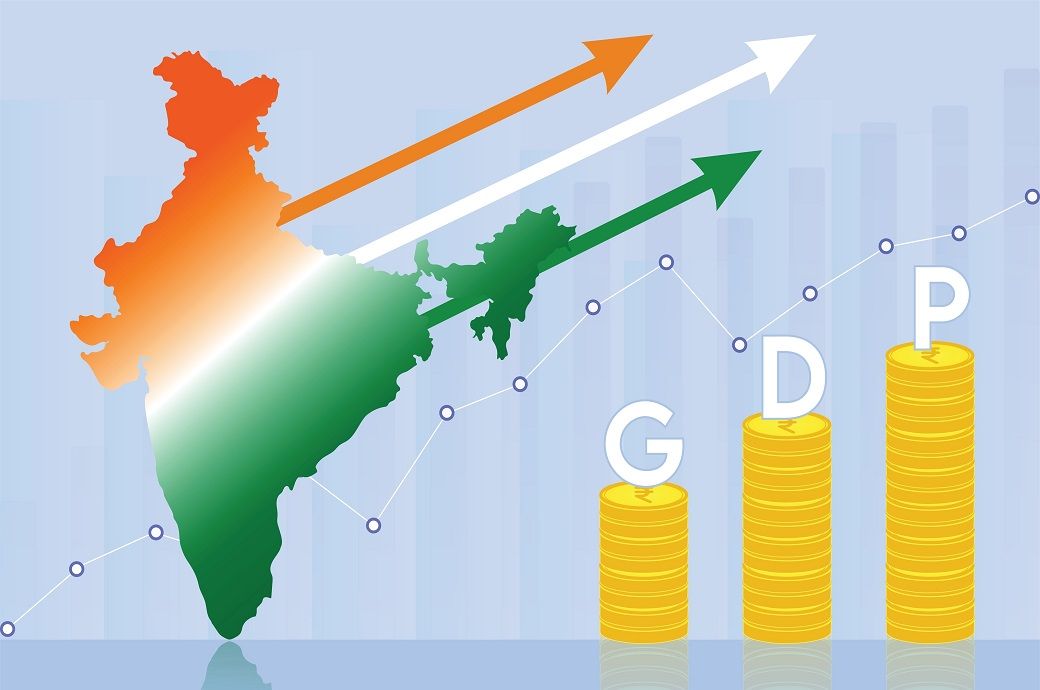
Nominal GDP, or GDP at current prices, is estimated to grow at 8.6 per cent to reach ₹345.47 trillion in FY26 against ₹318.07 trillion in 2024-25.
India’s real GDP is estimated to grow at 7.6 per cent to ₹322.58 trillion (~$3.54 billion) in FY26 compared to the first revised GDP estimate of ₹299.89 trillion for FY25 (7.1 per cent growth).
It released the new series of annual and quarterly national accounts estimates with FY23 base.
Real GVA is projected to grow at 7.7 per cent to reach ₹294.40 trillion in FY26 against ₹273.36 trillion in FY25.
Real gross value added (GVA) is projected to grow at 7.7 per cent to reach ₹294.40 trillion in FY26 against ₹273.36 trillion in FY25 (a 7.3-per cent growth rate).
Nominal GVA is estimated to grow at 8.7 per cent to hit ₹313.61 trillion during FY26, against ₹288.54 lakh crore in 2024-25.
Robust economic performance in FY26 is primarily on account of robust real growth observed in the second quarter (8.4 per cent) and third quarter (7.8 per cent).
The manufacturing sector has been the major driver of resilient performance of the economy the consecutive three fiscals after rebasing, a release from the ministry said.
Both private final consumption expenditure and grossed fixed capital formation exhibited more than 7-per cent growth rate in FY26.
Fibre2Fashion News Desk (DS)

The transition marks the formal handover of executive leadership to President and CEO Keun-Chang (Kevin) Yoon, reinforcing management continuity while preserving the founder’s long-term strategic vision.
Misto Holdings founder Gene Yoon has transitioned to honorary chairman in a planned leadership succession, formally handing executive control to president and CEO Kevin Yoon.
The founder, who expanded the group through the FILA global trademark acquisition and the takeover of Acushnet, will continue guiding long-term strategy as the rebranded Misto focuses on governance and sustainable growth.
Gene Yoon founded the business that would become Misto Holdings in the early 1990s, introducing the FILA brand to the Korean market and later leading a series of transformative transactions. In 2007, the company acquired the global FILA trademark rights through a leveraged buyout, followed by the 2011 acquisition of Acushnet Company, owner of the Titleist and FootJoy brands. The transaction was among the largest cross-border deals in Korea’s consumer sector at the time and significantly expanded the group’s global footprint.
Under his leadership, the company evolved into a multi-brand global portfolio spanning sportswear, golf equipment and apparel, generating approximately USD 3.08 billion in annual revenue.
As Honorary Chairman, Gene Yoon will remain closely engaged with the company, providing guidance on long-term strategy and global portfolio development while supporting management from a broader strategic perspective.
The leadership transition marks a new chapter under President and CEO Kevin Yoon, who has spent nearly two decades in senior roles across the group’s global operations, building deep operational and strategic expertise.
The company’s 2025 rebranding to “Misto” underscores its evolution into a global brand house focused on disciplined capital allocation, enhanced shareholder returns and sustainable long-term growth.
“Building on the founder’s legacy, our priority is to expand our global portfolio, strengthen governance and deliver sustainable value creation,” said Kevin Yoon, President and CEO of Misto Holdings.
Note: The headline, insights, and image of this press release may have been refined by the Fibre2Fashion staff; the rest of the content remains unchanged.
Fibre2Fashion News Desk (RM)



From Fraud Checks To Faster Settlements, SEBI Whole-Time Member Lists Recent Market Reforms In India

Netflix set to release new show following ex-Prince Andrew arrest

Israel launches pre-emptive attack against Iran; multiple explosions heard in Tehran

-

 Tech1 week ago
A $10K Bounty Awaits Anyone Who Can Hack Ring Cameras to Stop Sharing Data With Amazon
-
 Business1 week ago
US Top Court Blocks Trump’s Tariff Orders: Does It Mean Zero Duties For Indian Goods?
-

 Fashion1 week ago
ICE cotton ticks higher on crude oil rally
-

 Tech1 week ago
Donald Trump Jr.’s Private DC Club Has Mysterious Ties to an Ex-Cop With a Controversial Past
-

 Entertainment1 week ago
The White Lotus” creator Mike White reflects on his time on “Survivor
-

 Politics6 days ago
Pakistan carries out precision strikes on seven militant hideouts in Afghanistan
-
 Business7 days ago
Eye-popping rise in one year: Betting on just gold and silver for long-term wealth creation? Think again! – The Times of India
-

 Sports1 week ago
Brett Favre blasts NFL for no longer appealing to ‘true’ fans: ‘There’s been a slight shift’