

Politics
UN aid chief says rebuilding Gaza will be a ‘massive challenge’ after tour of devastation

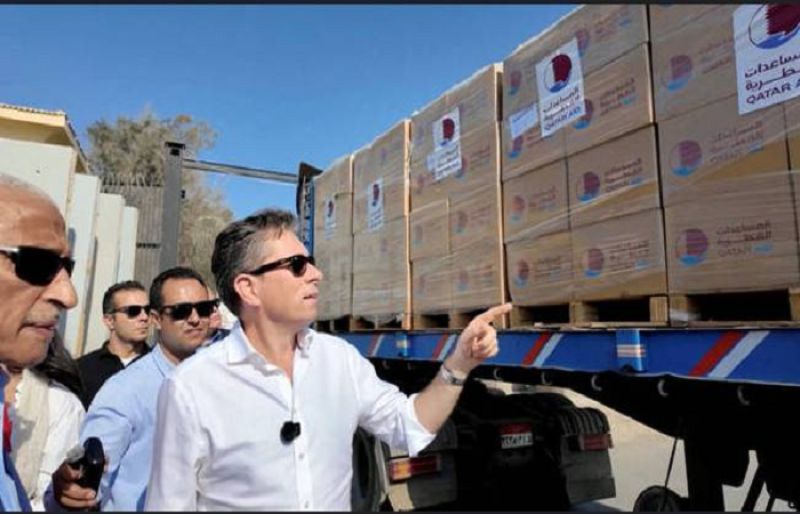

The United Nations’ humanitarian chief on Saturday assessed the enormous challenge of restoring essential services across the war-ravaged Gaza Strip, as Israel received the remains of another hostage from the October 7 attack, marking the second week of the ceasefire.
In a small convoy of white UN vehicles, relief coordinator Tom Fletcher and his team navigated through the wreckage of demolished buildings to inspect a wastewater treatment facility in Sheikh Radwan, north of Gaza City.
“I drove through here seven or eight months ago when most of these buildings were still standing. To see this level of destruction vast stretches of the city turned into wasteland it’s absolutely heartbreaking,” Fletcher told AFP.
Once densely populated with over two million Palestinians, Gaza’s cities now lie in ruins after two years of relentless bombardment and fierce clashes between Hamas and the Israeli army.
A little over a week after U.S. President Donald Trump helped broker the truce, the main border crossing with Egypt remains closed, though hundreds of aid trucks continue to enter daily through Israeli checkpoints to distribute relief supplies.
Hamas has returned the last 20 living hostages in its custody and has begun transferring the remains of 28 others who died during captivity.
On Friday night, it handed over the body of Eliyahu Margalit, 75, who was killed in the October 2023 attack that triggered the Gaza war.
Digging latrines
Surveying the damaged pumping equipment and a grim lake of sewage at the Sheikh Radwan wastewater plant, Fletcher said the task ahead for the UN and aid agencies was a “massive, massive job”.
The British diplomat said he had met residents returning to destroyed homes trying to dig latrines in the ruins.
“They’re telling me most of all they want dignity,” he said. “We’ve got to get the power back on so we can start to get the sanitation system back in place.
“We have a massive 60 day plan now to surge in food, get a million meals out there a day, start to rebuild the health sector, bring in tents for the winter, get hundreds of thousands of kids back into school.”
According to figures supplied to mediators by the Israeli military’s civil affairs agency and released by the UN humanitarian office, on Thursday some 950 trucks carrying aid and commercial supplies crossed into Gaza from Israel.
Relief agencies have called for the Rafah border crossing from Egypt to be reopened to speed the flow of food, fuel and medicines, and Turkey has a team of rescue specialists waiting at the border to help find bodies in the rubble.
– Hostage remains –
Israel’s Prime Minister Benjamin Netanyahu approved the ceasefire but is under pressure at home to restrict access to Gaza until the remaining bodies of the hostages taken during Hamas’s brutal attacks have been returned.
On Saturday, his office confirmed that the latest body, returned by Hamas via the Red Cross on Friday night, had been identified as Margalit, the elderly farmer who was known to his friends at the Nir Oz kibbutz as “Churchill”.
“He was a cowboy at heart, and for many years managed the cattle branch and the horse stables of Nir Oz,” said the Hostages and Missing Families Forum, a support group founded by relatives of the hostages.
“He was connected to the ‘Riders of the South’ group whose members shared a love of horseback riding for over 50 years. On October 7, he went out to feed his beloved horses and was kidnapped from the stable.”
Margalit had been married with three children and three grandchildren. His daughter Nili Margalit, also taken hostage, was freed during the war’s first brief truce in November 2023.
In a statement confirming he had been identified and his remains returned to his family, Netanyahu’s office said “we will not compromise … and will spare no effort until we return all of the fallen abductees, down to the last one”.
Hamas spokesman Hazem Qassem said on Friday that the group “continues to uphold its commitment to the ceasefire agreement… and it will continue working to complete the full prisoner exchange process”.
Under the ceasefire agreement between Israel and Hamas, negotiated by Trump and regional mediators, the Palestinian militant group has returned all 20 surviving hostages and the remains of 10 out of 28 deceased ones.
- Trump calls “Project Freedom” humanitarian gesture for stranded ships.
- Iran chokes off major flows of oil, gas and fertiliser to world economy.
- Over 900 commercial vessels present in Gulf, says maritime intel firm.
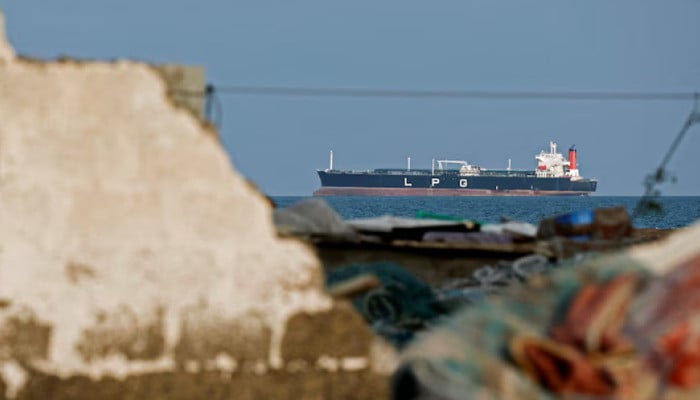
Iran warned on Monday that it would consider any US attempt to interfere in the Strait of Hormuz a breach of the Mideast ceasefire, as President Donald Trump said the United States would begin escorting ships through the blocked waterway.
Negotiations between the two countries have been deadlocked since a ceasefire came into effect on April 8, and Iran’s stranglehold on the strategic strait following US-Israeli attacks on Tehran has been a main point of contention.
Trump said Sunday the new maritime operation, which he dubbed “Project Freedom,” was a “humanitarian” gesture for crews aboard the many ships swept up in the blockade and which may be running low on food and other crucial supplies.
“We will use best efforts to get their Ships and Crews safely out of the Strait. In all cases, they said they will not be returning until the area becomes safe for navigation,” Trump said in a Truth Social post, noting operations would begin on Monday.
In response, the head of the Iranian parliament’s national security commission said: “Any American interference in the new maritime regime of the Strait of Hormuz will be considered a violation of the ceasefire.”
By blocking the Strait of Hormuz, Iran has choked off major flows of oil, gas and fertiliser to the world economy, while the United States has imposed a counter-blockade on Iranian ports.
Trump, in his post, said he was “fully aware that my Representatives are having very positive discussions with the Country of Iran, and that these discussions could lead to something very positive for all.”
He made no direct mention of what Tehran described as a 14-point plan “focused on ending the war.”
US Central Command said it would use guided-missile destroyers, over 100 land and sea-based aircraft, multi-domain unmanned platforms and 15,000 service members in the Hormuz effort.
As of April 29, more than 900 commercial vessels were located in the Gulf, according to maritime intelligence firm AXSMarine.
‘Impossible operation’
US news website Axios, citing two sources briefed on the proposal, reported that Iran set “a one-month deadline for negotiations on a deal to reopen the strait,” dissolve the US naval blockade and end the war.
Earlier Sunday, the Revolutionary Guards sought to put the onus back on Trump, saying he must choose between “an impossible operation or a bad deal with the Islamic Republic of Iran.”
Washington’s European allies are concerned that the longer the strait remains closed, the more their economies will suffer, and German Foreign Minister Johann Wadephul demanded that it be reopened.
In a call with his Iranian counterpart Abbas Araghchi, Wadephul stressed that Germany supported a negotiated solution but that “Iran must completely and verifiably renounce nuclear weapons and immediately open the Strait of Hormuz.”
Oil prices are currently about 50% above pre-conflict levels, largely due to the supply snarls in the strait.
‘Suffocating the regime’
The US president, who spent the weekend at his Mar-a-Lago resort in Florida, declined on Sunday to specify what could trigger new American military action.
But in his post he said that “if in any way, this Humanitarian (ship-guiding) process is interfered with, that interference will, unfortunately, have to be dealt with forcefully.”
Treasury Secretary Scott Bessent said the US naval blockade was only part of a broader economic embargo.
“We are suffocating the regime, and they are not able to pay their soldiers. This is a real economic blockade, and it is in all parts of government,” he told Fox News.
In yet more bellicose rhetoric, Mohsen Rezaei, a military adviser to Iran’s Supreme Leader Ayatollah Mojtaba Khamenei, said Iranian forces would sink US ships.
“The US is the only pirate in the world that possesses aircraft carriers. Our ability to confront pirates is no less than our ability to sink warships. Prepare to face a graveyard of your carriers and forces,” he posted on X.


Former New York City Mayor Rudy Giuliani has been hospitalised and is in “critical but stable condition,” his spokesperson said on Sunday.
The spokesperson, Ted Goodman, did not immediately provide more details about Giuliani’s condition or how long he has been hospitalised.
“Mayor Giuliani is a fighter who has faced every challenge in his life with unwavering strength, and he’s fighting with that same strength now,” Goodman said in a statement. “We do ask that you join us in prayer for America’s Mayor Rudy Giuliani.”
Giuliani, 81, garnered acclaim for his response to the September 11, 2001, al Qaeda attack on New York City, earning the nickname “America’s Mayor.”
Giuliani worked as an attorney for President Donald Trump in his failed efforts to overturn the results of the 2020 election, an effort that led to criminal charges against Giuliani in two US states and a defamation lawsuit from election workers. Giuliani has denied wrongdoing in the criminal cases.
Trump, in a social media post, called Giuliani the “Best Mayor in the History of New York City” and said he had been mistreated by Democrats.
Giuliani was previously hospitalised last year following a car crash in New Hampshire.


- Merz says withdrawal not linked to his criticism of US’s Iran policy.
- Pentagon to cut 5,000 troops from Germany, raising concerns.
- Biden-era missile deployment plan also seen as abandoned.
German Chancellor Friedrich Merz said he must accept that President Donald Trump does not share his opinions in order to work with the United States within Nato, but stressed there was no link between their rift and a planned troop drawdown.
Merz dismissed suggestions that his criticism of US war planning in Iran had sparked Washington’s Friday announcement that the US would reduce its military presence in Germany, its largest European base, by 5,000 soldiers, and repeated his commitment to the transatlantic alliance.
Merz had questioned whether Trump had an exit plan for the Middle East and said the US was being “embarrassed” in talks with Iran. Trump later called Merz an “ineffectual” leader.
“I have to accept that the American president has a different view on these issues than we do. But that does not change the fact that I remain convinced that the Americans are important partners for us,” Merz told public broadcaster ARD in an interview due to be aired later on Sunday.
Asked whether US plans to reduce its troop presence in Germany had anything to do with the spat between the two leaders, Merz said, “There is no connection.”
Trump called for a reduced US military presence in Germany already during his first term and has repeatedly called on Europeans to take greater responsibility for their own security.
Friday’s announcement is also seen as a cancellation of a plan under Joe Biden’s administration to deploy a US battalion with long-range Tomahawk missiles to Germany.
This is a blow to Berlin, which had pushed for the move as a powerful deterrent against Russia, while the Europeans develop such weapons of their own.
Merz said Trump had never committed to this plan and that it was unlikely the US would give up such weapons systems, adding, “If I’m not mistaken, the Americans don’t have themselves enough at the moment.”


Canada’s Gildan’s Q1 strong on HanesBrands integration, outlook steady

Vietnam, Japan eye $5 bn yearly investment, $60 bn trade by 2030

United Airlines 767 slams into NJ Turnpike light pole in viral crash—but what really happened?

-

 Tech7 days ago
A Brain Implant for Depression Is About to Be Tested in Humans
-

 Tech1 week ago
Almost 90% of women leave tech industry within 10 years | Computer Weekly
-
 Business1 week ago
Pakistan’s oil market is fuelling the crisis | The Express Tribune
-
 Business6 days ago
‘I had £20,000 stolen and had to fight a 13-month fraud reporting rule to get it back’
-

 Sports6 days ago
Pro wrestling star Steph De Lander reveals how colleague’s advice helped lead her to title triumph at ACW
-

 Entertainment7 days ago
Norway joins Type 26 Frigate Programme to boost NATO naval power
-

 Entertainment7 days ago
Melania Trump says ABC should ‘take a stand’ on late-night host Kimmel
-

 Tech6 days ago
This Ambitious Laptop Doesn’t Leave Much Room for Your Hands