

Politics
US and Iran exchange fire in Hormuz despite ongoing ceasefire

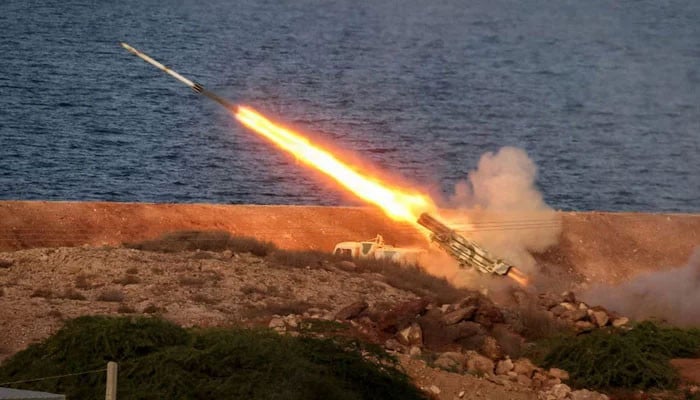
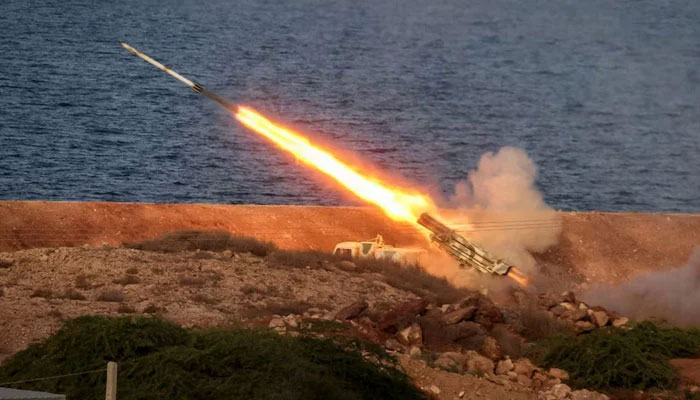
- Iran says struck US vessels after US attacks on ships and Iranian territory.
- US says Iran launched missiles, drones and small boats targeting destroyers.
- Iran state media says calm returned after several hours of exchanges.
WASHINGTON/DUBAI: The United States and Iran exchanged fire on Thursday in the most serious test yet of their month-long ceasefire, but Iran said the situation returned to normal while the Americans said they did not want to escalate.
Iran’s military said the US targeted two ships entering the Strait of Hormuz and carried out strikes on Iranian territory. The US military said it fired in response to Iranian attacks.
Trump told an ABC reporter that the ceasefire was still in effect and sought to downplay the exchange. “It’s just a love tap,” Trump told the reporter, according to her social media post.
Iranian state media said after the strikes that the situation was back to normal.
The renewed hostilities broke out as Washington was awaiting Iran’s response to a US proposal that would stop the fighting but leave the most contentious issues, such as Iran’s nuclear programme, unresolved for now.
The two sides have occasionally exchanged gunfire since the ceasefire took effect on April 7.
Iran’s top joint military command accused the US of violating the ceasefire by targeting an Iranian oil tanker and another ship, and of carrying out air attacks on civilian areas on Qeshm Island in the strait and nearby coastal areas of Bandar Khamir Sirik on the mainland. The military said it responded by attacking US military vessels east of the Strait of Hormuz and south of the port of Chabahar.
A spokesperson for the Khatam al-Anbiya Central Headquarters said the strikes inflicted “significant damage,” but US Central Command said none of its assets were hit.
CENTCOM said Iran had used missiles, drones and small boats in the attack, which targeted three Navy destroyers. The US said it targeted missile and drone sites and other locations in response.
“CENTCOM does not seek escalation but remains positioned and ready to protect American forces,” the statement added.
Iran’s Press TV later reported that following several hours of fire “the situation on Iranian islands and coastal cities by the Strait of Hormuz is back to normal now.”
This is not the first time the two sides have exchanged fire since the ceasefire started.
On Monday, the US military said it destroyed six Iranian small boats and intercepted Iranian cruise missiles and drones as Tehran sought to thwart a US naval effort to open shipping through the Strait of Hormuz.
Ceasefire under pressure
Before the latest exchanges, the US had floated a proposal to formally end the conflict. But it does not address key US demands that Iran suspend its nuclear work and reopen the strait, which before the war handled one-fifth of the world’s oil and gas supply.
Tehran said it had not yet reached a conclusion on the emerging plan.
Separately, the US imposed sanctions on Thursday on Iraq’s deputy oil minister and three militia leaders over what it said was their support for Iran.
Israel, which has also been fighting Iran-backed Hezbollah in Lebanon, said on Thursday it had killed a Hezbollah commander in an airstrike on Beirut a day earlier, the first Israeli attack on the Lebanese capital since a ceasefire there was agreed last month.
A halt to Israeli strikes in Lebanon is a key Iranian demand in negotiations with Washington.
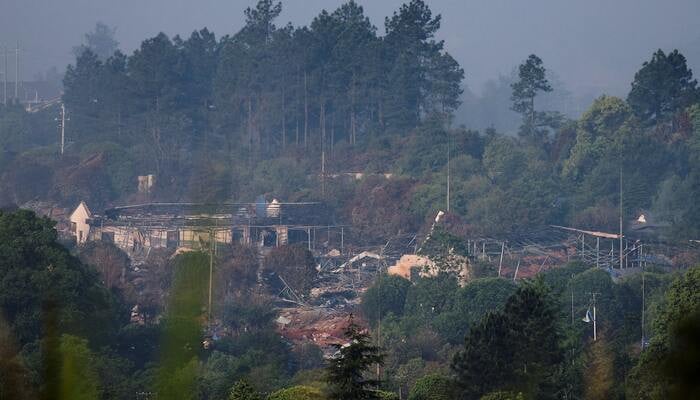
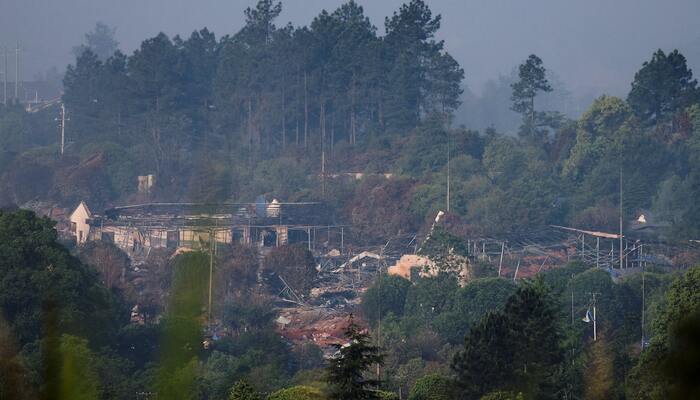
- One person remains missing in factory explosion.
- On-site research and rescue work completed.
- 51 people being treated at hospitals.
The death toll has risen to 37 from 26 and one person remains missing after a fireworks factory explosion in the southern Chinese province of Hunan, state news agency Xinhua said on Friday, in the deadliest blast reported in China since 2019.
The explosion happened at around 4:40pm (0840 GMT) on Monday in Hunan’s Liuyang, known as China’s fireworks capital because it manufactures 60% of the domestic supply of the devices and about 70% of exports.
Xinhua said on-site research and rescue work has been completed, and 51 people are being treated at hospitals.
An investigation into the incident has been launched and police have summoned eight people for questioning on suspicion of causing the deadly explosion, state media said.
The probe is under supervision of China’s top prosecutors while Hunan has ordered the suspension of operations for all fireworks plants in the city for safety inspections.
In June, an explosion at a fireworks factory in Hunan killed nine people.
In 2019, a chemical plant blast in the eastern Chinese province of Jiangsu left 78 people dead.
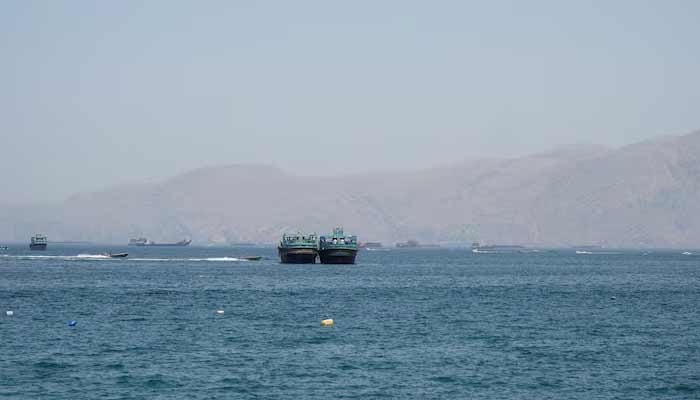
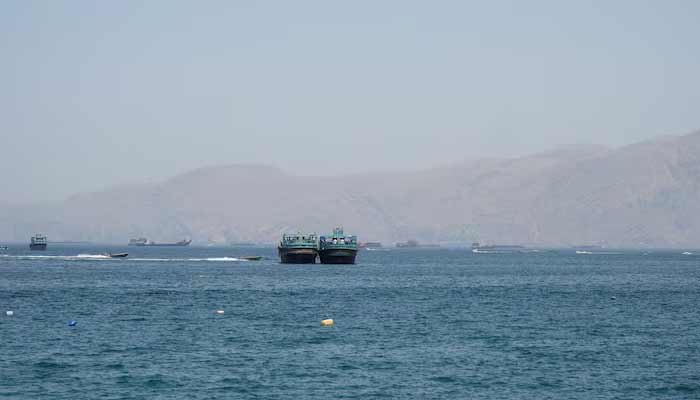
With the standoff over the frozen Iran war threatening a global economic meltdown, Washington and Tehran have scaled back their efforts to agree a comprehensive peace deal and now seek a limited pact putting off the harder issues.
This is what we know about the proposals under discussion and where they leave the big unresolved disputes behind the war:
At what stage are the discussions?
Sources in both camps have said the latest peace efforts are aimed at a temporary memorandum of understanding to halt the war and allow traffic through the Strait of Hormuz while they discuss a fuller deal.
The proposed framework would unfold in three stages: formally ending the war, resolving the crisis in the Strait of Hormuz and launching a 30-day window for negotiations on a broader agreement.
Gaps remain even on this limited plan, sources have said. Any wider deal would have to address intractable disputes such as Iran’s nuclear programme. The last deal over the nuclear programme — struck in 2015 and torn up by Trump in 2018 — took years of negotiations between large teams of technical experts.
What are the main issues?
Ending the war — US President Donald Trump says the war is near an end and can be resolved by Iran accepting terms. Iran does not trust him or Israeli Prime Minister Benjamin Netanyahu. Iranian officials point to their decision to attack in February despite a ceasefire that ended a previous US -Israeli air campaign last year. Both conflicts were launched unannounced during efforts to resolve issues diplomatically. Tehran also cites Israeli attacks during ceasefires in Gaza and Lebanon as reasons to believe a truce will not hold and wants some form of external guarantee.
Hormuz and Gulf blockade — Tehran sees its control of Hormuz and Washington views its blockade of Iranian ports as their chief points of leverage. But both sides are hurting. Iran’s economy faces catastrophe, and its inability to export oil may mean a storage crunch and output cuts. Its blockade of the Strait of Hormuz, meanwhile, is causing a worldwide energy crisis months before US midterm elections. Iran wants formal recognition of its control over Hormuz, though this would be opposed internationally.
Nuclear — the United States believes Iran wants to build a nuclear bomb. Iran has always denied this, saying its atomic programme is for peaceful purposes only. The focus is on its enrichment of uranium, which generates fuel for nuclear power but can also make material for a warhead. Washington wants Iran to give up its right to enrichment for 20 years and hand over its stockpile of highly enriched uranium. Iran wants its right to enrichment to be recognised. An agreement may eventually be possible including a years-long moratorium on enrichment and the export of its highly enriched uranium, but that still looks far off.
Ballistic missile — One main US demand before the war was for Iran to limit the range of its ballistic missiles so that they could not reach Israel. It says its war has succeeded in degrading Iran’s missile stocks, and it is not clear whether it would continue to insist on range limits in a bigger peace deal. Iran has always refused to discuss its ballistic missiles, saying its right to conventional weapons cannot be on the table and that it still has a large arsenal.
Sanction and frozen assets — Iran’s economy has been hurt by sanctions for years, contributing to the nationwide unrest in January. Tehran badly needs them to be lifted and frozen assets to be released. It also wants reparations for war damage, though there seems no chance now of the US agreeing to this, and it is not clear if it would stick to the demand as a condition for a deal.
Iran has previously said Israel’s war against its ally Hezbollah in Lebanon must be included in any peace deal. Israel rejects this, and it is not clear how far Iran would insist on it in future talks.
What do Israel and Gulf states think?
Israel is not directly involved in the peace effort. Netanyahu was eager to continue the war and would also be loath to subject Israel’s campaign against Hezbollah to a deal between Washington and Tehran.
Gulf states are not united on how to end the conflict. They have been targeted by Iran throughout the war and would oppose a deal that left Iran able to keep hitting them or impose controls on the Strait of Hormuz — their main trade route. They may fear that Washington will not prioritise their needs and concerns in talks.
Could European states, China or Russian play a role?
European states have their own sanctions on Iran and would want to be involved in any deal aimed at resolving the nuclear dispute. France, Germany and Britain were closely involved in the 2015 deal. European countries have offered to take a role in securing free passage in Hormuz after the war.
China is a major buyer of Gulf oil transiting the Strait of Hormuz. Iran may hope it would agree to be a guarantor in any deal, but it has given no indication it would want such a role.
Iran may also want Russia to play a role in any eventual agreement over its stockpile of highly enriched uranium, though it is not clear if Washington would accept that.
- Congress gains Muslim voter support in recent elections.
- BJP consolidates Hindu base, say analysts.
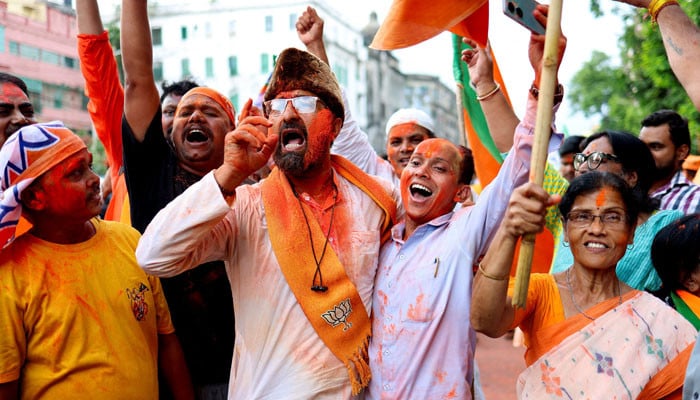
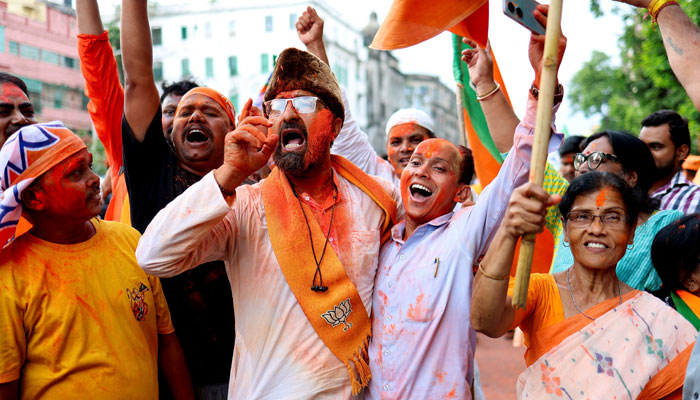
- Adhikari calls BJP’s wins in Assam, West Bengal victory of Hindutva.
PM Modi’s BJP didn’t field Muslim candidates in key states, cites Hindu voter backing for wins
NEW DELHI: India’s main opposition Congress party drew increasingly strong backing from Muslim voters while Hindus overwhelmingly voted for Prime Minister Narendra Modi’s party, results from recent elections in four states have shown.
This voter trend highlights hardening religious polarisation in the officially secular nation, and the deep-seated ideological division between India’s two biggest political parties, analysts and political commentators say.
Modi adopted an unabashedly pro-Hindu platform to take power in 2014, and his Bharatiya Janata Party largely follows a Hindu-first ideology called Hindutva. Such voter fragmentation helps expand its dominance across the country because Hindus are nearly 80% of India’s 1.42 billion people compared with about 14% Muslims.
“The rise of the BJP has led to a consolidation of Muslim voters behind so‑called secular parties, particularly the Congress – a form of reverse polarisation is taking place,” said political analyst Rasheed Kidwai, visiting fellow with the Observer Research Foundation.
Muslim leaders and analysts say voters from that community are increasingly choosing Congress or other strong regional parties over smaller parties that focus on their interests but have struggled to be part of any governments in recent years.
Congress fared poorly in the elections held last month across four states and one federal territory, with results declared this week. Its alliance secured control of only one state, while a BJP-led coalition won three and a new regional outfit took the remaining contest.
The Muslim support for Congress was most evident in the BJP-ruled northeastern state of Assam, where 18 of its 19 newly elected lawmakers are from the community, up from roughly 16 in the previous assembly. The party had fielded 20 Muslim candidates and about 80 non-Muslims for the 126-member legislature, in which the BJP won 82 seats.
The Assam-based All India United Democratic Front (AIUDF), which mainly draws Muslim support, saw its tally collapse to just two seats from 16 five years earlier.
In neighbouring West Bengal, which the BJP won for the first time with 207 lawmakers in a 294-member assembly, the two Congress legislators elected were Muslims.
The BJP did not field any Muslim candidates in either Assam or West Bengal. Party leaders in both states, including the prospective chief minister of Bengal, Suvendu Adhikari, credited the victories to support from Hindu voters.
“It was a victory for Hindutva,” Adhikari said.
Reverse polarisation
“In the future – depending on local political dynamics – if Muslim voters increasingly consolidate behind Congress, dominant Hindu voters may also regroup more strongly around the BJP,” said political columnist Radhika Ramaseshan.
Congress has capitalised on the fear and insecurity felt by many Muslim voters under BJP rule where they feel marginalised and their citizenship questioned, said Badruddin Ajmal, chief of the AIUDF in Assam.
“The argument being made is that only a party with the strength to fight the BJP at the centre can ultimately address these concerns. This is not true but voters believe it because they are scared.”
After the BJP accused Congress of becoming a “new Muslim League”, Congress said Muslims account for about 12% of its 664 state legislators nationwide, compared with roughly 78% who are Hindus, in line with India’s religious makeup.
“I am embarrassed to talk about these things in the 21st century,” said Congress spokesperson Pawan Khera, stressing that his party, which has ruled India for 54 years since independence in 1947, had broad support.
“We have always stood by the weak and the oppressed and will continue to do so, irrespective of their religion and caste.”
The BJP too has often reached out to Muslim voters, although it did not field any Muslim candidate in the 2024 general election.
Modi however has denied playing the religious card to win votes.
“The day I start talking about Hindu-Muslim (in politics) will be the day I lose my ability to lead a public life,” he said while filing his candidature to the election two years ago. “I will not do Hindu-Muslim. That is my resolve.”
But Ramaseshan, the columnist, said communal rhetoric, especially closer to elections, has become much more marked under Modi than in past BJP regimes.
“The BJP and the larger Sangh (the party’s ideological parent) are shaping a new idea of India as a ‘Hindu rashtra (nation)’ — and that narrative has increasingly embedded itself in public consciousness,” she said. “In the years ahead, we may see a complete overturning of the very idea of India.”


Australian wool market shows resilience amid currency headwinds

Prince Harry pays homage to key figure who ‘inspires’ Prince William

North India cotton yarn prices rise in Ludhiana amid export demand

-
 Business1 week ago
PSX plunges over 4,800 points | The Express Tribune
-
 Politics4 days ago
Iran weighs US reply delivered via Pakistan as Trump signals opposition to deal terms
-

 Tech1 week ago
Almost half of UK businesses hit by cyber attacks | Computer Weekly
-
 Business7 days ago
Apollo Sports Capital and Tom Dundon make landmark $225 million investment in pickleball
-

 Fashion7 days ago
Canada’s Lululemon appoints Esi Eggleston Bracey to board of directors
-

 Tech7 days ago
This Indigenous Language Survived Russian Occupation. Can It Survive YouTube?
-

 Entertainment1 week ago
David Allan Coe, country singer who wrote “Take This Job and Shove It,” dies at age 86
-
 Business1 week ago
Government hikes jet fuel prices by 5% for international airlines – The Times of India