

Politics
US approves multibillion-dollar arms deals to Saudi Arabia, Israel

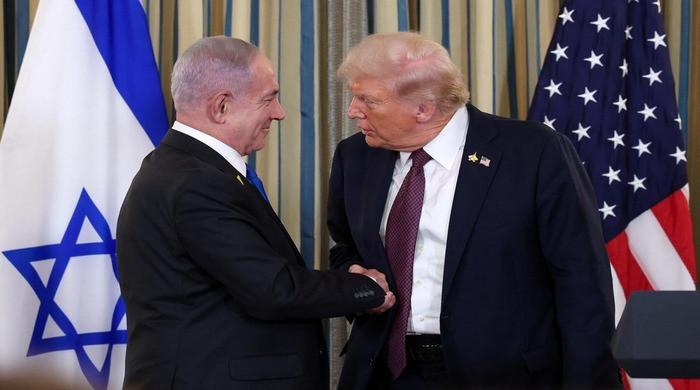
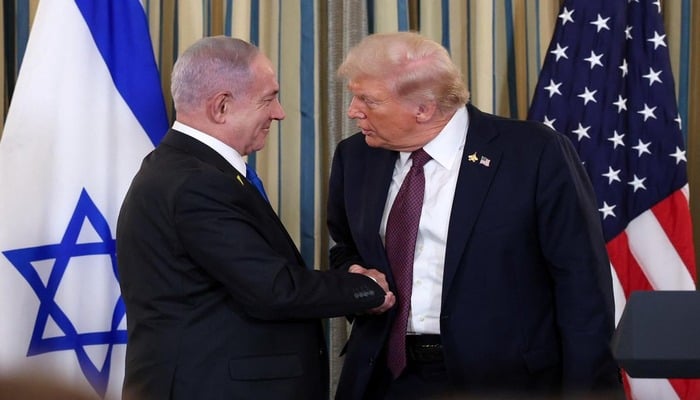
- State Dept okays $3.8bn sale of 30 attack helicopters to Israel.
- Also approves $9bn sale to Saudi Arabia for 730 Patriot missiles.
- Committed to security of Israel and it is vital to US interests.
WASHINGTON: The United States on Friday approved multibillion-dollar weapons sales to both Saudi Arabia and Israel, at a point of high tensions with Iran.
The State Department said it green-lighted a $3.8-billion sale of 30 Apache attack helicopters to Israel, which has agreed to a fragile ceasefire in Gaza.
“The United States is committed to the security of Israel, and it is vital to US national interests to assist Israel to develop and maintain a strong and ready self-defence capability,” the State Department said in a statement.
“This proposed sale is consistent with those objectives,” it said.
Also in the package was a $1.8 billion sale of joint light tactical vehicles.
The United States sends billions of dollars worth of military supplies per year to Israel, largely in aid rather than sales.
Israel and Hamas reached a US-backed ceasefire in October that largely paused two years of war.
Tensions are high elsewhere in the region as the United States deploys a major military contingent in waters near Iran.
The State Department also approved a $9-billion sale to Saudi Arabia for 730 Patriot missiles, which are used to defend against incoming attacks.
Israel last year carried out a major bombing campaign against nuclear and other military sites in Iran.
Iran has faced growing pressure after major protests against the clerical state, which has responded by killing thousands of protesters.
Saudi Arabia has voiced caution about an attack on Iran as Gulf nations fear instability that could jeopardise their reputation as business havens.
The Trump administration has said that the Gaza ceasefire is now in its second phase, with a focus on disarming Hamas.
Hamas attacked Israel on October 7, 2023, resulting in the deaths of 1,221 people on the Israeli side, mostly civilians, according to an AFP tally that includes hostages who died or were killed during their captivity in the Gaza Strip.
Since then, at least 71,667 Palestinians have been killed in the small coastal territory by Israel´s retaliatory military campaign, according to Gaza´s health ministry.
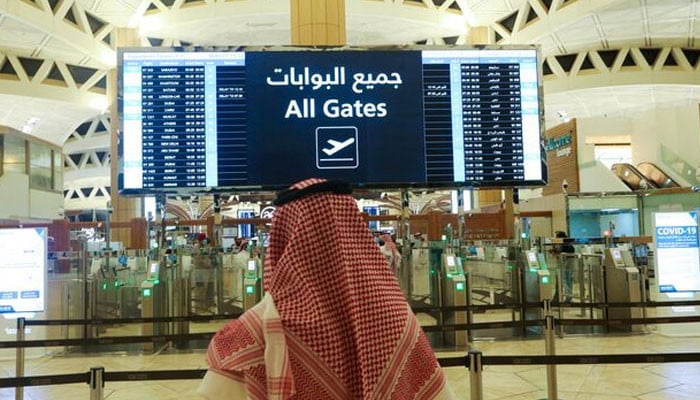
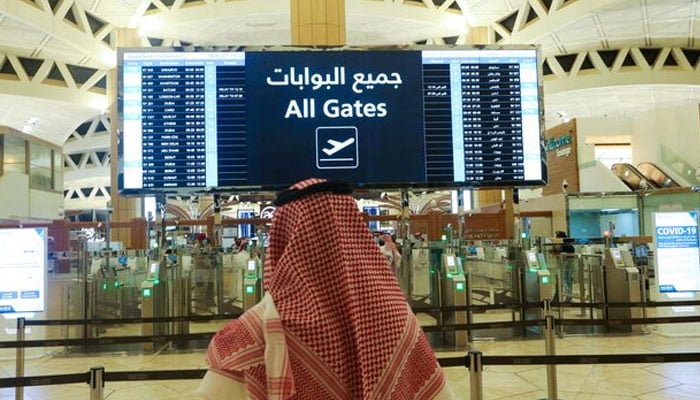
In a bid to facilitate stranded visitors who could not leave due to the current situation in the region, Saudi Arabia on Wednesday extended the validity of all types of visas until April 18, 2026.
In a statement, the Ministry of Interior said that those whose visas — including visit, Umrah, transit and final exit — expired as of February 25, 2026, and who were unable to depart the kingdom due to the current situation, can benefit from this offer.
The ministry asked holders of expired visas to go directly to departure ports, where their exit procedures will be completed smoothly without the need for prior measures.
“This service does not require the payment of any fees for beneficiaries who wish to depart directly,” it added.
A large number of foreigners were unable to depart the Kingdom due to the ongoing war between the United States, Israel and Iran, which disrupted air travel across the region.
Several countries closed their airspace and airlines suspended operations after Tehran launched retaliatory attacks across Gulf nations.
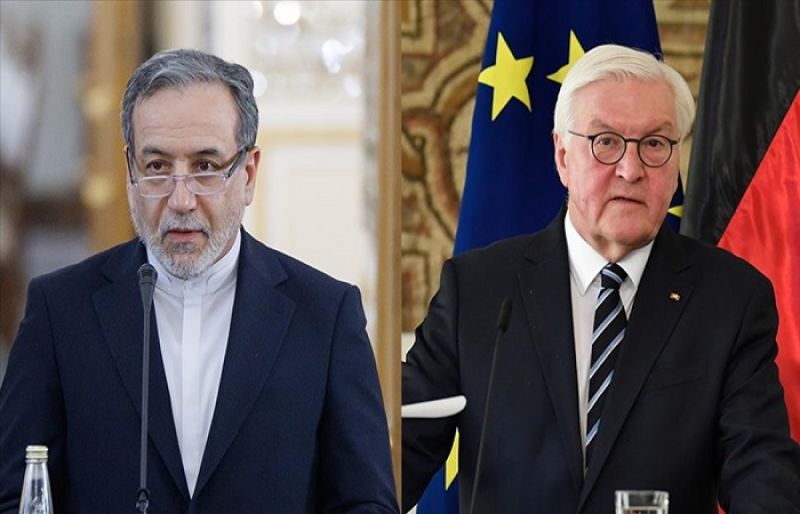
Iranian Foreign Minister Abbas Araghchi has lauded German President Frank-Walter Steinmeier for his outspoken condemnation of human rights violations against the Iranian people as the United States and Israel continue their aggression against the country.
Araghchi expressed his appreciation through a post on his X account on Wednesday, highlighting Steinmeier’s comments that described the US-Israeli war against Iran as not only aggressive but also a breach of international law.
The commendation comes at a time when many global leaders have opted for silence or inaction regarding the issue, marking Steinmeier’s stance as relatively unprecedented among Western figures.
Earlier, President Steinmeier, speaking at a ceremony in Berlin, described the US and Israeli war against Iran as “wrong” and “a violation of international law.”
Steinmeier, who previously served as Germany’s foreign minister, took a stance against the war, stating: “In my view, this war is a violation of international law.”
In his post, the Iranian foreign minister said, “International law is dead in practice—driven by Western double standards on Gaza vs. Ukraine and silence on Israel–US aggression on Iran.
“Still, credit to President Steinmeier for condemning the violations against Iranians. Those who value the rule of law should also speak up.”
Steinmeier also expressed skepticism about the claims of an “imminent threat” against American targets, saying the justification for starting the war of aggression against Iran was not convincing.
On February 28, the United States and the Israeli regime launched an unprovoked war on Iran, assassinating former Leader of the Islamic Revolution Ayatollah Seyyed Ali Khamenei as well as several top military commanders.
Iran immediately began to retaliate against the aggression by launching barrages of missiles and drone attacks on the Israeli-occupied territories as well as on the US bases in regional countries.
Politics
Wave 80: IRGC launches major strikes against northern, central occupied territories, US bases
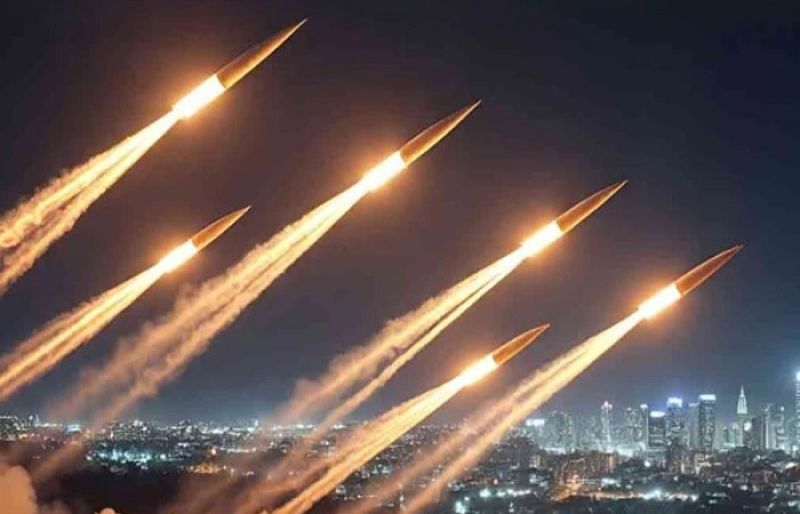
The Islamic Revolution Guards Corps (IRGC) has announced carrying out the 80th wave of its decisive retaliatory Operation True Promise 4, this time striking strategic points and military centers on the occupied territories’ northern side, besides pummeling American outposts across the region.
In a statement on Wednesday, the IRGC said the latest phase was staged by the Corps’ Aerospace Force in support of the “proud offensives,” carried out by Lebanon’s Hezbollah resistance movement against Israeli targets, and the residents of southern Lebanon, who have been bearing the brunt of Israeli aggression.
“Strategic points and military centers located in the northern occupied territories were smashed under the heavy and sustained missile attacks of the IRGC’s Aerospace Force,” the statement read.
The IRGC said the military command of the Zionist army in the northern city of Safed, responsible for coordinating attacks and defenses along the territories’ northern borders, was among the primary targets.
The statement described the strikes as the opening of a series of pre-announced operations against the “child-killing Zionist regime.”
The Corps said northern assembly points of Zionist forces and the Gaza belt would be subjected to heavy missile and drone attacks, emphasizing that the IRGC would not relent the slightest while it carries out this bout of counterstrikes.
The IRGC further stated that targets in central occupied territories, including Tel Aviv, Kiryat Shmona, and Bnei Brak, alongside US military bases of Ali al-Salem and Arifjan in Kuwait, al-Azraq in Jordan, and Sheikh Isa in Bahrain, were struck with liquid- and solid-fuel precision missiles and attack drones.
“This wave continues…,” the statement concluded in a sign of unquenched resolve.
Operation True Promise 4 began on February 28, momentarily after the United States and the Israeli regime started their latest round of unprovoked aggression targeting the Islamic Republic.
The Corps has vowed to sustain the reprisal until “complete victory.”


NBA Power Rankings: The Thunder reign while East teams rise

ICE cotton recovers on short covering, gains capped by macro worries

That Ex-CIA Agent in All Your Feeds Is After a Pardon From Donald Trump

-

 Fashion1 week ago
Sales at US apparel, clothing accessories stores up 4% YoY in Jan 2026
-
 Tech1 week ago
Justice Department Says Anthropic Can’t Be Trusted With Warfighting Systems
-
 Business1 week ago
Stocks and pound rise as US rate call approaches
-
 Sports1 week ago
PCB files complaint over allowing Bangladesh to take review on penultimate ball – SUCH TV
-

 Entertainment7 days ago
Val Kilmer revived 1 year after death through AI
-

 Sports1 week ago
March Madness 2026 – How to watch in SA, start time, schedule, TV channel for NCAA championship basketball tournament
-
 Business1 week ago
Brits cashing in jewellery as gold price hits record high
-
 Politics1 week ago
Iran strikes Tel Aviv with cluster-warhead missiles in retaliation of Larijani’s martyrdom