

Politics
US approves potential $4.5bn missile defence system sale to UAE

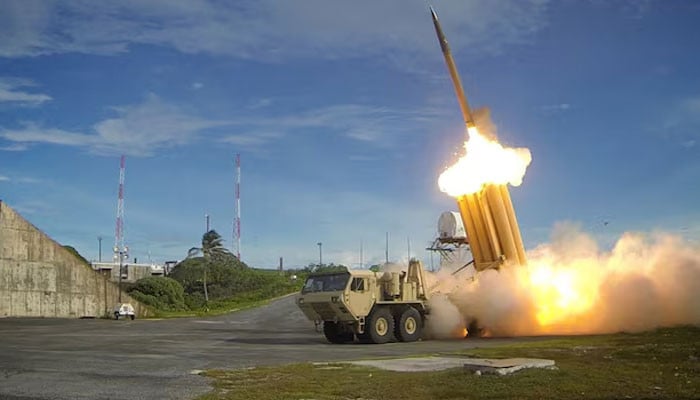
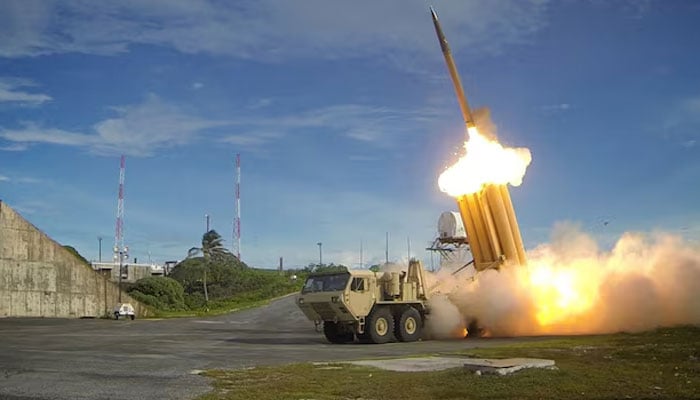
DUBAI: The United States has approved a possible $4.5 billion sale of an advanced missile defence system to the United Arab Emirates, the State Department said on Thursday.
In a statement, the Bureau of Political-Military Affairs said the deal includes a powerful long-range radar and the THAAD system, which is designed to shoot down incoming missiles before they hit their targets.
Officials described the radar as a highly advanced system that can detect threats from far distances, including ballistic missiles and drones.
“The proposed sale will improve the UAE’s ability to meet current and future threats,” the statement said, adding that it would help protect the country from attacks coming from all directions.
The State Department said the sale was approved on an emergency basis, allowing the administration to bypass the usual congressional review process due to national security concerns.
Washington said the UAE is an “important regional partner” and that the deal would support stability in the Middle East.
The agreement includes five years of training, technical support and maintenance services to ensure the system operates effectively.
The main contractor for the deal is Lockheed Martin Corporation, a leading American defence company known for producing advanced missile and radar systems.
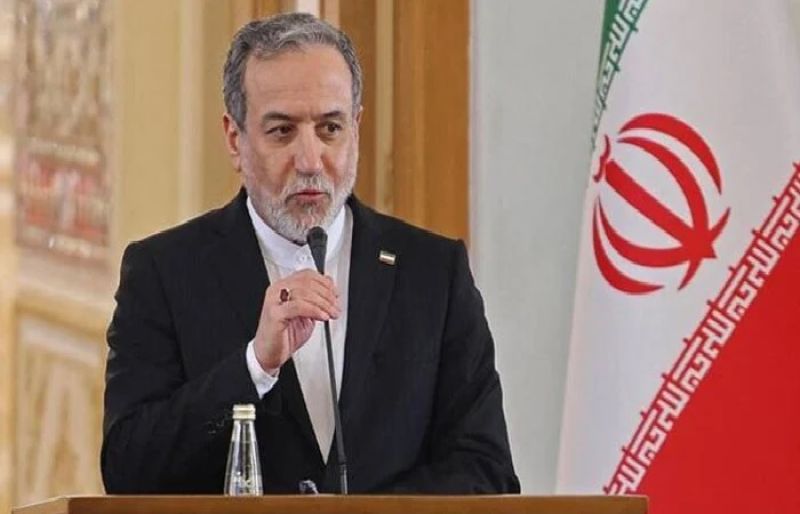

Foreign Minister Abbas Araghchi emphasizes that Iran will under no circumstances compromise the security of its people.
The top diplomat made the remarks in a telephone call with his Swedish counterpart Maria Malmer Stenergard on Wednesday.
During the conversation, Araghchi condemned Sweden’s “regrettable support” for an individual convicted of spying for the Israeli regime against the Islamic Republic.
He was commenting on Stockholm’s earlier supportive remarks concerning Koorosh Keivani, an agent of the Israeli spy agency Mossad, who had sent photos and videos of important security locations from inside Iran to the regime, and was executed earlier this month after completion of due legal procedures.
Keivani was arrested by the Islamic Revolution Guards Corps (IRGC)’s Intelligence Organization last June, when the regime and the United States waged a 12-day unprovoked war against Iran.
He had been recruited in Sweden in 2023 by a Mossad agent going by the name of “Ben,” who could speak Farsi.
News about his execution emerged amid the Zionist regime’s and the United States’ latest bout of unlawful aggression towards the Islamic Republic.
The aggression has prompted at least 63 waves of decisive retaliatory strikes against sensitive and strategic Israeli and American targets throughout the region.
It has also led to considerable increase in alertness among the Islamic Republic’s intelligence apparatuses regarding espionage and sabotage efforts, besides prompting unprecedented popular contribution to the apparatuses’ operations aimed at foiling subversive attempts.


The Islamic Revolution Guards Corps (IRGC) says it has successfully hit a US Air Force F-35 stealth fighter jet in central Iran’s airspace.
According to a statement released by the IRGC on its official news website on Thursday, the jet was struck at 2:50 a.m. local time by the IRGC’s advanced, modern air defense systems.
“The fate of the fighter jet is unclear and under investigation, and the likelihood of its crash is very high,” it said.
The IRGC noted that the interception follows the successful downing of more than 125 US-Israeli drones by Iran’s defense systems, signaling significant and purposeful upgrades in the country’s integrated air defense network.
Further details on the incident are still under investigation.
CNN cited sources familiar with the incident as confirming that a US F-35 fighter jet made an emergency landing at a US airbase in West Asia after being struck by what is believed to have been Iranian fire.
Capt. Tim Hawkins, a spokesperson for US Central Command, confirmed that the fifth-generation stealth jet was conducting a combat mission over Iran when it was forced to land. The incident is currently under investigation, he said.
This marks the first reported instance of Iranian forces hitting a US aircraft since the Israeli-American war of terrorism on Iran began in late February, with the unprovoked assassination of Leader of the Islamic Revolution Ayatollah Seyyed Ali Khamenei.
Both the United States and Israel have been deploying F-35s in the war, with each jet valued at over $100 million.
The alleged emergency landing comes amid continued claims from senior US officials regarding the success of its terrorist operations against Iran.
Extremist US war secretary Pete Hegseth boasted on Thursday morning that the US is “winning decisively” and emphasized that Iran’s air defenses have been “flattened.”
Hegseth has made numerous controversial statements, in which he sees America’s military aggressions, especially against Islamic nations, as part of a larger crusade seeking to bring about Armageddon.
His extremism is reflected in his tattoos, including the Jerusalem Cross, a religious symbol associated with the violent Crusades of Europeans to reclaim al-Quds from Muslims and the phrase “Deus Vult” (“God Wills It”) inked on his body, a rallying cry of the Crusaders.
These tattoos, along with his self-published book American Crusade, which frames the fight against Islam as a modern-day “crusade,” have reportedly sparked numerous complaints from his service members who see an apparent connection between his extremist worldview and the ongoing terrorist war on Iran.
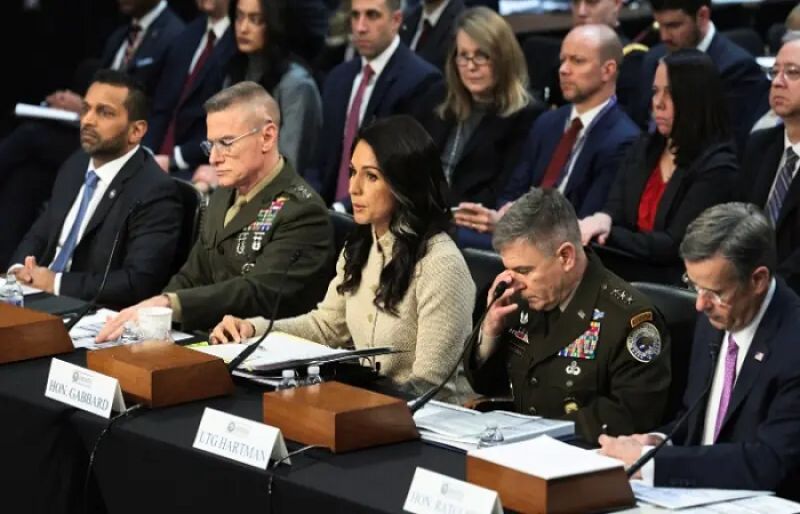

US Director of National Intelligence Tulsi Gabbard has identified Pakistan among countries posing a growing strategic concern, warning that Islamabad’s evolving long-range missile capabilities could potentially bring the American homeland within range.
Presenting the 2026 Annual Threat Assessment before the Senate Intelligence Committee, Gabbard also named Iran, China, Russia, and North Korea as nations actively developing new missile delivery systems, including both nuclear and conventional warheads, which put the US within range.
“The US secure nuclear deterrent continues to ensure safety in the homeland against strategic threats. However, Russia, China, North Korea, Iran and Pakistan have been researching and developing an array of novel, advanced, or traditional missile delivery systems with nuclear and conventional payloads that put our homeland within range,” Gabbard said.
She noted that Pakistan’s ballistic missile development “potentially could include intercontinental ballistic missiles (ICBMs)” capable of reaching the US homeland.
Gabbard also warned that the number of missile threats facing the US was expected to rise sharply, with the intelligence community projecting that global missile inventories could exceed 16,000 by 2035, up from more than 3,000 currently.
She added that the countries identified in the report would likely seek to understand US missile defence plans in order to shape their own development programmes and assess Washington’s deterrence posture.
Reacting to the remarks, former Pakistani ambassador to the US Jalil Abbas Jilani rejected the claim that Pakistan posed a direct missile threat to the American homeland.
In a statement, Jilani said Pakistan’s nuclear doctrine was India-centric and aimed at deterrence, not global power projection, adding that Islamabad’s strategic posture was focused on regional security dynamics.
Meanwhile, Turkish analyst Shaqeq-ud-Din questioned the assessment, arguing that Pakistan did not possess intercontinental ballistic missiles, while raising concerns about India’s growing ICBM capabilities, which he said were expanding with external support.
He termed the classification of threats selective, questioning whether similar scrutiny was being applied uniformly to all countries.
South Asia threat assessment
The threat assessment report noted that South Asia remained a source of “enduring security challenges”, particularly the relations between Pakistan and India, for the US.
“Pakistan-India relations remain a risk for nuclear conflict given past conflicts where these two nuclear states squared off, creating the danger of escalation,” it stated. It also mentioned the Pahalgam attack that triggered a war between the two neighbours.
“President Trump’s intervention deescalated the most recent nuclear tensions, and we assess that neither country seeks to return to open conflict, but that conditions exist for terrorist actors to continue to create catalysts for crises,” it stated.
The report also highlighted tensions along the Pakistan-Afghanistan border, stating: “Relations between Pakistan and the Taliban have been tense, with intermittent cross-border clashes, as Islamabad has become increasingly frustrated with anti-Pakistan terrorist groups’ presence in Afghanistan while Islamabad faces growing terrorist violence.”
“Pakistan’s army chief warned this month that lasting peace requires the Taliban to sever ties with militants targeting Pakistan.
The Taliban’s public posture has been to call for dialogue, but it has denied harbouring anti-Pakistani militants,” it said, while referring to the ongoing war between the two states.


Men’s March Madness live tracker: Updates from Thursday’s first round

Demi Moore pays tribute to Bruce Willis on 71st birthday

Enzo Fernández ‘completely committed’ to Chelsea – Liam Rosenior

Stock market crash today (March 12, 2026): Nifty50 opens below 23,600; BSE Sensex down over 900 points on continuing US-Iran war – The Times of India

UK’s Topshop unveils Tolu Coker capsule collection
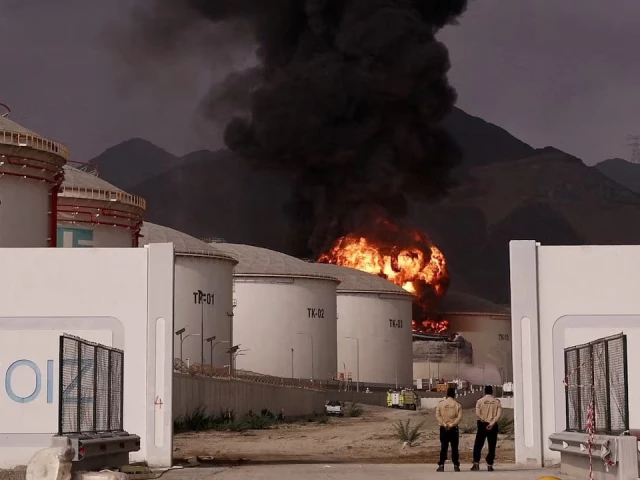
US ignites Iran war, but Gulf Arab states pay the price | The Express Tribune

-
Business1 week ago
Stock market crash today (March 12, 2026): Nifty50 opens below 23,600; BSE Sensex down over 900 points on continuing US-Iran war – The Times of India
-
 Fashion1 week ago
UK’s Topshop unveils Tolu Coker capsule collection
-
Business1 week ago
US ignites Iran war, but Gulf Arab states pay the price | The Express Tribune
-

 Fashion1 week ago
India’s textile recycling market may reach $3.5 bn by 2030: Report
-

 Tech1 week ago
Meta Developed 4 New Chips to Power Its AI and Recommendation Systems
-
 Business1 week ago
8th Pay Commission: How Much Will Central Govt Employees’ Salaries Rise? What We Know So Far
-
 Sports1 week ago
Bangladesh crush Pakistan in ODI series opener | The Express Tribune
-

 Entertainment1 week ago
Ed Sheeran makes surprising Benny Blanco confession after hygiene uproar