

Fashion
US’ Columbia reintroduces iconic 1993 Bugaboot 1 in limited edition

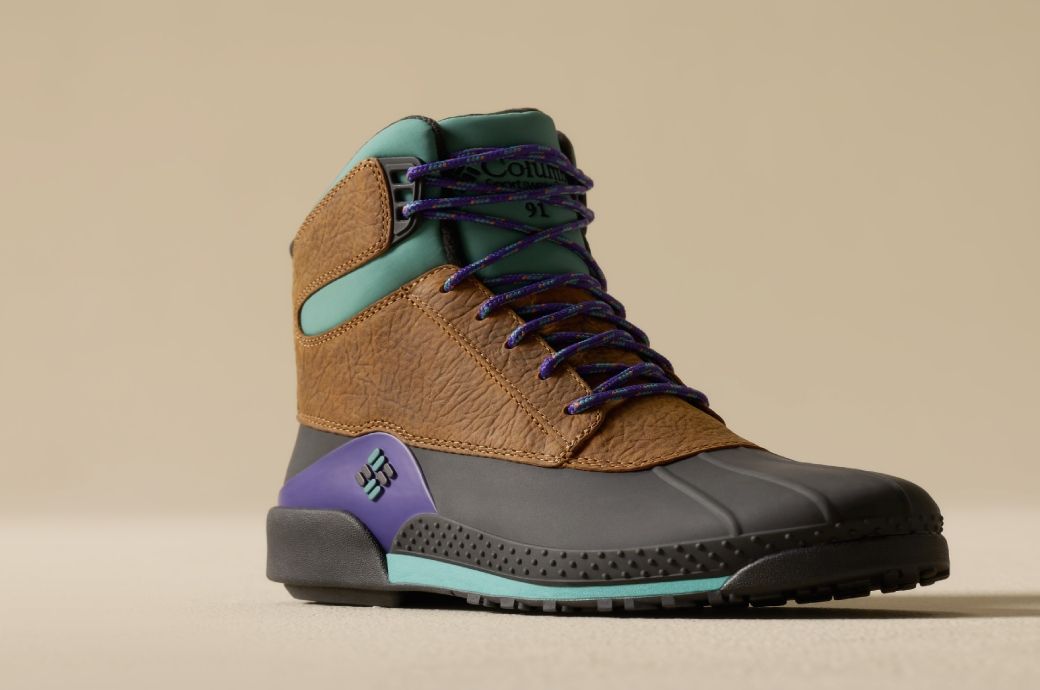
The original Bugaboot was the result of a landmark collaboration between Columbia founder Gert Boyle, CEO Tim Boyle, and footwear pioneer Peter Moore, whose previous roles at Nike and adidas helped shape modern sneaker culture.
Columbia Sportswear is relaunching its first-ever footwear, the Bugaboot 1, in a limited edition of 1,993 numbered pairs.
Honouring the original 1993 design by Peter Moore, the 2025 version integrates Omni-Grip traction and Techlite cushioning.
It will release on October 14 for Greater Rewards members and publicly on October 15, priced at $250, with exclusive packaging and memorabilia.
“More than 30 years ago, my mother and I knew it was time to expand Columbia’s footprint – literally – and enter the footwear space,” said Tim Boyle, Chairman, President & CEO of Columbia Sportswear. “Delivering a functional outdoor boot that reflected Columbia’s rugged, innovative spirit was critical. Peter was our first and only call. He and Gert shared an obsession with problem-solving through design, making him a natural partner to help launch this new chapter. Today, we honor Peter’s immeasurable legacy and celebrate Columbia’s own history in performance footwear alongside Peter’s sons, Hagen and Devin, who were instrumental in bringing this new project to life.”
Peter Moore, best known for designing the original Air Jordan shoe and logos during his time as Creative Director at Nike, later became Global Creative Director at adidas. A legendary designer and prolific multi-disciplinary artist, Moore’s work spanned product design, identity systems, and activism through his art. His creative influence and consulting shaped countless campaigns and logos, including the development of the original Bugaboot, a product he remained deeply involved with leading up to its launch.
“This project means a lot to our family. My dad poured his heart into everything he worked on, and the Bugaboot was no exception,” said Hagen Moore, son of Peter Moore and Co-Founder of Boom Pow Bang Creative Agency. “To see Columbia bring it back with so much care and respect for our father’s original design while pushing it forward with today’s tech is something we know he would’ve been incredibly proud of.”
In 1993, Columbia was already known for groundbreaking outerwear like the classic Bugaboo 3-in-1jacket, named after the famed Bugaboo Mountain Range in B.C. Canada. The Bugaboot was engineered as a natural extension of the jacket, pairing the durability of a duck boot with the comfort and performance of an athletic shoe. This 2025 edition honors that hybrid spirit while incorporating Columbia’s modern engineering innovations such as Omni-Grip traction and Techlite lightweight cushioning.
Only 1,993 pairs will be released globally and each is individually numbered to provide people with a one-of-one product. The shoes will retail for $250 USD in whole sizes only and come in custom packaging featuring matching box, a keychain, and unique tissue paper.
Note: The headline, insights, and image of this press release may have been refined by the Fibre2Fashion staff; the rest of the content remains unchanged.
Fibre2Fashion News Desk (RM)













“The improved order situation in industry has brightened sentiment somewhat. However, as a result of the Iran war, energy costs have risen sharply, and uncertainty among companies has also increased. That runs counter to a stronger economic recovery,” said Timo Wollmershauser, head of forecasts at ifo.
Firms in Germany have raised investment plans, with ifo expectations rising to 0.2 points in March from -3.1 in December 2025.
Industry led gains, especially non-energy sectors, while energy-intensive segments and chemicals remained weak.
Services showed modest optimism, but trade stayed pessimistic.
Rising energy costs and geopolitical uncertainty temper recovery.
The most notable rise in the willingness to invest was in industry. Expectations rose to +0.1 points in March, up from -6.9 points in December. The outlook improved particularly strongly in non-energy-intensive industries, where significantly more companies were planning to expand their investments this year, ifo said in a press release.
In energy-intensive industries, however, the willingness to invest remains subdued. At -9 points in March, the balance remained virtually unchanged from December (-8.9 points). In the chemical industry, investment expectations even declined further, from -15.8 to -16.2 points.
Overall, the corresponding balance in manufacturing rose from -4.1 to +1.2 points. “Companies across all sectors also want to invest more in software. The growing use of artificial intelligence is likely to play a role in that,” said ifo economic expert Lara Zarges.
In trade, companies remain the most pessimistic. The balance of investment expectations stood at -9.6 points in March, virtually unchanged from the level in December. Service providers, on the other hand, confirmed their slightly positive outlook from December: Their investment expectations improved from +1.1 to +2.8 points.
The points for the ifo investment expectations indicate the percentage of companies that intend to increase their investments on balance.
Fibre2Fashion News Desk (SG)
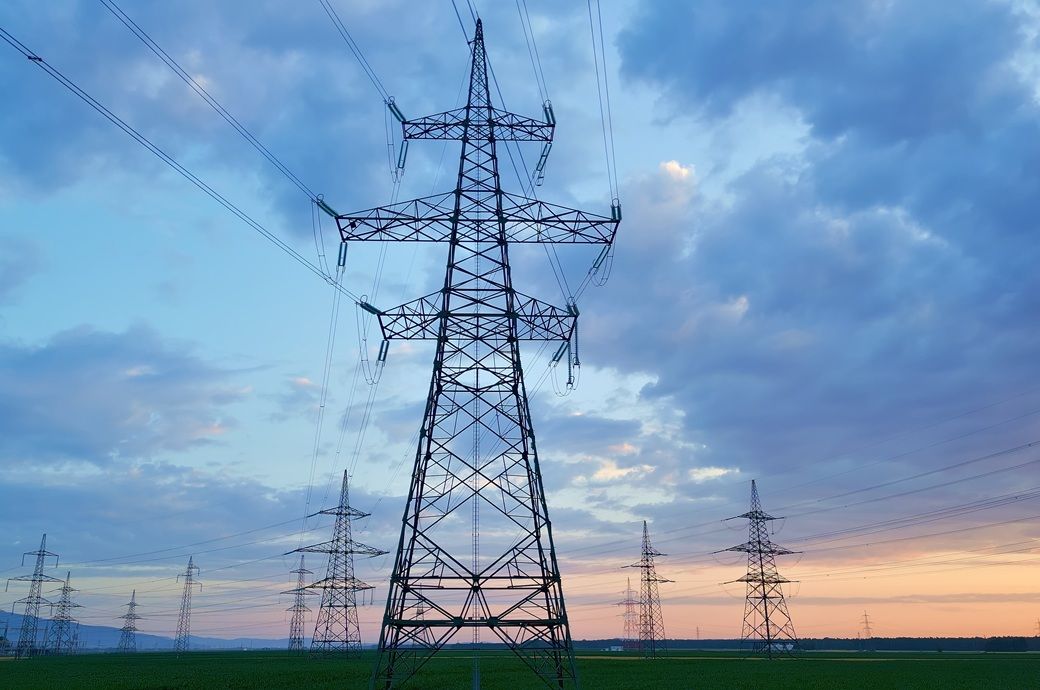
The report highlighted that although overall energy demand growth slowed compared with 2024 and remained slightly below the previous decade’s average, electricity demand rose by around 3 per cent, driven by increased usage across buildings, industry, electric vehicles, and data centres.
Global energy demand growth slowed to 1.3 per cent in 2025, while electricity demand rose around 3 per cent, driven by EVs, industry, and data centres, according to IEA.
Solar PV led supply growth for the first time.
Oil demand grew modestly, and coal growth slowed.
CO2 emissions rose slightly.
Renewables and nuclear expansion highlighted an accelerating shift towards cleaner energy systems.
Solar photovoltaic (PV) emerged as the largest contributor to global energy supply growth for the first time, accounting for over 25 per cent of the increase. Natural gas followed with a 17 per cent share, while renewables and nuclear together met nearly 60 per cent of additional demand.
Global oil demand rose modestly by 0.7 per cent, reflecting the continued expansion of electric vehicles, with sales surpassing 20 million units in 2025. Coal demand growth slowed overall, with declines in China offset by increases in the United States due to high natural gas prices.
“Global energy demand continued to increase in 2025 against a complex economic and geopolitical backdrop, with one trend unmistakeable: the expanding electrification of economies,” said Fatih Birol, IEA executive director.
He added that electricity consumption was growing much faster than overall energy demand, with one energy source outpacing all others. He noted that solar PV accounted for over a quarter of global energy demand growth for the first time, followed by natural gas, and added that countries prioritising resilience and diversification would be better placed to manage volatility and ensure secure, affordable energy.
Regional trends varied significantly. Energy demand growth in the United States rose sharply, supported by industrial activity, data centre expansion, and colder weather, while China’s growth slowed to 1.7 per cent due to rising renewable adoption and improved efficiency.
Global energy-related CO2 emissions increased marginally by around 0.4 per cent. Emissions declined in China and remained flat in India, aided by renewable deployment and favourable weather conditions, while advanced economies recorded higher emissions growth due to colder winter conditions.
In the power sector, solar PV generation surged by a record 600 terawatt-hours, marking the largest annual increase for any electricity generation technology. Battery storage emerged as the fastest-growing segment, with around 110 gigawatts of new capacity added, while nuclear energy also saw renewed momentum with over 12 gigawatts of new reactors under construction.
The IEA noted that cumulative deployment of low-emissions technologies since 2019 now offsets fossil fuel consumption equivalent to the entire energy demand of Latin America, underscoring the accelerating transition towards cleaner energy systems.
Fibre2Fashion News Desk (SG)

In a blog post, Alfred Kammer, director of the IMF’s European department, said his organisation sees growth slowing down in the continent. Initial data point already to weaker private investment and consumption.
The energy shock that has hit Europe due to the Middle East conflict, though smaller than in 2022, is weighing on growth and pushing inflation higher, an IMF expert recently cautioned.
IMF sees growth slowing down in the continent.
Initial data point already to weaker private investment and consumption.
Central banks must remain laser focused on keeping inflation expectations anchored, he wrote.
The outlook for euro area growth is projected at just 1.1 per cent in 2026, for the European Union it is 1.3 per cent; and this forecast comes with a high degree of uncertainty.
In a more severe scenario as described in the World Economic Outlook—a persistent supply shock compounded by tightening financial conditions—the EU could come close to recession with inflation approaching 5 per cent. No European country is spared, Kammer observed.
Policymakers face intense pressure—to act fast, visibly and for all, which results in policies that have more long-term downsides than short-term benefits, he wrote.
Targeted support is much more effective. Europe’s response to this shock should be shaped by two imperatives, he suggested. First, robust macroeconomic policy that is fit for a world with unpredictable and frequent shocks, and second, resilience built without wasting fiscal resources or getting in the way of markets.
The first imperative involves getting monetary and fiscal policy right. Central banks must remain laser focused on keeping inflation expectations anchored, the IMF expert wrote.
In the euro area, where inflation is close to target and medium-term expectations are broadly anchored, the European Central Bank has some scope to wait and observe the shock evolve before acting. IMF now expects a cumulative 50 basis point increase in the policy rate by the end of this year, maintaining a broadly neutral monetary stance in light of higher near-term inflation expectations, Kammer noted.
A rise in core inflation or increasing medium-term expectations would warrant a more restrictive stance, he wrote.
“Europe must reform under pressure. The current shock is not an argument for delay. It is all the more reason to push forward the reform agenda,” Kammer added.
Fibre2Fashion News Desk (DS)


Reese Witherspoon breaks silence after AI support controversy

Duke lands John Blackwell, top guard in transfer portal

Tackling the housing shortage with robotic microfactories

-

 Fashion6 days ago
France’s LVMH Q1 revenue falls 6%, shows resilience amid Iran war
-

 Sports1 week ago
The case for Man United’s Fernandes as Premier League’s best
-

 Entertainment1 week ago
Palace left in shock as Prince William cancels grand ceremony
-
 Business1 week ago
UK could adopt EU single market rules under new legislation
-

 Entertainment6 days ago
Is Claude down? Here’s why users are seeing errors
-

 Fashion1 week ago
Energy emerges as biggest cost driver in textile margins
-
 Business1 week ago
Delta Air Lines unveils first new Delta One suite in premium cabin arms race
-

 Fashion1 week ago
Asia claims largest share of markets on Kearney FDI Confidence Index