

Politics
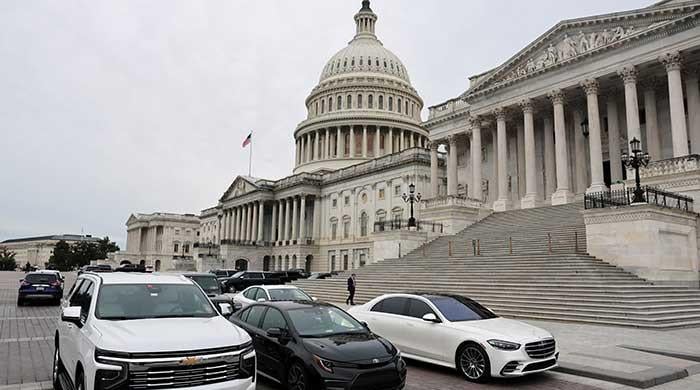
US govt shutdown begins as partisan division rules Washington

- Shutdown halts critical economic data, affects federal workers.
- Senate rejects spending measure, deepens partisan divide.
- Analysts warn shutdown could last longer than past closures.
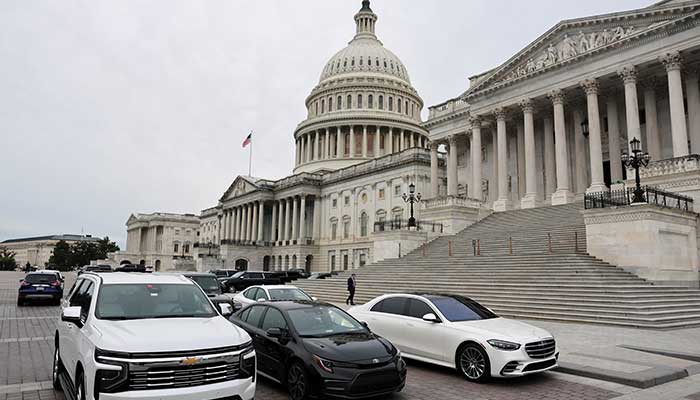
WASHINGTON: The US government shut down much of its operations on Wednesday as deep partisan divisions prevented Congress and the White House from reaching a funding deal, setting off what could be a long, gruelling standoff that could lead to the loss of thousands of federal jobs.
There was no clear path out of the impasse, while agencies warned that the 15th government shutdown since 1981 would halt the release of a closely watched September employment report, slow air travel, suspend scientific research, withhold pay from US troops and lead to the furlough of 750,000 federal workers at a daily cost of $400 million.
Trump, whose campaign to radically reshape the federal government is already on track to push out some 300,000 workers by December, warned congressional Democrats that a shutdown could clear the path for “irreversible” actions, including cutting more jobs and programs.
The shutdown commenced hours after the Senate rejected a short-term spending measure that would have kept government operations afloat through November 21.
Democrats opposed the legislation over Republicans’ refusal to attach an extension of health benefits for millions of Americans, which are due to expire at the end of the year. Republicans say the issue must be addressed separately.
At issue on the government funding front is $1.7 trillion for agency operations, which amounts to roughly one-quarter of the government’s total $7 trillion budget. Much of the remainder goes to health and retirement programs and interest payments on the growing $37.5 trillion debt.
Independent analysts warn the shutdown could last longer than the budget-related closures of the past, with Trump and White House officials threatening to punish Democrats with cuts to government programs and the federal payroll.
Trump budget director Russell Vought, who has called for “less bipartisan” appropriations, threatened permanent layoffs last week in the event of a shutdown.
Nonpartisan measure devoid of partisan policy riders
The longest government shutdown in US history stretched over 35 days during December 2018 and January 2019 during Trump’s first term in office, in a dispute over border security.
“All they want to do is try to bully us. And they’re not going to succeed,” Senate Democratic leader Chuck Schumer said in a floor speech a day after a White House meeting with Trump and other congressional leaders that ended with the two parties far apart.
Senate Majority Leader John Thune described the failed short-term spending bill as a “nonpartisan” measure devoid of partisan policy riders that Democrats have had no problem accepting in years past.
“What’s changed is that President Trump is in the White House. That’s what this is about. This is politics. And there isn’t any substantive reason why there ought to be a government shutdown,” the South Dakota Republican told reporters.
Trump’s Republicans hold majorities in both chambers of Congress, but legislative rules require 60 of the 100 senators to agree on spending legislation. That means that at least seven Democrats are needed to pass a funding bill.
Focus on healthcare funding
Democrats are under pressure from their frustrated supporters to score a rare victory ahead of the 2026 midterm elections that will determine control of Congress for the final two years of Trump’s term.
The healthcare push has given them a chance to unite behind an issue that resonates with voters.
Along with the extended health subsidies, Democrats have also sought to ensure that Trump will not be able to undo those changes if they are signed into law.
Trump has refused to spend billions of dollars approved by Congress, prompting some Democrats to question why they should vote for any spending legislation at all.
University of Chicago professor Robert Pape said the unusually polarised US political climate in the aftermath of conservative activist Charlie Kirk’s assassination and the growing power on the extreme wings of both parties could make it harder for party leaders to agree on a deal to reopen the government.
“The rules of politics are radically changing and we can’t know for sure where all of this is going to end,” said University of Chicago political science professor Robert Pape, who studies political violence.
“Each side would have to backtrack against tens of millions of truly aggressive supporters, their own constituents, which is going to be really hard for them to do,” he said.
Before the shutdown, Trump reached out to his own supporters with a deepfake video showing manipulated images of Schumer appearing to criticise Democrats while top House Democrat Hakeem Jeffries stood next to him, with a crudely drawn sombrero and mustache imposed over his face.
“It was childish. It was petty,” Schumer told reporters. “It’s something that a five-year-old would do, not a president of the US. But it shows how unserious they are. They don’t give a damn about the harm they will cause with their shutdown.”

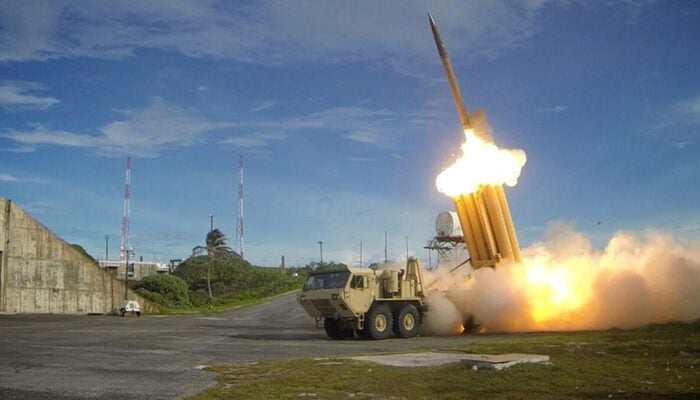
The United States military used up nearly half of its Patriot interceptor missile stockpile during its seven-week campaign against Iran, according to an analysis by the Center for Strategic and International Studies (CSIS).
A report by Washington-based outlet The Hill highlighted significant depletion across several key munitions, citing the CSIS analysis, and raised concerns about Washington’s preparedness for a potential conflict with China.
According to the CSIS study released on Tuesday, US forces fired almost 50% of their Patriot missiles during the operation. More than half of Terminal High Altitude Area Defence (THAAD) interceptors were also used, alongside over 45% of Precision Strike Missiles (PrSMs), during the air and missile campaign in Iran.
The analysis further found that more than 20% of Joint Air-to-Surface Standoff Missiles (JASSMs), over 30% of SM-3 interceptors and at least 10% of SM-6 missiles were expended as part of Operation Epic Fury.
CSIS warned that rebuilding stockpiles — including Tomahawk cruise missiles and JASSMs — to pre-operation levels could take between one and four years. These weapons, it noted, would be vital in any future conflict in the Western Pacific.
“Even before the Iran war, stockpiles were deemed insufficient for a peer competitor fight. That shortfall is now even more acute and building stockpiles to levels adequate for a war with China will take additional time,” the report’s authors wrote.
While the US is still likely to retain enough munitions to continue operations against Iran, the remaining inventory would fall short in a confrontation with a major adversary such as China, the report added.
Amid these concerns, the United States Central Command (Centcom), which led the Iran campaign, said its forces are actively rebuilding capacity during the ceasefire. In a social media message, CENTCOM said its “forces remain ready”.
Speaking alongside US Defence Secretary Pete Hegseth, Centcom commander Admiral Brad Cooper said: “We are rearming. We’re retooling, and we’re adjusting our tactics, techniques and procedures.”
“There is no military in the world that adjusts like we do, and that’s exactly what we’re doing right now during the ceasefire,” he added.
The findings come as President Donald Trump earlier held talks with leading defence contractors in March, after which he said production of “exquisite class” weapons would be increased fourfold.
Responding to the report, Pentagon chief spokesperson Sean Parnell defended the military’s capabilities, telling The Hill that the US remains fully equipped.
“The US military is the most powerful in the world and has everything it needs to execute missions at the time and place of the President’s choosing,” he said.
“As Secretary [Pete] Hegseth has highlighted numerous times, it took less than 10% of American naval power to control traffic in and out of the Strait of Hormuz. Since President Trump took office, we have executed multiple successful operations across combatant commands while ensuring the US military possesses a deep arsenal of capabilities to protect our people and our interests,” Parnell said in a statement. “Attempts to alarm Americans over the Department’s munitions stockpiles are both ill-informed and dishonourable.”
Meanwhile, Pentagon comptroller Jules ‘Jay’ Hurst said officials are planning to expand multi-year munitions contracts to as long as seven years, aimed at strengthening supply chains and encouraging sustained investment. The move forms part of the administration’s proposed $1.5 trillion defence budget.
“Once Operation Epic Fury ends, the naval assets sent to the Middle East will return to the Pacific. Munitions inventories will start to recover, but restoring depleted stockpiles and then achieving the desired inventory levels will take many years,” the report’s authors, Mark F. Cancian and Chris H. Park, wrote.

- US blockade of Iran ports to continue even during ceasefire.
- Trump says closing strait risks Iran losing $500m daily.
- Israel-Lebanon ceasefire talks set for Thursday.
WASHINGTON: President Donald Trump extended the US ceasefire with Iran to allow more time for peace talks, with Tehran silent on the decision early Wednesday.
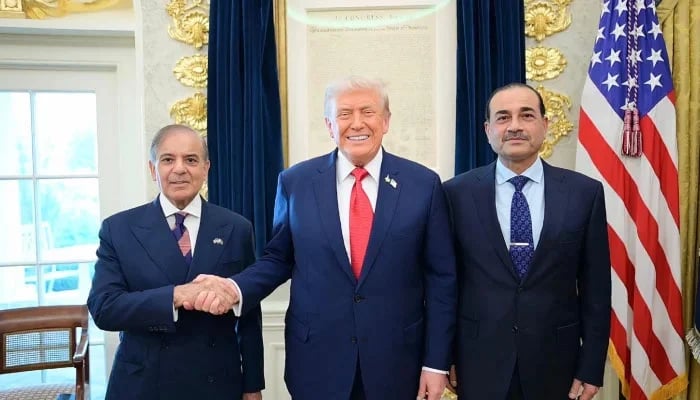
Trump indefinitely pushed back the end of the two-week truce, crediting a request from mediator Pakistan and stressing the need to give Iran’s “fractured” leadership time to form a proposal. But he said the US blockade of Iran’s ports — a sticking point for Tehran — would continue.
In a Truth social post on Tuesday, the US president accused Iran of wanting to keep the Strait of Hormuz open “so they can make $500 Million Dollars a day,” which he said the Gulf nation would risk losing if it remains closed.
Trump insisted in the post that keeping a US blockade of the strait, a critical waterway for about a fifth of the world’s oil and natural gas exports, is vital for forging a deal with Iran.
“People approached me four days ago, saying, ‘Sir, Iran wants to open up the Strait, immediately.’ But if we do that, there can never be a Deal with Iran, unless we blow up the rest of their Country, their leaders included!,” Trump said in the post.
In an earlier social media post, Trump indicated that he had no desire to extend the ceasefire and had warned of a resumption of bombing when it expired.
“I have… directed our Military to continue the Blockade and, in all other respects, remain ready and able, and will therefore extend the Ceasefire until such time as their (Iran’s) proposal is submitted,” Trump wrote on social media.
Ahead of Trump’s eleventh-hour intervention, it had been unclear when the original ceasefire would expire, with Pakistan indicating it would end at 2350 GMT Tuesday.
This moment came and went with no reports of new military activity by Iran, which had said the ceasefire would end at 0000 GMT. Iran are yet to respond to Trump’s ceasefire extension.
The fate of peace talks hosted by Pakistan was left hanging in the balance following Trump’s announcement.
A White House official confirmed that Vice President JD Vance would not travel to Pakistan for talks on Tuesday as previously planned, pending the submission of an Iranian proposal.
Islamabad lockdown
Strict security measures were adopted on Tuesday in Islamabad which was virtually shut down, even as no Iranian-US meeting was fixed.
Prime Minister Shehbaz Sharif thanked Trump for extending the ceasefire, with UN Secretary General Antonio Guterres also welcoming it.
As the original ceasefire deadline drew in, Iran preemptively threatened to attack its Gulf neighbors’ oil production facilities if their territory was used to attack it once the ceasefire expired.
Since the first round of talks in Islamabad, Trump announced a blockade of Iranian ports, which US Treasury Secretary Scott Bessent said would remain in place.
“In a matter of days, Kharg Island storage will be full and the fragile Iranian oil wells will be shut in,” Bessent said in an X post Tuesday, adding that constraining Iran’s maritime trade will target its “primary revenue lifelines.”
He warned: “Any person or vessel facilitating these flows-through covert trade and finance risks exposure to US sanctions.”
The US Defence Department said Tuesday that its forces intercepted and boarded a “stateless sanctioned” vessel as part of Washington’s efforts. AFP has identified the vessel as one affiliated with Iranian activity.
Both sides have accused the other of ceasefire breaches.
‘Cursed ceasefire’
Residents in the Iranian capital who spoke to Paris-based AFP journalists say life has only worsened despite the truce.
“This cursed ceasefire has broken us,” said Saghar, 39. “I don’t know anyone around me who is doing well.”
Experts said Iran’s noncommittal public stance was an attempt to put pressure on Washington.
“The current standoff between the United States and Iran is no longer a clash of capabilities but rather a struggle of political endurance and bargaining leverage,” Daniel Byman of the Center for Strategic and International Studies wrote in a commentary.
Despite the ongoing uncertainty, stocks rose on Tuesday amid lingering hopes for a deal to end the conflict.
Israel-Lebanon talks
On another front in the war, Israel and Lebanon, which have no diplomatic relations, will hold fresh talks in Washington on Thursday, a State Department official told AFP.
A separate 10-day ceasefire was agreed between the two nations on Friday and included Hezbollah, whose rocket fire in support of Iran drew Lebanon into the wider Mideast conflict.
Sporadic violence has continued, and Israel’s military warned civilians against returning to dozens of villages in southern Lebanon.
Israeli attacks on Lebanon have killed at least 2,454 people since the start of the war, a Lebanese government body said in its latest toll.
Hezbollah said it launched an attack on northern Israel on Tuesday in retaliation for what it said were Israeli violations of the ceasefire, the first such claim since the truce began.
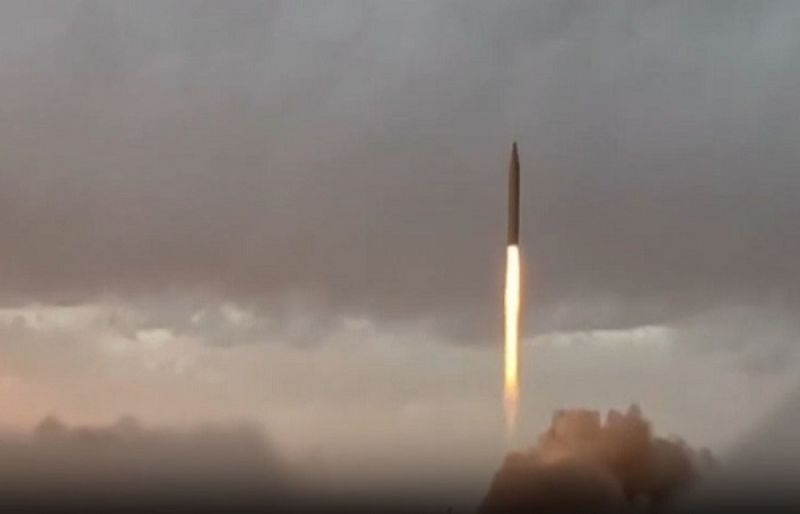
Iran has fully prepared for the possible resumption of war as the ceasefire deadline approaches, with new surprises ready for any new round of imposed war, the Tasnim News Agency reported on Tuesday, citing informed sources.
According to the report, the US naval blockade announcements and Washington’s excessive demands have prevented the formation of new negotiations as the agreed ceasefire period nears its end.
“Iran is fully prepared for the possibility of a new war and has prepared new surprises for a potential new round of combat,” the report said.
The sources told Tasnim that over the past two weeks, Iran has taken the possibility of renewed war seriously.
“Accordingly, some military movements and new target lists have been prepared for this purpose,” the report added.
Iran is ready to create “another hell” for Americans and Israelis from the very beginning of any potential new war, the sources said.
The United States and Israel launched their unprovoked, illegal war of aggression against Iran on February 28, assassinating the Leader of the Islamic Revolution, Ayatollah Seyyed Ali Khamenei, and striking nuclear facilities, schools, hospitals and bridges, along other civilian sites.
Iran’s armed forces responded with 100 waves of decisive retaliatory strikes under Operation True Promise 4, launching hundreds of ballistic and hypersonic missiles, as well as drones, against American military bases across West Asia and Israeli positions throughout the occupied territories.
A two-week ceasefire, brokered by Pakistan, took effect following the intense 40-day war. However, tensions have remained high.
The United States has declared plans for a naval blockade of Iranian ports, a move Tehran has condemned as provocative and a violation of the ceasefire.
Iranian officials have repeatedly warned that any US attempt to impose a blockade or conduct mine-sweeping operations in the Strait of Hormuz will be met with a decisive military response.
Iranian Foreign Minister Abbas Araghchi has previously accused Washington of bad faith, citing repeated US violations of the ceasefire, threats against Iranian shores and vessels, and continuous contradictions in American statements.
Tehran has made it clear that while it remains committed to diplomacy, it will not accept diktats or conditions imposed by the United States.


Burkina Faso fully nationalises leading cotton firm Sofitex

High-Skilled Immigration: US tightens screws on high-skilled immigration: Denial rates surge across key visa categories – The Times of India

Marcus Smart’s breakout game helps Lakers go up 2-0 on Rockets

-

 Fashion6 days ago
France’s LVMH Q1 revenue falls 6%, shows resilience amid Iran war
-

 Sports1 week ago
The case for Man United’s Fernandes as Premier League’s best
-

 Entertainment7 days ago
Is Claude down? Here’s why users are seeing errors
-
 Business1 week ago
Delta Air Lines unveils first new Delta One suite in premium cabin arms race
-

 Fashion1 week ago
Asia claims largest share of markets on Kearney FDI Confidence Index
-

 Tech1 week ago
The Deepfake Nudes Crisis in Schools Is Much Worse Than You Thought
-

 Sports7 days ago
PSL 11: Peshawar Zalmi win toss, opt to field first against Quetta Gladiators
-

 Tech1 week ago
Bremont Is Sending a Watch to the Moon’s Surface