

Fashion
US tariff hike puts Indian textile margins under pressure

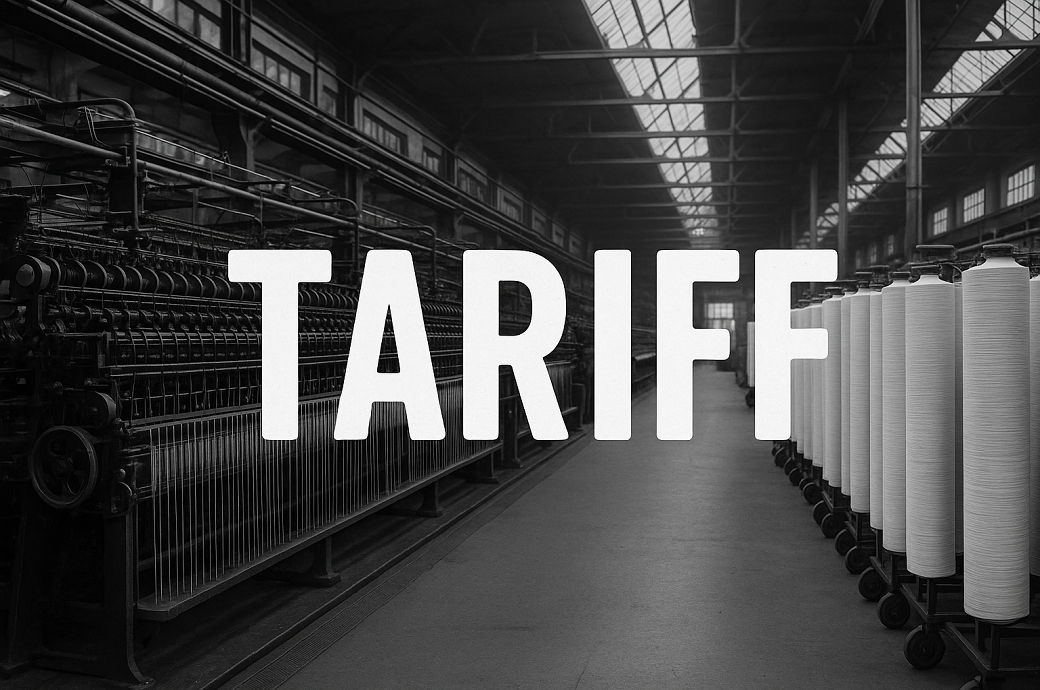
The US move to double tariffs on Indian goods from 25 per cent to 50 per cent from August 27, 2025, places India’s textile exports in a vulnerable position, according to S&P Global Ratings.
The US decision to double tariffs on Indian goods to 50 per cent from August 27, 2025, puts India’s textile exports in a vulnerable spot.
The US is India’s top textile market with 9 per cent share.
While supply chains may limit disruption, low margins and high leverage mean exporters cannot absorb costs, weakening credit metrics and stretching working capital.
The US is India’s largest textile market, accounting for 9 per cent share of US imports, up from 6 per cent five years ago as buyers shifted sourcing away from China, whose share fell from 38 per cent to 25 per cent. India is now the third-largest textile supplier to the US after China and Vietnam.
While trade disruption may be moderate thanks to established supply chains and the US’ reliance on Indian suppliers, slim margins leave the sector exposed. Textile companies operate on low single-digit Earnings Before Interest, Taxes, Depreciation, and Amortisation (EBITDA) margins with debt-to-EBITDA leverage above 4x, limiting their ability to absorb additional tariff costs.
Though the impact on exports may be moderate, credit metrics in the textile sector are likely to weaken further, in S&P Global Ratings’ view.
Fibre2Fashion News Desk (HU)








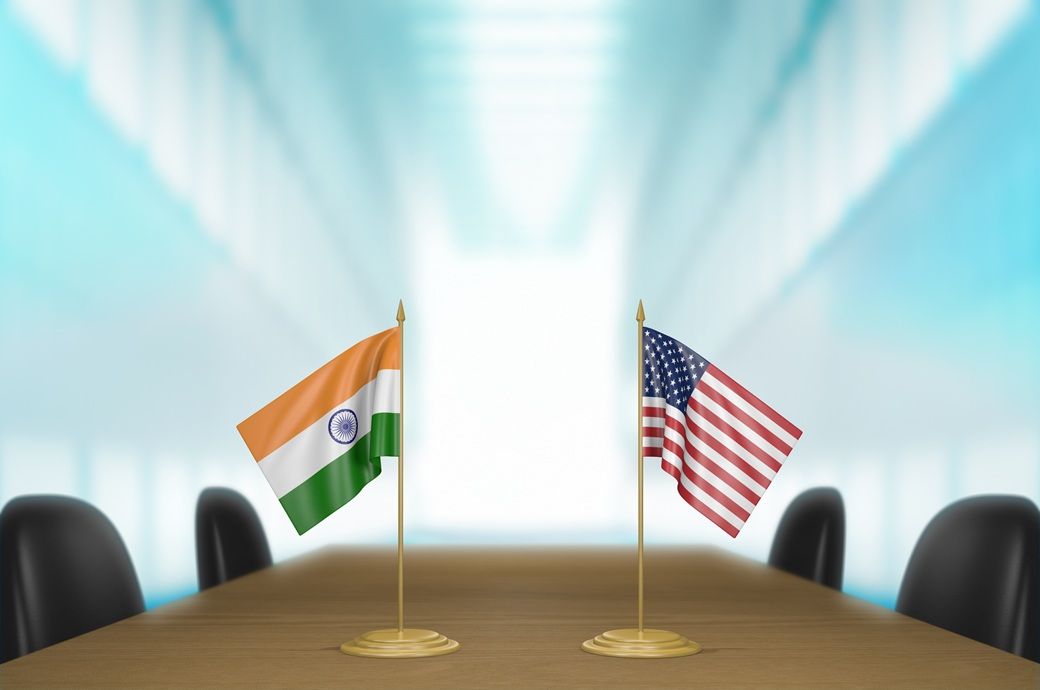
The text of the agreement was released on February 7.
India and the US will today resume talks on the first phase of their bilateral trade agreement in Washington, DC.
The three-day talks will discuss the situation that has evolved under the changed US tariff regime.
The two unilateral probes launched by the USTR against India may also be discussed at the meeting.
Darpan Jain, additional secretary in the department of commerce, is leading the Indian team.
Darpan Jain, additional secretary in the department of commerce, is leading the Indian team.
The three-day talks will discuss the situation that has evolved under the changed US tariff regime, according to Indian media reports.
Following the US Supreme Court decision against the sweeping tariffs imposed by President Donald Trump on several countries, the US administration imposed a 10-per cent tariff on all countries beginning February 24 for 150 days.
This led to a meeting between chief negotiators of both sides scheduled in February getting postponed to this month.
The two unilateral investigations launched by the US Trade Representative (USTR) against India may also be discussed at the meeting. India has rejected allegations made by the USTR in these two probes under its Section 301 of Trade Law and has called for termination of the probes as the initiation notice has failed to provide cogent rationale to substantiate the claims.
Fibre2Fashion News Desk (DS)
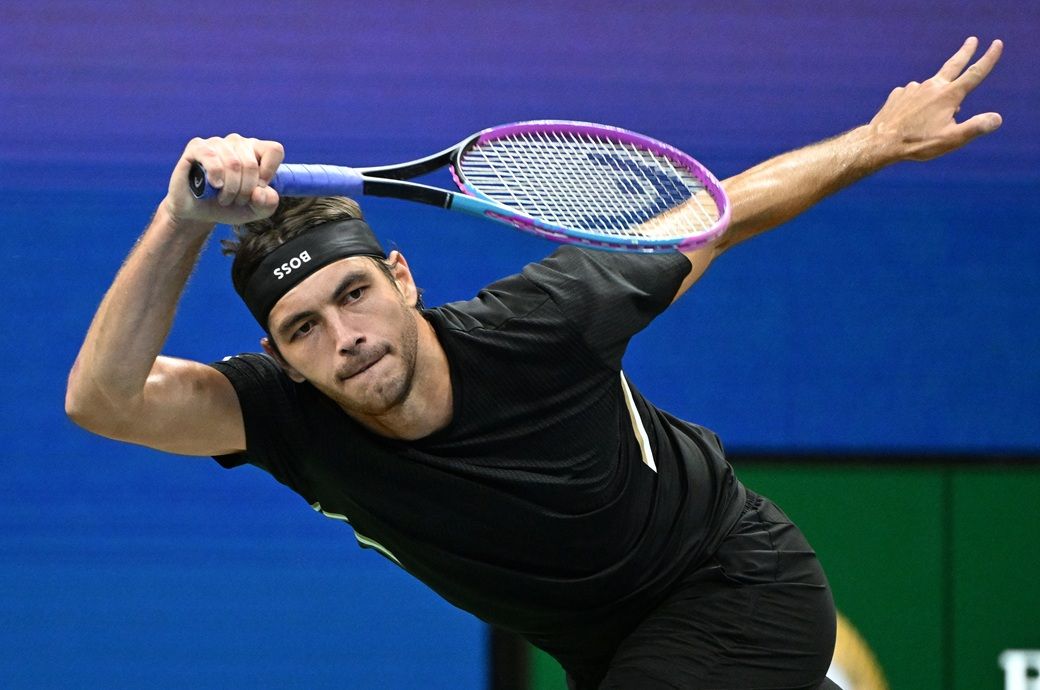
The partnership is rooted in a shared mindset: ambition, world-class performance, global relevance, and a bold confidence that defines both BOSS and the Australian Open. As a cornerstone of BOSS’s cultural strategy, the collaboration creates a powerful platform to connect with fans at scale, unlock new audiences, and showcase the full world of BOSS through its collections, ambassadors, and experiences.
BOSS will become Official Lifestyle Outfitter of the Australian Open from 2027, marking a key step in its sport and culture strategy.
The brand will dress up to 4,000 staff and elevate on- and off-court style through tailored looks, activations and merchandise, strengthening its global presence in tennis while redefining the tournament’s visual identity.
“We are absolutely excited to partner with the Australian Open, which is one of the most dynamic and globally followed sporting events worldwide,” stated Daniel Grieder, CEO of HUGO BOSS. “This collaboration is a natural fit for us, as it brings together two brands that share the same commitment to excellence, innovation, and creating extraordinary experiences. Tennis is part of BOSS’s DNA. The partnership therefore
marks an important step in our strategy to further drive the brand’s positioning at the intersection of sport, lifestyle, and global fan engagement.”
“The Australian Open has always been about more than just great tennis – it’s about atmosphere, innovation, and setting the benchmark for major sporting events worldwide,” Tennis Australia CEO Craig Tiley said. “BOSS is a global brand with impeccable credentials in sport and style, and together we will enhance how our tournament looks, feels, and connects with fans from around the world.”
In its new role as the tournament’s Official Lifestyle Outfitter, BOSS is set to transform the visual identity of the Australian Open like never before. Dressing up to 4,000 staff, officials, umpires, and ball kids, BOSS will make an unmistakable impact, setting its signature confident style from the very first moment. The result is a bold step change: a unified, elevated, and distinctly modern aesthetic that will be visible across every corner of Melbourne Park. A curated palette of refined shades, subtle nods to the brand’s tailoring expertise, and easy-wear silhouettes engineered for the Melbourne heat come together to signal a new era in tournament style – perfectly in tune with the fast-paced, high-energy spirit of the event.
BOSS branding will also be displayed around the venue, including inside the iconic Rod Laver Arena. Beyond the tournament’s courts, the collaboration will extend to exclusive replica teamwear, merchandise, and off-court capsules. Dedicated pop-up stores, immersive on-site fan activations, an elevated guest experience, and further special events will bring the BOSS attitude to every part of “The Happy Slam.” Online and in store, impactful storytelling and curated initiatives will also share the sunshine spirit of Melbourne with tennis fans around the globe.
In a powerful opening serve that ignites excitement and sets the tone for what’s to come, the brand has created bold visuals to accompany today’s announcement. Bridging the worlds of fashion and sport, the imagery reimagines tennis balls in tactile fabrics – from rich wool to soft alpaca – as a nod to BOSS’s roots in craft and tailoring.
The brand’s history in tennis dates back to the 1980s, when it embarked on a 15-year-long sponsorship of the Davis Cup, the world’s largest international team competition in men’s tennis. Most recently, BOSS has welcomed star players Taylor Fritz and Matteo Berrettini, as well as emerging talents Noma Noha Akugue and Ella Seidel, as brand ambassadors, and since 2022 has served as title sponsor of popular ATP 250 tournament the BOSS OPEN in Stuttgart. Through the Australian Open partnership, BOSS is cementing its presence in tennis at one of the world’s most prestigious tournaments and propelling its position as a leading global style authority at the intersection of sport and culture.
Note: The headline, insights, and image of this press release may have been refined by the Fibre2Fashion staff; the rest of the content remains unchanged.
Fibre2Fashion News Desk (JP)

Sovereign ratings in Southeast Asia are under risk due to the Middle East conflict. Fiscal and external metrics underpinning the ratings will be strained if the global energy market does not begin to normalise in the next few months, the credit rating agency noted.
Prolonged energy disruptions will raise fiscal and external pressures on Southeast Asian nations, according to S&P Global.
Indonesia is more vulnerable to weakening credit metrics if the war continues and energy prices remain high.
Vietnam’s strong economic growth, its booming export sector and relatively unencumbered government balance sheet will act as ballast against the energy market dislocation.
If the longer-term impact of the war is severe, the robust growth prospects of economies dependent on imported energy may also be impaired, weakening economic support for the ratings, it said.
Its base case assumes the war’s intensity will peak and the Strait of Hormuz’s effective closure will ease during April, but some disruptions are likely to persist for months.
A prolonged surge in the cost of energy imports—coupled with a loss of foreign exchange reserves—is one risk scenario that could materially weaken Vietnam’s external liquidity position, the credit rating agency said in a regulatory article.
And a sharp increase in the fiscal deficit, in the unlikely event that economic growth also decelerates abruptly, could also erode the government’s more favourable leverage profile, it noted.
If these scenarios persist beyond six months and the government is unable to mitigate the impact on credit metrics, they could erode Vietnam’s robust credit buffers at the current ratings level.
If the pressure on the economy causes capital outflows, the authorities may use foreign exchange reserves to support the exchange rate.
The budget deficit in the country could also widen if the energy disruption drags on. Outcomes will ultimately be tied to the duration of the conflict and the disruptions, it said
Meanwhile, the sovereign ratings on Indonesia (BBB/stable/A-2) are sensitive to weakening fiscal or external credit metrics resulting from the war.
Potential risks include higher energy prices raising budgetary subsidy payments, weighing on deficits; government interest payments rising if accelerating inflation fuels a further increase in market interest rates; and importing more expensive oil products widening the current account deficit (CAD).
The government’s response to the energy disruption may contain some of the damage to its fiscal performance, S&P Global Ratings noted. But, higher commodity prices could also boost government revenue. This helps to limit the increase in the size of the fiscal deficit and reduces upward pressures on the budgetary interest payment ratio.
Indonesian exports have grown this year, but the growth momentum is tempered by declining sales of energy products. With the sharp rebound in energy prices, Indonesian export growth could rise further to mitigate the increase in oil imports.
Overall, Indonesian credit metrics are likely to weaken marginally under the credit rating agency’s base case.
As a commodities exporter, Indonesia may see some mitigating developments offsetting some of the pressures on the sovereign ratings, particularly if there is a broad-based strengthening of commodities prices. This could help to turn around some of the worsening trend in the country’s credit metrics once the situation normalises.
Fibre2Fashion News Desk (DS)


India, US to resume BTA talks today
SBP receives final $1bn from Saudi Arabia, bringing total deposit reaches $3bn – SUCH TV

Eddie Murphy announces the latest addition to family: ‘Blessings’

-

 Fashion5 days ago
France’s LVMH Q1 revenue falls 6%, shows resilience amid Iran war
-

 Sports1 week ago
The case for Man United’s Fernandes as Premier League’s best
-

 Entertainment1 week ago
Palace left in shock as Prince William cancels grand ceremony
-
 Business1 week ago
UK could adopt EU single market rules under new legislation
-

 Entertainment6 days ago
Is Claude down? Here’s why users are seeing errors
-

 Fashion1 week ago
Energy emerges as biggest cost driver in textile margins
-
 Business1 week ago
Delta Air Lines unveils first new Delta One suite in premium cabin arms race
-

 Tech1 week ago
A Lot of Shops Won’t Fix Electric Bikes. Here’s Why