

Business
US tariffs impact on jobs: Nearly 3 lakh workers at risk in textiles and gems? Here’s what experts say – Times of India


The steep tariffs imposed on Indian exports to the US have triggered sharp debate among staffing specialists, with some flagging the risk of immediate job losses and others suggesting that India’s domestic demand and trade diversification could soften the blow.“The recent imposition of additional US tariffs is expected to have a direct and substantial impact on India’s employment landscape. This will especially impact those industries relying heavily on the US market for business continuity and growth,” Genius HRTech founder, chairman and managing director R P Yadav told PTI.
Yadav identified textiles, auto components, agriculture, and gems and jewellery as the most vulnerable sectors, warning that micro, small and medium enterprises (MSMEs) will absorb the heaviest shock. He estimated that 2,00,000 to 3,00,000 jobs are at immediate risk, with textiles alone—being labour-intensive—potentially losing as many as 1,00,000 positions if the tariff regime remains in force for over six months.He further cautioned that gems and jewellery hubs in Surat and SEEPZ, Mumbai, could also face widespread job losses due to shrinking demand and rising costs in the US market.However, not all experts foresee an employment crisis. TeamLease Services Senior Vice President Balasubramanian Anantha Narayanan argued that India’s reliance on domestic consumption makes its job market less vulnerable than China’s.“At this point in time, we aren’t seeing any signs of a slowdown or loss of jobs. This also by extension means that our jobs are largely in service of domestic demand too, with the exception of some sectors like ITeS among others. Our exports to the USA are USD 87 billion, which is roughly about 2.2 per cent of our overall GDP. Largely pharma, electronics etc. won’t be affected for now, which will further limit the export exposure to industries such as textiles, gems and jewellery among others,” he said, quoted PTI.He also noted that the tariffs are yet to take effect, leaving space for possible negotiations. “On the other side, we’ve also had several positives by way of the recently closed FTA with the UK and other countries. Even if these US tariffs do come about, we’ll definitely figure out a way of redirecting or diversifying our trade to other markets. Therefore, at this point in time, we aren’t seeing any signs of a slowdown or loss of jobs. It’s an evolving situation and we’ll get to know more in due course of time,” Narayanan said.According to him, the broader drag on employment stems from global consumption slowdown, tariff uncertainties, and ongoing geopolitical conflicts.CIEL HR MD and CEO Aditya Mishra said the tariff scenario is unsettling exporters in sectors deeply tied to the American market—including electronics, textiles, gems and jewellery, auto components, leather, footwear, shrimp and engineering goods.“Even industries outside the direct tariff ambit, like pharmaceuticals, are feeling the ripple effect through costlier upstream chemicals and materials,” Mishra said. He added that uncertainty could persist through the third quarter of this financial year as negotiations unfold.While Mishra does not expect widespread layoffs, he noted that companies are already adopting cost-control measures—cutting discretionary spends, streamlining production, freezing hiring, and putting pressure on temporary and contractual roles. “The immediate pressure will be on temporary and contract roles, particularly shop-floor workers, artisans, sales and logistics staff, and some mid-level managers in export-led units. This will have a cascading effect on thousands of MSMEs in the supply chain, which collectively account for a large share of employment,” he warned.Mishra also pointed to potential spillover risks for IT and global capability centres (GCCs). “The IT sector is already experiencing slow spending and hiring, and this additional uncertainty could delay its recovery further. GCCs are likely to take a cautious approach to hiring and investments until there is greater clarity on trade negotiations and market stability. If the tariff situation persists, India’s market share in the US could shrink, leading to longer-term repercussions for exporters and the industries that depend on them,” he said.

Gold prices in Pakistan have risen again at the start of the business week after several days of decline, according to the All Pakistan Bullion Market.
The price of gold per tola increased by Rs 800, reaching Rs 493,962.
Similarly, the price of 10 grams of gold rose by Rs 686 to Rs 423,492.
In the global market, gold also recorded an increase of $8 per ounce, reaching $4,716.
Experts say global economic uncertainty, currency fluctuations, and investor preference for safe-haven assets are driving the upward trend in gold prices.
They add that changes in international markets directly impact Pakistan’s local bullion rates, leading to continued fluctuations in domestic prices.

Now one of the biggest sportswear firms, Anta’s rise follows a playbook adopted by many Chinese giants.
Source link
Business
Gold price prediction today: Will gold prices continue to be volatile? Key levels to watch out for April 27, 2026 week – The Times of India

Gold price prediction today: Gold prices will closely track movements on the rate decisions by several central banks, including the US Federal Reserve, this week, says Manav Modi, Senior Analyst, Commodity Research at Motilal Oswal Financial Services Ltd.Gold is currently consolidating after sharp swings in a broad range, indicating a pause rather than a reversal. Price action shows a higher-high structure intact, but the recent sideways movement suggests indecision near the upper supply zone around 158,000–160,000. The formation resembles a short-term flag/triangle continuation pattern, where a breakout on either side will define the next directional move. Volume has tapered slightly, reinforcing the consolidation narrative.Gold prices recently moved from the upper band toward the mid-band (20 DMA), and are now attempting to stabilize. The bands have started to contract, signaling a potential volatility expansion ahead. Sustaining above the mid-band (~150,500–151,000 zone) keeps bullish bias intact, while a breakdown below this could trigger a deeper mean reversion toward the lower band.For the week, immediate support for gold prices is placed at around Rs 150,500, which is followed by stronger support near Rs 148,500. On the upside, the resistance stands at around Rs 155,500, and after that the key supply zone is at Rs 158,000. A decisive close for gold above Rs 158,000 levels can then resume the broader uptrend. However, a break in gold prices below levels of Rs 148,500 may shift the momentum to bearish in the near term.The economic docket is filled with data points and events this week as the focus will be on FED, BOJ, ECB and ECB policy meetings. US consumer confidence, GDP, inflation and durable goods orders data will also be in radar.(Disclaimer: Recommendations and views on the stock market, other asset classes or personal finance management tips given by experts are their own. These opinions do not represent the views of The Times of India)


SBP raises policy rate by 100bps to 11.5% as inflation risks mount

Finalise Bangladesh’s textile-RMG circular economy strategy: Experts
Gold prices rise rebound in Pakistan after recent decline – SUCH TV

-

 Sports1 week ago
WWE WrestleMania 42 Night 2: Live match results and analysis
-

 Sports1 week ago
NCAA men’s gymnastics championship: All-time winners list
-

 Fashion1 week ago
UK’s Sosandar returns to profitability amid robust FY26 performance
-

 Politics6 days ago
UK’s Starmer seeks to deflect blame over Mandelson appointment
-

 Entertainment7 days ago
Lee Anderson, Zarah Sultana kicked out of UK Parliament for calling PM ‘liar’
-
 Business1 week ago
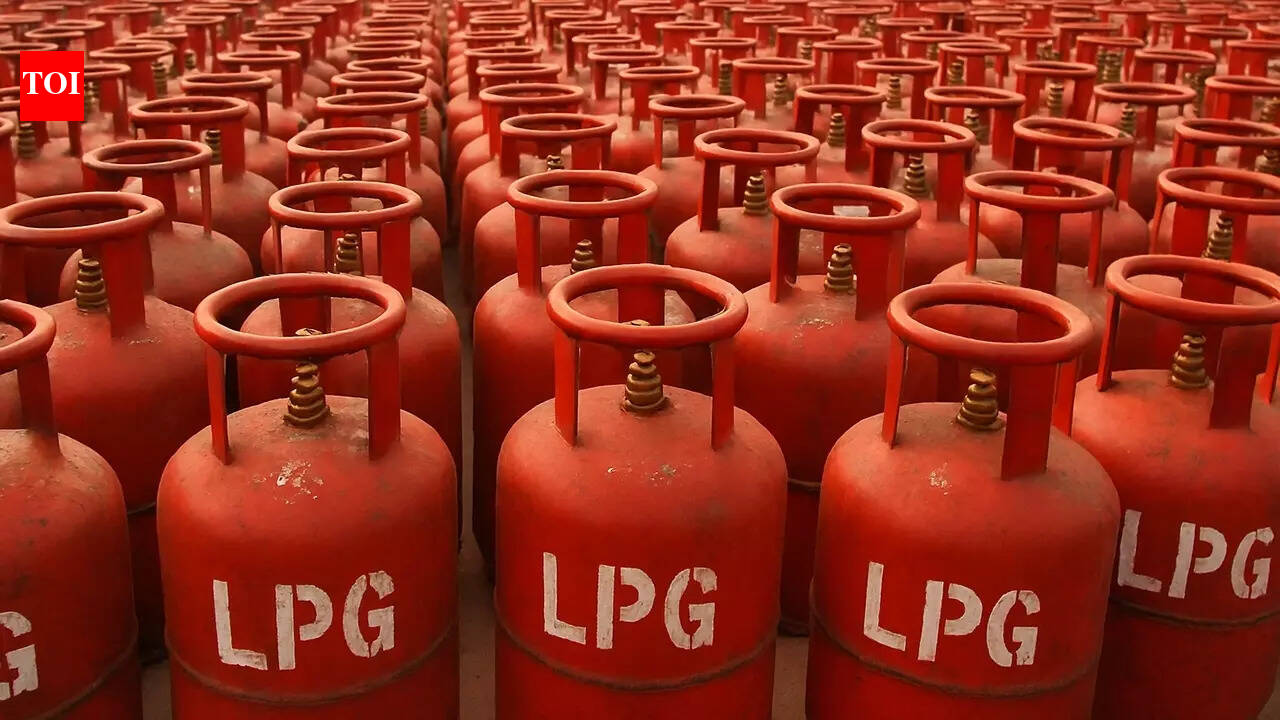
No fuel shortage: Govt assures 100% domestic LPG, PNG, CNG supply amid Hormuz energy crunch – The Times of India
-
 Business7 days ago
How Trump’s psychedelics executive order could unlock stalled cannabis reform
-
 Business6 days ago
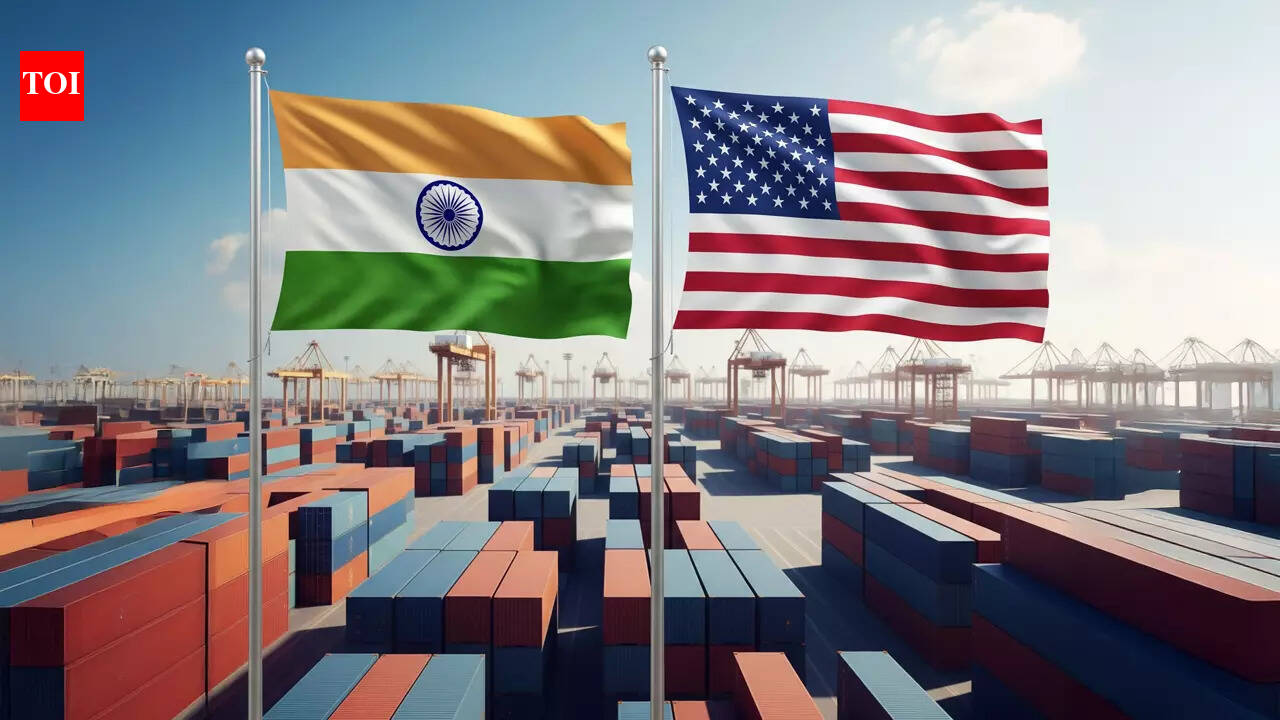
Us-India Trade Talks: US–India trade deal: Where do talks stand & what to expect – explained – The Times of India