

Fashion
Vivienne Westwood show to open Riyadh Fashion Week, event has international labels for first time

Published
October 10, 2025
The Vivienne Westwood label will host its first-ever fashion show in the Middle East as part of Riyadh Fashion Week this month with it debuting there on 16 October. The show will be staged at a Palm Grove in Riyadh.
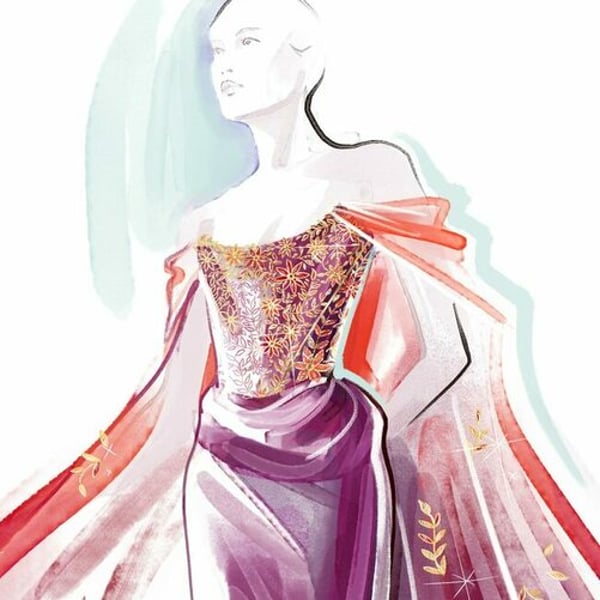
Company CEO Carlo D’Amario said the label is working “on a special collection of embroidered gowns, a result of the union of the expertise of our couture team and the craftsmanship of local artisans: a concrete way to promote local traditions through an international perspective. Today, fashion must go beyond aesthetics – it must be a connection between cultures. ‘Global-local’ is a key concept for us and for this reason we have started collaborating on special projects and shows like this”.
The embroidered capsule pieces, which are in collaboration with ‘Art of Heritage’, a cultural institution safeguarding Saudi Arabia’s legacy of craftsmanship, will be shown alongside the main Vivienne Westwood SS26 collection.
The label has also invited around 100 students from local fashion schools to attend and will be hosting a mentoring session with students prior to the show.
In its third edition, Riyadh Fashion Week is now well established in the region but this year is the first time the official calendar is open to international houses, hence the Vivienne Westwood involvement.
Copyright © 2025 FashionNetwork.com All rights reserved.









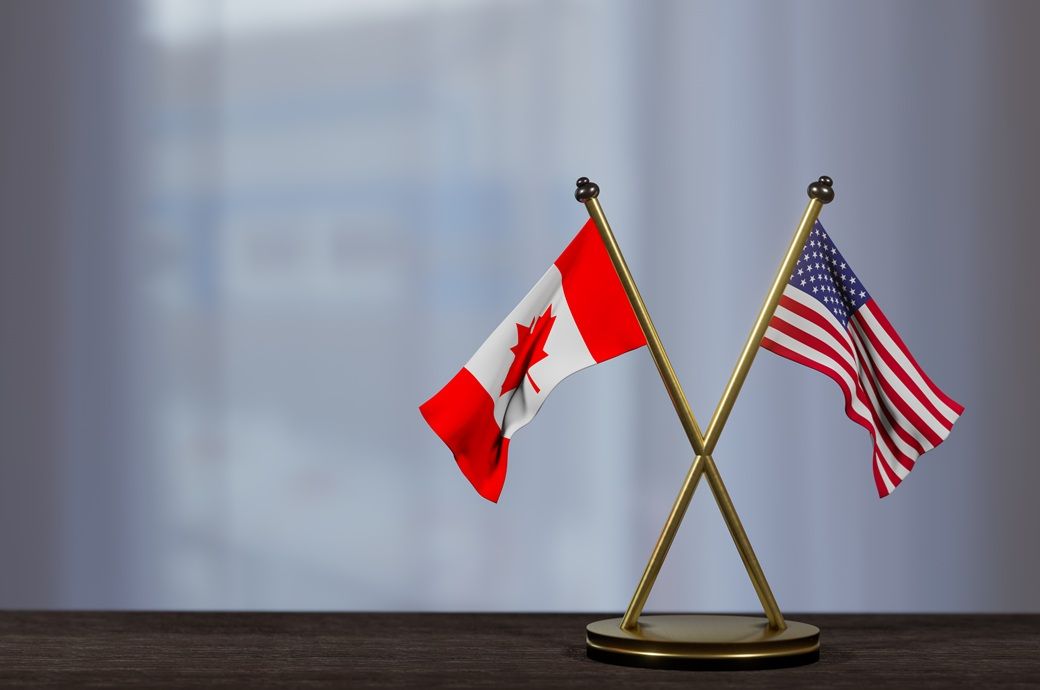
The committee will serve as a forum for expert advice on trade, investment, labour and economic strategy, and will be chaired by Dominic LeBlanc, minister responsible for Canada-US Trade, Intergovernmental Affairs, Internal Trade and One Canadian Economy. It includes leaders from across key sectors of the Canadian economy and will hold its first meeting on April 27, 2026.
Canada has formed a new advisory committee to guide its economic strategy with the United States ahead of the Canada-United States-Mexico Agreement (CUSMA) review.
With 85 per cent of trade remaining tariff-free, the move aims to deepen collaboration, safeguard market access and better position Canada for upcoming negotiations and evolving trade dynamics.
Carney announced members including Jean Simard, Candace Laing, Darryl White, Lisa Raitt, Tracy Robinson, Flavio Volpe, Ron Bedard, Ken Seitz, Dennis Darby, Lana Payne, Francois Poirier, Emile Cordeau, Luc Theriault, Magali Picard, Jonathan Price, Susan Yurkovich, Michael Harvey, Tabatha Bull, Cameron Bailey, Valerie Beaudoin, Erin O’Toole, Jean Charest, P.J. Akeeagok and Ralph Goodale.
The initiative replaces the former Council on Canada-US relations and aims to strengthen engagement with business and labour stakeholders while positioning Canada for future negotiations.
“Canada is approaching its economic relationship with the US with focus, discipline and unity. This new Advisory Committee ensures that government is drawing on the best advice and the broadest perspectives to advance Canada’s economic interests. Our goal is a strong economic partnership with the US that creates greater certainty, security and prosperity for all,” Carney said.
“Canada is strongest when governments, workers, businesses and industry leaders pull in the same direction. This Advisory Committee will help us stay closely connected to key sector perspectives, support effective outreach and strengthen Canada’s position as we establish a new economic and security relationship with the US,” LeBlanc added.
Canada-US trade remains a cornerstone of North America’s economy. In 2024, both countries exchanged nearly $3.6 billion in goods and services daily. Together with Mexico, the three countries represent a market of 517 million consumers with a combined GDP of $48.8 trillion. Since CUSMA came into force on July 1, 2020, bilateral trade has increased by more than 27 per cent, or $196 billion.
CUSMA, which is in force until 2036, will undergo a mandatory joint review on July 1, 2026. Member countries will decide by consensus on potential updates or an extension for another 16 years. If no agreement is reached, annual reviews will continue until consensus is achieved or the agreement expires.
Fibre2Fashion News Desk (CG)

Such industrial units can transfer gas load allocated under the captive power category to the industrial category within the same premises and ownership. But gas load from the industrial power category cannot be transferred to captive use.
Bangladesh’s power, energy and mineral resources division has simplified the industrial gas distribution system, allowing factories within the same premises and ownership to transfer unused gas load with approval from the relevant gas company.
The aim is to improve service amid rising demand.
Industrial units can rearrange or replace gas equipment keeping the approved hourly load unchanged.
Industrial units can rearrange or replace gas equipment keeping the approved hourly load unchanged, according to a circular by the division.
Commissioning work must be carried out by contractors enlisted with the relevant gas company, while no permission from the gas distribution company will be required, the circular noted.
The aim is to improve service amid rising demand.
Textile mills lauded the move, saying the reforms would enhance productivity, reduce cost and streamline operations, particularly for energy-intensive textile and garment sectors, according to domestic media reports.
Fibre2Fashion News Desk (DS)
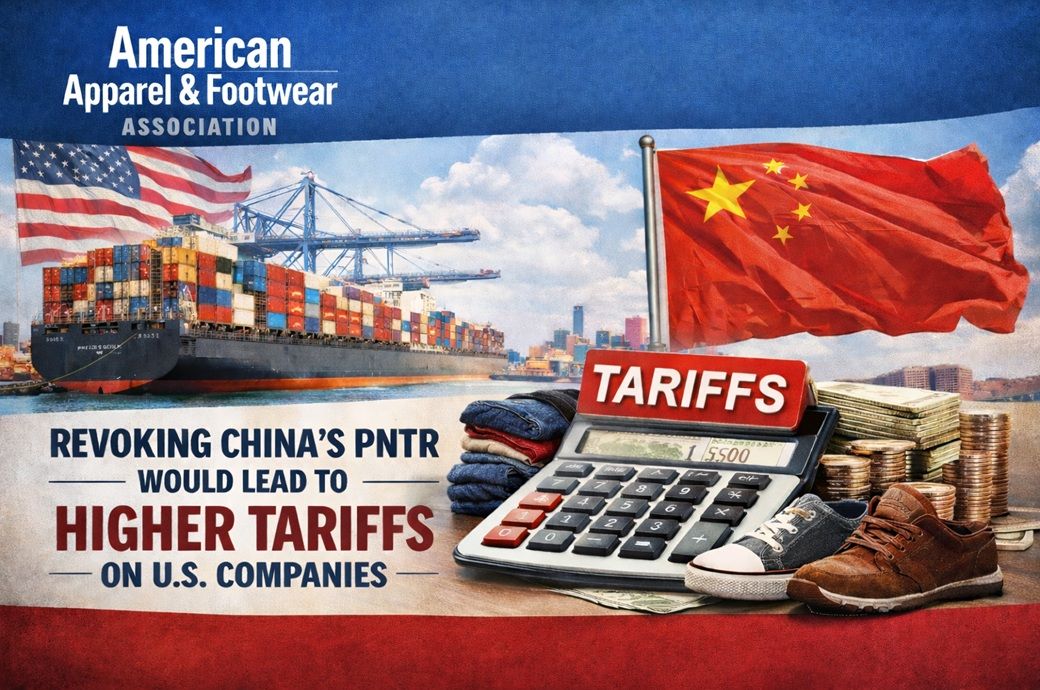
“These significant tariff increases cannot be absorbed by US brands and retailers, as margins are already tight and leave little room to offset such dramatic cost increases. As a result, these added costs would be passed on to consumers, hurting the affordability of clothes and shoes for American families,” Beth Hughes, AAFA vice president for trade and customs policy, wrote in a letter to the ITC.
US trade body AAFA has urged the International Trade Commission not to revoke the permanent normal trade relations (PNTR) status granted to China as that would result in higher tariffs borne by US companies.
Higher tariffs on Chinese imports would constrain US firms’ ability to invest in innovation, expand operations and support US job growth, and would risk closing off commercial opportunities in China.
“At the same time, higher tariffs on Chinese imports would constrain US companies’ ability to invest in innovation, expand operations and support American job growth,’ he noted.
AAFA in its letter said that US manufacturers rely on Chinese raw materials and inputs to produce finished goods under ‘Made in USA’ initiatives. Certain textiles are only available from China at the scale required, with no viable alternatives available now.
China remains the largest supplier for the US apparel, footwear and travel goods industry, accounting for 27.26 per cent of apparel imports, 47.83 per cent of footwear imports and 36.62 per cent of travel goods imports in 2025.
“Revoking China PNTR would result in higher tariffs borne by US companies significantly raising costs, reducing Americans’ ability to purchase affordable clothing, footwear and travel goods, while straining limited US and global manufacturing capacity that cannot readily replace these imports and provoking potential retaliatory measures that could further harm US companies,” the letter read.
Many small businesses and employers may not be in a position to absorb those costs, it observed.
While these additionally costs might ultimately be manageable—by being passed along over time or addressed through other mitigation measures, including alternative sourcing—those measures take time and also involve costs, it said.
An entire class of companies would be eliminated by the existential nature of such high tariff costs.
China’s pattern of retaliation suggests that any US move to revoke PNTR would likely be met with swift and proportional countermeasures, the letter noted.
As China a major market for American goods, the loss of PNTR would not only raise prices and disrupt supply chains, but also risk closing off commercial opportunities in China, it added.
Fibre2Fashion News Desk (DS)


Canada forms new advisory committee to strengthen US trade relations

High street drug dealer sells cannabis to undercover reporter

Clearing Hormuz Strait mines could take six months: report

-

 Fashion1 week ago
France’s LVMH Q1 revenue falls 6%, shows resilience amid Iran war
-

 Entertainment1 week ago
Is Claude down? Here’s why users are seeing errors
-

 Tech1 week ago
The Deepfake Nudes Crisis in Schools Is Much Worse Than You Thought
-

 Sports1 week ago
PSL 11: Peshawar Zalmi win toss, opt to field first against Quetta Gladiators
-
 Tech1 week ago
Human-machine teaming dives underwater
-
 Business1 week ago
Standard Life buys rival in £2b deal to create savings giant
-
 Business1 week ago
BP sees ‘exceptional’ oil trading result as Iran war sends crude costs soaring
-

 Fashion1 week ago
What no one is saying about the 2026 apparel slowdown