

Tech
“Wait, we have the tech skills to build that”

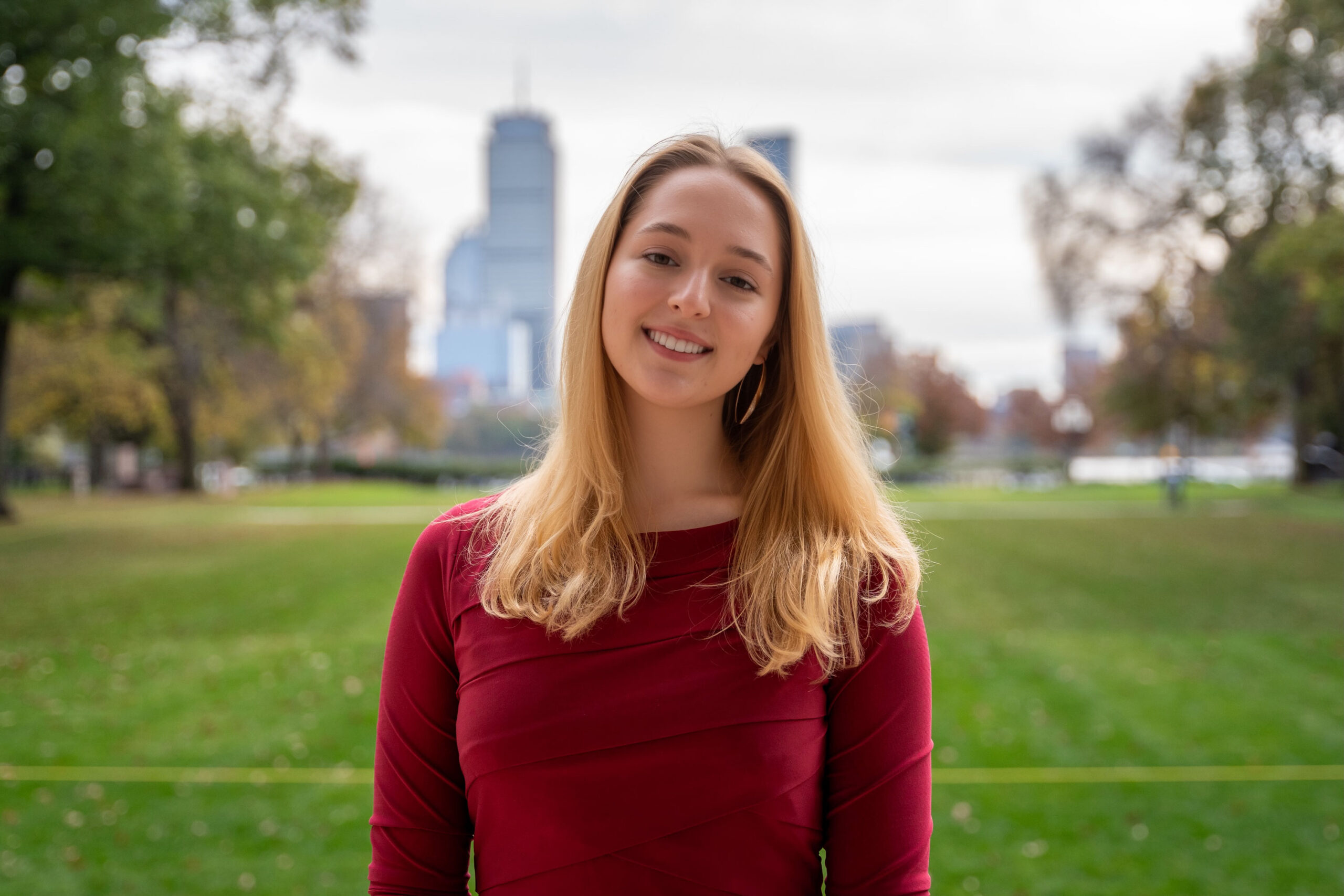
Students can take many possible routes through MIT’s curriculum, which can zigag through different departments, linking classes and disciplines in unexpected ways. With so many options, charting an academic path can be overwhelming, but a new tool called NerdXing is here to help.
The brainchild of senior Julianna Schneider and other students in the MIT Schwarzman College of Computing Undergraduate Advisory Group (UAG), NerdXing lets students search for a class and see all the other classes students have gone on to take in the past, including options that are off the beaten track.
“I hope that NerdXing will democratize course knowledge for everyone,” Schneider says. “I hope that for anyone who’s a freshman and maybe hasn’t picked their major yet, that they can go to NerdXing and start with a class that they would maybe never consider — and then discover that, ‘Oh wait, this is perfect for this really particular thing I want to study.’”
As a student double-majoring in artificial intelligence and decision-making and in mathematics, and doing research in the Biomimetic Robotics Laboratory in the Department of Mechanical Engineering, Schneider knows the benefits of interdisciplinary studies. It’s a part of the reason why she joined the UAG, which advises the MIT Schwarzman College of Computing’s leadership as it advances education and research at the intersections between computing, engineering, the arts, and more.
Through all of her activities, Schneider seeks to make people’s lives better through technology.
“This process of finding a problem in my community and then finding the right technology to solve that — that sort of approach and that framework is what guides all the things I do,” Schneider says. “And even in robotics, the things that I care about are guided by the sort of skills that I think we need to develop to be able to have meaningful applications.”
From Albania to MIT
Before she ever touched a robot or wrote code, Schneider was an accomplished young classical pianist in Albania. When she discovered her passion for robotics at age 13, she applied some of the skills she had learned while playing piano.
“I think on some fundamental level, when I was a pianist, I thought constantly about my motor dynamics as a human being, and how I execute really complex skills but do it over and over again at the top of my ability,” Schneider says. “When it came to robotics, I was building these robotic arms that also had to operate at the top of their ability every time and do really complex tasks. It felt kind of similar to me, like a fun crossover.”
Schneider joined her high school’s robotics team as a middle schooler, and she was so immediately enamored that she ended up taking over most of the coding and building of the team’s robot. She went on to win 14 regional and national awards across the three teams she led throughout middle and high school. It was clear to her that she’d found her calling.
NerdXing wasn’t Schneider’s first experience building new technology. At just 16, she built an app meant to connect English-speaking volunteers from her international school in Tirana, Albania, to local charities that only posted jobs in Albanian. By last year, the platform, called VoluntYOU, had 18 ambassadors across four continents. It has enabled volunteers to give out more than 2,000 burritos in Reno, Nevada; register hundreds of signatures to support women’s rights legislation in Albania; and help with administering Covid-19 vaccines to more than 1,200 individuals a day in Italy.
Schneider says her experience at an international school encouraged her to recognize problems and solutions all around her.
“When I enter a new community and I can immediately be like, ‘Oh wait, if we had this tool, that would be so cool and that would help all these people,’ I think that’s just a derivative of having grown up in a place where you hear about everyone’s super different life experiences,” she says.
Schneider describes NerdXing as a continuation of many of the skills she picked up while building VoluntYOU.
“They were both motivated by seeing a challenge where I thought, ‘Wait, we have the tech skills to build that. This is something that I can envision the solution to.’ And then I wanted to actually go and make that a reality,” Schneider says.
Robotics with a positive impact
At MIT, Schneider started working in the Biomimetic Robotics Laboratory of Professor Sangbae Kim, where she has now participated in three research projects, one of which she’s co-authoring a paper on. She’s part of a team that tests how robots, including the famous back-flipping mini cheetah, move, in order to see how they could complement humans in high-stakes scenarios.
Most of her work has revolved around crafting controllers, including one hybrid-learning and model-based controller that is well-suited to robots with limited onboard computing capacity. It would allow the robot to be used in regions with less access to technology.
“It’s not just doing technology for technology’s sake, but because it will bridge out into the world and make a positive difference. I think legged robotics have some of the best potential to actually be a robotic partner to human beings in the scenarios that are most high-stakes,” Schneider says.
Schneider hopes to further robotic capabilities so she can find applications that will service communities around the world. One of her goals is to help create tools that allow a surgeon to operate on a patient a long distance away.
To take a break from academics, Schneider has channeled her love of the arts into MIT’s vibrant social dancing scene. This year, she’s especially excited about country line dancing events where the music comes on and students have to guess the choreography.
“I think it’s a really fun way to make friends and to connect with the community,” she says.
Tech
‘Uncanny Valley’: Nvidia’s ‘Super Bowl of AI,’ Tesla Disappoints, and Meta’s VR Metaverse ‘Shutdown’

This week on Uncanny Valley, hosts Brian Barrett and Zoë Schiffer discuss the highlights from Nvidia’s annual developer conference, and why Tesla recently got in trouble with some of its most loyal fans online. Plus, Meta’s initial decision to shut down Horizon Worlds VR on the Quest headset signals the end of the metaverse dream. (Meta has since reversed course, saying it will keep the platform on limited support for the “foreseeable future.”)
Articles mentioned in this episode:
You can follow Brian Barrett on Bluesky at @brbarrett and Zoë Schiffer on Bluesky at @zoeschiffer. Write to us at [email protected].
How to Listen
You can always listen to this week’s podcast through the audio player on this page, but if you want to subscribe for free to get every episode, here’s how:
If you’re on an iPhone or iPad, open the app called Podcasts, or just tap this link. You can also download an app like Overcast or Pocket Casts and search for “uncanny valley.” We’re on Spotify too.
Transcript
Note: This is an automated transcript, which may contain errors.
Zoë Schiffer: Brian, hello. Very exciting to have another way to talk to you when I’m not pinging you on Slack every five seconds.
Brian Barrett: It’s great, because Slack doesn’t have the voice part.
Zoë Schiffer: It doesn’t.
Brian Barrett: I will say: very sad that Leah won’t be a part of that journey today.
Zoë Schiffer: I know. It is really sad, but when the Leah’s away, the mice will play, and we will be talking about topics that Leah hates, so just wait.
Brian Barrett: And to be clear, she’ll be back next week. She’s just sick.
Zoë Schiffer: Yeah.
Brian Barrett: It’s allergy season.
Zoë Schiffer: Welcome to WIRED’s Uncanny Valley. I’m Zoë Schiffer, WIRED’s director of business and industry.
Brian Barrett: I’m Brian Barrett, executive editor.
Zoë Schiffer: This week on the show, we’re diving into Nvidia’s annual developer conference, why some Tesla influencers are fleeing the brand, and why Meta has finally shut down Horizon Worlds on Meta Quest. So to start us off, this week, Nvidia had its annual developer conference in San Jose. This is the big event in the AI industry. Some people even call it the Super Bowl of AI. Developers go, CEOs, researchers, WIRED reporters—and we’re all waiting to hear what CEO Jensen Huang is going to tell us about the future of the company.
Brian Barrett: One thing that’s interesting about the Nvidia conference too, is I feel like so much of it is business facing. It’s not a lot of stuff that you, as an AI consumer or someone who plays around with Claude, wouldn’t necessarily connect with. One thing, with a grain of salt, because this is someone who stands to make this money, but Jensen did say the revenue opportunity for artificial intelligence chips just at Nvidia might reach at least a trillion dollars through 2027.
Zoë Schiffer: Pocket change.
Brian Barrett: Pocket change, I mean, really, for Nvidia at this point. One thing that was really interesting: He introduced a new product. I always like when there’s an actual product tied to this rather than the promise of a product. A while ago, Nvidia struck a licensing deal with a company called Groq, not to be confused with the occasionally—
A senior Federal Communications Commission official overseeing ABC-owned California stations privately offered to assist FCC Chairman Brendan Carr’s campaign last year against the Walt Disney Co. and Jimmy Kimmel Live!, according to internal emails obtained by WIRED.
On September 17, Carr threatened Disney with regulatory action regarding the Jimmy Kimmel monologue about the assassination of Charlie Kirk, prompting major station affiliates to drop the broadcast and forcing ABC to temporarily suspend the show.
Later that day, Lark Hadley, the FCC West Coast enforcement director, emailed Carr and FCC chief of staff Scott Delacourt. The email, obtained via the Freedom of Information Act, was titled “personal note of support re Charlie Kirk ABC/Disney issue” and quoted Carr’s remarks from an interview with conservative podcaster Benny Johnson: “This is a very, very serious issue right now for Disney. We can do this the easy way or the hard way,” Carr said during the interview.
Noting that he had been a broadcaster himself, Hadley wrote that the “absolute lack of accountability has always confused (and sickened) me,” telling Carr and Delacourt: “Please, do not let up, and let me know if I can help in any way.”
It is highly irregular for a career civil servant and enforcement chief to express support for a politically motivated pressure campaign, or pledge services to a targeted retaliation effort against a broadcaster in their own jurisdiction.
Federal ethics rules prohibit government employees from participating in matters where their impartiality could reasonably be questioned.
Carr’s office did not respond to a request for comment.
While FCC headquarters typically handles television content complaints, Hadley’s office holds direct enforcement authority over physical ABC-owned stations in its jurisdiction, including KABC-TV in Glendale, the broadcast origin for Jimmy Kimmel Live!
The brief suspension of Jimmy Kimmel Live! became a defining test of Carr’s ability to leverage the FCC’s regulatory apparatus against political critics. Following Carr’s public threats, major affiliate networks Nexstar and Sinclair—both of which had multibillion-dollar mergers pending before the commission—refused to air the program, forcing Disney to temporarily pull the show.
An ABC spokesperson did not immediately respond to a request for comment.
Will Creeley, legal director at the Foundation for Individual Rights and Expression, tells WIRED that regional directors like Hadley have no business cheering on the FCC chairman’s regulatory threats against broadcasters that air views the president doesn’t like.
“Just like Brendan Carr, they swore an oath to uphold the Constitution—and that includes the First Amendment, which bars the government from coercing private broadcasters into censoring dissent,” Creeley says. “This is a public servant paid by our taxpayer dollars. Is it too much to ask for him not to sound so excited about the chairman abusing the power of his office?”

More than half of the nine developers who worked on the game have either obtained a US visa or tried and failed to do so. Most of them are from China, but the team also intentionally recruited talent from other countries in the hopes of incorporating more diverse immigrant perspectives.
“Everybody knows somebody that’s on a visa, but not all of them are vocal about that part of their identity,” says Andrea Saravia Pérez, an immigrant from Colombia who joined the team in February as a narrative designer. “How can we develop a project that’s interactive and shows people this immigration system that a lot of Americans are not familiar with?”
There’s growing interest across the gaming industry in making political games, says Yang. When her team brought H1B.Life to the annual Game Developers Conference in San Francisco last week, she says they received a tremendous amount of interest and support because they are tackling an important societal issue without expecting to make much profit. (The game was supported by a philanthropic organization and the developers also plan to raise additional funding from a future Kickstarter campaign.)
Yang says she has also heard from people in Germany and Australia interested in licensing or adapting the game for different countries. “The whole world is turning right, and life is getting more difficult for all immigrants,” she says.
“If we can just put people in our shoes, I think it can create a very positive impact,” says Saravia Pérez. “As long as players come to have fun and are able to sympathize and understand it a little bit more, I think that we’ve done our job as a team.”
Courtesy of Reality Reload
Technicalities Versus Emotions
The H-1B visa program, created in 1990, is one of the most reliable US immigration pathways for white collar workers with college degrees. In recent years, the program issued about 85,000 visas annually, but since there are often more applicants than slots, a lottery system determines who ultimately is chosen. And if you don’t get it, you have to wait an entire year before you try again. Every person who has gone through the process has their own success or failure story to tell, me included.
The team behind H1B.Life started developing the game by interviewing immigrants. So far, Yang says they have talked to over two dozen people about their H-1B journeys and used those interviews to make the game more realistic and accurate. The biggest challenge now is to figure out how to balance explaining complicated immigration rules accurately and ensuring the game is still entertaining.


TCU backs up its tough talk, bounces Buckeyes in 1st round

“The Bachelorette” season with Taylor Frankie Paul canceled after 2023 video surfaces, ABC says

‘Uncanny Valley’: Nvidia’s ‘Super Bowl of AI,’ Tesla Disappoints, and Meta’s VR Metaverse ‘Shutdown’

Stock market crash today (March 12, 2026): Nifty50 opens below 23,600; BSE Sensex down over 900 points on continuing US-Iran war – The Times of India

UK’s Topshop unveils Tolu Coker capsule collection

US ignites Iran war, but Gulf Arab states pay the price | The Express Tribune

-
Business1 week ago
Stock market crash today (March 12, 2026): Nifty50 opens below 23,600; BSE Sensex down over 900 points on continuing US-Iran war – The Times of India
-
 Fashion1 week ago
UK’s Topshop unveils Tolu Coker capsule collection
-
Business1 week ago
US ignites Iran war, but Gulf Arab states pay the price | The Express Tribune
-

 Fashion1 week ago
India’s textile recycling market may reach $3.5 bn by 2030: Report
-

 Tech1 week ago
Meta Developed 4 New Chips to Power Its AI and Recommendation Systems
-

 Sports1 week ago
Bangladesh crush Pakistan in ODI series opener | The Express Tribune
-
 Business1 week ago
8th Pay Commission: How Much Will Central Govt Employees’ Salaries Rise? What We Know So Far
-

 Entertainment1 week ago
Gas, food, household prices explained