

Sports
Week 15 Anger Index: The case for Texas and monthlong gripes for Miami, BYU

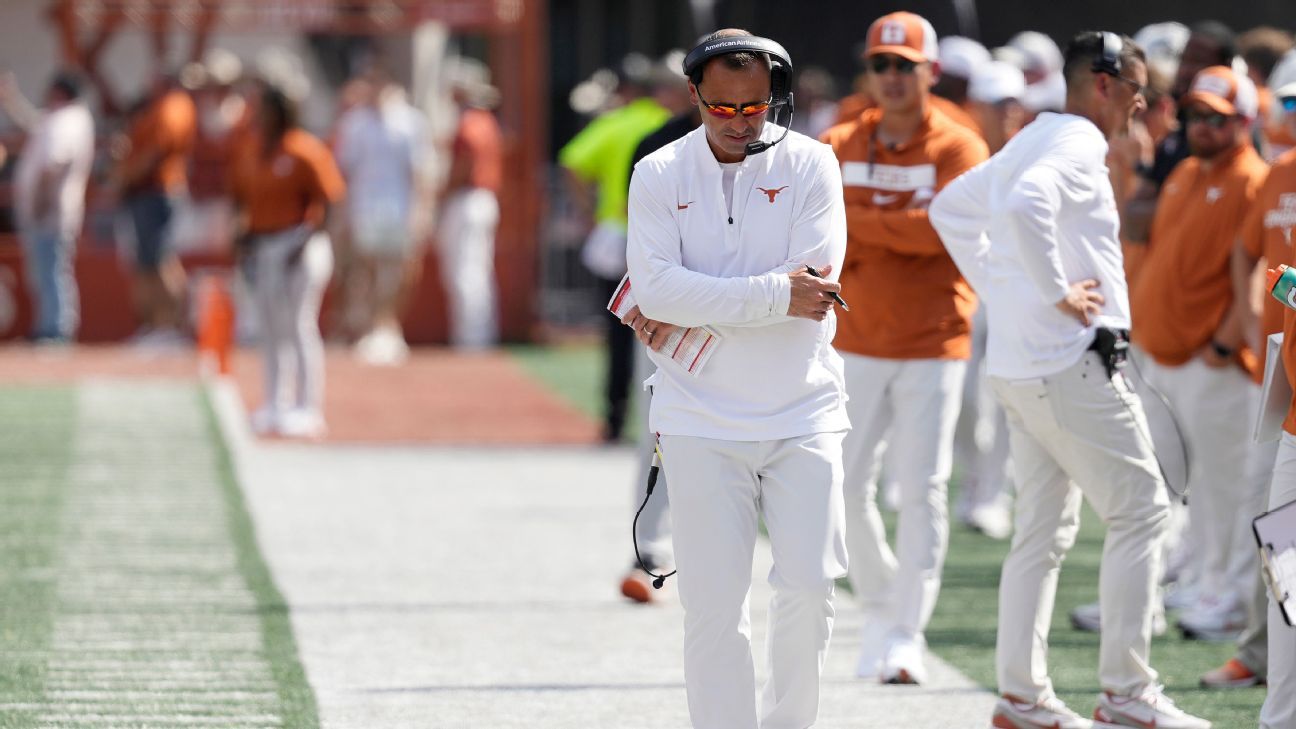
The first College Football Playoff rankings came out five weeks ago. They looked a lot like tonight’s rankings.
We’ve had precious little movement at the top, with a few teams jockeying up or down a slot, but effectively no seismic shifts in the landscape. BYU and Texas are the only two teams that were projected in the field in the committee’s first ranking that aren’t now — and they’re just barely on the outside with reasonable arguments for inclusion.
Teams ranked in the top 18 by the committee this year are a combined 55-9, with six of those losses coming to other teams ranked in the top 18. All three outliers are courtesy of — you guessed it — the ACC (Louisville to Cal, Virginia to Wake and Georgia Tech to Pitt).
That’s a massive anomaly. Last year, top-18 teams at this point had lost 19 games, including 14 to teams outside their own grouping. Top-10 teams are 33-4 this year. In the first 11 years of the playoff, top-10 teams had lost an average of nine games by this point in the season.
The two words that best describe this year’s playoff push are “status quo.”
That, of course, has been bad news for all the teams on the outside looking in — from those with valid cases such as Miami, BYU and Vanderbilt, to underdogs like USC, Utah or Arizona that might’ve had a shot in a more chaotic year.
But the real loser in this copy-and-paste rankings season is all the fans who just want to see things get weird. It’s a sad state of affairs when we’re left to rely on MACtion and the ACC to do all the heavy lifting when it comes to college football drama. The power players need to step up — or, perhaps, ratchet down — their game to add a bit more drama.
The good news is, the committee’s ad-hoc reasoning, mush-mouthed explanations and mind-boggling about-faces still leave plenty to argue about, even if the big picture hasn’t changed all that much.
Here’s this week’s biggest slights, snubs and shenanigans.


It’s not entirely clear how this committee values wins. For the past month, the priority has certainly appeared to be about who has the better losses (unless, of course, you’re Alabama).
That seems a foolish way to prioritize playoff teams, since the goal of the playoff isn’t to lose to good teams but to win games.
Does Texas have a bad loss? Yes. A 29-21 defeat to woeful Florida — even if the Gators also played Georgia and Ole Miss close and just walloped a team that beat Alabama head to head — is problematic.
But look who Texas has beaten: No. 7 Texas A&M by 10, No. 8 Oklahoma by 17 and No. 14 Vandy by three (in a game they led by 24 in the fourth quarter). That’s the résumé of a team capable of winning a national championship — even if the Horns were also capable of losing to a second-rate SEC team.
Are we trying to find teams with the most upside or give participation trophies to the ones who’ve not lost an ugly one? (Except, again, Alabama.)
And it’s not as if the committee believes an extra loss is disqualifying. Oklahoma, Alabama, Notre Dame and Miami all have two losses and are ranked ahead of one-loss BYU (more on that in a moment), so what’s the harm of moving a three-loss Texas ahead of a two-loss team that has accomplished less?
This all comes back to the most frequent and justified criticism of the committee: The same rules aren’t applied evenly. In some cases, record matters. In some cases, best wins matter. In some cases, better losses matter. The standard varies based on the team being considered. But if the committee is going to err in favor of anyone, it should probably do so for a team that’s proven — not once, not twice, but three times — that it can beat an elite opponent.
Oh, and moving Texas up ahead of, say, Notre Dame would also have the added bonus of allowing the committee to sidestep another tricky situation. Which leads us to …


We’re putting these two teams together, because we’ve already lamented the committee’s utterly disingenuous evaluation of them repeatedly, so it feels redundant to keep going down the same rabbit hole. But, for the sake of two programs being astonishingly misevaluated, let’s do one more round.
For Miami, the logic is obvious: The Canes beat Notre Dame head to head.
But let’s keep going. Miami’s two losses — SMU and Louisville — would rank as the fourth- and fifth-toughest games on Notre Dame’s schedule, had the Irish played them. Instead, Notre Dame has cruised through an essentially listless slate. Six of Notre Dame’s 10 wins came against teams that beat zero or one other Power 4 opponent. Stanford — seriously, Stanford! — is Notre Dame’s fourth-best win (by record). Yes, Notre Dame played well enough in losses to two very good teams, but one of those teams has the same record and is somehow ranked lower! Even if this is strictly about the “eye test,” there’s little argument for ignoring the head-to-head outcome. Notre Dame’s strength of record is 13th. Miami’s is 14th. Notre Dame’s game control is fifth. Miami’s is sixth. If all else is the same, how is head-to-head not the deciding factor?
Yet, here’s a little more salt in the wound for the Canes: Had Florida State finished 6-2 instead of 2-6 in ACC play, Miami would’ve won the (fifth) tie-breaker for a spot in the ACC title game and could’ve locked up its place in the playoff by simply beating Virginia. Instead, the Canes will sit at home and watch and hope and, at this point, probably get left out. Chess, not checkers, by rival FSU.
As for BYU, the committee’s desire to overlook the Cougars makes no sense. Let’s take a look at a blind résumé, shall we? (Note: Best wins and composite top 40 based on an average of SP+, FPI and Sagarin ratings.)
Team A: No. 6 strength of record, No. 14 game control, best win vs. No. 11, next vs. No. 28, loss to No. 5, four wins vs. composite top-40, five wins vs. teams that finished 7-5 or better
Team B: No. 7 strength of record, No. 10 game control, best win vs. No. 13, next vs. No. 27, loss to No. 7, three wins vs. composite top-40, two wins vs. teams that finished 7-5 or better
Now, just based on that information, Team A would seem the obvious choice. Now what if I told you Team B just lost its head coach, too?
That’s right, Team A is BYU, and Team B is Ole Miss. Every bit of data here suggests the Cougars are, at worst, on even footing with the Rebels or ahead, and yet the committee has Ole Miss ranked five spots higher.
This is, arguably, the second year in a row in which BYU was clearly the most overlooked team in the country.

A week ago, Notre Dame was ranked one spot ahead of Alabama.
Then on Saturday, the Irish beat 4-8 Stanford by 29 (in a game they at one point led 42-3), while Alabama beat 5-7 Auburn by 7 (in a game the Tigers had a chance to tie before fumbling in Tide territory late).
The committee looked at those two results and said, “You know what, We like what we saw from the Tide! Move ’em up!”
What could possibly be the logic for shifting opinions on these two teams? The only other team that jumped another winning team was Texas, and the Longhorns beat the No. 3 team in the country emphatically, not a second-tier team that fired its head coach a month ago.
Oh, and hasn’t the committee made it pretty clear losses are supposed to matter? Well, Notre Dame has two Ls to teams ranked in the top 12. Alabama got beat by a Florida State team that finished 5-7.
Even by the eye test, this makes little sense. Notre Dame has proven to be one of the most complete, dominant teams in the country, with a secondary that’s near impossible to throw on, a rookie QB who has been nearly flawless, and a running back who may well be the best player in the country. Alabama, on the other hand, has a one-note offense that can’t run the football.
We’re not believers in using advanced metrics as a ranking of accomplishment, but if this is simply a “who’s better” debate …
-
SP+ ranks Notre Dame fifth and Alabama 12th.
-
FPI ranks Notre Dame third and Alabama sixth.
-
Sagarin ranks Notre Dame second and Alabama seventh.
-
FEI ranks Notre Dame fourth and Alabama ninth.
So, again, we ask: Why would the committee possibly make this change?
We’d wager you know the answer. That sticky Canes-vs.-Irish head-to-head debate is a real headache for the committee. But if Notre Dame’s currently the last team in and something unexpected happens this weekend (hello, BYU over Texas Tech), then the committee can do as it did in 2014 and wash its hands of a tough choice and keep both Notre Dame and Miami out.
(It’s also interesting that a seven-point win over a team with a losing record is enough to jump Notre Dame, but a 31-point win over a ranked Pitt did nothing for Miami’s relative placement with the Irish despite — and we’re not sure anyone has mentioned this yet — a head-to-head win!)
But, speaking of Alabama …


4. Championship game participants
Step into the time machine with us for a moment, all the way back to championship week 2024. Here’s the state of play: Alabama, at 9-3, is ranked No. 11, the first team out of the playoff and also out of the SEC title game. Still, the Tide and the SEC hope there’s a pathway to salvation because SMU — 11-1 and ranked eighth — still has a game to play against Clemson in the ACC championship. If the Mustangs were to lose, couldn’t the committee then justify slotting SMU behind Alabama based on another data point, even though the Tide were simply sitting at home watching the action?
This was the case being made throughout the run up to the ACC championship last season. SMU, which should’ve been celebrating a miraculously successful first season in the Power 4, spent hours upon hours defending itself against criticism that it didn’t belong in the same conversation with big, bad Bama. Rhett Lashlee hinted he thought the committee’s vote was rigged, SMU players lamented their status on the chopping block despite a ranking that should’ve put them safely in the playoff field, and SEC commissioner Greg Sankey made the rounds arguing that Alabama’s (and Ole Miss’s and South Carolina’s) strength of schedule ought to put them ahead of SMU (and others).
OK, back to the present day. Here we are, with Alabama sitting perilously on the dividing line between in the field and out — a week ago, they would have been the last team in, but of course the committee had other ideas this time around — with a game to play against Georgia in the SEC championship. An ACC team (Miami) sits just a tick behind the Tide in the rankings, but it will be off this week.
So, what happens if Alabama loses?
The comparison to last year’s SMU isn’t even a particularly fair one. The Mustangs were at No. 8 before the ACC title game. Alabama is at No. 9 (and probably should be a spot or two lower). SMU’s game against Clemson was new territory. A loss to Georgia would actually undermine Alabama’s best argument for inclusion — the three-point win in Athens in September. And while SMU ultimately did make the playoff field last year, a last-second loss on a 56-yard field goal still dropped the Mustangs from No. 8 to No. 10 in the rankings.
Play this scenario out now: Alabama, ranked at No. 9, plays a team that currently counts as the Tide’s best win. Imagine if Georgia wins the rematch and does so convincingly. The committee docked SMU two spots for a last-second loss, so surely it would do at least that much to Alabama for a more convincing defeat, right? And here’s the other thing: Even with the ACC title game loss last year, SMU was 11-2 — one less loss than Alabama had. A Tide loss in the SEC title game now would be defeat No. 3 — one more than Notre Dame or Miami or (presumably) BYU.
It’s hard not to see a conspiracy here given the committee’s inexplicable flip-flop between Alabama and Notre Dame. It’s hard not to see brand bias in how the Tide’s championship week narrative diverges from SMU’s a year ago. It’s not at all hard to envision a scenario where Alabama loses to Georgia, gets in as the last team anyway, and it’s all explained away as a completely reasonable decision.

Well, the committee finally weighed in on more than one team outside the Power Four — mostly because it was just impossible to find enough Power Four teams worth ranking — and the news isn’t good for JMU. With the committee deciding already that North Texas is the higher ranked team, the Dukes’ only hope for the playoff would seem to be a Duke win in the ACC title game.
But what exactly has the committee seen to warrant that decision? Check out the numbers.
Best win (by average FPI, SP+ and Sagarin ranking)
JMU: No. 54 Old Dominion
UNT: No. 62 Washington State
Next best
JMU: No. 62 Washington State
UNT: No. 68 Navy
Loss
JMU: No. 29 Louisville
UNT: No. 24 USF
Wins vs. bowl-eligible
JMU: six
UNT: five
Strength of record
JMU: 18th
UNT: 22nd
FPI
JMU: 28th
UNT: 37th
There are certainly some check marks in North Texas’ favor, including a more impressive win over common opponent Washington State and a slightly better SP+ ranking, but on the whole, James Madison has had the tougher path here. That can reasonably change should UNT beat Tulane, but the committee should’ve waited for that to happen. Instead, they’ve made it clear JMU isn’t sniffing the playoff unless it comes at the expense of the ACC.
Also angry this week: Vanderbilt Commodores (10-2, No. 14); The ACC leadership who voted on its tie-breaker policies; Manny Diaz, who has to try to make a coherent argument for his five-loss Duke Blue Devils getting in ahead of a one-loss JMU; Every 8-4 team with a markedly better résumé than 9-3 Houston who isn’t ranked this week; Lane Kiffin’s yoga instructor and Juice Kiffin’s dog walker.
- PSL 11 scheduled to run from March 26 to May 3.
- Gaddafi Stadium will host most number of matches.
- PCB allots reserve day for the PSL final on May 4.
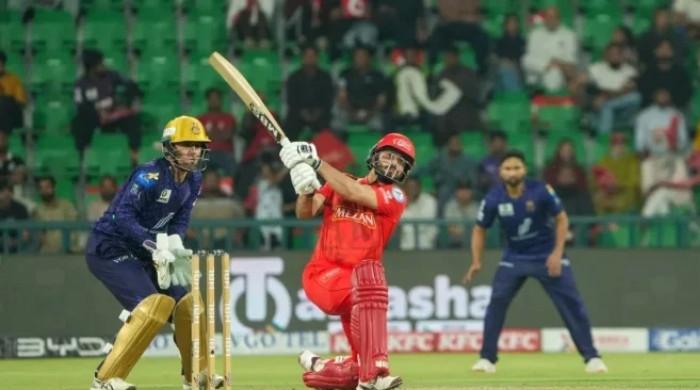
The Pakistan Cricket Board (PCB) on Tuesday unveiled the complete fixtures for Pakistan Super League (PSL) 11, scheduled from March 26 to May 3.
The 11th edition of the tournament league will see eight teams, including two new entrants, Pindiz and Hyderabad Houston Kingsmen, playing a total of 44 matches in the 39-day event.
The tournament will commence with defending champions Lahore Qalandars taking on Hyderabad Houston Kingsmen at their home ground on March 26.
As per the schedule, each team will play a total of 10 matches, with the top four qualifying for the playoffs, comprising Qualifier 1, Eliminator, Qualifier 2, followed by the final, scheduled to be played at the Gaddafi Stadium on May 3.
Furthermore, the PCB has also allotted a reserve day for the final on May 4.
The PSL 11 will also feature six double-headers, out of which three will be played at the Gaddafi Stadium.
The landmark 11th edition will be played across six venues in Pakistan, with Faisalabad and Peshawar to host PSL matches for the first time, joining Karachi, Lahore, Multan, Peshawar and Rawalpindi.
Among the six venues, Lahore’s Gaddafi Stadium will host the most number of matches (15), followed by Rawalpindi Cricket Stadium with 11, while Faisalabad’s Iqbal Stadium will host seven.
The iconic National Bank Stadium in Karachi will host six matches, while four matches will be played at the Multan Cricket Stadium. Peshawar’s Imran Khan Cricket Stadium to host one match – a day fixture between home side Peshawar Zalmi and Pindiz on March 28.
PSL 11 match schedule
March 27 – Quetta Gladiators vs Karachi Kings at Gaddafi Stadium, Lahore
March 28 – Peshawar Zalmi vs Rawalpindi Pindiz at Imran Khan Cricket Stadium, Peshawar
March 28 – Multan Sultans vs Islamabad United at Gaddafi Stadium, Lahore
March 29 – Quetta Gladiators vs Hyderabad Kingsmen at Gaddafi Stadium, Lahore
March 29 – Lahore Qalandars vs Karachi Kings at Gaddafi Stadium, Lahore
March 31 – Islamabad United vs Peshawar Zalmi at Rawalpindi Cricket Stadium, Rawalpindi
April 1 – Multan Sultans vs Hyderabad Kingsmen at Multan Cricket Stadium, Multan
April 2 – Islamabad United vs Quetta Gladiators at Rawalpindi Cricket Stadium, Rawalpindi
April 2 – Rawalpindi Pindiz vs Karachi Kings at Rawalpindi Cricket Stadium, Rawalpindi
April 3 – Multan Sultans vs Lahore Qalandars at Multan Cricket Stadium, Multan
April 4 – Rawalpindi Pindiz vs Islamabad United at Rawalpindi Cricket Stadium, Rawalpindi
April 5 – Multan Sultans vs Quetta Gladiators at Multan Cricket Stadium, Multan
April 6 – Multan Sultans vs Rawalpindi Pindiz at Multan Cricket Stadium, Multan
April 8 – Hyderabad Kingsmen vs Peshawar Zalmi at National Bank Stadium, Karachi
April 9 – Lahore Qalandars vs Islamabad United at Iqbal Stadium, Faisalabad
April 9 – Karachi Kings vs Peshawar Zalmi at National Bank Stadium, Karachi
April 10 – Quetta Gladiators vs Rawalpindi Pindiz at National Bank Stadium, Karachi
April 11 – Peshawar Zalmi vs Lahore Qalandars at Iqbal Stadium, Faisalabad
April 11 – Karachi Kings vs Hyderabad Kingsmen at National Bank Stadium, Karachi
April 12 – Hyderabad Kingsmen vs Islamabad United at National Bank Stadium, Karachi
April 13 – Peshawar Zalmi vs Multan Sultans at Iqbal Stadium, Faisalabad
April 15 – Peshawar Zalmi vs Quetta Gladiators at Iqbal Stadium, Faisalabad
April 16 – Hyderabad Kingsmen vs Rawalpindi Pindiz at Iqbal Stadium, Faisalabad
April 16 – Karachi Kings vs Islamabad United at National Bank Stadium, Karachi
April 17 – Lahore Qalandars vs Quetta Gladiators at Iqbal Stadium, Faisalabad
April 18 – Lahore Qalandars vs Rawalpindi Pindiz at Iqbal Stadium, Faisalabad
April 19 – Multan Sultans vs Karachi Kings at Gaddafi Stadium, Lahore
April 19 – Quetta Gladiators vs Hyderabad Kingsmen at Gaddafi Stadium, Lahore
April 21 – Lahore Qalandars vs Quetta Gladiators at Gaddafi Stadium, Lahore
April 21 – Rawalpindi Pindiz vs Multan Sultans at Rawalpindi Cricket Stadium, Rawalpindi
April 22 – Karachi Kings vs Hyderabad Kingsmen at Gaddafi Stadium, Lahore
April 22 – Peshawar Zalmi vs Multan Sultans at Rawalpindi Cricket Stadium, Rawalpindi
April 23 – Rawalpindi Pindiz vs Islamabad United at Rawalpindi Cricket Stadium, Rawalpindi
April 23 – Lahore Qalandars vs Karachi Kings at Gaddafi Stadium, Lahore
April 24 – Islamabad United vs Peshawar Zalmi at Rawalpindi Cricket Stadium, Rawalpindi
April 25 – Quetta Gladiators vs Karachi Kings at Gaddafi Stadium, Lahore
April 25 – Lahore Qalandars vs Hyderabad Kingsmen at Gaddafi Stadium, Lahore
April 26 – Rawalpindi Pindiz vs Peshawar Zalmi at Rawalpindi Cricket Stadium, Rawalpindi
April 26 – Islamabad United vs Multan Sultans at Rawalpindi Cricket Stadium, Rawalpindi
April 28 – Qualifier at Rawalpindi Cricket Stadium, Rawalpindi
April 29 – Eliminator 1 at Gaddafi Stadium, Lahore
May 1 – Eliminator 2 at Gaddafi Stadium, Lahore
May 3 – Final at Gaddafi Stadium, Lahore
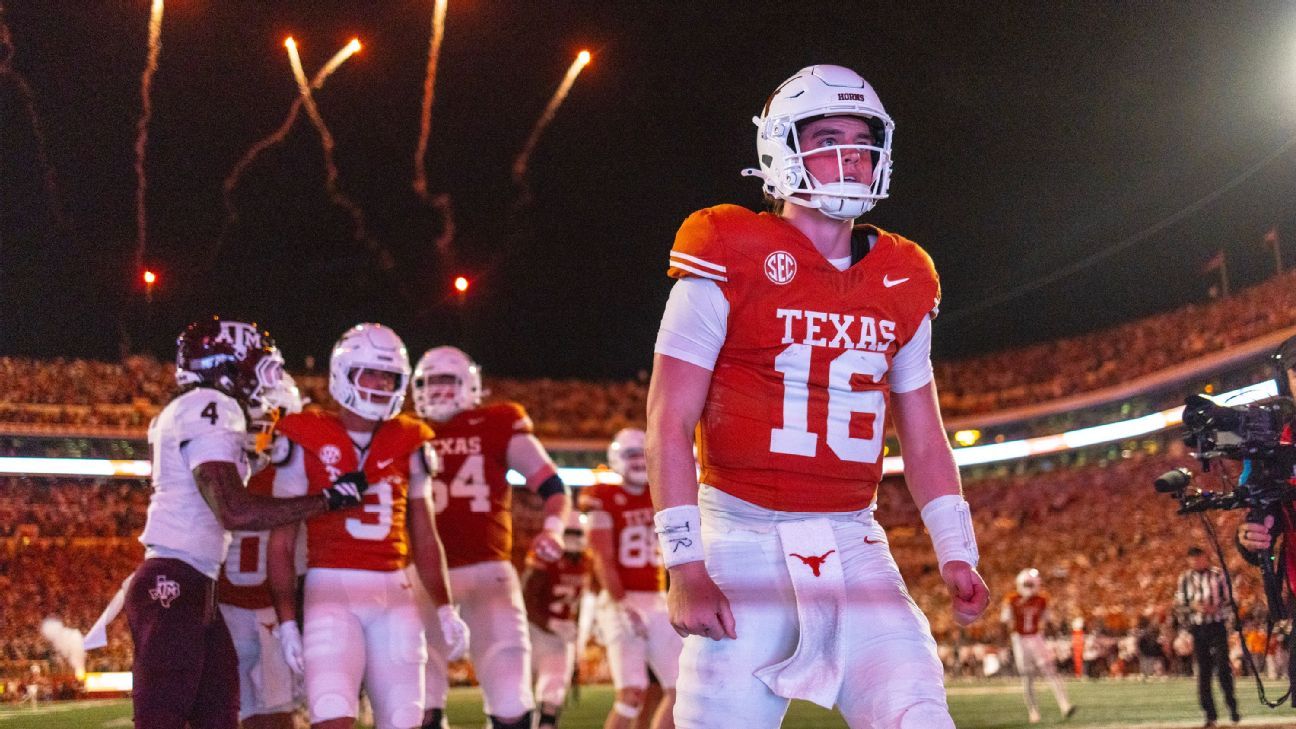
With spring finally on the horizon after a long winter for much of the country, optimism is in the air.
In that spirit, we asked our college football reporters about teams and players they think will be on the rise in the 2026 season.
No one rose higher than national champion Indiana and Heisman Trophy winner Fernando Mendoza last year, but plenty of teams took big steps in the right direction. Texas Tech, Miami, Oklahoma and Ole Miss are among the teams that made the College Football Playoff for the first time, and Houston, Utah and Virginia went from losing records in 2024 to double-digit wins in 2025.
Who could be in store for similar improvement this fall and beyond? These are the potential CFP contenders, breakout performers and bounce-back candidates our reporters have their eyes on.
Which non-CFP team from last year do you expect to make the playoff in 2026?
Adam Rittenberg: Texas. If the Longhorns can’t make the College Football Playoff in quarterback Arch Manning‘s second season as the starter, with all the talent around him on both sides of the ball, something is wrong in Austin. Manning looked like a Heisman Trophy candidate late in the 2025 season, and Texas made major portal investments in wide receiver Cam Coleman, linebacker Rasheem Biles, running back Hollywood Smothers and others. The Longhorns face a challenging schedule, but several of their toughest games (Ohio State, Texas A&M, Ole Miss) will be at home. Coach Steve Sarkisian’s team is talented and experienced enough to return to the CFP.
Jake Trotter: Notre Dame honestly should have been in the playoff this past season. CJ Carr had a strong freshman season, ranking eighth nationally with a QBR of 83.4, and figures to be sharper with a year of experience under his belt. Even with running back Jeremiyah Love moving on to the NFL, the Irish will still have weapons, especially if wideout Jaden Greathouse can return to his 2024 playoff form coming off a serious hamstring injury. The defense will be seasoned. And off the playoff snub, coach Marcus Freeman will have his team playing with an edge.
Andrea Adelson: I was tempted to say LSU because Lane Kiffin put together one of the best portal classes in the country, but then I remembered Brian Kelly put together one of the best portal classes in the country last year and that did not exactly work out. Still, I think LSU will be in the mix late. The team I am going with is BYU. The Cougars return quarterback Bear Bachmeier and leading rusher LJ Martin, shored up their offensive line and made some key transfer portal additions on defense, starting with standout linebacker Cade Uluave from Cal. The schedule is manageable, though an October matchup with Notre Dame in Provo could have huge CFP implications.
Heather Dinich: Texas is my preseason No. 1, but I’ll add USC to this conversation. The pressure is on coach Lincoln Riley, who hasn’t reached 10 wins since his first season, and the pieces are in place to get there. With quarterback Jayden Maiava returning, along with all five starting offensive linemen and running back King Miller, the offense has the potential to be potent. Riley lured in the No. 1 recruiting class and also has help coming from the transfer portal. If he can upgrade the defense, which allowed 23 points per game last year, USC should be a playoff team. The Trojans should be 3-0 heading into their Sept. 26 home game against Oregon, and a win against the Ducks would change the narrative and position USC for a playoff run.
David Hale: This is, perhaps, an outside-the-box pick, but I’ll offer Louisville as an under-the-radar option. The ACC may have a clear-cut favorite in Miami, but beyond that, the league is wide open. The ACC has given us two first-time playoff programs in the past two years — SMU and Miami — and it certainly wouldn’t be a stretch to add another in 2026. And although Louisville hasn’t been a true playoff contender late in the season the past few years, the Cardinals’ 28 wins since 2023 are the second most by any Power 4 program to not make the playoff (Missouri has 29). What’s more, of Louisville’s 12 losses under Jeff Brohm, eight have come by a touchdown or less, including three by a field goal or less last year. Brohm might have something special in QB transfer Lincoln Kienholz, who brings an added dimension of athleticism to the position that Brohm hasn’t had in the past. Add in a deep corps of running backs and an improved defense, led by Clev Lubin, and there’s a lot to like about this year’s Louisville team.
Eli Lederman: This prediction relies on a lot of “what ifs,” but why can’t a Michigan team that finished 9-4 with loads of on- and off-field issues a year ago play its way into the 12-team field in 2026? The arrival of longtime Utah coach Kyle Whittingham should bring sorely needed stability to Ann Arbor this offseason, and he brought a number of key former Utes with him, including offensive coordinator Jason Beck and star defensive end John Henry Daley. Any level of success this fall will be tied heavily to the Year 2 progression of coveted quarterback Bryce Underwood. Beck’s innovative scheme and fresh skill talent, including five-star freshman rusher Savion Hiter and Utah transfer pass catcher JJ Buchanan, should certainly help. Meanwhile, Michigan plugged some key holes on defense through the additions of Daley and fellow ex-Utes Jonah Lea’ea and Smith Snowden. Visits from Oklahoma, Penn State and Indiana combined with November trips to Oregon and Ohio State make for a daunting schedule but could provide the platform for the Wolverines to get back to the CFP if Whittingham can execute a quick turnaround.
Schlabach: BYU narrowly missed making the CFP in 2025, losing to Texas Tech 34-7 in the Big 12 title game. The Cougars fell to the Red Raiders twice last season — they lost 29-7 on the road in the regular season — so they’re going to have to figure out how to crack Tech’s stingy defense. But the Cougars did a great job of keeping coach Kalani Sitake around after he was wooed by Penn State. BYU brings back Bachmeier, who completed 64.9% of his passes for 3,033 yards with 15 touchdowns and seven interceptions as a freshman. He should be much better in Year 2. Martin, the Big 12’s leading rusher with 1,305 yards and 12 scores in 2025, also came back. BYU will need to rebuild its offensive line and find some reliable receivers. The best news? The Cougars won’t play the Red Raiders nor Houston in the regular season, and they’ll face Arizona and Arizona State at home.
Which team will show the greatest improvement from last year?
Rittenberg: Virginia Tech. I also expect James Franklin’s former Penn State team to rise in 2026, but Virginia Tech certainly will improve on a 3-9 mark from last season. Franklin has had a head start on most new coaches in implementing his vision and had a solid portal haul, which included Penn State imports quarterback Ethan Grunkemeyer and tight end Luke Reynolds. A favorable first-half schedule should help the Hokies build confidence and belief. Expect them to pull off one notable upset in November, too.
Trotter: After going 0-18 in the Big 12 over the past two years, Oklahoma State, behind new coach Eric Morris and an array of talented transfers, will bounce back to finish with a winning conference record in 2026. The North Texas star transfer trio of quarterback Drew Mestemaker, running back Caleb Hawkins and wideout Wyatt Young will ensure that the Cowboys get back to putting up points after two dismal offensive seasons in Stillwater. Don’t be stunned if the revamped Pokes make a run to the Big 12 title game.
Adelson: I think Florida will have a chance to double its win total from a year ago for a few reasons. First, new coach Jon Sumrall made a great hire in offensive coordinator Buster Faulkner, who will have familiarity with his quarterback, Georgia Tech transfer Aaron Philo, plus former Jackets receivers Eric Singleton Jr. and Bailey Stockton. Jadan Baugh, Dallas Wilson and Vernell Brown III return on offense, giving Florida playmaking ability. Second, the schedule sets up nicely for a rebound. Florida had one of the toughest schedules in the country the past two years. With the new nine-game conference schedule in the SEC, Florida has a more manageable nonconference slate and faces only four teams ranked in our Way-Too-Early Top 25.
Dinich: Clemson because … there’s just no way Dabo Swinney can lose six games again. Can he? Bringing back former Clemson offensive coordinator Chad Morris is interesting because he hasn’t called plays since 2020 and hasn’t coached at Clemson since 2014. He’s a proven playcaller, though, who helped the Tigers to a 41-11 record during his tenure. How first-year starting quarterback Christopher Vizzina fares is a valid question, but when searching for a team that will make a significant leap this fall, it’s hard to believe Clemson will continue to be irrelevant in the ACC race. With a road opener at LSU, the Tigers will find out early how far their climb back will be.
Hale: Virginia Tech and Oklahoma State feel like obvious answers here, if only because there’s so much room for improvement. And it’s tempting to say Bill Belichick will pull off a miracle at North Carolina after a disastrous 4-8 campaign in 2025, but its schedule doesn’t look promising. So, who’s someone a bit outside the box? How about South Carolina? The pressure is on coach Shane Beamer after a disappointing 4-8 year, but LaNorris Sellers and Dylan Stewart are back, five of the Gamecocks’ first six games come against teams that missed a bowl last year, and although the back end of the schedule is tougher, it would take only an upset or two to get South Carolina into the eight- or nine-win range. And if there’s anything we’ve learned from the Beamer-era Gamecocks, it’s that they tend to play their best when no one’s expecting it.
Schlabach: Penn State was finally able to lure Matt Campbell away from Iowa State, and he could be poised for a big turnaround in Happy Valley. The Nittany Lions won their last four games to salvage a 7-6 campaign in 2026. Much of the roster followed Franklin to Virginia Tech and ex-defensive coordinator Jim Knowles to Tennessee. But Campbell brought in 39 transfers, including two dozen from Iowa State. Quarterback Rocco Becht, tailback Carson Hansen, receiver Chase Sowell and tight end Benjamin Brahmer are plug-and-play starters on offense. The Nittany Lions don’t play Indiana, Ohio State or Oregon in the regular season, so a 10-win season isn’t out of the question.
Which player do you think could take a major step forward in 2026?
Trotter: We started to see Manning live up to the hype and potential late last season, as he posted a QBR of 92 or above in four of his final five games. There’s little reason to believe he won’t carry that over into next season. With Coleman’s arrival, Manning will have a legitimate No. 1 receiver. With a year of experience, he could reemerge into the conversation as the top QB prospect heading into the 2027 NFL draft.
Adelson: As Jake noted above, Notre Dame’s Carr was one of the most impressive freshman quarterbacks in the country a year ago, and his trajectory should only go up from here. He was poised, accurate, did not make many mistakes and rarely got flustered last season. It will be an adjustment not having Jeremiyah Love and Jadarian Price in the backfield, but Carr is more than capable of shouldering the load if necessary.
Rittenberg: Remember Ryan Williams‘ electrifying, spin-infused 75-yard touchdown against Georgia early in the 2024 season? Then a 17-year-old freshman, the Alabama wide receiver was the talk of college football following a blistering start to his career. But Williams struggled with drops and inconsistency during a sophomore season that fell well short of expectations. He’s pushing forward, though, and clearly has the talent and experience to break through as a junior. The road to stardom isn’t always linear, and Williams shouldn’t be overlooked in 2026.
Dinich: Alabama linebacker Caleb Woodson, who transferred from Virginia Tech, should be someone casual fans get to know this fall. Coach Kalen DeBoer told me he was looking for a mature guy to help compensate for the loss of three senior linebackers who graduated, and Woodson started 17 games for the Hokies. Last year, he was second on the team with 58 tackles and had 2.5 TFLs. He’s the kind of player who can get to the quarterback, disrupt passing lanes and make game-changing plays. With the Tide’s entire secondary returning, Alabama’s defense should be fast and physical.
Hale: If you’re a buyer on Dabo Swinney’s “what’s old is new again” approach to Clemson’s offense for 2026 with new coordinator Chad Morris, then you might as well invest heavily in running back Gideon Davidson‘s stock, too. Entering his true freshman year in 2025, Davidson was hyped as a game changer, with Swinney lauding him as one of the most talented backs he’d ever recruited, and an expectation that, at least by year’s end, Davidson would seize the primary role in the ascendant Tigers’ backfield. Instead, both Davidson and Clemson disappointed. Davidson had just 12 carries by the end of October, and it was only after Clemson had effectively punted on any hopes for 2025 that he carved out a bigger role. Down the stretch, though, he had a few moments for optimism, and switching from the clearly ineffective RPO game favored by Garrett Riley back to a more straightforward, vertical offense with a power run component under Morris should help Davidson’s growth. It’s a dice roll, but there’s a lot of upside here.
Lederman: Cal‘s Jaron-Keawe Sagapolutele emerged as the most productive freshman quarterback in the country last fall when he threw for 3,454 yards, 12th most among returning FBS starters in 2026. With another year of experience, a new offensive coordinator in Jordan Somerville and a fairly generous ACC schedule, there’s every reason to believe the left-hander from Hawai’i will make another big jump this fall. First-year coach Tosh Lupoi has injected new energy in the Bears’ program, and Sagapolutele — the quarterback Lupoi went to see hours after his hiring back in December — is at the center of all the optimism hovering over Cal right now.
Schlabach: Georgia is going to have to identify playmakers at receiver after losing Zachariah Branch, Colbie Young, Dillon Bell and Noah Thomas to the NFL draft. The Bulldogs picked up Georgia Tech transfer Isiah Canion in the transfer portal, but the buzz in Athens is that sophomore Talyn Taylor is poised to break out in a big way. He had a critical drop in the Bulldogs’ 24-21 loss to Alabama and missed a long stretch with a broken collarbone. He finished with two catches for 28 yards in six games. But Taylor was the No. 4 receiver in the country as a senior at Geneva (Illinois) High School in the class of 2025 and has elite speed.
Which off-the-radar team will we be talking about in December?
Rittenberg: Washington. I actually liked Jedd Fisch’s team in this category a year ago, but the Huskies struggled to keep pace with their toughest opponents. In hindsight, Year 3 always seemed more sensible for a potential breakthrough, as Fisch and his staff have gradually improved the roster. The fallout from quarterback Demond Williams Jr.’s near exit in January is worth watching, but if things are stable there, Washington should take a step forward offensively. Washington’s schedule also helps as its toughest games in September and October are at home — USC and Iowa in consecutive weeks. The Huskies conclude the regular season with Indiana (home) and Oregon (road).
Trotter: Last season was a disaster for the Gamecocks, who finished with only one SEC win. But two years ago, South Carolina was the hottest team in college football heading into December and nearly snuck into the playoff. The Gamecocks return two absolute stars in Sellers and Stewart. With better pass protection for Sellers — the Gamecocks are hopeful left tackle transfer Jacarrius Peak (NC State) will be ready to go after an offseason basketball injury — South Carolina could be a sleeper playoff contender come December.
Adelson: I am not sure whether it is fair to call SMU under the radar considering the Mustangs have won 42 games over the past four years, including 20 in their first two years in the ACC. But SMU should be considered a CFP contender this year. With quarterback Kevin Jennings returning, a strong offensive line and another solid portal class, SMU simply finds ways to win and stay relevant in the national conversation. The first three weeks of the season are hugely important. SMU opens at Florida State on Labor Day night, then plays at Louisville two weeks later.
Dinich: Boise State. The highest-ranked Group of 6 team will make the playoff this year — not the highest-ranked Group of 6 champion, which is different from previous seasons. Boise State will also be competing for a Pac-12 title this year after conference realignment, and the Broncos have one of the better schedules to impress the selection committee, starting with their season opener at Oregon. With senior quarterback Maddux Madsen returning, the Broncos should be in a position to contend for the Group of 6 spot.
Hale: Let’s go way off the radar. Like, so far off the radar, many people might not even realize what conference this team is in. But, here’s the case for Cal. First, the Golden Bears might have the best young QB in the country in Sagapolutele. Second, new coach Lupoi is coming from a program (Oregon) that has created a strong blueprint on how to win in the Northwest. Third, Lupoi inked one of the top portal classes in the country, completely renovating an offense that offered far too little support for its burgeoning star QB last year. And Lupoi is a defensive guru who has brought a handful of impact players with him from Oregon and stocked the rest of the unit with plenty of upside. Then, look at the schedule: Aside from a trip to UNLV (no easy win), five of Cal’s first six opponents lost at least six games last year. The Bears miss Miami, Louisville and Florida State. The only games where Cal figures to be at a distinct talent disadvantage are vs. Clemson and at SMU (and that talent disadvantage isn’t as huge as it might seem based on reputations). A lot would have to go right for Cal to make a run at the playoff — and, frankly, Cal isn’t a place where a lot has gone right in recent years — but on paper, there’s certainly a formula in which this all works out beautifully in Year 1 for Lupoi.
Lederman: Predicting a Group of 6 CFP contender this time of year is a bit of a fool’s errand … which is why it’s fun to dive into all the various possibilities, including San Diego State building on its 2025 momentum and thrusting itself into the CFP mix this fall. The Aztecs followed up a 3-9 finish in 2024 with a 9-4 campaign in coach Sean Lewis’ second season ahead of the program’s long-anticipated move into the reformed Pac-12 in 2026. Between quarterback Jayden Denegal and reigning All-Mountain West first-team running back Lucky Sutton, SDSU returns the foundational players in the nation’s 19th-ranked rushing offense in 2025. How the Aztecs rebuild following the departure of coordinator Rob Aurich and a number of starters from college football’s No. 6 defense, including Trey White and Owen Chambliss, will, of course, be critical. But with a friendly schedule and résumé-boosting opportunity in a late November trip to Boise State, SDSU has every chance of being in the CFP conversation come late fall.

The meeting was attended by directors of physical education from educational boards as well
A view of the New Zealand versus Pakistan hockey final of the FIH Nations Cup in Kuala Lumpur on Saturday. NZ proved much superior to Pak on the day, winning 6-2. PHOTO: AFP
Officials in Pakistan have unveiled a new strategy aimed at reviving the country’s national sport by strengthening hockey at school and education-board level.
The initiative was discussed during a meeting of the National Education–Hockey Coordination Committee hosted by the Inter Boards Coordination Commission at its secretariat in Islamabad on 10 March.
The meeting, focused on rebuilding Pakistan’s hockey talent pipeline through the education system, was co-chaired by Dr Ghulam Ali Mallah and Mohyuddin Ahmed Wani.
During the session, the Federal Secretary for the Inter-Provincial Coordination Division presented the IBCC–PHF School and Inter-Board Hockey Revival Programme (2026–2029).
The programme — developed in collaboration with the Pakistan Hockey Federation — outlines a roadmap to rebuild Pakistan hockey by expanding the sport across schools and educational boards.
Officials said the initiative will focus on increasing participation in school hockey in Pakistan, organising inter-board hockey tournaments, and establishing a structured pathway for talented players to progress from grassroots level to the Pakistan men’s national field hockey team.
The meeting was attended by directors of physical education from educational boards as well as former Olympians including Hassan Sardar, Islahuddin Siddique and Khwaja Junaid.
Participants welcomed the proposed strategy and expressed support for reviving Pakistan hockey through collaboration between sports authorities and the education sector.
A joint steering committee — which will include former Olympians and representatives from education boards — will oversee the implementation of the Pakistan school hockey revival programme and monitor its progress over the coming years.
Pakistan remains one of the most successful nations in the history of international hockey, but officials believe rebuilding the sport at grassroots level will be key to restoring its competitiveness on the global stage.


Iran war raises new credit risks for emerging market sovereigns: Fitch

BGMEA seeks clarity from US on trade deal’s duty-free access mechanism

PCB announces complete schedule for PSL 11

-

 Politics3 days ago
India let Iran warship dock the day US sank another off Sri Lanka, say officials
-
 Sports4 days ago
Pakistan set for FIH Pro League debut | The Express Tribune
-

 Entertainment3 days ago
Harry Styles kicks off new era with ‘One Night Only’ comeback show
-
 Business3 days ago
Restaurant group changes name after bid to buys pubs across the UK
-

 Tech1 week ago
The 5 Big ‘Known Unknowns’ of Donald Trump’s New War With Iran
-
 Business1 week ago
Labour parliamentarians urge UK Government to oppose Rosebank oil field
-
 Business4 days ago
Home heating oil: ‘Most of my pension has gone on home heating oil’
-

 Sports1 week ago
USA vs. Argentina (Mar 1, 2026) Live Score – ESPN