

Business
‘We’re trying to shame them’: Upstart activist investors target America’s underperforming banks


Misha Zaitzeff and Vik Ghei, founders of HoldCo Asset Management, at their Fort Lauderdale, Florida, offices.
Courtesy: HoldCo
American banks have found an unlikely pair of adversaries in Vik Ghei and Misha Zaitzeff.
Since July, the nine-person hedge fund they run from Fort Lauderdale, Florida, called HoldCo, has challenged lenders with more than $200 billion in combined assets, demanding that they take swift action or face public campaigns to overthrow their boards and fire their CEOs.
The fund notched a victory this month after Comerica, under pressure from HoldCo, agreed to sell itself to rival Fifth Third for $10.9 billion in the biggest bank merger of the year. HoldCo has since announced activist campaigns against two smaller regional lenders, Boston-based Eastern Bank and Billings, Montana-based First Interstate.
A fourth bank is now in their sights, CNBC has learned exclusively: HoldCo plans to launch a proxy battle against Columbia Bank, a lender with $70 billion in assets and 350 branches across Western states, unless it can strike a deal with management.
HoldCo, with $2.6 billion in assets, is bringing back activism to an industry that has largely been insulated from it since the 2008 financial crisis. The demise of bank-specific hedge funds in the post-crisis years and regulatory resistance to mergers meant that underperforming CEOs faced little discipline from the markets until now, according to Ghei and Zaitzeff.
Regional banks have struggled to regain their footing after the 2023 crisis that consumed Silicon Valley Bank and First Republic, leaving them exposed to activists seeking undervalued targets. At the same time, mergers are now viewed as more likely to be approved by regulators in the Trump administration, giving activists like HoldCo a clear exit strategy.
Coming from a hedge fund that few outside of banking circles had heard of, HoldCo’s moves have garnered admiration in some corners of Wall Street, while making them a pariah in others.
Ghei and Zaitzeff say HoldCo has been banned from attending a banking conference held next month outside Miami by Piper Sandler, an investment bank known for advising regionals on mergers. A spokesman for Piper Sandler didn’t immediately have a comment.
The millennial upstarts now find themselves key players in a larger story of industry consolidation. While retail banking is dominated by three giants, JPMorgan Chase, Bank of America and Wells Fargo, the country has more than 4,400 banks, and a long-expected merger wave began this year.
Bad incentives
The HoldCo thesis on regional banks is simple: Many are undervalued because their CEOs have put their own interests above that of shareholders, Ghei and Zaitzeff told CNBC in interviews over the past month.
That’s because the CEOs earn millions of dollars more in annual compensation if they grow by acquiring other banks, even if the deals prove disastrous for shareholders, according to the investors. Bank boards mostly operate as rubber stamps for such deals, they say, because directors are often hand-picked by the CEOs themselves.
“We’re trying to shame them into doing the right thing,” Ghei, 43, told CNBC. “At some of the banks we own, the CEOs have doubled compensation while their stocks have dramatically underperformed, or even fallen.”
On top of that, some of the investment bankers and research analysts that cater to small and medium banks are complicit, because their firms earn fees from mergers, and shareholders are usually silent because they risk losing management access if they challenge bank leaders, said the HoldCo founders.
“We feel that the way to rectify this is to publicly shame banks and aggressively pursue things like proxy battles,” Ghei said. “CEOs should be fired, and the boards should be fired, because they rolled the dice and lost; there should be consequences.”
Regional banks face pressure to bulk up through mergers to compete with super regionals and megabanks, which have far larger budgets for technology and compliance, according to industry consultants who requested anonymity to speak candidly. Poorly-managed firms are more the exception than the rule, they said.
As a group, regional banks have trailed both larger peers and broader stock indexes in recent years, partly because of the hangover from the 2023 tumult. The S&P Regional Banking ETF is still 14% below its 2021 peak, and shares of regional lenders tumbled again this month on concern over a trio of defaults tied to alleged corporate fraud.
In April, after bank stocks plunged in the selloff sparked by President Donald Trump’s so-called “Liberation Day” tariff policies, HoldCo began loading up on shares of beaten-up regionals, including Columbia, Citizens Financial and KeyCorp.
Those bets kickstarted their recent round of activism and raised their profile: HoldCo “is quickly becoming a household name in both the regional banking space and the world of activism,” analyst Don Bilson wrote in an October 21 research note.
The firm’s rise has rattled executives across the U.S. regional banking landscape; several banks have quietly started reviewing their capital plans in anticipation of possible activist scrutiny, according to the industry advisors who spoke to CNBC.
HoldCo said it now owns more than $1 billion in regional bank shares.
‘Best job in the world’
Over steak dinners, Zoom meetings and phone calls, Ghei and Zaitzeff began private discussions with a succession of bank CEOs in recent months, hoping to persuade them to commit to their shareholder-friendly actions.
When that approach has failed, they’ve gone public, releasing their presentations online and in the pages of the Wall Street Journal and Bloomberg News.
It’s a playbook more familiar to other sectors including technology, media and health care, where hedge funds far larger than HoldCo have attempted to sway management with public campaigns.
“I wish I could say there’s more nuance involved,” Ghei said. “But you actually need to put the CEO’s job at risk and make this very legitimate case that you can defeat them.”
HoldCo’s campaign against Columbia Bank is one of the firm’s largest bets yet. Its position is worth roughly $150 million and makes up about 1.9% of the company’s voting shares.
In a 71-page presentation, the activist said that while CEO Clint Stein quadrupled Columbia Bank’s assets through two acquisitions since taking over in 2020, the bank’s shares have fallen 36% during his tenure.
At the same time, Stein’s most recent pay package rose 80% to $6.3 million from his 2021 compensation, the year he began announcing the takeovers.
Columbia Bank declined to comment for this article.
“Being a bank CEO is the best job in the world,” Ghei said. “You have incredible job security because shareholders never show their face and the board feels like they work for you. Everyone’s happy to meet you, and you have a bunch of investment bankers who want to make fees off of you.”
Stein and his chief operating officer flew to Fort Lauderdale in August to meet the activists at a steakhouse two blocks from HoldCo’s offices on bustling Las Olas Boulevard, according to Ghei and Zaitzeff.
Their meal was amicable enough, but the tone changed afterward when it became clear that HoldCo would pursue a proxy battle unless a deal was struck, meaning they would aim to replace directors with their own picks, with the ultimate goal of replacing Stein, according to the HoldCo duo.
In late September, the HoldCo founders delivered their presentation to board members, slide by slide, over a Zoom call.
HoldCo wants Columbia to swear off from doing more acquisitions, instead using excess cash to buy back their own cheap stock for five years, after which they should explore selling themselves to a larger bank.
“They are honestly accomplished people, but not in banking,” Ghei said of the Columbia directors. “I don’t think they understood how bad the transactions they did were.”
‘Don’t take it personally’
The HoldCo partners said they developed their appetite for confrontation in the rough-and-tumble world of distressed debt.
Ghei, a former Goldman Sachs analyst covering financial firms, had figured out a way to make money picking through the remains of banks that had collapsed in the 2008 financial crisis.
Then an analyst at Owl Creek, a hedge fund that specialized in the debt of failed companies, Ghei realized that bonds from the parent company of Washington Mutual were trading at deep discounts because everybody assumed that they wouldn’t be repaid.
But they were ultimately repaid at full price, plus interest, making hundreds of millions of dollars for Owl Creek, according to an American Banker profile of Ghei from 2013.
Ghei would repeat that trade at another Manhattan hedge fund, Tricadia, where he met Zaitzeff, a Brown University computer science graduate who ran models of new financial instruments called subprime collateralized debt obligations.
Tricadia made millions by both creating subprime CDOs and then separately betting that other CDOs would fail, similar to trades from Goldman Sachs and others chronicled in the Michael Lewis book “The Big Short.”
The men immediately hit it off, and in 2011 started their own firm out of “crummy offices” in New York’s Financial District, says Ghei. They called it HoldCo because of their early trades acquiring the debt of 70 holding companies whose banking subsidiaries had failed in the crisis.
Ghei and Zaitzeff say they would spend most of their waking hours over the next 14 years together, angering their wives with their singular focus on batting around ideas for investments until they came to consensus.
“We’re friends, first and foremost,” Zaitzeff, 42, said. “We spend a lot of time debating investments, but we don’t take it personally.”
They believed the bonds of dead banks had value because of assets like tax refunds on corporate ledgers. But the Federal Deposit Insurance Corporation, which took over the failed banks’ subsidiaries, believed it was entitled to the assets, not HoldCo.
So HoldCo battled the FDIC in bankruptcy courts around the country, winning enough of the time on the strength of their arguments to develop a reputation as scrappy fighters.
By 2013, the pair had raised their first institutional funds from an endowment; word of mouth then spread, and they eventually garnered investment from about 20 universities, hospitals and family offices in a series of ever-larger funds.
One battle after another
Their go-anywhere investment style led them to buy the distressed debt of a New Orleans-based lender named First NBC Bank in 2016; the bank had been established a decade earlier to help the city rebuild after Hurricane Katrina.
After realizing that First NBC would soon be undercapitalized, HoldCo shorted the lender and published letters revealing their concerns. The bank’s auditor resigned and the institution was seized by the FDIC. In 2023, the former First NBC CEO Ashton Ryan was sentenced to 14 years in prison for bank fraud.
It was experiences like that led Ghei and Zaitzeff to their dim view of bank management. By proving to themselves that they could identify situations where the market wasn’t functioning like it should, the HoldCo partners had the conviction to take on regional banks this year.
First NBC Bank Chief Executive Ashton Ryan, center.
Source: Nasdaq
Banks didn’t understand the scope of HoldCo’s ambitions at first, the partners said.
“People were surprisingly nice to us after Comerica,” Zaitzeff said. “When we went after Comerica, they viewed it as us going after a bigger bank. But a lot of regional banks view Eastern and First Interstate as much more like them.”
Bank CEOs may believe that if they don’t engage with HoldCo, they can avoid activist campaigns, Zaitzeff said. The activists believe that’s why they were blacklisted from a recent banking conference.
But the hedge fund has purchased almost 5% of the shares of Bank United, a Miami Lakes, Florida-based lender with $35.5 billion in assets, without speaking to management, according to the pair.
HoldCo plans to wage a proxy battle unless they can come to an agreement with management over increasing shareholder returns. Bank United didn’t immediately return messages seeking comment.
On Tuesday, after publication of this story, Bank United shares rose 4.9% and Columbia Bank rose 2.9% in midday trading, the two biggest risers of the more than 140 banks in the S&P Regional Banking ETF.
The investors, convinced of the righteousness of their position, say they also plan to publish regular dispatches about banks destroying shareholder value, even when they don’t hold a stake in the firm.
“The problem is that for so many years there’s been no accountability, and the world has gone insane,” Ghei said. “We’re trying to call out bad decisions and incent them into doing the right thing.”
— CNBC’s Gabriel Cortes contributed to this report.


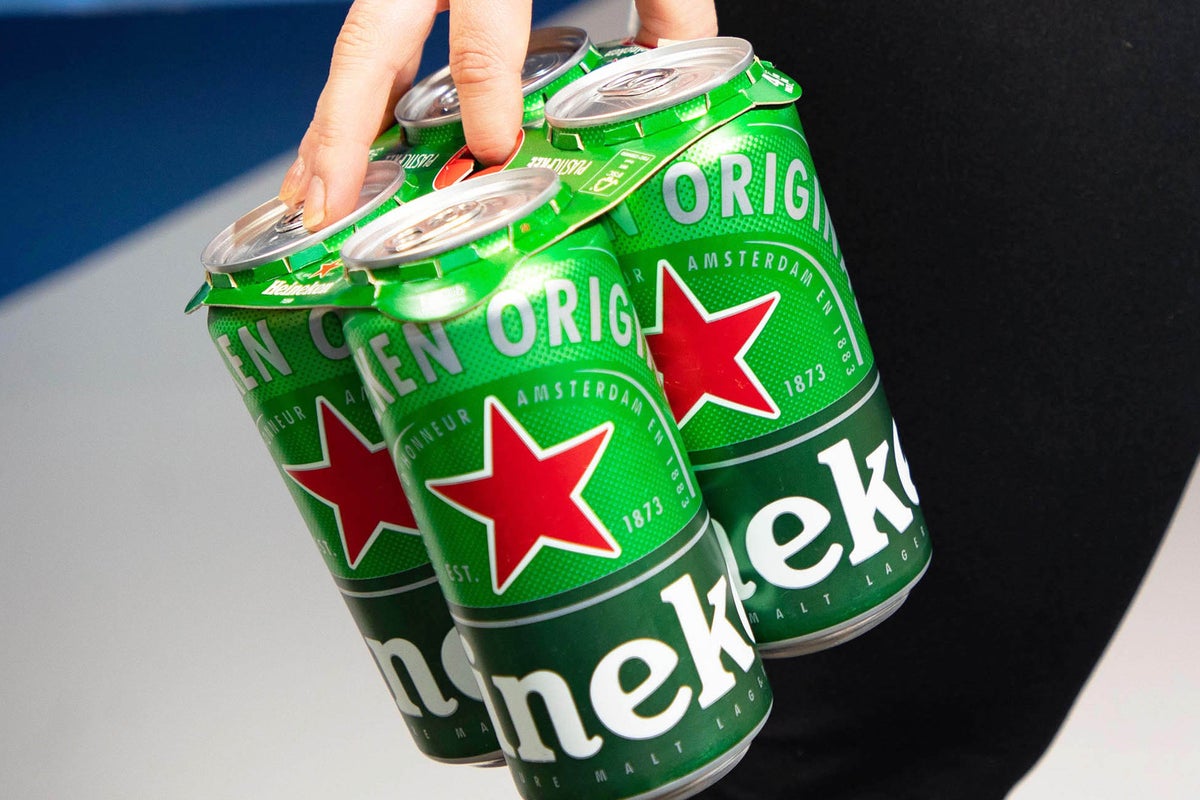
Heineken has revealed plans to invest more than £44 million into improvements for hundreds of its UK pubs.
The Dutch brewing giant said the cash injection into its Star Pubs operation, which runs 2,350 sites across the UK, will create around 850 jobs.
The major investment plan comes despite a challenging backdrop for the pub sector.
Pubs have come under pressure from rising labour costs and increases to national insurance contributions over the past year, while consumer spending has also come under pressure with concerns over inflation and rising unemployment.
However, pubs received additional business rates support from the Government from last month to help ease their cost pressures.
Lawson Mountstevens, Star Pubs’ managing director, said the company’s investment plan is partly aimed at boosting revenues to help the group cope with the recent “sustained increases in running costs”.
The plans will see the business invest £44.5 million this year into upgrades for 647 of its pubs.
It said 108 of its venues will see particularly significant cash injections, with these all set for transformations costing at least £145,000.
Heineken said the majority of pubs are owned by the group but independently operated by locals, with sports-focused venues an emphasis for investment in the run-up to the 2026 football World Cup.
The pub firm and brewer said it has pumped £328 million into British pubs since 2018.
It has already started work in 52 locations, including eight projects where it is reopening boarded-up pubs which have suffered from lengthy closures.
Mr Mountstevens urged the Government to reduce the tax burden on pubs to help ease the cost burden and support more job creation in the industry.
He said: “We can only do so much; the root-and-branch reform of business rates that the industry has been calling for over many years is urgently required, as well as a lowering of the burden of taxation on pubs, including VAT and beer duty.
“We are calling on the Government to support us in bringing out the best in the Great British pub.”

A company law appeals court on Monday rejected a challenge by mining billionaire Anil Agarwal’s Vedanta Ltd to the winning bid by Gautam Adani’s group for bankrupt real estate firm Jaiprakash Associates Ltd (JAL), whose assets include India’s only Formula One circuit. The National Company Law Appellate Tribunal (NCLAT) did not find merit in the issues raised by Vedanta and dismissed its two petitions. A Bench comprising Chairperson Justice (retired) Ashok Bhushan and Technical Member Barun Mitra held that the Committee of Creditors (CoC) were right in preferring Adani Group’s Rs 14,535 crore bid over Vedanta’s resolution plan for JAL. That decision was approved by the National Company Law Tribunal (NCLT), against which Vedanta went into an appeal in NCLAT. “No grounds have been made out by the appellant (Vedanta) to interfere with the decision of the adjudicating Authority (NCLT),” NCLAT order said. “There is no merit in the appeal. Both appeals are dismissed. There shall be no orders to pass.” NCLAT said the decision of the Committee of Creditors was based on “overall consideration of the respective resolution plan and was taken in its commercial wisdom,” said the appellate tribunal. JAL was admitted for insolvency proceedings in June 2024 after it failed to pay bank dues exceeding Rs 57,000 crore. The resolution process drew 28 expressions of interest, with six final bidders including Vedanta, Adani Enterprises and others. Adani and Vedanta emerged as frontrunners, with Adani’s proposal scoring higher on upfront recovery and overall value. The CoC approved Adani’s plan in November 2025 with a 93.81 per cent vote. Vedanta later submitted a revised offer, valued at Rs 16,070 crore, but creditors declined to consider it, citing rules barring post-deadline changes. Vedanta argued the process lacked transparency and that its revised bid offered superior value. Creditors countered that the revised proposal was submitted only after Vedanta became aware it was trailing the winning bid. The appellate tribunal had earlier declined to stay implementation of Adani’s plan, a decision subsequently upheld by the Supreme Court, which directed an expedited hearing while requiring key implementation decisions to receive tribunal approval. Monday’s ruling clears the way for Adani’s takeover of JAL unless Vedanta challenges it in the Supreme Court. In its order, NCLAT also said there has been “no material irregularity committed by Resolution Professional while conducting the plan resolution process.” NCLAT also dismissed Vedanta’s plea, where it had questioned the evaluation metrics adopted and had said its bid was Rs 3,400 crore higher in gross value terms and roughly Rs 500 crore more in net present value compared to the Adani Group’s bid. Rejecting this, NCLAT said “decision of CoC not approving the resolution plan of the appellant with a higher plan value of Rs 3,400 crores and NPV of Rs 500 crore as compared to plan of respondent No 3 (Adani) cannot be said to be arbitrary or perverse.” On March 17, the NCLT, Allahabad bench, approved Adani Enterprises Ltd’s Rs 14,535-crore bid to acquire JAL through the insolvency process. This was challenged by Vedanta before the appellate tribunal NCLAT. On April 23, the insolvency appellate tribunal had concluded its hearing after hearing the petitioner Vedanta and respondents, including the Resolution Professional, Committee of Creditors (CoC) and Adani Enterprises. Vedanta has questioned the evaluation metrics adopted by lenders of JAL, which had selected the lower bid of Rs 3,400 crore from Adani Enterprises for the debt-ridden company and questioned the commercial wisdom of CoC. Earlier, on March 24, NCLAT declined any interim stay over the Vedanta Group’s plea against the order passed by the NCLT approving Rs 14,535-crore bid by the Adani Group for acquiring JAL. However, it had also said the plan would be subject to the outcome of the appeals filed by the Anil Agarwal-led Vedanta Group. This interim order by NCLAT was challenged before the Supreme Court, which also declined to grant a stay. However, the apex court had directed that if the monitoring committee planned to take any major policy decision, it should first obtain the Tribunal’s sanction. Adani Enterprises had outbid Vedanta and Dalmia Bharat to win the bid for JAL. Adani got the maximum 89 per cent votes from creditors, followed by Dalmia Cement (Bharat), and Vedanta Group. The CoC defended its decision, saying the process complied with all Insolvency and Bankruptcy Code (IBC) rules. They maintained that no bidder has a guaranteed right to win, even if it offers the highest value. They said plans were evaluated on multiple factors, including upfront cash, feasibility, and execution, not just headline value. JAL, which has high-quality assets and business interests spanning real estate, cement manufacturing, hospitality, power and engineering & construction, was admitted to the CIRP in June 2024 after it defaulted on payments of loans aggregating Rs 57,185 crore. JAL has major real estate projects like Jaypee Greens in Greater Noida, a part of Jaypee Greens Wishtown in Noida (both on the outskirts of the national capital), and the Jaypee International Sports City, located near the upcoming Jewar International Airport. It also has three commercial/industrial office spaces in Delhi-NCR, while its hotel division has five properties in Delhi-NCR, Mussoorie, and Agra. JAL has four cement plants in Madhya Pradesh and Uttar Pradesh, and a few leased limestone mines in Madhya Pradesh. It also has investments in subsidiaries, including Jaiprakash Power Ventures Ltd, Yamuna Expressway Tolling Ltd, Jaypee Infrastructure Development Ltd, and several other companies.
Business
Manufacturing PMI rises up to 54.7 in April, Iran war pushes input costs higher – The Times of India

India’s manufacturing activity showed a mild recovery in April, with growth in new orders and output improving sequentially, though the pace remained among the slowest in nearly four years, PTI reported.The seasonally adjusted HSBC India Manufacturing Purchasing Managers’ Index (PMI) rose to 54.7 in April from 53.9 in March, signalling continued expansion but marking the second-slowest improvement in overall operating conditions in close to four years.In PMI terms, a reading above 50 indicates expansion, while below 50 denotes contraction.“India’s manufacturing PMI rose to 54.7 in April, up from 53.9 in March, but still marking the second-slowest improvement in operating conditions in nearly four years,” said Pranjul Bhandari, Chief India Economist at HSBC.The survey showed that growth in new orders and output strengthened compared with March, though both indicators remained weaker than levels seen over the past three-and-a-half years.Participants cited advertising efforts and resilient demand as factors supporting sales and production, but noted that competitive pressures, the Middle East conflict and delays in client approvals constrained growth.“Spillovers from the Middle East conflict are becoming more evident, particularly through inflation: input costs increased at the fastest pace since August 2022, and output prices rose at the quickest rate in six months,” Bhandari said, adding that “output, new orders (including exports) and employment all grew moderately, pointing to continued resilience in India’s manufacturing sector.”New export orders rose sharply at the start of the fiscal year, recording a seven-month high, with firms reporting stronger demand from markets including Australia, France, Japan, Kenya, mainland China, Saudi Arabia, the UAE and the UK.On the cost front, companies reported rising prices for aluminium, chemicals, electrical components, fuel, leather, petroleum products and rubber, with many attributing the increases to the Middle East war.Input costs rose at the fastest pace in 44 months, while output prices increased at the quickest rate in six months.The survey noted that overall inflation reached its highest level since August 2022, prompting manufacturers to raise selling prices accordingly.Despite only a marginal rise in outstanding business volumes, firms increased hiring, with job creation marking its strongest pace in ten months.While manufacturers remained optimistic about future growth, overall confidence softened from March levels, with expectations hinging on stronger marketing outcomes and approvals for pending projects.The HSBC India Manufacturing PMI is compiled by S&P Global based on responses from around 400 manufacturing firms.


Yankees radio icon John Sterling dead at 87

Princess Charlotte shows off ‘sporty' Princess Kate trait in latest video

Canada’s Gildan’s Q1 strong on HanesBrands integration, outlook steady

-

 Tech7 days ago
A Brain Implant for Depression Is About to Be Tested in Humans
-

 Tech1 week ago
Almost 90% of women leave tech industry within 10 years | Computer Weekly
-
 Business7 days ago
‘I had £20,000 stolen and had to fight a 13-month fraud reporting rule to get it back’
-
 Business1 week ago
Pakistan’s oil market is fuelling the crisis | The Express Tribune
-

 Sports6 days ago
Pro wrestling star Steph De Lander reveals how colleague’s advice helped lead her to title triumph at ACW
-

 Entertainment7 days ago
Melania Trump says ABC should ‘take a stand’ on late-night host Kimmel
-

 Tech6 days ago
This Ambitious Laptop Doesn’t Leave Much Room for Your Hands
-

 Entertainment7 days ago
Norway joins Type 26 Frigate Programme to boost NATO naval power