

Business
What $1 million buys you in real estate around the world


France, Provence-Alpes-Cote d’Azur, French Riviera, Alpes-Maritimes, Principality of Monaco.
Marco Bottigelli | Moment | Getty Images
A version of this article first appeared in CNBC’s Inside Wealth newsletter with Robert Frank, a weekly guide to the high-net-worth investor and consumer. Sign up to receive future editions, straight to your inbox.
A million dollars isn’t what it used to be — especially in luxury real estate.
According to the new Knight Frank Wealth Report, $1 million buys you only 16 square meters (or about 172 square feet) in Monaco, the world’s most expensive luxury market as measured per meter. That’s down from 17 square meters (182 square feet) in 2020.
In Hong Kong, which ranks second, $1 million gets you 22.5 square meters, or about 242 square feet. New York looks downright affordable next to London, Singapore and Geneva, with $1 million getting you 33.9 square meters, or 365 square feet.
Luxury real estate in most major markets around the world continues to become more expensive, as the wealthy grow wealthier and more mobile. Last year, prices for prime real estate in 100 markets tracked by Knight Frank increased by 3.2%, outpacing the growth of mainstream global housing prices at 2.9%.
The Middle East led global luxury growth last year, with prices in Dubai, United Arab Emirates, up 25% in 2025 and nearly 200% over the past five years, according to the report. Tokyo was the big standout in 2025, with prices surging 58%, the report said. Manila, Philippines, Seoul, South Korea, and Prague also had strong price growth.
For future growth, Knight Frank says Mumbai, India, Brisbane, Australia, Miami and Hong Kong are all future hot spots for luxury real estate. The report said the ultra wealthy are more mobile than ever, buying homes around the world and flitting from city to city more frequently.
“Rising tax and growing regulatory pressures are accelerating the global mobility of wealth,” the report said. “As a result, established hubs such as London are shifting towards a ‘dip-in, dip-out’ model: places to spend time for business, culture and connectivity rather than permanent residence.”
Liam Bailey, global head of research at Knight Frank, said the luxury markets with the strongest outlook have low supply combined with a strong lifestyle and tax appeal. Miami, Milan and Dubai, for instance, have attractive tax environments. New York and London draw the wealthy for their lifestyle offerings and business concentration. Yet both cities are becoming less attractive for tax reasons.
“Every market that wants to succeed in attracting UHNW capital over the next decade needs to be positioned at an attractive point on the tax curve, ” Bailey said. “Capital is already moving away from high-friction environments toward jurisdictions that actively court wealth.”




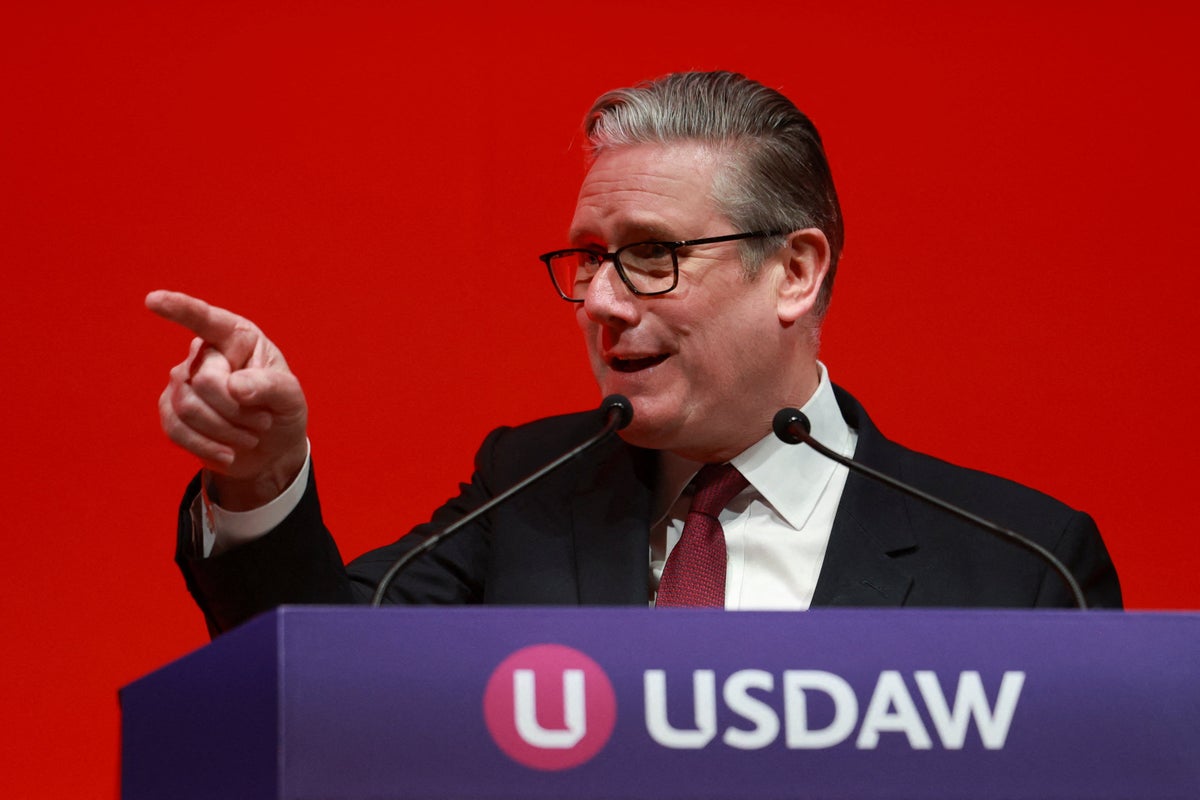
Sir Keir Starmer claimed “the tide could be turning” against shoplifting as he set out the Government’s efforts to crack down on retail crime.
The Prime Minister said shop thefts were “slightly down” in the latest figures and he wanted wider use of technology which allows CCTV footage to be shared immediately with the police.
His comments came as a think tank highlighted figures showing 67% of shoplifting offenders go on to commit another offence within 12 months, up from 55% before the pandemic.
In an address to the Usdaw shopworkers’ union, Sir Keir said: “It’s disgraceful that people just working in their shop have to take abuse from customers.
“It’s disgraceful that people feel sick to the stomach thinking about how they’re going to get through the day and it’s disgraceful that people can have their lives and livelihoods ruined by persistent shop theft.”
He said the Government has put an extra 3,000 neighbourhood police officers on the streets and scrapped the “ridiculous” rule which left theft of goods worth less than £200 “not properly investigated” by police.
“That was a shoplifters’ charter, and we’ve ended it and not before time,” he said.
“We’ve toughened up punishment too. We’re giving police stronger powers, making the abuse and assault of retail workers a specific crime and giving you the same protections as emergency workers.”
Sir Keir said he was “not blind to how big this challenge is” but said the number of people charged had gone up 17% in the latest statistics and shop theft was down.
The latest Office for National Statistics (ONS) data showed shoplifting offences fell slightly last year, down from 516,611 in 2024 to 509,566 in 2025.
Sir Keir said: “It’s only slightly down, but the tide could be turning.”
The Prime Minister’s speech came as the Centre for Social Justice (CSJ) warned of a high street crime epidemic.
The centre-right think tank highlighted figures uncovered by former Tory leader Sir Iain Duncan Smith through parliamentary questions which showed the extent of repeat offending.
The think tank’s analysis showed the average number of offences committed by shoplifters has nearly doubled in five years, rising from 5.5 to 9.1 offences per convicted thief.
Sir Iain, the CSJ’s chairman, said: “Communities across Britain are suffering from a high street crime wave.
“Set against years of economic difficulties, there is a risk that some of our town and city centres are left permanently hollowed out.”
A standalone offence for assaulting a retail worker is set to be introduced in the Crime and Policing Bill going through Parliament.
But the two Houses of Parliament are currently in a tussle over the final draft of the Bill as the end of the parliamentary session nears.
Almost 80% of shop workers said they experienced verbal abuse, more than half said they were threatened by a customer and 10% said they were assaulted in the latest annual survey by retail trade union Usdaw.
The small drop in shoplifting in the ONS figures may reflect a change in how such offences are recorded.
Offences where someone has entered a retail premises, steals, then either uses or threatens violence against staff or other people should be classed as robbery of business, police forces were advised in April last year.
This may account for the steep increase in the number of such robberies recorded, which rose 78% to 26,158 in 2025.
Joanne Thomas, Usdaw general secretary, said the incoming legislation delivers “much-needed protection of retail workers’ law”.
She said: “While there has been a welcome small decrease in shoplifting across last year, the fact is retail crime continues to be a significant issue for the sector and particularly staff.
“Usdaw’s last survey found that this is in no way a victimless crime, with two-thirds of attacks on retail staff being triggered by theft or armed robbery.
“Having to deal with repeated and persistent offences can cause issues beyond the theft itself, like anxiety, fear and physical harm to retail workers.”
Shadow home secretary Chris Philp accused the Prime Minister of “brazen cheek”, saying Sir Keir was “part of the problem, not the solution”.
He said: “Shoplifting is up 8% under Labour, made worse by a drop in total police numbers of 1,300 in the last year alone.
“Starmer is abolishing prison sentences under a year, which means virtually no shoplifter will ever go to prison.
“The Conservative plan to take back our streets will see 10,000 extra police hotspot patrol high crime areas, combined with a tripling of stop and search and widespread use of live facial recognition to catch wanted criminals.
“Only the Conservatives have a plan to fix this.”

Gold prices in Pakistan have risen again at the start of the business week after several days of decline, according to the All Pakistan Bullion Market.
The price of gold per tola increased by Rs 800, reaching Rs 493,962.
Similarly, the price of 10 grams of gold rose by Rs 686 to Rs 423,492.
In the global market, gold also recorded an increase of $8 per ounce, reaching $4,716.
Experts say global economic uncertainty, currency fluctuations, and investor preference for safe-haven assets are driving the upward trend in gold prices.
They add that changes in international markets directly impact Pakistan’s local bullion rates, leading to continued fluctuations in domestic prices.

Now one of the biggest sportswear firms, Anta’s rise follows a playbook adopted by many Chinese giants.
Source link

Starmer says ‘tide could be turning’ on shoplifting epidemic

SBP raises policy rate by 100bps to 11.5% as inflation risks mount

Finalise Bangladesh’s textile-RMG circular economy strategy: Experts

-

 Sports1 week ago
WWE WrestleMania 42 Night 2: Live match results and analysis
-

 Sports1 week ago
NCAA men’s gymnastics championship: All-time winners list
-

 Fashion1 week ago
UK’s Sosandar returns to profitability amid robust FY26 performance
-

 Politics6 days ago
UK’s Starmer seeks to deflect blame over Mandelson appointment
-

 Entertainment7 days ago
Lee Anderson, Zarah Sultana kicked out of UK Parliament for calling PM ‘liar’
-
 Business1 week ago
No fuel shortage: Govt assures 100% domestic LPG, PNG, CNG supply amid Hormuz energy crunch – The Times of India
-
 Business7 days ago
How Trump’s psychedelics executive order could unlock stalled cannabis reform
-
 Business1 week ago
Exercise to test response to offshore energy threat involving vessels and drones