

Business
What are tariffs, how do they work and why is Trump using them?

 Getty Images
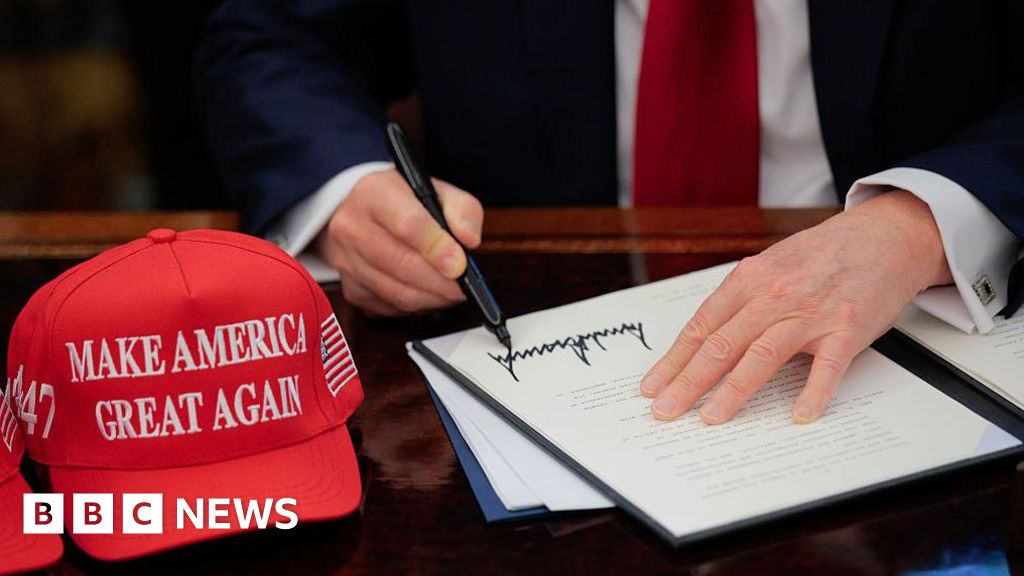
US President Donald Trump has threatened to impose further tariffs on eight European allies who oppose his demands for control of Greenland.
In 2025, he placed a number of taxes on goods reaching the US from countries around the world, arguing that the move would boost American manufacturing and create jobs.
Critics warned of higher prices and damage to the global economy, and the US Supreme Court is considering the legality of the tariffs Trump has brought in.
What are tariffs and how do they work?
Tariffs are taxes on imported goods.
Typically, the charge is a percentage of a good’s value.
For example, a 10% tariff on a $10 product would mean a $1 tax on top – taking the total cost to $11 (£8.17).
The tax is paid to the government by companies bringing in the foreign products.
These firms may pass some or all of the extra cost on to their customers, which in this case means ordinary Americans and other US businesses.
They may also decide to import fewer goods.
Why is Trump using tariffs?
Trump says tariffs increase the amount of tax raised by the government, encourage consumers to buy more American-made goods and boost investment in the US.
He wants to reduce the US trade deficit – the gap between the value of goods it buys from other countries and those it sells to them.
The president argues that the US has been exploited by “cheaters” and “pillaged” by foreigners.
He said that China, Mexico and Canada must do more to stop migrants and the illegal drug fentanyl reaching the US.
Trump has also used the threat of tariffs to encourage other countries to support the US on issues unrelated to trade – Russia’s invasion of Ukraine and Iran’s suppression of protests, as well as his demands on Greenland.
Many tariffs have been amended or delayed after being announced.
How will the new tariffs on eight European countries work?
On 17 January, Trump threatened to impose a further 10% tariff on eight European countries who have rejected his Greenland plans.
He said the rate would apply to goods from Denmark, Norway, Sweden, France, Germany, the UK, the Netherlands and Finland from 1 February, but could later rise to 25% – and would last until a deal was reached.
The move was widely condemned by European leaders, including UK Prime Minister Sir Keir Starmer and French President Emmanuel Macron, who said the EU could consider a series of retaliatory options including a so-called “trade bazooka”.
Officially known as the Anti-Coercion Instrument (ACI), this is a law that allows the EU to respond to economic blackmail from non-EU countries. It threatens very severe consequences.
In July 2025, European Commission President Ursula von der Leyen agreed the EU would pay 15% tariffs on its US exports.
After the agreement, Brussels suspended the tariffs it had planned to introduce on €93bn (£81bn; $109bn) worth of US goods sold to the EU, from livestock and aircraft parts to whiskey.
The European Parliament had been due to ratify the 15% deal shortly, but is now expected to suspend the agreement, sparking fears of a new trade war.
What are Trump’s tariffs on individual countries?
Negotiations continue with a number of countries, including America’s top three trading partners, China, Canada and Mexico, who have been threatened with particularly high tariffs:
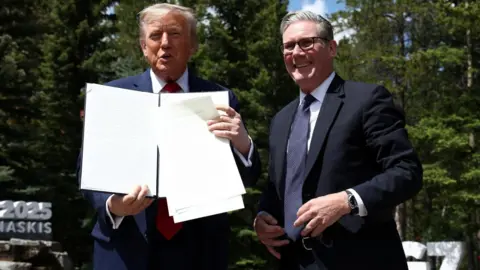
What is the UK tariff deal?

 Reuters
Which goods are affected by Trump’s tariffs?
Some taxes announced by Trump are on particular products, wherever they are made.
These include:
 Reuters
In addition, Trump ended an exemption for imports valued at $800 (£592) or less.
It means low-cost goods are no longer duty-free – a move affecting millions of packages sent every day, including those from online retailers like Shein and Temu.
The companies shipping the parcels now have to pay duties based on the tariff rate which applies to the country the goods were sent from. Otherwise, for six months, they can choose to pay a fixed fee of between $80 and $200 per package.
On 2 January, the White House confirmed it had slashed proposed tariffs of almost 92% on some imported pasta after what it called constructive engagement from firms.
In November, Trump had signed an executive order exempting a range of other food products from tariffs, including avocados, bananas, beef and coffee because of domestic shortages.
Why has the Supreme Court been considering the legality of Trump’s tariffs?
Trump’s tariffs have faced numerous legal challenges.
The Trump administration brough in certain tariffs using the 1977 International Emergency Economic Powers Act. Declaring an emergency under the law meant Trump could bypass Congress.
In August 2025, a US appeals court ruled that most of the tariffs were illegal, but left them in place.
The White House asked the US Supreme Court to overturn that decision. A ruling is expected soon.
Trump posted on social media that it would be a “complete mess” if the Supreme Court struck down his tariffs, and warned of difficulties if businesses were told they could claim refunds.
“It would take many years to figure out what number we are talking about and even, who, when, and where, to pay,” he said.
Have prices gone up for US consumers?
Some products have become more expensive – including toys, appliances and furniture as well as certain foodstuffs.
US inflation was 2.7% in the 12 months to December, down from 3% in September, but up from 2.4% in April, before most tariffs started.
Many firms say they are passing on the cost of tariffs to US customers, including Target, Walmart and Adidas.
The cost of goods manufactured in the US using imported components is also expected to rise.
For example, car parts typically cross the US, Mexican and Canadian borders multiple times before a vehicle is completely assembled.
How are tariffs affecting the US and global economies?
Trump was accused of throwing the global economy into turmoil when he announced the first tariffs of his second presidential term.
Although financial markets have since largely recovered, in October 2025 the International Monetary Fund (IMF) said the overall picture remained volatile, and that US tariffs were having a negative effect.
It forecast global growth of 3.2% for 2025, and 3.1% in 2026. That was a slight increase from its July predictions, but still below the 3.3% it had projected for both years before Trump’s measures were announced.
It thinks the US economy will grow by 2% in 2025, and 2.1% in 2026. That’s down from the 2.8% growth recorded in 2024, but still the fastest among the world’s most advanced economies.
The most recent US figures show the economy picked up speed over the three months to September 2025, as consumer spending jumped and exports increased.
The economy grew at an annual rate of 4.3%, up from 3.8% in the previous quarter. That was better than expected, and marked the strongest growth in two years.
Imports – which count against growth – continued to decline during the period.
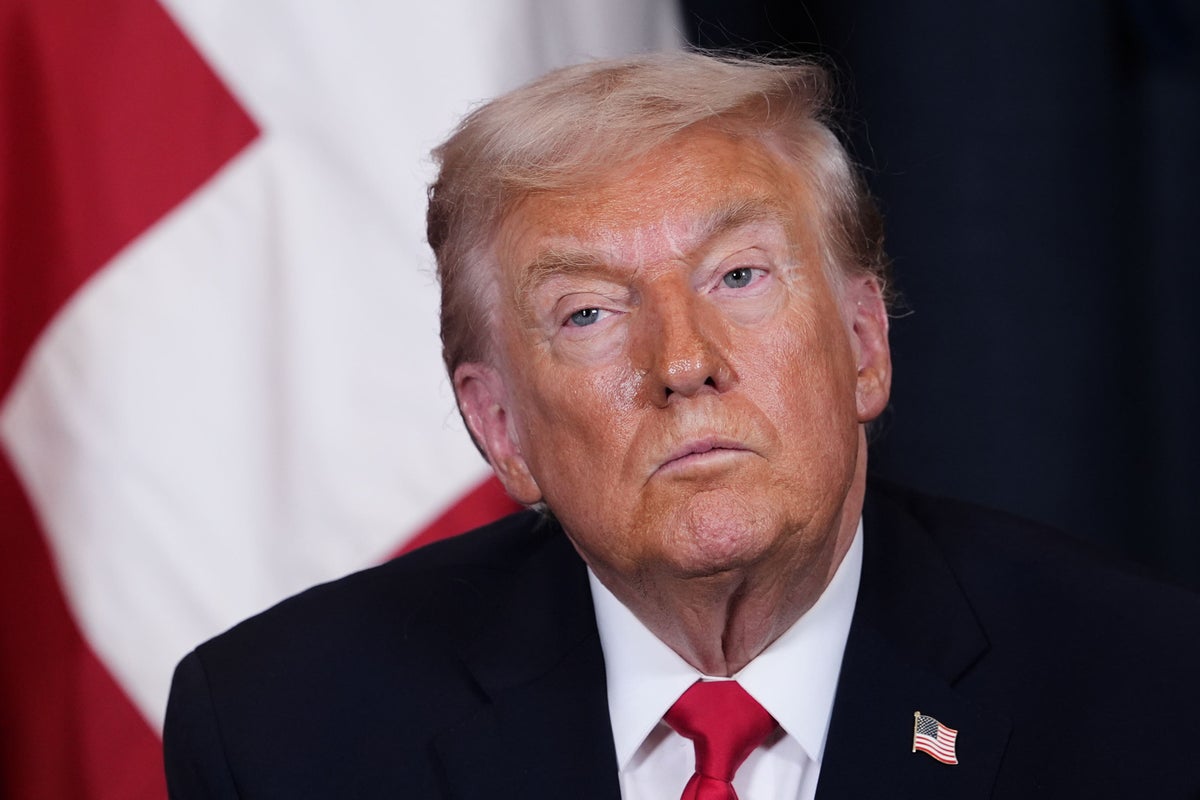
The FTSE 100 shrugged off a weak start to close slightly higher on Wednesday after US president Donald Trump said he would not use force to take control of Greenland, but insisted America must still have “ownership” of it.
Kathleen Brooks, research director at XTB, said Mr Trump’s speech at Davos, in Switzerland, had two key takeaways for markets.
“Firstly, Trump will not take Greenland by force and second, Trump wants the economy to run hot to send US stocks flying north,” she said.
The FTSE 100 index closed up 11.31 points, 0.1%, at 10,138.09.
The FTSE 250 ended 113.42 points higher, 0.5%, at 23,071.29, and the AIM All-Share closed up 7.45 points, 0.9%, at 808.59.
In a wide-ranging, often rambling speech at the World Economic Forum, Mr Trump said: “We probably won’t get anything unless I decide to use excessive strength and force where we would be, frankly, unstoppable, but I won’t do that.”
But he demanded “immediate” talks on Washington’s acquisition of Greenland, renewing his push to seize control of the autonomous territory from Nato ally Denmark.
“It’s the US alone that can protect this giant mass of land, this giant piece of ice, develop it and improve it,” Mr Trump told world leaders.
“That’s the reason I’m seeking immediate negotiations to once again discuss the acquisition of Greenland by the US.”
Prime Minister Sir Keir Starmer earlier told Parliament he would not give in to pressure from Mr Trump over the future of Greenland.
“I will not yield, Britain will not yield on our principles and values about the future of Greenland under threats of tariffs, and that is my clear position,” he told MPs, adding that he would host Danish counterpart Mette Frederiksen in London on Thursday.
Mr Trump has threatened to slap tariffs on Britain and other European countries for opposing his claims on Greenland.
“Greenland could still be an issue for financial markets, since Trump has said that he wants to gain control of Greenland and will start immediate negotiations to do so. However, today’s speech suggests that Nato is not under immediate threat, for now,” Ms Brooks said.
In European equities on Wednesday, markets were mixed. The CAC 40 in Paris closed up 0.1%, while the DAX 40 in Frankfurt ended 0.6% lower.
In New York, financial markets were higher at the time of the London equity market close.
The Dow Jones Industrial Average was up 0.9%, as was the S&P 500, while the Nasdaq Composite climbed 1.0%.
Bond markets were calmer after Tuesday’s sharp moves. The yield on the US 10-year Treasury was quoted at 4.27%, trimmed from 4.28% on Tuesday. The yield on the US 30-year Treasury was quoted at 4.89%, narrowed from 4.91%.
Back in London, analysts played down a surprise spike in UK inflation, calling it a “blip”.
“It was always likely that the December figures would post a rebound on account of the rise in tobacco duty rates showing up in the December data rather than November (as it did in 2024) due to the later timing of last year’s budget,” analysts at Lloyds Bank said.
“Some unwinding of the ‘early’ Black Friday discounting seen in the November data also looks to have been behind the upward move, as well as base effects associated with a sharp rise in airfares last month relative to a more subdued increase in December 2024,” the bank added.
Headline consumer prices index (CPI) inflation accelerated in December, with CPI rising by 3.4% year-on-year, up from 3.2% in November, according to data published on Wednesday by the Office for National Statistics (ONS). It was ahead of the FXStreet-cited consensus of 3.3%.
It was the first time headline inflation has risen since July, when the annual rate rose to 3.8% from 3.6% in June. Figures for October at 3.6% and November at 3.2% were lower than the consensus forecast at the time.
The ONS said alcohol, tobacco and transport made the largest upward contributions to the monthly change.
Core CPI, which excludes energy, food, alcohol and tobacco, was unchanged at 3.2%, better than the 3.3% consensus.
The CPI goods annual rate rose to 2.2% from 2.1%, while the CPI services annual rate rose to 4.5% from 4.4%, but below the 4.6% consensus.
RBC Capital Markets expects the December “blip” to fall away sharply in the first half of 2026.
“Not only therefore did the December outturn leave services and headline CPI inflation broadly in line with the BoE’s (Bank of England’s) projections from November but also the main upward contributions to both headline and CPI were concentrated in non-core or more volatile categories,” the broker said.
Deutsche Bank expects inflation will take a big step down in January, pushing to near 3% year-on-year.
And by spring, the bank expects the BoE’s 2% inflation target “to be in sight”.
The pound was quoted lower at 1.3437 US dollars at the time of the London equities close on Wednesday, compared to 1.3462 dollars on Tuesday.
The euro stood at 1.1707 dollars, lower against 1.1733 dollars. Against the yen, the dollar was trading at 158.18 yen, higher from 157.95 yen.
On the FTSE 100, trading statements boosted Burberry but weighed on Experian.
Luxury goods manufacturer Burberry rose 5.0% after announcing an increase in comparable store sales over the festive period, while it expects its annual adjusted operating profit to be in line with analyst consensus estimates.
Comparable sales by region in the third quarter of financial year 2026, which runs until March 28, were up 6% in Greater China and 5% higher in Asia Pacific. They were up 2% in the Americas. Further, comparable sales were flat in Europe, Middle East, India & Africa due to declines in tourist spend.
Miners were in demand with Rio Tinto, up 5.2% after a well-received fourth quarter production update, and Glencore, which Rio is trying to buy, up 3.7%.
Bank of America said it believes “GlenTinto” – should a deal be sealed – offers “compelling value”.
Rio has until February to firm up an approach for Glencore.
Heading south, insurer Admiral, down 4.2%, after Goldman Sachs downgraded to “sell” from “buy”, while Experian slipped 4.9% despite reporting in-line trading.
On the FTSE 250, Currys shares sparked 7.7% higher as the electricals retailer rose profit guidance, while Premier Foods climbed 7.1% after it signalled top-end full-year profits.
But pub chain JD Wetherspoon failed to cheer investors, with shares down 8.1%, as it said higher costs were offsetting growth in sales.
Brent oil traded lower at 64.82 dollars a barrel on Wednesday, down from 64.89 dollars late on Tuesday.
Gold was quoted at 4,833.66 dollars an ounce on Wednesday, after hitting another record high, up from 4,742.56 dollars on Tuesday.
The biggest risers on the FTSE 100 were Rio Tinto, up 327.00 pence at 6,641.00p, Burberry, up 61.00p at 1,280.00p, Bunzl, up 97.00p at 2,086.00p, Anglo American, up 158.00p at 3,401.00p, and JD Sports Fashion, up 3.78p at 82.06p.
The biggest fallers on the FTSE 100 were Experian, down 157.00p at 3,070.00p, Admiral Group, down 128.00p at 2,948.00p, London Stock Exchange, down 198.00p at 8,782.00p, Rolls Royce, down 26.00p at 1,255.00p and Sage Group, down 16.50p at 1,025.00p.
Thursday’s global economic calendar has public sector net borrowing figures, plus GDP data, initial jobless claims and personal consumption expenditures data.
Thursday’s UK corporate calendar has trading statements from discount retail chain B&M European Value Retail and trading platform AJ Bell.
Contributed by Alliance News
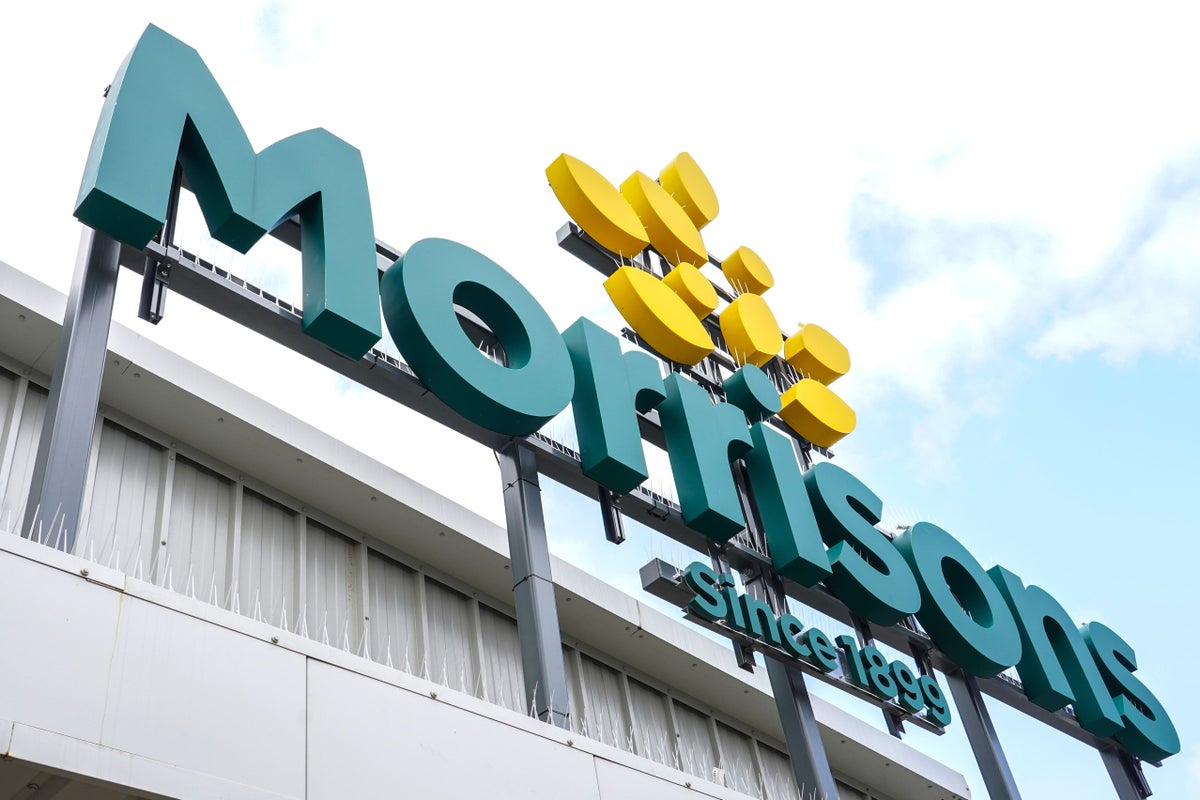
Supermarket Morrisons has revealed annual losses of £381 million after hefty borrowing costs but enjoyed a resurgent sales performance over Christmas.
The UK’s fifth largest grocery chain reported a £381 million pre-tax loss for the year to October 26 after it faced a £281 million interest bill on its debt mountain, although it said this was narrowed from losses of £414 million in 2023-24.
The group – owned by US private equity firm Clayton, Dubilier & Rice – said it cut debts by 10% over the year, but still ended 2024-25 with a £3.1 billion debt pile.
Morrisons added that on an underlying basis and stripping out costs such as debt interest, its earnings remained flat at £835 million, with progress held back by rising costs and a cyber incident that caused an IT systems outage just before Christmas 2024, impacting product availability.
The group said measures in the 2024 budget, such as last April’s national insurance contributions tax hike and minimum wage rise, sent costs surging by £200 million in the past financial year.
It said it cut costs by £233 million in the year to October 26 and is making further savings over the current financial year to meet its £1 billion target.
This is not set to include job losses among its 95,000-strong workforce, although bosses said the group would not replace some workers as they left in an effort to make savings and as it rolls out initiatives such as electronic shelf price tags.
Over Christmas, the firm said like-for-like sales growth picked up to 3.4% in the crucial six weeks to January 4, helped by strong demand for its own-brand premium range, which saw sales jump 17.4%.
It cheered a “good performance in a competitive market”, with non-food sales also up 10% and its clothing range seeing a 4.7% increase over the Christmas period.
The festive sales jump marked an improvement on trading in the full year to October, when like-for-like sales lifted 2.8%, with growth slowing to 2.4% in the final quarter.
Rami Baitieh, chief executive of Morrisons, said: “In a year when consumers were feeling the squeeze, we grew like-for-like sales for a 12th consecutive quarter, maintained Ebitda (earnings before interest, taxes, depreciation, and amortisation) and our market share.”
He said the results “demonstrated our resilience in the face of some tough external headwinds, from the cyber incident, rising inflation and Government cost increases, which we worked hard to offset”.
Mr Baitieh added: “We had a good Christmas in 2025, providing a solid foundation for the first quarter.
“As we enter 2026, the grocery market remains competitive and we are committed to our focus on delivering good value and keeping prices low for customers.”
He said consumers were under pressure at the end of last year, with “the impact of the Government cost increases, with inflation and budget uncertainty all weighing on customer sentiment” and added consumer confidence was still “not at its best” in 2026.
Recent industry data from Worldpanel suggested Morrisons’s market share slipped over Christmas, to 8.5% in the 12 weeks to December 28, down from 8.6% a year earlier despite the sales rise.
The gap with rival Lidl is closing and experts have said the German discounter could overtake Morrisons in the coming months if its current momentum continues.
Morrisons said it cut costs and borrowings in the year to October 26, with its debt now down by 46% from a peak seen in 2022.
Jo Goff, chief financial officer of Morrisons, said: “We worked hard during the year to offset the significant and unexpected cost headwinds arising from the Government’s 2024 budget and other inflationary pressures, with our cost reduction programme delivering savings of £233 million, to take the total to date to £845 million.
“We expect to exceed our £1 billion savings target by the end of 2025-26.”
Business
EU–Mercosur trade pact: Parliament sends deal to EU court, farmers celebrate while exporters flag risks – The Times of India

The European Parliament has voted to refer the recently signed EU-Mercosur free trade agreement to the bloc’s top court, pushing the long-negotiated pact into legal uncertainty just days after it was sealed, according to an AFP report.Lawmakers in Strasbourg voted 334 to 324 in favour of asking the Court of Justice of the European Union (CJEU) to examine whether the agreement complies with EU rules. The move follows the signing of the deal on Saturday with Brazil, Argentina, Uruguay and Paraguay, aimed at creating one of the world’s largest free trade areas.
The decision was greeted with celebration by farming groups, particularly from France, which has led opposition to the pact over concerns about agricultural imports. Hundreds of farmers gathered with tractors outside the European Parliament ahead of the vote and cheered as the result was announced.“We’ve been on this for months and months, for years,” Quentin Le Guillous, head of a French young farmers’ group, told AFP. “Tonight, I’m going home, I’m going to kiss everyone, and I’m going to tell my kids, ‘I got it, we got it, we can be proud.’”The court referral deals a setback to the European Commission, which negotiated and champions the agreement. Commission President Ursula von der Leyen had earlier described the pact as a “historic deal,” especially at a time when countries are seeking new trade partners amid tariff threats from the US administration.The Commission said it “regrets” the parliament’s decision. Trade spokesman Olof Gill said the questions raised by lawmakers were “not justified,” arguing that the Commission had already addressed concerns in detail.At the heart of the legal challenge is whether the agreement can be partially applied before full ratification by all EU member states, and whether it improperly limits EU powers on environmental and food-safety standards.The decision also drew criticism from industry. Hildegard Mueller, head of Germany’s auto industry group VDA, said the vote sent a “devastating sign” and risked alienating Mercosur partners at a time of heightened geopolitical uncertainty.Germany, Spain and Nordic countries back the deal, viewing it as a way to boost exports amid competition from China. German Chancellor Friedrich Merz said after the vote: “We are convinced of the legality of the agreement. No more delays. The agreement must now be provisionally applied.”However, France, Poland, Austria, Ireland and Hungary remain opposed, citing risks to domestic agriculture. French Foreign Minister Jean-Noel Barrot said, “The fight continues to protect our agriculture and guarantee our food sovereignty.”The EU-Mercosur deal would ease tariffs on more than 90 per cent of bilateral trade, favouring European exports such as cars, wine and cheese, while opening EU markets further to South American beef, poultry, sugar and soy.Together, the EU and Mercosur account for around 30 per cent of global GDP and more than 700 million consumers.


TCL Knocks $1,000 off One of Our Favorite Mid-Range TVs
Stocks rally as Trump calms Greenland rhetoric

Travis Kelce praises offensive coordinator’s reported Chiefs return

-

 Tech1 week ago
New Proposed Legislation Would Let Self-Driving Cars Operate in New York State
-

 Entertainment1 week ago
X (formerly Twitter) recovers after brief global outage affects thousands
-

 Sports6 days ago
Pak-Australia T20 series tickets sale to begin tomorrow – SUCH TV
-

 Politics5 days ago
Saudi King Salman leaves hospital after medical tests
-

 Fashion5 days ago
Bangladesh, Nepal agree to fast-track proposed PTA
-
 Business5 days ago
Trump’s proposed ban on buying single-family homes introduces uncertainty for family offices
-

 Tech6 days ago
Meta’s Layoffs Leave Supernatural Fitness Users in Mourning
-

 Tech7 days ago
Two Thinking Machines Lab Cofounders Are Leaving to Rejoin OpenAI