

Business
What Budget rumours are doing to the FTSE 100

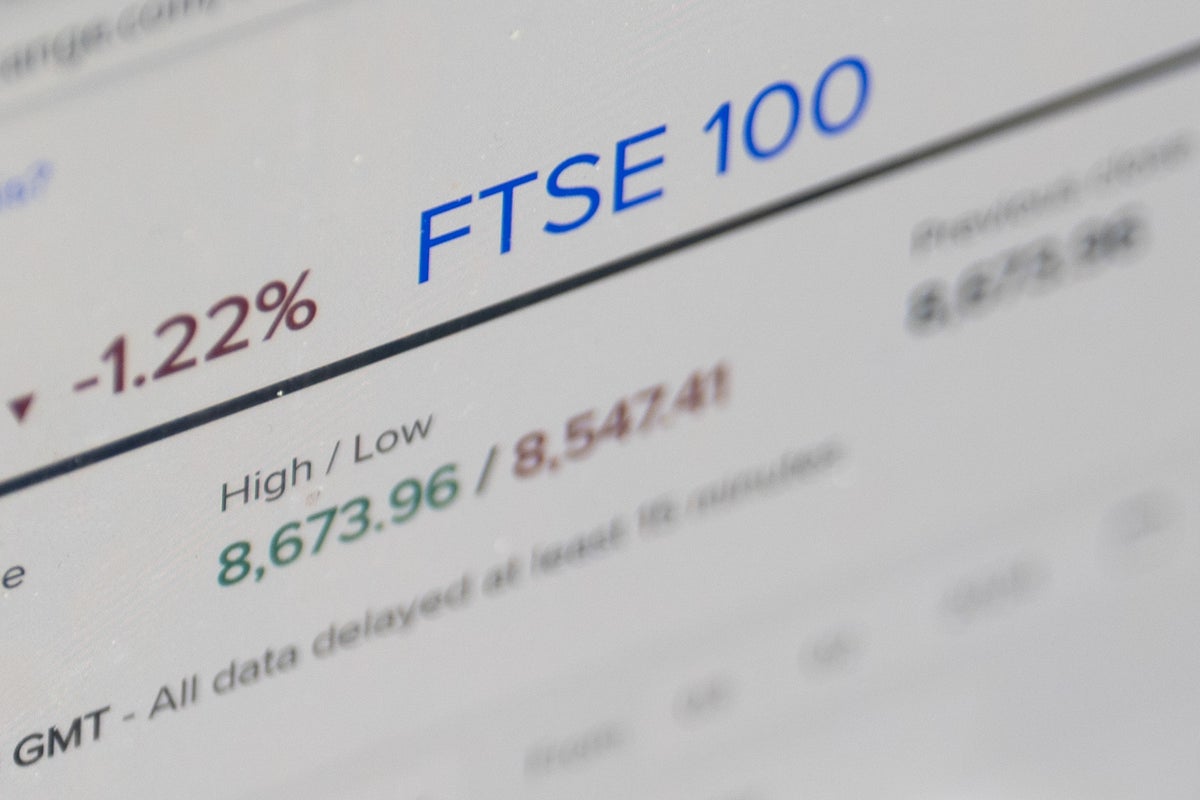
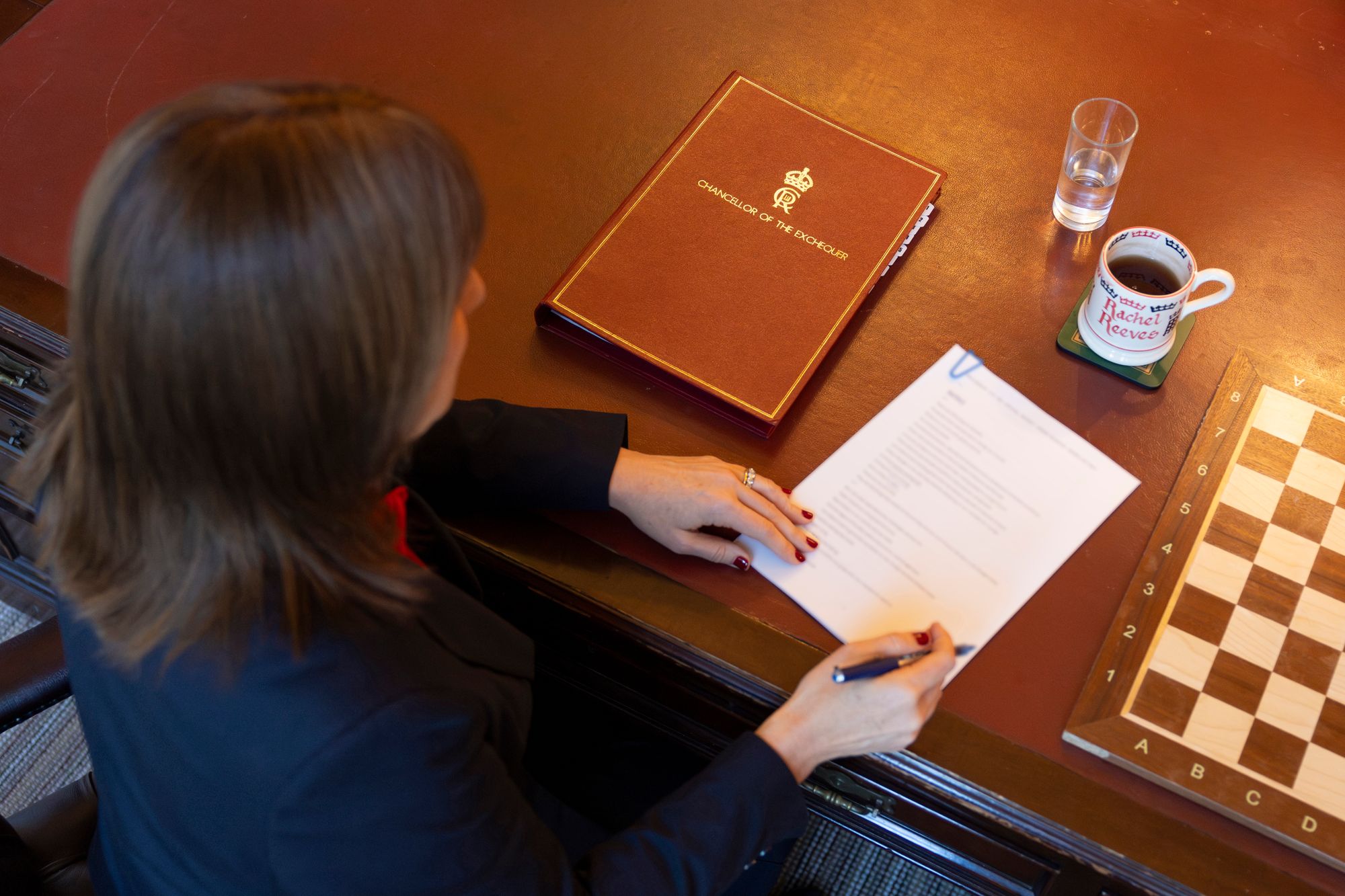
Banking stocks gave the FTSE 100 a lift on Tuesday amid rumours that the sector will be spared a tax hit in Chancellor Rachel Reeves’ budget.
The FTSE 100 index closed up 74.62 points, 0.8 per cent, at 9,609.53.
The FTSE 250 ended up 205.83 points, 1.0 per cent, at 21,617.41, and the AIM All-Share closed up 4.93 points, 0.7 per cent, at 742.09.
High street lenders Lloyds Banking Group rose 3.8 per cent, NatWest Group climbed 3.7 per cent and Barclays advanced 2.4 per cent.
It came as the Financial Times said that Ms Reeves is unlikely to impose further tax hikes on UK banks, calming fears that they could be hit.
The chancellor will deliver the budget statement to Parliament around 12.30pm on Wednesday, after Prime Minister’s Questions.
It is likely to contain further hefty tax increases as Ms Reeves looks to cover the expected fiscal deficit and seek a higher buffer against future economic shocks.
An extension to the freeze on personal tax allowances, a mansion tax, increases in betting duties, and changes to salary sacrifice schemes are all likely to form part of a smorgasbord approach to tax policy.
But economists are less sure that this scatter-gun approach is the right path to follow.
Citi’s Callum McLaren-Stewart called the smorgasbord approach “politically palatable, but economically problematic”.
Kallum Pickering at Peel Hunt said a “haphazard patchwork of smaller anti-growth tax increases” would be a “bad outcome”.
Ahead of the budget, the pound was quoted higher at US$1.3183 at the time of the London equities close on Tuesday, compared to $1.3104 on Monday.
The yield on the UK 10-year gilt was down by 5 basis points at 4.49 per cent.
Reports also suggest that the chancellor may announce a stamp duty holiday for new listings on the London Stock Exchange.
Hargreaves Lansdown’s Emma Wall said this would be a “welcome boost” for the UK stock market which has been “losing out” to New York for initial public offers in recent years.
Currently, investors have to pay 0.5 per cent stamp duty tax when they buy shares, but this is expected to be waived for new listings for up to three years.
In European equities on Tuesday, the CAC 40 in Paris closed up 0.8 per cent, while the DAX 40 in Frankfurt ended 1.0 per cent to the good.
Stocks in New York were mixed after Monday’s stellar gains.
The Dow Jones Industrial Average was up 0.7 per cent, the S&P 500 index was up 0.2 per cent, but the Nasdaq Composite fell 0.2 per cent.

The yield on the US 10-year Treasury was quoted at 4.01 per cent, narrowed from 4.05 per cent. The yield on the US 30-year Treasury was quoted at 4.65 per cent, trimmed from 4.69 per cent.
After the data vacuum caused by the American government shutdown, investors weighed a hefty batch of new figures on the health of the US economy.
Reports were mixed with US producer price growth steady year-on-year in September, while a retail sales rise was tamer than forecast on-month.
According to the Bureau of Labor Statistics, producer prices rose 2.7 per cent on-year in September, in line with August’s rise and meeting the FXStreet-cited consensus estimate.
Separately, the Census Bureau reported US retail sales rose 0.2 per cent in September from August, shy of the FXStreet-cited forecast of a 0.4 per cent rise. In August, sales rose 0.6 per cent from July.
In addition, a report from the Conference Board showed consumer confidence in the US weakened in November, hitting its second-lowest level since April.
The CME FedWatch tool now places an 83 per cent chance of a quarter-point cut at December’s Federal Reserve meeting.
The data weighed on the dollar. The euro stood higher at $1.1569 on Tuesday, against $1.1525 on Monday. Against the yen, the dollar was trading lower at 156.13 yen compared to 156.91 yen.
Back in London, Beazley fell 9.2 per cent as analysts said a planned US$500 million investment to build out a new Bermuda platform will mean a “material” step down in share buyback expectations.
The Lloyds of London insurer announced the news alongside mixed trading results in the first nine months of 2025.
But RBC Capital Markets said the “key new news” was the $500 million capital to be set aside to set up in Bermuda.
Beazley said the investment supports growth from 2026 onward and “supports our expansion into the alternative risk transfer market”.
But UBS thinks this puts a share buyback at the year-end “at risk”, and if there still is one, it could be of a lesser amount than the broker’s US$700 million estimate.
Faring better, Kingfisher rose 6.0 per cent after raising profit guidance for the second time in three months.
The DIY retailer, which owns the B&Q, Screwfix, Castorama and Brico Depot brands, now expects full-year adjusted pretax profit between £540 million to £570 million.
In September, Kingfisher upgraded its profit outlook to the “upper end” of the previously guided range of £480 million to £540 million.
On the FTSE 250, AO World jumped 1.5 per cent as it raised its profit forecast after reporting “continued positive trading”.
The Bolton, England-based consumer electronics seller in September upped its profit view to a £45 million to £50 million range.
Since then, AO World said it has seen “continued positive trading”, and it now expects pre-tax profit “around the top” of the outlook range.
But Baltic Classifieds slid 2.2 per cent as JPMorgan double-downgraded it to “underweight” from “overweight”.
The broker thinks online classifieds players will have to “materially” increase their efforts to maintain their gatekeeper position by delivering “undisputable, top-notch, now AI-driven search experiences and relevant information to compete with GenAI agents and new aggregators”.
Brent oil was quoted at 61.71 dollars a barrel at the time of the London equities close on Tuesday, down from $62.90 late on Monday.
The oil price fell amid reports that Ukraine has agreed to the terms of a peace deal with US representatives, although additional reports suggested Russia may block any modified plan.
Gold was quoted at 4,132.40 dollars an ounce, up against $4,097.64.
The biggest risers on the FTSE 100 were Airtel Africa, up 19.2p at 314.80p, Kingfisher, up 17.5p at 309.9p, Burberry, up 52.5p at 1,168.5p, Barratt Redrow, up 15.5p at 393.9p and Lloyds Banking Group, up 3.3p at 90.6p.
The biggest fallers on the FTSE 100 were Beazley, down 79p at 781p, Intertek, down 278p at 4,592, Pearson, down 21.8p at 985.2p, BAE Systems, down 31p at 1,621p and Compass, down 41p at 2,408p.
Wednesday’s economic calendar has the UK budget, the Beige Book in the US and an interest rate call in New Zealand overnight.
Wednesday’s UK corporate calendar has half-year results from property developer Helical, equipment hire firm Speedy Hire, and celebration cakes retailer Cake Box.
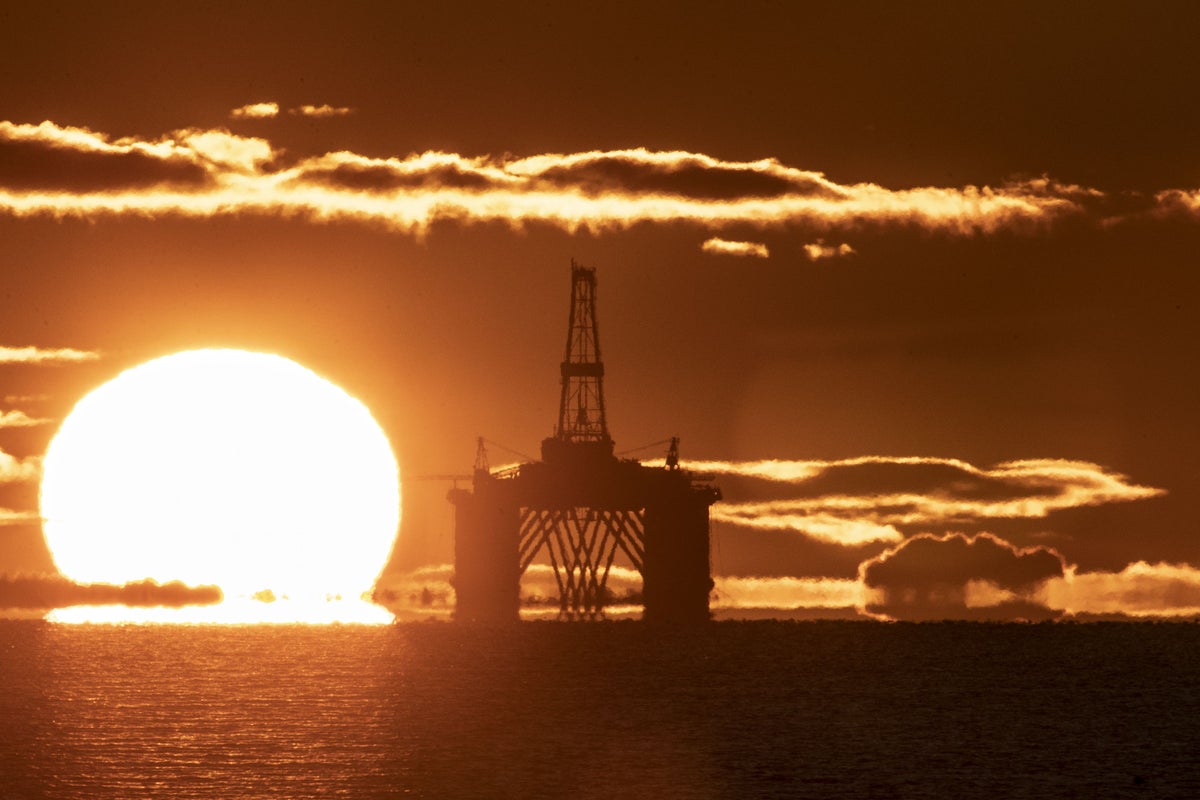
Labour MPs are among a group of more than 60 parliamentarians to have made public their opposition to the planned Rosebank oil field – with one of Sir Keir Starmer’s backbenchers urging the Government to rule against the development and take a stand “against Trump, Reform and their fossil fuel paymasters”.
Clive Lewis is one of more than 50 MPs at Westminster who have signed a pledge from campaign group Uplift to “oppose the Rosebank oil field” and instead “advocate for a properly funded just transition for oil and gas workers and communities”.
Urging the Government to reject the development, Norwich South MP Mr Lewis said: “We must stand our ground against Trump, Reform and their fossil fuel paymasters.
“Approving an enormous new oil field would mean caving in to their anti-climate, anti-renewables agenda that runs completely counter to our values and our long-term interests.”
Scottish Labour MP Chris Murray, another of the Labour MPs to have signed the pledge, said the decision on Rosebank was “an opportunity for the Government to change course”.
It comes as the UK Government continues to consider whether the development of the oil field can go ahead – with Labour now under mounting pressure after the loss of the Gorton and Denton by-election to the Greens on Thursday.
Rosebank, which lies about 80 miles west of Shetland, is the UK’s largest untapped field, containing up to an estimated 300 million barrels of oil.
Drilling there was approved by the Conservative government in 2023 but was then subject to a legal challenge in the wake of a Supreme Court ruling which said the emissions created from burning fossil fuels should be considered when granting permission for new sites.
Now the decision on whether it can proceed lies with Labour ministers – with some 16 Labour MPs having made plain their opposition to the development.
The group includes Mr Lewis, Mr Murray, former Labour shadow chancellor John McDonnell and Scottish Labour’s Brian Leishman.
Former Labour MPs Jeremy Corbyn and Diane Abbott have also signed the pledge, along with a number of Liberal Democrat and Green MPs, SNP MP Chris Law, Plaid Cymru’s Liz Saville Roberts and Paul Maskey of Sinn Fein.
In Scotland a number of Labour MSPs have signed the pledge, along with Green MSPs – including the party’s Scottish co-leader Ross Greer – and former SNP health secretary Michael Matheson.
While previous Scottish first ministers Nicola Sturgeon and Humza Yousaf made plain their opposition to Rosebank, First Minister John Swinney has insisted the Scottish Government takes a “case-by-case approach” to new oil and gas developments, stressing these should only proceed if found to be compatible with climate change targets.
Mr Lewis said opposing Rosebank would “show that a Labour Government will stand by the promises we made to the country”.
He added: “There are only so many times we can afford to make mistakes and then change course.
“With Rosebank, we have an opportunity to get it right the first time.”
Mr Murray, the Labour MP for Edinburgh East and Musselburgh, said many locals in his constituency were “deeply concerned about Rosebank and rightly so”.
He added: “Climate change is one of the reasons I came into politics, and opening new oil and gas fields is simply incompatible with our climate commitments.
“With the North Sea’s oil supply dwindling, Scotland’s energy sector must transition to clean energy, or workers risk being left behind.”
Scottish Labour MSP Mercedes Villalba, who has also signed the pledge, argued that “approving projects like Rosebank will lock us into a toxic dependence on volatile, conflict-ridden fossil fuels”.
This would create “another excuse to delay the urgent investment needed to create secure, well-paid jobs for Scotland’s workers”, she added.
Ms Villalba said: “In an increasingly uncertain world, where climate action is relegated in favour of fossil politics, the UK and Scotland must lead the way on the clean energy transition.”
Wera Hobhouse, Liberal Democrat MP for Bath, said people in her constituency and across the country “are already facing the consequences of an increasingly unstable climate”.
Highlighting the impact of flooding and “skyrocketing food prices”, she said that “climate impacts are now a daily reality”.
Ms Hobhouse said: “Extreme weather is damaging crops, putting pressure on farmers, and destroying our precious natural environment.
“We cannot ignore these warning signs.
“A massive new oil field like Rosebank would only make matters worse.
“The emissions would be enormous, locking us into decades more pollution when we should be cutting carbon and unlocking the benefits of cheap, renewable energy.”
Approving the Rosebank development would “make a mockery of Labour’s environmental promises”, she said.
A UK Government spokesperson said: “Our priority is to deliver a fair, orderly and prosperous transition in the North Sea in line with our climate and legal obligations, which drives our clean energy future of energy security, lower bills, and good long-term jobs.”
Business
UAE stock markets close, trading halted by Abu Dhabi Securities Exchange and the Dubai Financial Market for two days amid Iran–US–Israel war fallout – The Times of India
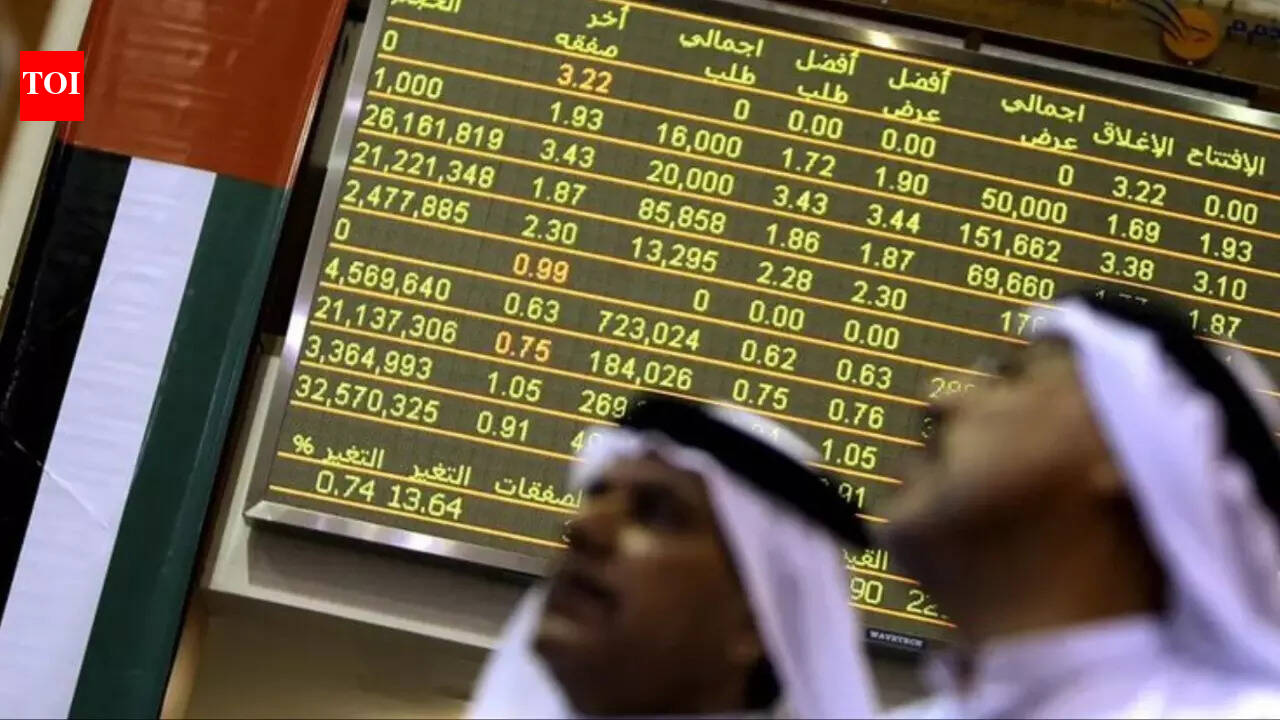
In an unprecedented economic response to escalating regional conflict, the United Arab Emirates has announced that its two major financial markets, the Abu Dhabi Securities Exchange (ADX) and the Dubai Financial Market (DFM), will remain closed on Monday, March 2 and Tuesday, March 3, 2026. The decision comes as the UAE reels from a series of retaliatory Iranian strikes following coordinated US and Israeli military actions against Iran, which have destabilised Gulf business sentiment and prompted sweeping security and economic precautions.The UAE Capital Markets Authority said that keeping the exchanges closed temporarily is part of its supervisory and regulatory mandate, providing authorities and market participants time to assess the impact of recent events on financial infrastructure and investor confidence. The halt affects equities, derivatives and trading in hundreds of billions of dollars in listed assets and is among the clearest signs yet of economic shockwaves from the regional crisis.
Why UAE stock markets are paused: Regional conflict among Iran–US–Israel disrupts confidence
The closures follow Iran’s retaliatory missile and drone strikes on Gulf cities and strategic targets, including airports and other infrastructure, after a joint US–Israel offensive. These attacks have not only led to safety measures such as airspace restrictions and travel advisories but also triggered widespread business disruption across the Gulf. Major airports in Dubai and Abu Dhabi have seen operations halted or altered and commercial hubs from ports to retail centres have felt the strain.
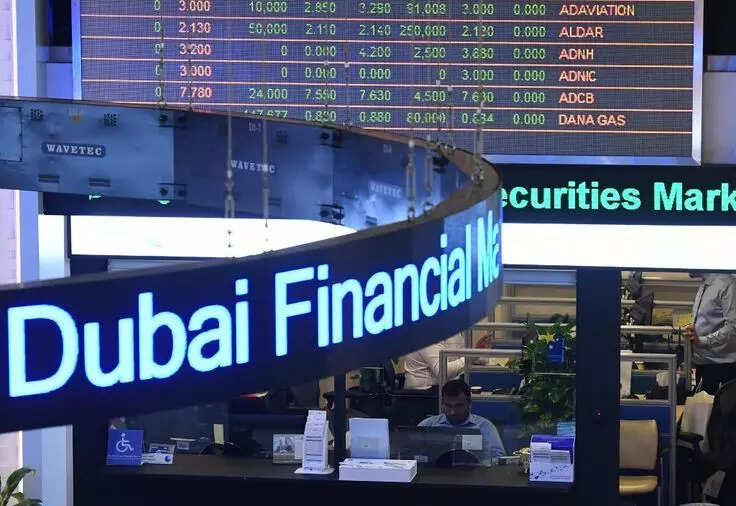
UAE Markets Shut Down: Is This Economic Capitulation to Regional War?
Financial markets are typically among the first economic indicators affected by geopolitical instability. When investors fear prolonged unrest, they often pull funds from equities and seek so-called “safe-haven” assets like gold, sovereign debt or commodities such as oil, especially when conflict threatens critical energy supply corridors like the Strait of Hormuz.
Regional market turmoil and knock-on effects in the Middle East amid Iran–US–Israel clashes
While the UAE exchanges are closed, other Gulf markets that remained open on Sunday experienced significant sell-offs as investors reacted to the turmoil:
- Saudi Arabia’s benchmark index saw sharp drops before partially recovering as investors weighed conflict risks against energy price gains.
- Muscat and other regional bourses also slid, reflecting broader risk-off sentiment.
- In Kuwait, authorities took the rare step of suspending trading indefinitely due to “exceptional circumstances” linked to the same regional tensions.
Financial markets are serving as a barometer of risk and economic confidence and the dramatic moves across the Gulf underscore how intertwined political stability is with economic performance in the region.
What the UAE’s stock market closure means for investors
For both domestic and international investors, the temporary shutdown of ADX and DFM has several implications. Liquidity and price discovery are paused, leaving billions of dollars in listed assets in limbo. Risk premiums on Gulf assets may rise, as traders reassess exposure during periods of heightened uncertainty. Investor sentiment is likely to remain fragile until there are visible signs of de-escalation or credible diplomatic resolutions.Economists note that halting trading does not eliminate market pressure, it simply delays it and when markets do reopen, there may be sharp moves as investors recalibrate positions based on new geopolitical and economic realities. The conflict has not just shaken stock markets, energy markets have also reacted. Reports from analysts indicate that crude oil prices have surged as fears of supply disruptions increase, with the Strait of Hormuz, a crucial passage for roughly 20% of global oil exports, under theoretical threat of closure.
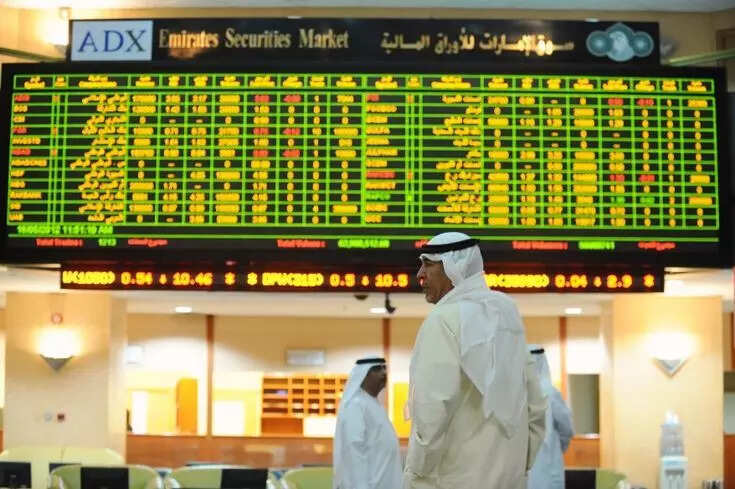
UAE Stock Markets Closed: What Does This Mean for Global Investors Amidst Escalating Conflict?
Higher oil prices can partially offset stock market pain in energy-exporting economies like the UAE but the overall economic impact remains complex. Other sectors, from tourism and hospitality to trade and logistics, have also felt immediate fallout: airport shutdowns have stranded travellers and corporate events and networking key to Ramadan business cycles have been postponed, compounding uncertainty.
UAE government messaging and future prospects
UAE authorities have stressed that public and economic safety remain top priorities. The temporary market closure is coupled with broad advisories across transportation, education and public services, such as airports issuing travel advisories and schools moving to remote learning, aimed at ensuring operational stability while the situation evolves. Officials have pledged to monitor conditions closely and communicate updates on any further market action. This includes potential rescheduling of reopening dates for ADX and DFM or additional measures to support investors once trading resumes.The UAE Capital Markets Authority ordered a two-day closure of the Abu Dhabi and Dubai stock markets on March 2–3, 2026, in response to escalating regional tensions. The pause follows retaliatory strikes by Iran after US and Israeli military action, which have disrupted markets, air travel and business operations across the Gulf. Gulf markets that remained open experienced sharp declines and volatility, reflecting investor risk aversion. Oil prices and safe-haven assets have climbed as geopolitical risk fuels global economic uncertainty. Authorities will continue to assess and communicate market developments as conditions evolve.
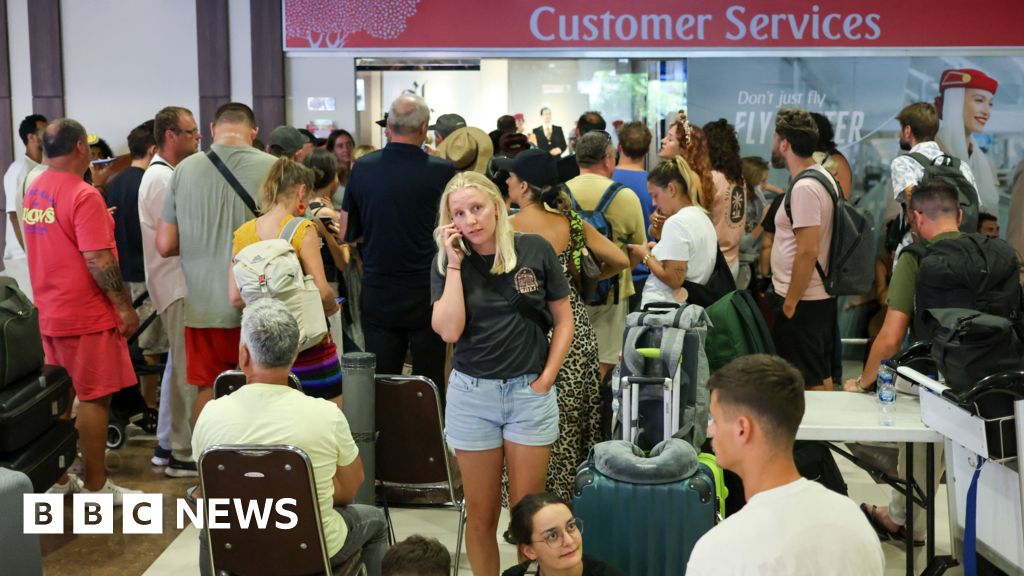
BA and Virgin Atlantic are among major airlines to ground services to the Middle East in light of the attacks.
Source link


Orlando vs. Miami (Mar 1, 2026) Live Score – ESPN
Labour parliamentarians urge UK Government to oppose Rosebank oil field

Chris Hemsworth reveals what keeps marriage strong after all these years

Pakistan carries out precision strikes on seven militant hideouts in Afghanistan

Eye-popping rise in one year: Betting on just gold and silver for long-term wealth creation? Think again! – The Times of India

These Cheap Noise-Cancelling Sony Headphones Are Even Cheaper Right Now

-
 Politics1 week ago
Pakistan carries out precision strikes on seven militant hideouts in Afghanistan
-
Business1 week ago
Eye-popping rise in one year: Betting on just gold and silver for long-term wealth creation? Think again! – The Times of India
-
 Tech1 week ago
These Cheap Noise-Cancelling Sony Headphones Are Even Cheaper Right Now
-

 Sports1 week ago
Kansas’ Darryn Peterson misses most of 2nd half with cramping
-

 Sports1 week ago
How James Milner broke Premier League’s appearances record
-

 Entertainment1 week ago
Viral monkey Punch makes IKEA toy global sensation: Here’s what it costs
-

 Entertainment1 week ago
Saturday Sessions: Say She She performs "Under the Sun"
-
 Sports1 week ago
Floyd Mayweather to come out of retirement again