

Business
What the latest interest rates change means for your mortgage, savings and bills

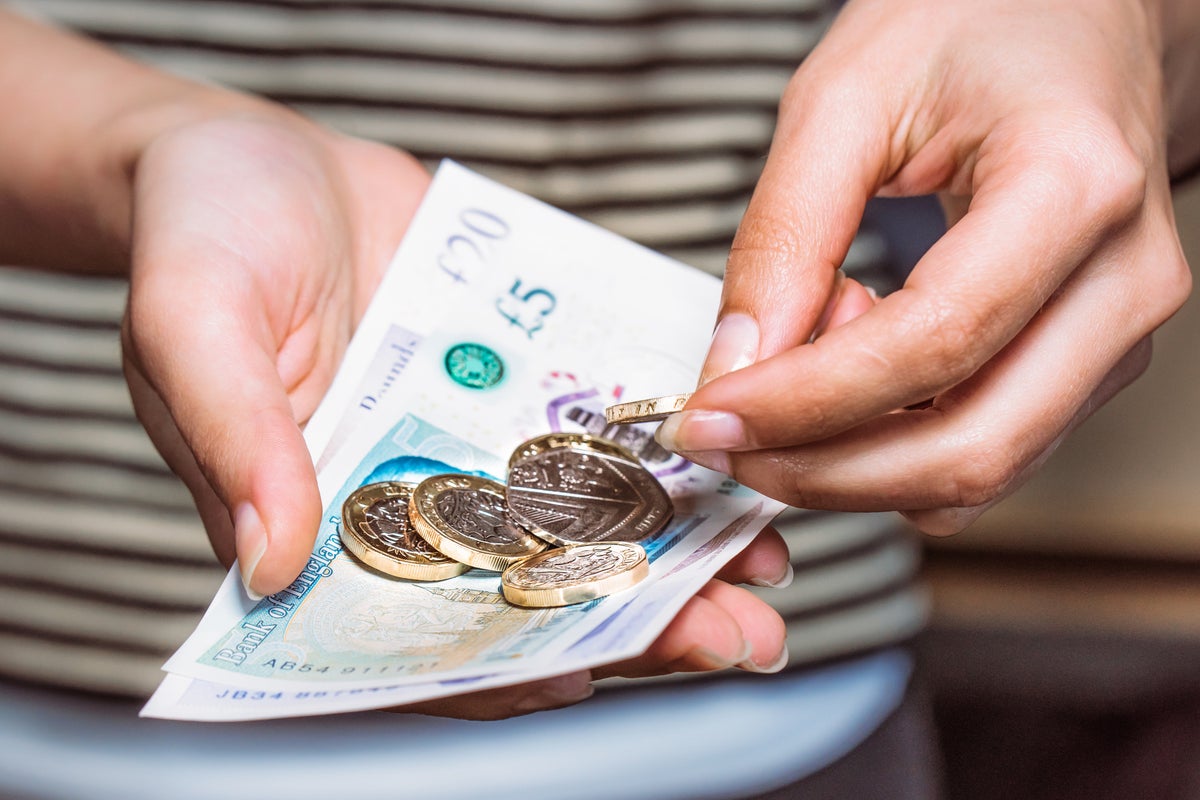
The Bank of England (BoE) announced on Thursday its decision to cut interest rates to 3.75 per cent, the fourth cut of the year.
For December’s vote, the bank’s nine-person Monetary Policy Committee (MPC) showed just a slight swing compared to last time out pre-Budget in November; a 5-4 split then favouring a hold became a 5-4 split in favour of cutting this time, with governor Andrew Bailey a key switcher.
Following falling inflation rates, poor economic figures and rising unemployment, it brings the base rate down to the lowest level in almost three years.
Here’s a brief rundown of what the current interest rate might mean for you:
What does the interest rate mean for mortgages?
Broadly speaking, as increasing interest rates over the last few years have meant mortgage repayments going up, then the reverse also holds true: lower rates, lower repayments. However, there are several important things to note.
Firstly, that it’s only the interest on the repayments which should change – your capital repayments will naturally decrease the more you pay off your mortgage. Secondly, the base rate isn’t the rate you are necessarily charged by your bank or lender for the mortgage – they’ll base theirs off the BoE rate but it doesn’t have to be the same.
More than half a million people do, however, have a mortgage which tracks the BoE interest rate and those will see an immediate change. Far more have fixed-term deals, which expire each year and need renegotiating – almost 2 million homes are expected to seek renewed deals in 2026.
If you’ve got a fixed term on a mortgage plan, you won’t see a change in any case until that comes to an end and you start a new one, but if you’ve already finished and moved onto a standard variable rate (SVR) deal, then you might see a change in your repayments.
New mortgage products tend to be based on swap rates – market agreements based on future expectations of interest rate movements – rather than the current bank rate, which is why there has been a recent battle between lenders dropping their rates even before the cut today.
What about savings accounts?
If you have money in a savings account, it’s the other side of the see-saw: rates going down mean you’ll earn less interest.

Get a free fractional share worth up to £100.
Capital at risk.
Terms and conditions apply.
ADVERTISEMENT
Get a free fractional share worth up to £100.
Capital at risk.
Terms and conditions apply.
ADVERTISEMENT
As there has been a bit of a fierce battle raging among banks and building societies for customers, it’s still possible to get good deals if you are happy to lock in money for a fixed period of time or contribute regular amounts, with several offering more than 4 per cent until recently.
However, it’s likely some will be removed from the market or have their rates altered in the coming days, while many of the best deals in easy access accounts have been below 4.5 per cent for a while now.
There are always terms and conditions to be met, so ensure any accounts you open suit your circumstances, but the opportunity still remains to save and earn money at a better rate than inflation, which currently sits around 3.2 per cent.
Do be aware of the amount of interest you can earn without being taxed, though. If your savings account interest rate isn’t fixed, banks can always change the rate you get up or down.
A tax-efficient way of saving is to use a Cash ISA, where everyone (for now!) has a £20,000 personal allowance each year, which will drop to £12,000 soon with the other £8,000 reserved for tax-free investing.
Bills and repayments
Credit card repayments and other types of personal loans are of course also affected by interest rates, as the amount they all charge for borrowing could be altered.
For credit card users (and especially for Buy Now Pay Later deals), it’s always ideal to pay off the full amount each month if you are able to, to avoid interest being charged at all – depending on your circumstances and the account type, they can be one of the more costly ways to borrow.
Again, it may not be immediate that lenders alter their rates after a base rate change, but get in touch with them to assess your options if you feel your repayments could or should be lower.

The BBC has heard concerns about poverty and cost of living from St Helier Central voters.
Source link
Business
Versant stock jumps 10% after company’s Q1 report shows bright spots in licensing, platforms

Versant Media Group on Thursday unveiled results for its most recent quarter — its first as a stand-alone company after separating from Comcast’s NBCUniversal and beginning to trade on the Nasdaq earlier this year.
The report revealed continued pressure in the traditional pay TV bundle but highlighted growth in digital platform and licensing businesses.
Versant stock rose roughly 10% in early trading.
Linear distribution revenue for its pay TV networks — which include CNBC, MS NOW and the Golf Channel as well as USA, E!, Syfy and Oxygen — was down roughly 7% during the period to $1.01 billion. The company said that was due to subscriber declines and partially offset by rate increases.
Advertising revenue for the first quarter fell 5% to $368 million, which was considered an improvement from the same period last year when it posted a 12% decline.
Revenue from content licensing, however, rose 113.5% to $121 million, due largely to the licensing of the longtime reality TV series hit “Keeping Up With the Kardashians” and other related content to Disney’s Hulu.
Revenue from Versant’s platforms business, which includes Fandango, GolfNow and some of the already launched direct-to-consumer units, was up 9.5% to $192 million.
CEO Mark Lazarus said on Thursday’s earnings call with investors that the company aims to “build scale and expand our audiences” in direct-to-consumer.
“Yes, we hope that comes with a large base of subscribers, and we’ll gauge ourselves as [to] how do revenues look across all of our various forms of distributing content,” he said.
Lazarus added that the company is working to make sure it grows “revenue diversification within each of our verticals.”
More than 80% of Versant’s revenue comes from the pay TV business. However, executives have told Wall Street that it aims to eventually rebalance its revenue mix so that 50% is derived from its digital, platform, subscription, ad-supported and transactional businesses.
Overall revenue for the period ended March 31 was down about 1% compared with the same quarter last year to $1.69 billion. Wall Street analysts polled by LSEG had expected revenue of $1.62 billion.
Net income attributable to Versant decreased 22% to $286 million, or $1.99 per share, for the quarter, which the company said was due to lower revenue, higher public company costs and interest expense following the spinout from Comcast. This was partially offset by lower taxes during the quarter, it said.
Adjusted earnings before interest, taxes, depreciation and amortization fell 7% from the same period last year to $704 million.
When compared with stand-alone adjusted EBITDA, a metric to more directly compare performance of the pre-spin portfolio companies to current results, adjusted EBITDA was up about 5%, Versant said. That was due to lower entertainment programming expenses and reduced selling, general and administrative costs, which offset revenue declines.
Growth avenues
Versant has consistently touted its strength in sports and news. On Thursday the company highlighted viewership increases for CNBC and MS NOW as well as continued momentum for the Golf Channel and other live sports and events on its networks.
The company has been exploring growth through mergers and acquisitions, and obtaining more sports rights. On Thursday, Lazarus said Versant has been “looking in a variety of areas” when it comes to potential deals.
CFO and COO Anand Kini added during Thursday’s call that while exploring M&A remains a part of Versant’s strategy, the company is also looking to maintain a healthy balance sheet and is focused on organic growth within its businesses.
“Our platforms revenue growth this quarter demonstrates that was really organic growth in GolfNow and Fandango,” Kini said. “So we’re going to look when there’s opportunities that are inorganic, [but] they have a very high threshold even as they fit within those markets and those strategies.”
The company also continued on its earlier pledge of returning capital to its shareholders, mainly due to its light debt load.
The company on Thursday declared a quarterly cash dividend for the second quarter in a row, each time at 37.5 cents per share. The new dividend is payable on July 22 to shareholders of record as of the close of business on July 1.
Versant also announced that it expects to enter into a $100 million accelerated share repurchase agreement, beginning Friday, which it anticipates completing during the second quarter. Versant repurchased nearly 2.7 million shares of Class A common stock during the first quarter, with a remaining authorization of roughly $900 million as of March 31, it said.
Disclosure: Versant is the parent company of CNBC.

Sweetener and ingredients firm Tate & Lyle has revealed talks over a possible £2.7 billion takeover by US rival Ingredion Incorporated in the latest swoop on a UK company.
London-listed Tate & Lyle said it had received an approach from Illinois-based Ingredion worth 615p per share in cash, which follows a number of earlier proposals.
Tate and Ingredion are now in discussions, but Tate stressed there was no certainty an offer will be made.
Ingredion has until 5pm on June 11 to make a firm offer or walk away under Takeover Panel rules.
It comes amid a spate of approaches for British firms by overseas suitors, with laboratory testing company Intertek earlier this week giving its backing to a £9.4 billion proposal from Swedish firm EQT.
Shares in Tate & Lyle soared by over 50% in afternoon trading on Thursday.
But the takeover tilt comes after shares have come under pressure over the past year, with Tate warning over full-year profits last October and revealing a 10% drop in first half profits in November.
Tate & Lyle last year bought food and drink ingredients business CP Kelco in a deal worth around £1.4 billion.


Here’s how Marco Rubio avoids Chinese sanctions to reach Beijing

Taliban regime detains three journalists in Afghanistan, says UN

GFS 2026: Bio-based materials have arrived. Can fashion scale them?

-

 Tech6 days ago
A new frontier: Identity stack evolves for agentic systems | Computer Weekly
-

 Tech6 days ago
‘Orbs,’ ‘Saucers,’ and ‘Flashes’ on the Moon: Pentagon Drops New UFO Files
-

 Fashion6 days ago
New orders in German manufacturing up 5% MoM in Mar 2026: Destatis
-

 Tech6 days ago
Nick Bostrom Has a Plan for Humanity’s ‘Big Retirement’
-

 Sports6 days ago
Shaheen Afridi achieves landmark feat during opening Test against Bangladesh
-

 Entertainment6 days ago
Rihanna embraces new tattoo given by children
-

 Fashion6 days ago
US’ Carter’s taps retail veteran Sharon Price John as new CEO
-

 Tech7 days ago
The Canvas Hack Is a New Kind of Ransomware Debacle