

Entertainment
What’s keeping drivers from buying EVs? Key reasons at a glance

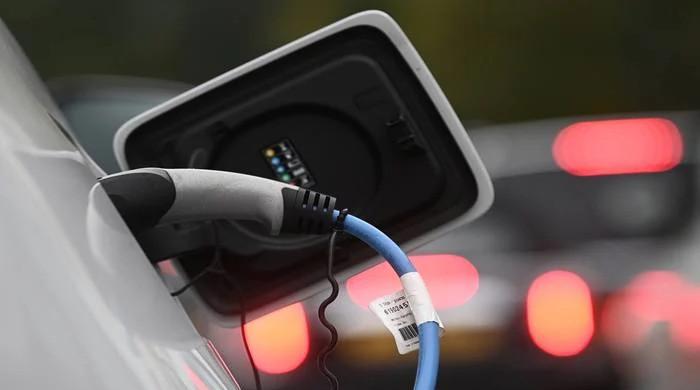
The ongoing mobility evolution normalising electric vehicles (EVs) is commendable, and it is sufficient to compel drivers into buying one, for EVs are eco-friendly, fun to drive, and are widely believed to cut fuel/energy costs. Yet the adoption of EVs is not being preferred over combustion engine vehicles, meaning the transition may be stalled.
Let’s delve deeper into what is really impeding the reception of EVs despite countless automakers churning out a myriad of flashy electrified vehicles, equipped with high-end, sophisticated tech.
Affordability: The biggest roadblock
First things first, one must bear in mind that EVs definitely cost a fortune—courtesy of the tech underneath, its costs and the meticulous engineering behind. The pricey aspect of low EV reception is also backed by Ashley Nunes, a senior research associate at Harvard Law School, as she says: “We looked at 13 years’ worth of electric vehicle prices in the US, and in inflation-adjusted dollars, the average price of an EV is going up, not down.”
Despite a 25% drop in battery prices in 2024, EVs still have higher upfront costs than petrol vehicles, especially in markets with limited subsidies or high interest rates. As per the data, China is leading in EV affordability, with two-thirds of battery electric vehicles (BEVs) sold in 2024 priced lower than their internal-combustion counterparts. Emerging markets like Thailand, Brazil, and Indonesia are also benefiting from affordable Chinese models.
In contrast, European markets seem unfortunate as they registered a trivial change in EV pricing, with significant premiums for BEV SUVs. The US is facing similar challenges, with high prices limiting mass adoption.
Charging infrastructure
Across regions, charging availability is another grave bottleneck, because even in countries with rapidly expanding public networks, many drivers are worried about EV charging infrastructure. Urban dwellers of apartments and households without off-street parking face significant hurdles installing home chargers—an issue common from the US to Europe to parts of Asia.
Meanwhile, public charging is growing, but at an inconsistent pace. Some regions have established extensive, fast-charging systems, while others are relying on slow chargers or have networks prone to outages.
Even in areas with plenty of chargers, compatibility issues, queues during peak time, and variable pricing negatively affect consumer confidence.
Thus, for most people, the question isn’t just whether EVs are technologically capable—it’s whether they can be conveniently powered.
EV performance issues
Besides the limited range in EVs, another anxiety which continues to deter buyers is performance, a key factor when daily commuting is in question. While drivers in colder climates worry about range degradation in winter, rural and long-distance drivers question whether charging stops will extend their journeys.
And while modern EVs perform well for most urban travel conditions, options suitable for towing, large-family transport and heavy hauling are still not in abundance.
In many countries, EVs are often purchased as complements rather than replacements. Households buy an EV for short trips while keeping a separate petrol vehicle for long-distance or heavy-duty needs. This treatment signals not only uncertainty but also the limited availability of EVs that meet all use cases.
Limited availability
Another barrier to wider EV adoption worldwide is the mismatch between what consumers want and what’s available to them. Buyers chasing large SUVs, minivans, or low-cost compact models have limited EV options, and this is where China stands out for offering an incredible array, ranging from ultra-compact city cars to low-cost electric SUVs.
Notwithstanding these woes, projections by industry analysts suggest redressal, as new models planned through 2026 are expected to close many of these gaps. However, as of now, many shoppers struggle to find an EV that fits their lifestyle, budget or feature expectations.
Production challenges
EV manufacturers are adjusting expectations as adoption appears to have slowed, and some major automakers are restricting EV production plans, scaling back partnerships or delaying capacity expansions.
These shifts are equally driven by slower demand growth and partly by uncertainties in supply chains, charging network development and regulatory environments.
With automotive unions and policymakers worldwide bracing for an electric future, upcoming regulatory standards, especially in Europe, will compel manufacturers to expand affordable EV offerings.
EV sales trends
The surprising part of the picture is that global EV sales are climbing, with varied momentum. Markets such as the US and Europe have registered slow growth compared to previous rates, while China and emerging markets are accelerating, thanks to lower prices and broader model availability.
This trend was also observed in other regions, with affordability and infrastructure increasing adoption speed.
Global EV manufacturers’ total sales so far in 2025
| Manufacturer | Total EVs sold/delivered in 2025 so far | Key notes |
| Tesla | 1,217,901 vehicles (Q1-Q3 2025) | Global total for first three quarters; full-year total pending |
| BYD (BEV only) | 1.61 million (Jan-Sept 2025) | ~4.4 million vehicles (2025 estimate) |
| Rivian | Full-year forecast: 41,500-43,500 vehicles | |
| General Motors | 144,700 EVs sold in the U.S. as of Q3 2025 | US-only figure, global 2025 total not yet released |
| BMW (BEV only) | 247,025 fully electric vehicles sold worldwide (Jan-Sept 2025) | Strong global BEV growth; excludes PHEVs |
| Hyundai Motor Group | ~481,000 EVs (BEVs + PHEVs) worldwide (Jan-Sept 2025) | Hyundai + Kia combined performance |
| Volkswagen(BEV only) | 717,500 BEVs worldwide (Jan-Sept 2025) | Up 41.7% YoY compared to 2024 |
| Ford | 108,185 EVs worldwide (Jan-Sept 2025) | Based on regional reporting, no single global release |
| Zeekr | 165,346 EVs sold worldwide (Jan-Oct 2025) | Rapid global expansion, strong performance in premium EV segment |
| Xiaomi | ~257,171 EVs (Q1-Q3 2025) | Fastest-growing new entrant in 2025, driven by SU7 series |
| Geely (NEV only) | 725,000+ NEVs (Jan-June 2025) | Annual target: 3 million |
What’s the future of EVs?
Despite setbacks like unbearable prices, insufficient charging infrastructure, and performance limitations, the global EV transition is nevertheless moving forward, and more affordable models are on the horizon.
Competition in battery technology is also intensifying, and infrastructure networks are expanding with each passing year. With these elements combined, the barriers holding EV drivers back will gradually diminish, most likely.
For now, the EV landscape is one of uneven progress, not fully ready to cater to all kinds of drivers worldwide.
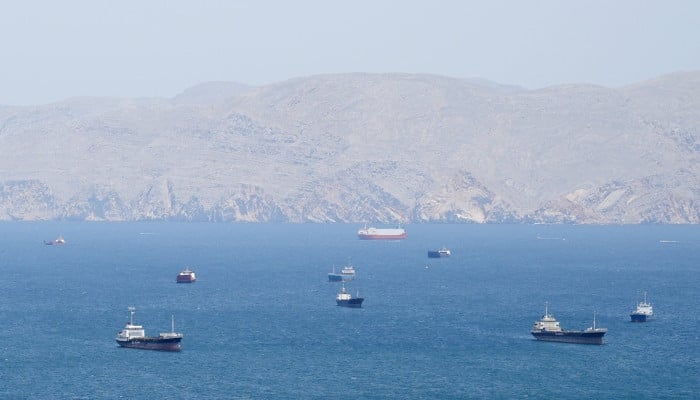
Iran warned last week that submarine cables in the Strait of Hormuz were a vulnerable point for the region’s digital economy, raising concerns about potential attacks on critical infrastructure.
The narrow waterway, already a chokepoint for global oil shipments, is equally vital for the digital world. Several fibre-optic cables snake across the seabed of the strait, connecting countries from India and Southeast Asia to Europe via the Gulf states and Egypt.
What makes undersea cables important?
Subsea cables are fibre-optic or electrical cables laid on the sea floor to transmit data and power. They carry around 99% of the world’s internet traffic, according to the ITU, the United Nations specialised agency for digital technologies.
They also carry telecommunications and electricity between countries, and are essential for cloud services and online communications.
“Damaged cables mean the internet slowing down or outages, e-commerce disruptions, delayed financial transactions … and economic fallout from all of these disruptions,” said geopolitical and energy analyst Masha Kotkin.
Gulf countries, particularly the UAE and Saudi Arabia, have been investing billions of dollars in artificial intelligence and digital infrastructure to diversify their economies away from oil. Both nations have established national AI companies serving customers across the region — all reliant on undersea cables to move data at lightning speed.
Major cables through the Strait of Hormuz include the Asia-Africa-Europe 1 (AAE-1), connecting Southeast Asia to Europe via Egypt, with landing points in the UAE, Oman, Qatar, and Saudi Arabia; the FALCON network, connecting India and Sri Lanka to Gulf countries, Sudan, and Egypt; and the Gulf Bridge International Cable System, linking all Gulf countries including Iran.
Additional networks are under construction, including a system led by Qatar’s Ooredoo.
What area the risks?
While the total length of submarine cables has grown considerably between 2014 and 2025, faults have remained stable at around 150–200 incidents per year, according to the International Cable Protection Committee (ICPC).
State-sponsored sabotage remains a risk, but 70–80% of faults are caused by accidental human activities — primarily fishing and ship anchors, according to the ICPC and experts.
Other risks include undersea currents, earthquakes, subsea volcanoes, and typhoons, said Alan Mauldin, research director at telecom research firm TeleGeography. The industry addresses these by burying cables, armouring them, and selecting safe routes, he said.
The US-Israel war on Iran, nearing the two-month mark, has brought unprecedented disruption to global energy supply and regional infrastructure, including hits to Amazon Web Services data centres in Bahrain and the UAE. Subsea cables have been spared so far.
However, an indirect risk exists from damaged vessels inadvertently hitting cables by dragging anchors.
“In a situation of active military operations, the risk of unintentional damage increases, and the longer this conflict lasts, the higher the likelihood of unintentional damage,” Kotkin said. A similar incident occurred in 2024, when a commercial vessel attacked by Iran-aligned Houthis drifted in the Red Sea and severed cables with its anchor.
The degree to which damage to the cables might impact connectivity in Gulf countries depends largely on how much individual network operators rely on them and what alternatives they have, according to TeleGeography.
No easy fix
Repairing damaged cables in conflict zones poses a separate challenge to securing them. While the physical repair itself is not overly complicated, decisions by repair vessel owners and insurers may also be impacted by the risk of damage from fighting or the presence of mines, experts say.
Permits to access territorial waters add another layer of difficulty. “Often one of the biggest problems with doing repairs is you have to get permits into the waters where the damage is. That can take a long time sometimes and can be the biggest source (of problems),” Mauldin said.
Once the conflict ends, industry players will also face the challenge of re-surveying the sea floor to determine safe cable positions and avoid ships or objects that may have sunk during hostilities, he said.
What alternatives are there if subsea cables falter?
While potential damage to subsea cables would not cause a complete connectivity loss — due to land-based links — experts agree that satellite systems are not a feasible replacement, as they cannot handle the same volume of traffic and are more expensive.
“It’s not as though you could just switch to satellite. That’s not an alternative,” Mauldin said, noting that satellites rely on connections to land-based networks and are better suited for things in motion, like airplanes and ships.
Low-Earth-orbit networks such as Starlink are “a boutique solution, which is not scalable to millions of users, at this time,” Kotkin added.
Entertainment
‘Dances With Wolves’ star Nathan Chasing Horse gets life imprisonment for sexual assault verdict

Dances with Wolves star Nathan Chasing Horse was handed a life imprisonment sentence on Monday, April 27, 2026.
Chasing Horse was convicted of sexual assault in a Las Vegas courtroom on Monday, April 27.
‘This is a miscarriage of justice,’ Chasing Horse said after a Nevada judge announced the judgment.
Judge Jessica Peterson sentenced Chasing Horse to a total of 37 years of life imprisonment.
Chasing Horse, who has continued to plead not guilty, was accused by three women, including a minor girl, when the assaults began.
Chasing Horse had also been cleared on some of the charges.
He was found guilty by the Clark County jury on 13 of the 21 counts filed against him in January this year.
The sentencing ends a year-long process of prosecuting the former actor after he was first arrested and indicted in 2023.
During sentencing, the Las Vegas court heard statements from victims and their loved ones narrating the trauma inflicted upon them by Chasing Horses’ actions.
Prosecutors alleged Chasing Horse, recognized for his role as Smiles A Lot in the film Dances With Wolves, used his role as a self-professed medicine man to run a cult and sexually exploit and abuse women and children.
Chasing Horse will now serve his sentence in the Nevada Department of Corrections, besides getting life imprisonment; he is also facing warrants for alleged crimes in Montana and Canada.
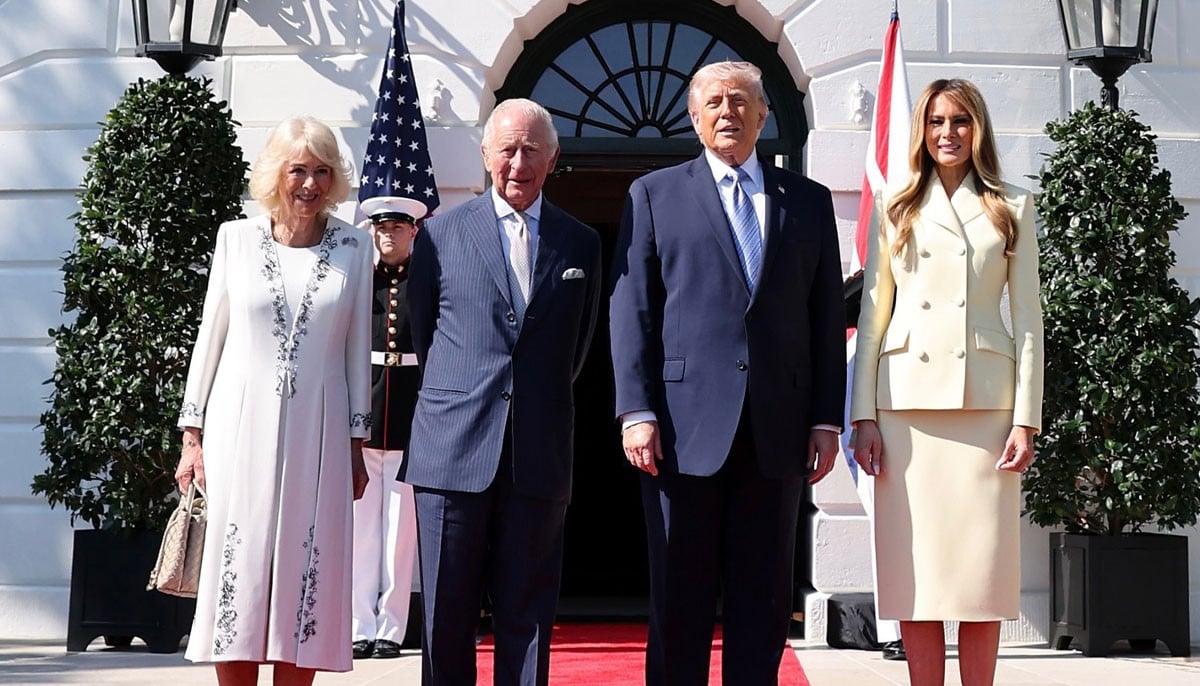
King Charles and Queen Camilla began their US trip amid mounting fear about their security after the Trump shooting incident.
The royal couple arrived on April 27 in Washington, D.C., to begin a four-day State Visit to the USA, on the advice of the UK Government, and at the invitation of the President of the United States, Donald Trump.
Buckingham Palace issued an update from the King and Queen’s first engagement in the US, but that left fans “disappointed.”
The King and Queen were shown the beehives in the White House gardens alongside the US President and First Lady, Melania Trump.
According to the statement, “The White House beehives were first established in 2009, serving as an enduring feature of the grounds across multiple administrations and producing honey for the White House.
“In 2026, First Lady Melania Trump enhanced the existing White House honey program to include a hand-crafted hive, shaped in the form of the White House. During the summer, the hive is home to approximately 70,000 bees.”
However, fans in the comments section were not impressed by the first outing.
One social media user wrote, “Poor King Charles, Queen Camilla having to appear graceful, professional, diplomatic in front of those two…”
“I pray Their Majesties are kept safe during this four-day trip. God save the King,” another penned.
One fan took a dig by saying, “Looks like that’s the first time Trump has seen them, too.”

Protesters halt NatWest shareholder meeting as boss defends climate policy

North India cotton yarn prices rise as mills gain pricing power

How does Middle East conflict threaten subsea cables?

-

 Sports1 week ago
NCAA men’s gymnastics championship: All-time winners list
-

 Sports1 week ago
WWE WrestleMania 42 Night 2: Live match results and analysis
-

 Fashion1 week ago
UK’s Sosandar returns to profitability amid robust FY26 performance
-

 Politics1 week ago
UK’s Starmer seeks to deflect blame over Mandelson appointment
-
 Business1 week ago
No fuel shortage: Govt assures 100% domestic LPG, PNG, CNG supply amid Hormuz energy crunch – The Times of India
-

 Entertainment1 week ago
Lee Anderson, Zarah Sultana kicked out of UK Parliament for calling PM ‘liar’
-
 Business1 week ago
How Trump’s psychedelics executive order could unlock stalled cannabis reform
-
 Business7 days ago
Us-India Trade Talks: US–India trade deal: Where do talks stand & what to expect – explained – The Times of India