

Fashion
What’s next for Vestiaire Collective after its change in leadership?

Published
January 13, 2026
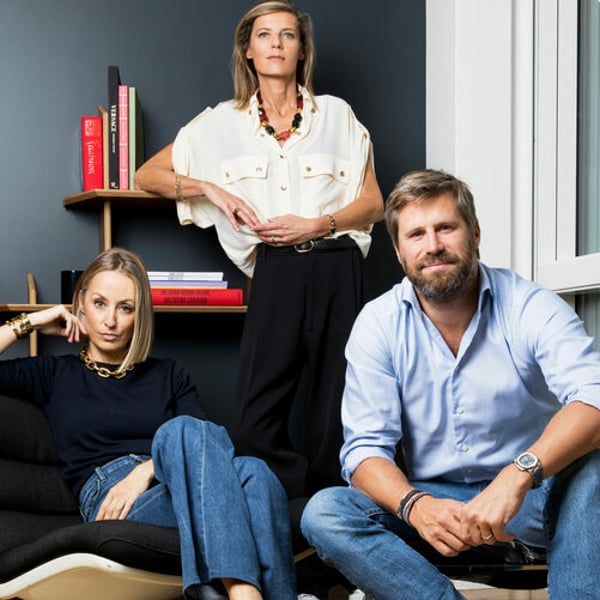
Premium and luxury second-hand platform Vestiaire Collective has parted ways with co-founder and president Fanny Moizant. Of the leadership trio assembled in 2019 with managing director Maximilian Bittner and fashion director Sophie Hersan, only the latter remains- the last co-founder still in post at the company. This changing of the guard raises questions about the strategy of Bernard Osta, who recently took the helm and plans to harness AI and marketing to strengthen the platform’s position.
Vestiaire Collective does not publish its figures. Its revenue was estimated at around €414 million for 2024. Operating in more than 70 countries, the platform claims 30,000 new listings per day and around 23 million members.
This shift in governance comes as the clothing sector undergoes a transition of its own. With demand slowing as consumers redirect spending to other categories, industry players are seeking to adapt. Vestiaire Collective must also contend with an online sales model which, after years of strong growth in the West, is no longer insulated from fluctuations in consumer spending.
Consumer spending, after a health crisis, an energy crisis, the invasion of Ukraine, and worsening geopolitical tensions, is now showing its limits even in the luxury market. This is a segment in which Vestiaire Collective has historically built a strong position against other second-hand fashion players, but where the ubiquitous Vinted is now seeking to compete with dedicated features.
“Vestiaire Collective has established itself as the benchmark marketplace in the highly attractive second-hand luxury fashion sector,” said Bernard Osta upon his appointment. “Together, we will continue to transform fashion by giving a second life to the most coveted pieces, in the service of a more sustainable model.”
A study by the French Federation of Circular Fashion (FMC) estimated last year that the European second-hand fashion market would grow by 8.5% per year to reach €26 billion in 2030, compared with €15.9 billion in 2024. These gains will, more than ever, have to be captured from the new-goods market, underpinned by significant investment in technology and communications.
AI and marketing
Like many marketplaces, the French company is betting heavily on artificial intelligence, both to rationalise costs- at a time when investors are closely scrutinising return on investment (ROI)- and to streamline its processes, as AI tools are now capable of purchasing on third-party sites on behalf of customers.

It is a pivot to AI that Vestiaire Collective has already been preparing. At the end of 2024, the company announced its first two AI-powered features, focused on search and recommendations.
But the move towards AI was marked above all by the hiring of Stacia Carr, previously vice president of Fashion Customer Experience at Zalando, where she led engineering and applied sciences. Another heavyweight, Jim Freeman, a US tech figure with stints at Amazon and Zalando, has also joined the board.
“With the rise of AI, we have an extraordinary opportunity to accelerate our product roadmap, offer a more engaging customer experience and gain market share,” says Bernard Osta, whose company now sets out a “vast product roadmap powered by AI to improve the experience of buyers and sellers at an accelerated pace.”
International campaigns
The company also intends to boost its profile, and address a relative lack of brand awareness versus other second-hand players such as Lithuania’s Vinted and France’s Leboncoin. To this end, campaigns have been announced targeting Europe and the US as well as Asia-Pacific (APAC), under the leadership of Samina Virk, who took over as marketing director last July.

In its communications, the company can notably draw on the environmental benefits of reusing clothing. For several seasons, the site has rolled out hard-hitting campaigns showing global capitals and beaches covered in textile waste, and has even enlisted influencers in its fight against fast fashion, which is banned from its platform.
On the financial side, the company last raised €178 million in 2021, followed by a €75 million debt refinancing subsequently. Around €3.5 million was also raised via crowdfunding in 2024.
Since September, the company has offered a menswear category, and in December it was ranked the seventh-largest cross-border resale platform in Europe by CBCommerce Europe. In this “recommerce” ranking, the company sits alongside eBay, H&M, Back Market, and Vinted.
Against its Lithuanian competitor, Vestiaire Collective fully intends to defend its premium and luxury positioning. And perhaps revive an IPO project which, despite the support of minority shareholder Kering, has yet to come to fruition.
This article is an automatic translation.
Click here to read the original article.
Copyright © 2026 FashionNetwork.com All rights reserved.












The transition marks the formal handover of executive leadership to President and CEO Keun-Chang (Kevin) Yoon, reinforcing management continuity while preserving the founder’s long-term strategic vision.
Misto Holdings founder Gene Yoon has transitioned to honorary chairman in a planned leadership succession, formally handing executive control to president and CEO Kevin Yoon.
The founder, who expanded the group through the FILA global trademark acquisition and the takeover of Acushnet, will continue guiding long-term strategy as the rebranded Misto focuses on governance and sustainable growth.
Gene Yoon founded the business that would become Misto Holdings in the early 1990s, introducing the FILA brand to the Korean market and later leading a series of transformative transactions. In 2007, the company acquired the global FILA trademark rights through a leveraged buyout, followed by the 2011 acquisition of Acushnet Company, owner of the Titleist and FootJoy brands. The transaction was among the largest cross-border deals in Korea’s consumer sector at the time and significantly expanded the group’s global footprint.
Under his leadership, the company evolved into a multi-brand global portfolio spanning sportswear, golf equipment and apparel, generating approximately USD 3.08 billion in annual revenue.
As Honorary Chairman, Gene Yoon will remain closely engaged with the company, providing guidance on long-term strategy and global portfolio development while supporting management from a broader strategic perspective.
The leadership transition marks a new chapter under President and CEO Kevin Yoon, who has spent nearly two decades in senior roles across the group’s global operations, building deep operational and strategic expertise.
The company’s 2025 rebranding to “Misto” underscores its evolution into a global brand house focused on disciplined capital allocation, enhanced shareholder returns and sustainable long-term growth.
“Building on the founder’s legacy, our priority is to expand our global portfolio, strengthen governance and deliver sustainable value creation,” said Kevin Yoon, President and CEO of Misto Holdings.
Note: The headline, insights, and image of this press release may have been refined by the Fibre2Fashion staff; the rest of the content remains unchanged.
Fibre2Fashion News Desk (RM)


Total apparel shipments fell by 2.66 per cent year on year to $425.44 million in January 2026, compared with $437.07 million in the corresponding month of 2025. The performance underscored uneven global demand conditions that continue to influence sourcing patterns and order flows for Sri Lankan manufacturers.
Sri Lanka’s apparel exports declined 2.66 per cent YoY to $425.44 million in January 2026 amid weak global demand.
Shipments to the US and EU softened, while the UK remained stable with slight growth.
Other markets saw sharper contraction.
JAFF highlighted DCTS benefits and tariff changes while suggesting diversification and efficiency to sustain competitiveness.
Exports to the United States, the country’s largest market, decreased by 2.73 per cent to $165.11 million, while shipments to the European Union excluding the United Kingdom, declined by 1.93 per cent to $126.99 million. In contrast, exports to the UK remained broadly stable, rising marginally by 0.23 per cent to $61.71 million. Apparel shipments to other markets dropped more sharply by 6.07 per cent to $71.63 million.
JAAF noted that the UK’s steady performance offers a constructive signal for the sector, particularly as the revised Developing Countries Trading Scheme (DCTS), effective January 1, 2026, is expected to enhance sourcing flexibility and strengthen Sri Lanka’s competitive position in the British market.
The industry body also highlighted the introduction of a uniform 10 per cent temporary tariff in the US market as a relatively supportive development, reducing the impact of previously higher country-specific rates and providing greater short-term pricing predictability for exporters.
Commenting on the January outcome, JAAF said the moderate decline reflects ongoing volatility in global demand. The association emphasised that the industry remains committed to reinforcing resilience through market diversification, product innovation and operational efficiency, while collaborating with stakeholders to sustain Sri Lanka’s standing as a reliable apparel sourcing destination.
Fibre2Fashion News Desk (KUL)


South Korea’s Misto Holdings completes planned leadership transition

Michigan tops Illinois for 1st outright Big Ten regular-season title since ’14
[CinePlex360] Please moderate: “Mexico’s appare

-

 Tech1 week ago
A $10K Bounty Awaits Anyone Who Can Hack Ring Cameras to Stop Sharing Data With Amazon
-
 Business1 week ago
US Top Court Blocks Trump’s Tariff Orders: Does It Mean Zero Duties For Indian Goods?
-

 Fashion1 week ago
ICE cotton ticks higher on crude oil rally
-

 Politics6 days ago
Pakistan carries out precision strikes on seven militant hideouts in Afghanistan
-

 Tech1 week ago
Donald Trump Jr.’s Private DC Club Has Mysterious Ties to an Ex-Cop With a Controversial Past
-
 Business7 days ago
Eye-popping rise in one year: Betting on just gold and silver for long-term wealth creation? Think again! – The Times of India
-

 Entertainment1 week ago
The White Lotus” creator Mike White reflects on his time on “Survivor
-

 Fashion1 week ago
India’s $28 bn reset: How 5 trade deals will reprice its T&A exports