

Tech
Boldyn, EE, TfL deploy ESN infrastructure across London Underground | Computer Weekly


In the latest part of its 20-year concession to deliver high-speed mobile connectivity across the entire transport network, Boldyn Networks has been charged with delivering a 4G mobile network infrastructure that will enable the country’s Emergency Services Network (ESN) for London Underground.
Neutral host provider Boldyn Networks was awarded a 20-year concession by Transport for London (TfL) in June 2021 to deliver high-speed mobile connectivity across the entire London Underground network. TfL carries up to four million passengers a day on the London Underground network, and renewing and preparing the communications network for the future has long been regarded as essential to maintain and improve critical infrastructure.
The network upgrade is seen as an important step in updating London’s public safety critical communications, enhancing response times and improving the quality of information available to emergency services personnel addressing live incidents.
Boldyn’s delivery of infrastructure for ESN on the London Underground is being carried out in collaboration with leading UK mobile provider EE, TfL and the UK’s Home Office, with the primary aim of enabling more resilient and reliable communications services in the future for thousands of first responders including police, fire and ambulance services.
The ESN has endured a series of problems since its inception with the £2bn network project beset by delays and cost overruns. In 2015, the UK Home Office contracted suppliers to provide a new ESN to replace the existing and well-liked Airwave terrestrial trunked radio (Tetra) network used by all 108 police, fire and ambulance services across England, Scotland and Wales to communicate between the field and control rooms.
As part of its Emergency Services Mobile Communications Programme (ESMCP), the Home Office intended ESN to fully replace Airwave, be less expensive and provide users with access to “modern” mobile data. The government expected to turn off Airwave in 2019. In the same year, the Home Office contracted BT-owned EE to provide priority access to its mobile network and increase network coverage. It also contracted Motorola Solutions UK for software and systems including critical features not normally found on a mobile network, such as a first-of-a-kind “push-to-talk” functionality.
Numerous delays and criticism of the role of Motorola Solutions eventually led to the UK’s Competition and Markets Authority (CMA) opening an investigation into the role of the Airwave network in the ESN in October 2021, with a particular focus on the impact of Motorola’s dual role as the owner of the company providing the planned new mobile radio network and as a key existing supplier. In May 2023, the CMA recommended restricting how much Motorola can charge the emergency services to use Airwave.
In January 2025, after several further delays and much criticism from Parliament regarding the project and its leading technology stakeholder, the current government decided to embark on a different approach to deliver the infrastructure, appointing new IT and comms partners including IBM and Ericsson.
The deployment for London Underground will aim to provide “seamless” mobile coverage across the 137 Tube, Docklands Light Railway and London Overground stations located underground. It will provide first responders with immediate access to what could be lifesaving data, imagery, live video and public safety information, supporting faster and more coordinated responses to live situations.
Yet Boldyn also accepts that delivering these new capabilities within the London Underground presents unique engineering challenges because it is one of the UK’s most complex transport environments.
“Access to connectivity for the emergency services can’t be compromised, especially in an environment as complex as the London Underground. Critically, ESN will ensure first responders can stay connected when it matters most, with access to the data and tools they need to respond quickly, safely and successfully,” said Paul Osborne, chief commercial officer UK at Boldyn Networks. “We’re proud to continue our work with TfL and EE to help safeguard the millions of daily passengers across the London Underground network.”
In addition to the project to deliver mobile coverage across the Tube network, which remains on track for delivery by the end of 2026, Boldyn and TfL have committed to scaling the capital’s fibre backbone and installing small-cell technology on street furniture.
Commenting on the new project, TfL’s director of technology products and operations, Rebecca Bissell, said: “Keeping our customers and London’s emergency services personnel safe while they travel and operate across our network is our top priority. That means ensuring frontliners are equipped with immediate access to lifesaving information to respond more effectively to emergency situations and keep London moving safely.”
Faisal Mahomed, managing director of ESN mobile services at BT Group: “Extending ESN below ground marks another important milestone in our long-term commitment to empowering Britain’s emergency services with trusted, mission critical communications. We’re pleased to be working alongside Boldyn Networks and TfL to provide this service.”


Food handling is an area of work that still relies heavily on humans. Fruit, vegetables, meat, and other foods need to be handled quickly but gently. It is also hard to automate because no two pieces of fruit, vegetables, or chicken nuggets look exactly the same.
Eka’s demos suggest that the company may be onto something big. I found myself mentally comparing their robots to GPT-1, OpenAI’s first large language model, developed four years before ChatGPT. GPT-1 was often incoherent but showed glimmers of general linguistic intelligence.
The robots I saw seem to have a similar kind of nascent physical intelligence. When I watched a video of one reaching for a set of keys in slow motion, I noticed it did something that seemed remarkably human: It touched the tips of its grippers to the table and slid them along the surface before making contact with the keys and securing them between its digits. Eka’s algorithms seem to know instinctively how to recover from a fumble. This kind of thing is difficult for other robots to learn, unless the humans training them deliberately make a wide range of mistakes.
Unlike with any other robot I can think of, it’s almost possible to imagine what the world is like for the robot. Its sensors seem to feel the weight of its arm, the inertia as it sweeps toward the keys and slows down. Once it has the keys in its grasp, it seems to sense the weight of them dangling from its claw.
I don’t know if Eka’s approach really is the route to a ChatGPT-like breakthrough in robotics. Some very smart experts believe that mixing human demonstration with simulation will yield better results than simulation alone. Maybe some combination of the two approaches will ultimately be necessary? But it does seem clear that robots will eventually need to have the kind of tactile, physical intelligence that Eka is working on if they are to obtain humanlike dexterity.
Agrawal tells me that the same general approach should work for finer manipulation. The fiddly dexterity required to build an iPhone, for instance, could be achieved by building different actuators and sensors and practicing the task in simulation.
After spending a few hours at Eka, I decide to stop by the restaurant downstairs. I watch from the counter as the staff prepare food and make coffee. A descendant of the machine upstairs may be able to do these things just as well, if not better. But given how much I enjoy chatting with the people who work there, I think I would pay extra to keep humans around. Unless, that is, my hands get automated away too.
Let us know what you think about this article. Submit a letter to the editor at [email protected].
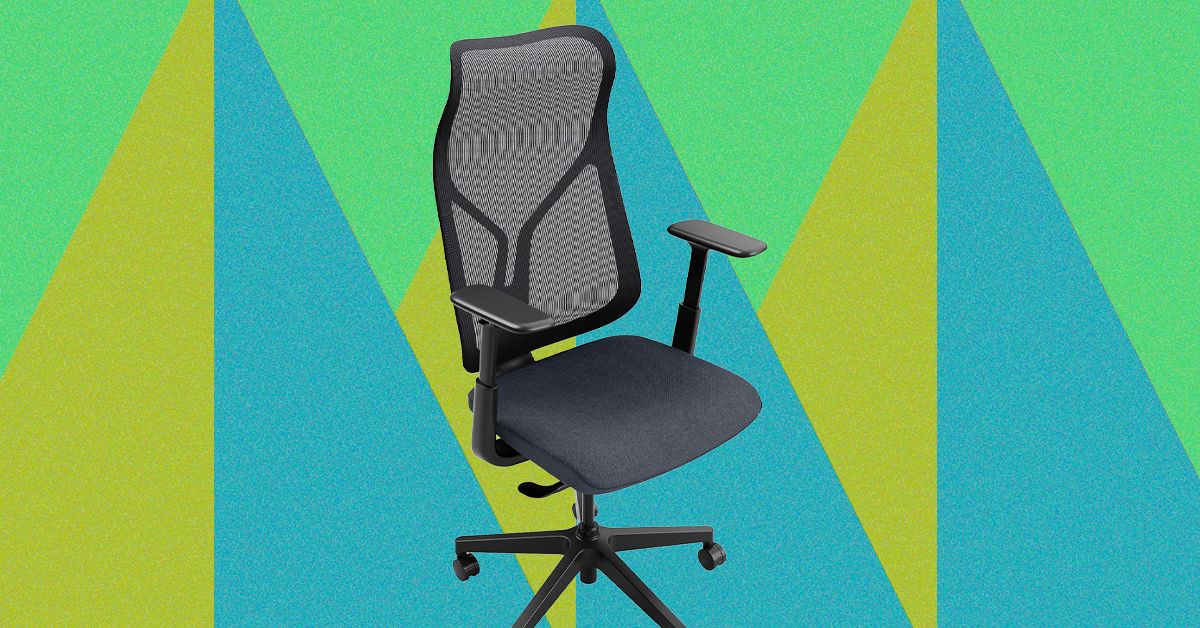
Like the brand’s easy-to-assemble desks, the Align chair has a deceptive simplicity with relatively few parts. The chair required less than 15 minutes and only three screws to put together, using an Allen wrench that came in the box. (While the QR code, on a chair released in March, did not yet link up to the right URL for the assembly instructions, I mostly didn’t need them.)
The simplicity stems mostly from the decision to limit the chair’s components: a cushion atop the wheels and casters and a single-piece mesh top held aloft by a suspension system that allows for a quite generous lean.
The chair’s spec sheet says one can lean back about 20 degrees, but I found there to be significantly more play on my large frame: I could lean back closer to 45 degrees while still feeling full support and no tipping danger. This makes for a lot of room to stretch.
Customization Concerns
Video: Matthew Korfhage
Even though the chair is constructed from minimal parts, Vari has managed to trundle in a surprising amount of adjustability. The seat can be moved about four inches up and down, shifted forward and back, and the lumbar support tilted to your liking using a five-position adjustable ratchet behind the chair. The effect isn’t dramatic visually, but it leads to vastly different degrees of pressure at the lower back.
The armrests can also be pivoted inward or outward and moved forward or back, though these positions cannot be locked. If you’re prone to fiddling, you may find yourself playing with the position of the armrests in idle moments. The armrests are also only lightly padded, and while I didn’t feel any discomfort, those who like a feeling of plushness might look elsewhere.
Note that while the armrests can pivot in place, their width cannot be adjusted. The seat cushion is also on the wide side, about 20 inches across. This means that while the chair accommodates wide frames handily, those who are a more petite may find the armrests too far apart. I loved the high-backed support, as a tall and long-bodied man. But smaller people may feel like they’re swimming in the chair, with its 27-inch-tall back.
Overall, I was impressed by the chair’s somewhat ingenious simplicity, which has the welcome side effect of keeping the price low. This balanced mix of breathability, support, value, and customizability makes the Align a very strong contender in the mid-price range—and the integrated headrest represents a serious step up from the company’s previous-generation Vari Task Chair. My one worry about the Align is that I’ll actually fall asleep in it.
Power up with unlimited access to WIRED. Get best-in-class reporting and exclusive subscriber content that’s too important to ignore. Subscribe Today.


Egypt’s SCZONE signs $8-mn Turkish textile project in Qantara West
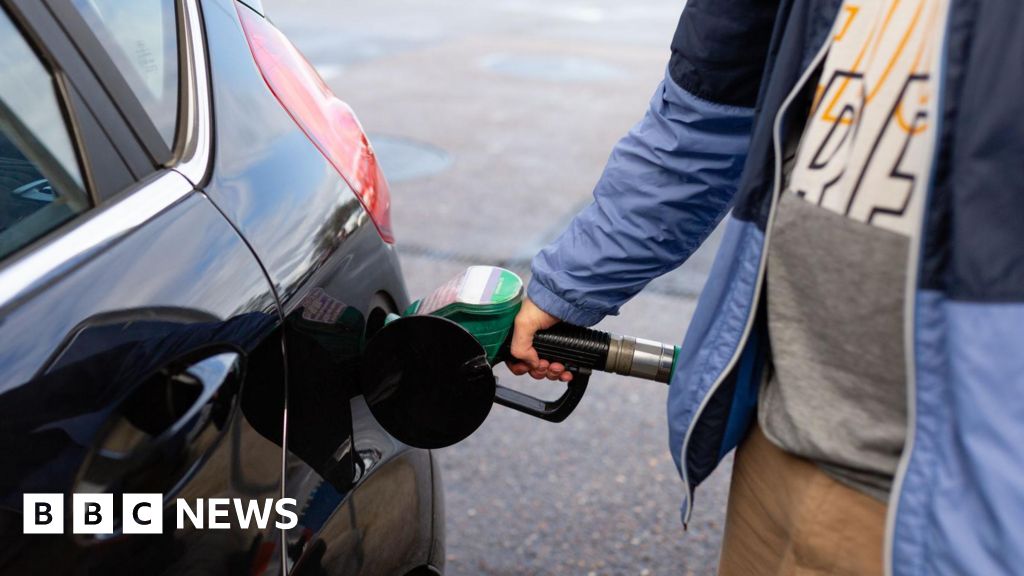
Oil price jumps to $117 after reports of ‘extended’ Iran blockade

ICE cotton edges up on higher crude oil, dry weather concerns

-

 Politics1 week ago
UK’s Starmer seeks to deflect blame over Mandelson appointment
-
 Business1 week ago
How Trump’s psychedelics executive order could unlock stalled cannabis reform
-

 Entertainment1 week ago
Lee Anderson, Zarah Sultana kicked out of UK Parliament for calling PM ‘liar’
-
 Business1 week ago
Us-India Trade Talks: US–India trade deal: Where do talks stand & what to expect – explained – The Times of India
-

 Tech1 week ago
A Humanoid Robot Set a Half-Marathon Record in China
-

 Fashion1 week ago
India, US to resume BTA talks today
-
 Business1 week ago
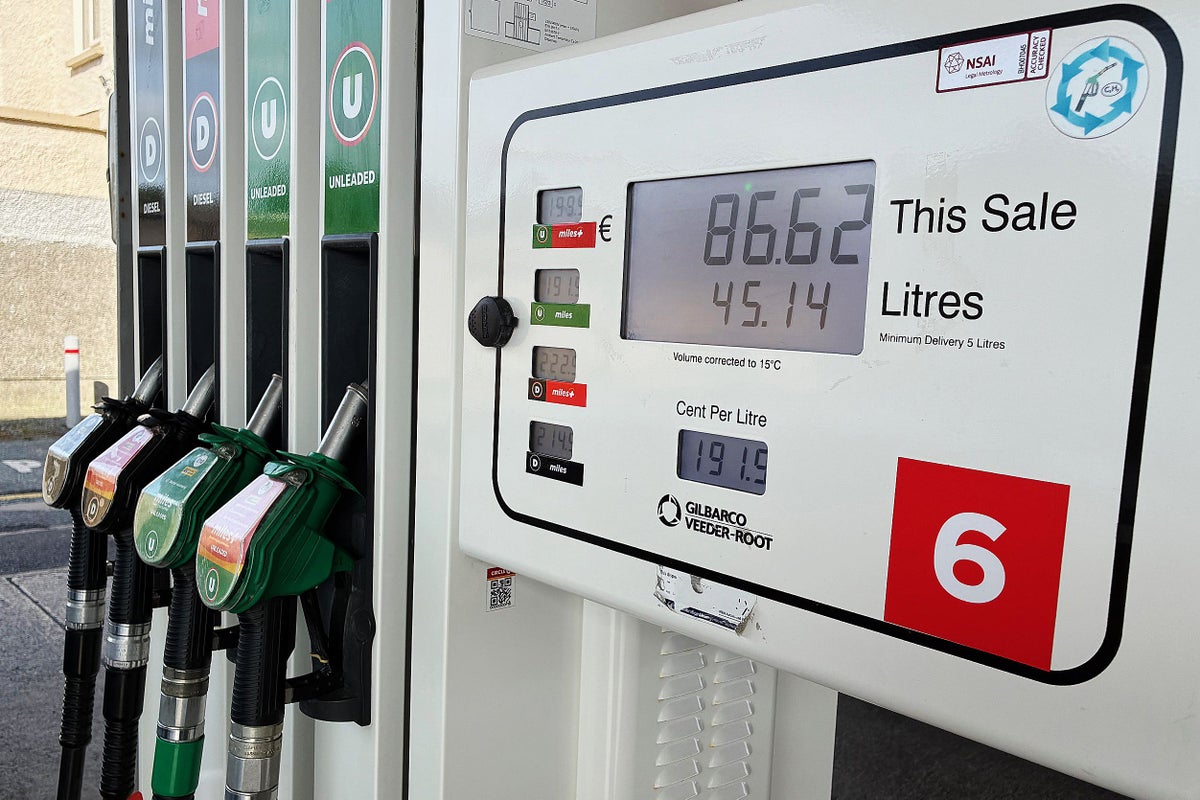
UK inflation accelerates after Iran war drives sharp rise in fuel prices
-

 Fashion1 week ago
Global energy growth slows to 1.3% in 2025: Report